News
CBN Raises Exchange Rate For Cargo Clearance To N1,605 Per Dollar
- /home/naijuinz/public_html/wp-content/plugins/mvp-social-buttons/mvp-social-buttons.php on line 27
https://naijablitznews.com/wp-content/uploads/2024/02/8D748135-0B53-4BBE-9262-670F1E7BBDF9.webp&description=CBN Raises Exchange Rate For Cargo Clearance To N1,605 Per Dollar', 'pinterestShare', 'width=750,height=350'); return false;" title="Pin This Post">
- Share
- Tweet /home/naijuinz/public_html/wp-content/plugins/mvp-social-buttons/mvp-social-buttons.php on line 72
https://naijablitznews.com/wp-content/uploads/2024/02/8D748135-0B53-4BBE-9262-670F1E7BBDF9.webp&description=CBN Raises Exchange Rate For Cargo Clearance To N1,605 Per Dollar', 'pinterestShare', 'width=750,height=350'); return false;" title="Pin This Post">
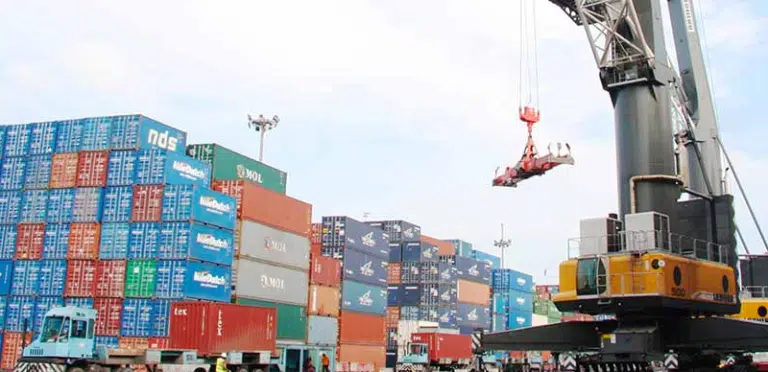
The Central Bank of Nigeria (CBN), on behalf of the Federal Government, has again increased the exchange rate for cargo clearance to N1,605 per Dollar.

This adjustment follows recent fluctuations, with the rate initially rising to N1,515/$, then dropping to N1,472/$.
Since January, there have been several adjustments in the exchange rate, starting from N952/$ in December, then moving to N1,356/$, followed by N1,413/$, and eventually reaching N1,444/$ before hitting the current rate of N1,605/$.

According to The PUNCH, checks on the portal of the Nigeria Customs Service on Wednesday morning showed that the new rate was reflected on the portal.
Barely a month ago, the Federal Government, through the CBN, elevated the exchange rate for cargo clearance from N952 per dollar to N1.356 per dollar.
This adjustment follows weeks after the rate was raised from N783 per dollar to N952 per dollar.
Recall that as at November 2023, the exchange rate for cargo clearance was increased from N757 per dollar to N783 per dollar, marking a 3.4 per cent rise.
Subsequently, in December, it was further raised from N783 per dollar to N952 per dollar.
The updated rate in the subsequent month has been implemented on the Nigeria Customs Service portal.
In response to the development at the time, a member of the Association of Nigerian Licensed Customs Agents, Remilekun Sikiru, expressed his views during a conversation with journalists saying: “How do we explain this? From N952/$ to N1.4/$ as of Friday morning with about N404 increase? It’s quite unfortunate that the prices of goods and commodities will automatically increase. Importation would further decrease and depreciate, vehicle prices would skyrocket again.
Since this unification of a thing, the government has refused to look inward and critically into the maritime industry regarding importation and exportation. The sector has been neglected, and things are getting worse daily. The question now is, how would freight forwarders and customs brokers agents cope with this new rate?”
News
Till now I’ve not sighted report that led to Senator Natasha’s suspension -Ireti Kingibe
The lawmaker representing the Federal Capital Territory, FCT, at the Senate, Ireti Kingibe, says she did not see any report that led to the suspension of Kogi Central Senator, Natasha Akpoti-Uduaghan.
She made this revelation on Wednesday when she featured in an interview on Arise Television’s ‘Prime Time’.
She said she was at a retreat with Edo North Senator, Adams Oshiomhole, when she heard about the report.
According to her, she never saw the report that led to Natasha’s suspension. I was at a retreat. I had earlier stated that I was there with three or four other senators who are members of the committee.
“We attended the Committee on Petitions and Public Complaints, signed the attendance register, and I later left for the tax reform retreat, which I considered more important at the time.
“It affects my constituents much more than disciplining a senator, and I figured that the other people who were not part of that committee would take care of it.
“I even complained to other Senators, specifically to Senator Enyinnaya Abaribe. I complained to him very bitterly that I had not seen that report. I didn’t see it then. I have not seen it till now,” she said.
News
URHOBO NATION PREPARES TO RALLY BEHIND LP’S BARRY AVOTU JOHNSON AS 20,000 POLLING UNIT AGENTS SET FOR INAUGURATION IN EVWRENI
Massive Grassroots Mobilisation Signals New Political Direction for Delta State Ahead of 2027
By Andrew Oghenetega
Politics Correspondent
Evwreni, Delta State | April 16, 2026
A new political momentum appears to be taking shape across Delta State as supporters of the Labour Party and stakeholders from across Urhobo land prepare for what is expected to be one of the most significant grassroots political gatherings ahead of the 2027 governorship election.
At the center of the movement is Dr. Barry Avotu Johnson 1st, political scientist, democracy advocate, international development strategist, and frontline Labour Party governorship hopeful, who has announced Thursday, July 30, 2026, as the date for the official declaration of his ambition to contest for Governor of Delta State.
The declaration ceremony will take place at Marere Secondary School Field, Evwreni Town, Ughelli North Local Government Area, beginning at 11:00 a.m. prompt, under the theme:
“THE GOOD BETTER BEST VISION FOR DELTA 2027”
Political observers believe the event will not only mark the formal launch of a governorship campaign but also unveil a comprehensive development blueprint designed to reposition Delta State for economic growth, social advancement, youth empowerment, and transparent governance.
20,000 POLLING UNIT AGENTS TO BE INAUGURATED
The major highlight of the event will be the inauguration and swearing-in of 20,000 Polling Unit Agents, strategically selected from communities across Delta State.
According to campaign coordinators, the agents will serve as grassroots ambassadors of democratic participation, voter education, election monitoring, and community mobilization across the state’s twenty-five local government areas.
Political analysts describe the initiative as one of the largest structured grassroots mobilization efforts by any governorship aspirant in Delta State at this stage of the electoral cycle.
The move is expected to strengthen the Labour Party’s presence at the community level while promoting citizen participation in the democratic process.
Supporters say the initiative reflects Dr. Barry Avotu Johnson’s longstanding commitment to electoral integrity and people-centered democracy through his leadership of the Votes Must Count International Initiative (VMCII).
EVWRENI PREPARES FOR HISTORIC HOMECOMING
Preparations are already underway in Evwreni as community leaders, youth organizations, women groups, and political stakeholders mobilize for the highly anticipated event.
Organizers describe the declaration rally as a grand homecoming for the Urhobo nation and an opportunity for sons and daughters from all 22 Urhobo Kingdoms to unite behind a common vision for the future of Delta State.
Thousands of supporters are expected from the three senatorial districts, while delegations from civil society organizations, labour unions, professional associations, market groups, and faith-based organizations are also expected to participate.
Local residents say the gathering could become one of the most attended political events in the area in recent years.
BROAD COALITION OF SUPPORTERS EXPECTED
According to the organizing committee, participation is expected from:
– Leadership of the Obedient Movement Worldwide in Delta State.
– Youth leaders from Delta North, Delta Central, and Delta South.
– Women organizations and market associations.
– Labour unions and workers’ groups.
– Civil society organizations and democracy advocates.
– Road transport workers and professional associations.
– Entertainment and creative industry practitioners.
– Traditional rulers and community stakeholders.
– Leadership of the Urhobo Progress Union (UPU).
– Friends and supporters of a greater Delta State.
Observers say the diversity of groups expected at the event demonstrates growing interest in issue-based governance and developmental politics across the state.
THE GOOD BETTER BEST DEVELOPMENT VISION
At the heart of Dr. Barry Avotu Johnson’s governorship aspiration is a development agenda known as the Good Better Best Vision for Delta 2027.
The vision is built on the belief that Delta State possesses enormous human and natural resources capable of transforming it into one of Nigeria’s leading economic and industrial hubs.
According to campaign documents, the objective is to move Delta State beyond ordinary governance and establish a new benchmark for leadership, accountability, innovation, and sustainable development.
The philosophy is straightforward:
“Good is not enough. Delta must become Better. Better is not enough. Delta must become the Best.”
ECONOMIC REVITALIZATION AND JOB CREATION
A central pillar of the vision is economic transformation.
The proposed agenda seeks to diversify Delta’s economy through:
– Agricultural modernization.
– Agro-processing and food production hubs.
– Industrial development zones.
– Small and medium enterprise support programs.
– Technology and innovation parks.
– Strategic local and foreign investments.
The goal is to create sustainable employment opportunities while strengthening economic productivity across urban and rural communities.
YOUTH EMPOWERMENT AND HUMAN CAPITAL DEVELOPMENT
Recognizing the importance of young people in nation-building, the Good Better Best Vision places significant emphasis on youth development.
Proposed initiatives include:
– Digital technology training centers.
– Skills acquisition and vocational education programs.
– Entrepreneurship support funds.
– Youth innovation grants.
– Career development opportunities.
– Creative industry empowerment schemes.
The objective is to equip young Deltans with the tools necessary to compete successfully in the modern global economy.
EDUCATION REFORM FOR A NEW GENERATION
Education remains a major priority under the proposed development framework.
The campaign advocates:
– Modern school infrastructure.
– Teacher capacity development.
– Expansion of science and technology education.
– Scholarship and bursary programs.
– Digital learning platforms.
– Research and innovation initiatives.
The vision seeks to produce a new generation of globally competitive graduates capable of driving economic and technological advancement.
QUALITY HEALTHCARE FOR ALL
Healthcare transformation also features prominently within the Good Better Best agenda.
The proposed reforms include:
– Upgrading general hospitals.
– Strengthening primary healthcare centers.
– Rural medical outreach services.
– Expanded health insurance coverage.
– Modern medical equipment.
– Improved emergency response systems.
Supporters argue that access to quality healthcare should be a fundamental right for every resident of Delta State.
INFRASTRUCTURE FOR ECONOMIC GROWTH
The campaign also proposes significant investments in infrastructure development.
Areas of focus include:
– Road construction and rehabilitation.
– Rural access roads.
– Water supply projects.
– Modern transportation systems.
– Renewable energy initiatives.
– Urban renewal programs.
– Smart city development projects.
Analysts believe improved infrastructure would stimulate commerce, attract investments, and improve the quality of life for residents.
TRANSPARENCY, ACCOUNTABILITY, AND GOOD GOVERNANCE
As founder of the Votes Must Count International Initiative, Dr. Barry Avotu Johnson has consistently advocated democratic accountability and transparent governance.
His campaign promises to strengthen:
– Open government systems.
– Citizen participation in decision-making.
– Digital transparency mechanisms.
– Performance-based governance.
– Efficient public service delivery.
– Anti-corruption initiatives.
Supporters believe these reforms would restore public confidence in government institutions and improve service delivery across the state.
POLITICAL OBSERVERS WATCH CLOSELY
As Delta State moves closer to the 2027 governorship election, political analysts are closely monitoring developments surrounding the Labour Party’s grassroots mobilization efforts.
Many believe the inauguration of 20,000 polling unit agents could provide an early indication of organizational strength and voter engagement ahead of the official campaign season.
Whether the movement ultimately translates into electoral success remains to be seen.
However, one fact is becoming increasingly evident:
The campaign of Dr. Barry Avotu Johnson 1st is positioning itself around a message of development, accountability, grassroots participation, and a vision for a better future.
For supporters gathering in Evwreni on July 30, the event represents more than a political declaration.
It represents the launch of a movement built around a simple promise:
“A Good Delta. A Better Delta. The Best Delta.”
And for many of those expected to attend, that vision begins in Evwreni.
News
The Digital Divide: Why Journalists Struggle With Laptops in Developing Regions, By Emmanuel Ajibulu
Journalists across the globe increasingly rely on laptops as their primary tool for reporting, editing, and publishing. Yet, for many, especially those working in developing regions, this reliance comes with formidable challenges that hinder productivity and compromise press freedom.
One of the most pressing obstacles is the high cost of modern laptops. Advanced devices capable of handling multimedia editing, data visualization, and investigative research remain financially inaccessible to many professionals, leaving them dependent on outdated or underpowered machines.
Even when equipment is available, limited digital literacy poses another barrier. Skills such as video editing, graphic design, and secure data management are increasingly essential in modern journalism, yet many practitioners lack adequate training to fully leverage these tools.
Security risks further compound the problem. Journalists are highly vulnerable to malware, phishing attacks, and pervasive digital surveillance.
These threats not only endanger personal safety but also jeopardize the confidentiality of sources, an issue particularly critical in regions where press freedom is fragile and protective infrastructure is minimal.
Beyond technical and security concerns, systemic issues severely restrict productivity. In many developing regions, inadequate power supply leads to frequent interruptions, forcing journalists to work under unpredictable conditions.
The absence of reliable corporate internet access further limits their ability to conduct timely research, publish stories, and collaborate with colleagues across borders.
Together, these challenges illustrate a stark digital divide.
While laptops have become indispensable tools for journalism worldwide, their effectiveness is undermined by financial, technical, and infrastructural barriers.
Successfully addressing the challenges faced by journalists in developing regions requires a multi-pronged strategy that tackles cost, skills, safety, and systemic barriers. Affordable device programs, targeted digital literacy training, stronger cybersecurity measures, and infrastructure improvements such as reliable electricity and internet connectivity are essential to empowering journalists and safeguarding the free flow of information.
Affordable device initiatives can play a transformative role. Governments, NGOs, and media organizations should consider subsidizing or bulk-purchasing laptops for journalists.
Refurbished devices and low-cost alternatives, such as Chromebooks, offer practical solutions without prohibitive costs. Strategic partnerships with technology companies can further ensure access to modern tools at reduced prices, bridging the gap between resource limitations and professional needs.
Equally important is digital literacy training. Journalists must be equipped with the skills to navigate multimedia editing, data visualization, and investigative reporting tools.
Structured training programs, online modules, and peer-led workshops can help practitioners adapt to evolving digital demands, ensuring they remain competitive in a rapidly changing media landscape.
Cybersecurity remains a critical concern.
Providing journalists with cybersecurity support, including training on safe digital practices, access to VPNs, secure communication platforms, and reliable antivirus software, protects both their personal safety and the confidentiality of their sources. Advocacy for stronger legal protections against surveillance and harassment further reinforces this safety net.
Beyond technology, systemic improvements are vital. Expanding infrastructure support, such as reliable electricity grids, backup power solutions, and affordable broadband, directly enhances productivity. Community-based internet hubs or co-working spaces can provide shared access to stable connectivity, enabling journalists to conduct timely research, publish stories, and collaborate across borders.
More pointedly is the fact that, the human dimension must not be overlooked. Addressing stress from digital insecurity and unstable working conditions through mental health support, counseling, and peer-support networks is crucial. Flexible work arrangements and orientation manuals for digital journalists can ease transitions into modern reporting environments, reducing anxiety and fostering resilience.
*Emmanuel Ajibulu is an infoprenuer, publisher of Veracity Desk (www.veracitydesk.com), writer, communication consultant and social media influencer. He wrote via emmanuelajbulu@gmail.com*
-
News4 hours agoAppeal Court Knocks Out NBC’s Bid To Revive Broadcast Fines
-
News23 hours agoPIGD Lauds Mutfwang’s Bold Push To Make Plateau Livestock Hub
-
News4 hours agoI’m Fully Vindicated of 11-Year-Old Case That Tormented Me and My Family – Diezani Celebrates UK Court Acquittal
-
News20 hours agoExperts Urge ECOWAS Lawmakers to See Electricity as an Economic Game-Changer
-
News4 hours ago‘If You See Something, Say Something’ — Oborevwori Rallies Deltans Against Terror, Kidnapping at Security Summit
-
Sports4 hours agoDR Congo Mark World Cup Return with Historic Draw Against Portugal
-
News20 hours agoMinority Caucus Sounds Alarm Over Insecurity, Judiciary and 2027 Politics
-
Sports4 hours agoHarry Kane’s Brace Powers England To Victory Over Croatia