Connect with us

News

Oronsaye Report Outdated, Won’t Reduce Governance Cost — Falana

Published

on

ADVERTISEMENT
Zoom Ad
ADVERTISEMENT
Zoom Ad

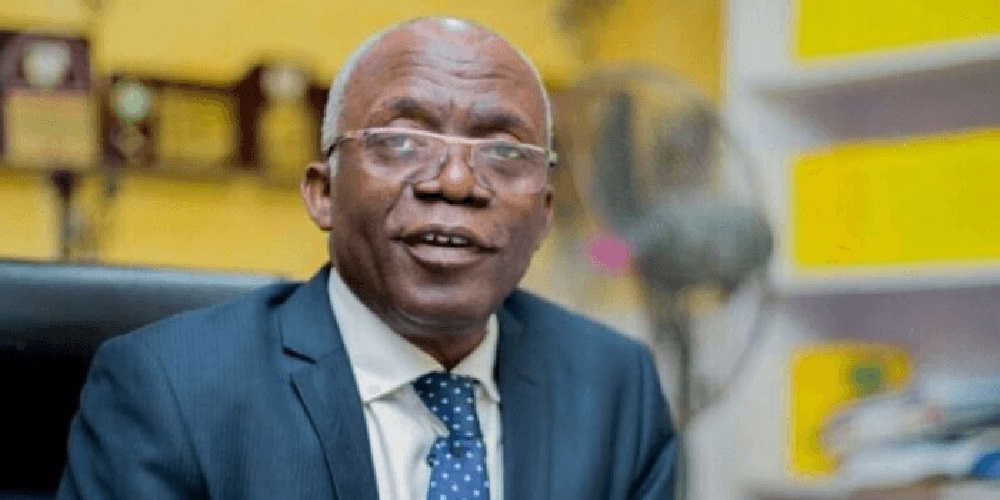
Human rights lawyer, Femi Falana, has described as outdated, the 12-year old Steve Oronsaye Report recommending the merger of government agencies and commissions.


In a statement on Tuesday, the Senior Advocate of Nigeria, said contrary to the belief in official circles, the report won’t “substantially reduce the enormous costs of governance in the country as it does not reflect the current situation in the public service”.

The Federal Executive Council (FEC) chaired by President Bola Tinubu had on Monday approved the full implementation of the Oronsaye report.

According to the Special Adviser to the President on Policy Coordination, Hadiza Bala Usman, the move was in line with the need to reduce cost of governance and streamline efficiency across the governance value chain.

Advertisement

However, Falana said, “No doubt, the implementation of some of the recommendations of the Panel will take appreciable time as the merger of certain bodies require constitutional amendments or repeal of a number of statutes.

“The 800-page report of the Steve Oronsaye Panel recommended the reduction of statutory agencies from 263 to 161, scrapping 38 agencies, merging 52, and reverting 14 to departments in different ministries,

“Since the Goodluck Jonathan administration produced a White Paper on the Steve Oronsaye Report in 2014, the Federal Government has created more ministries, departments and agencies.

“Whereas the Report recommended the reduction of 263 agencies to 151, the number of ministries, departments and agencies has increased to 1316. Even the current administration has increased the number of ministries and created new agencies. To that extent, the Steve Oronsaye Report is completely outdated.

Advertisement

“However, in implementing the Oronsaye Report the Federal Government should ensure that the crisis of insecurity is not compounded through the retrenchment of hundreds of thousands of workers.

“Instead of downsizing the public service the Federal Government should ensure that the two houses of the National Assembly are merged while the number of Ministers, Special Advisers, Senior Special Assistants and Special Assistants is significantly reduced.”


Continue Reading
Advertisement

News

INEC Insists CVR Ends Today

Published

on

By

ADVERTISEMENT
Zoom Ad
ADVERTISEMENT
Zoom Ad

The Independent National Electoral Commission, INEC, has urged eligible Nigerians to take advantage of the remaining days of the Continuous Voter Registration, warning that the registration window will close on Sunday, July 26, 2026.

In a public notice issued on its X handle on Saturday, the electoral body reminded prospective voters that they could complete their registration online from start to finish through its dedicated CVR portal or visit designated registration centres nationwide for physical assistance.

“Your future won’t wait. Neither should you. The Continuous Voter Registration, CVR, exercise ends Sunday, 26 July 2026,” the commission said.

INEC encouraged Nigerians who require assistance to visit any of its state offices, local government area offices, or designated registration centres to complete the process in person.

Advertisement

The commission also stated that all registration centres would remain open daily, including weekends, from 9:00 a.m. to 3:00 p.m. until the exercise ends.

“You can complete your voter registration online from start to finish via http://cvr.inecnigeria.org. If you need assistance, visit any INEC State Office, LGA Office, or designated registration centre to complete your registration in person,” the commission added.

The CVR exercise is part of INEC’s preparations for the 2027 general elections. It enables eligible Nigerians and those seeking to update their voter information to be included in the national register of voters.

Advertisement
Continue Reading

News

Gumi Questions Why No One Has Visited Boko Haram, Bandits to Negotiate Peace

Published

on

By

ADVERTISEMENT
Zoom Ad
ADVERTISEMENT
Zoom Ad

Controversial Islamic cleric, Sheikh Ahmad Gumi, has questioned why no government official has visited Boko Haram terrorists and bandits to negotiate an end to their violence, the way past leaders engaged Niger Delta militants.

He made the comparison in a Facebook post on Saturday, recalling how former President Goodluck Jonathan and former Vice President Yemi Osinbajo both visited militants in the creeks to broker peace.

Gumi noted that both leaders, at different times, went into the creeks to meet militants and returned with programmes designed to end militancy in the region.

“The former President Jonathan visited Delta militants in the creeks, so also the former Vice President Osinbajo. They all came up with a program to tame the militants,” he wrote.

Advertisement

The cleric then asked who would extend similar engagement to Boko Haram and bandits terrorising parts of northern Nigeria without facing public backlash.

“Who is going to visit BH and Bandits to tame them without fools castigating them?” he asked.

Gumi has for years positioned himself as an advocate for dialogue with armed groups in the North-West and North-East, repeatedly visiting bandit camps in Zamfara and other states to hear their grievances.

He has consistently argued that negotiation, rather than military force, worked to end militancy in the Niger Delta and should be replicated in the North.

Advertisement

The cleric’s interventions have drawn both support and criticism. While some Nigerians accuse him of legitimising armed groups responsible for kidnapping, killings and cattle rustling, others credit his engagements with securing the release of kidnap victims.

The retired military officer has repeatedly denied backing terrorism, insisting his advocacy is aimed solely at ending the bloodshed through dialogue and rehabilitation.

The Niger Delta amnesty programme, launched in 2009 under the late President Umaru Yar’Adua and sustained by Jonathan, saw thousands of militants disarmed in exchange for training, stipends and reintegration support. The programme significantly reduced attacks on oil infrastructure in the region.

Jonathan first waded into the Niger Delta crisis in 2007 as vice-president, entering the creeks without an armed detail to meet ex-militant leader Government Ekpemupolo, popularly known as _Tompolo_, in Warri, Delta State.

Advertisement

He later said the meeting laid the groundwork for the amnesty programme granted to militants, which remains in place today.

Osinbajo similarly toured Niger Delta communities as acting president in 2017, engaging militants and traditional leaders directly. 

He justified the outreach by arguing that those in the creeks were citizens with genuine grievances, not merely security threats.

Advertisement
Continue Reading

News

Photo news: Gov Fubara performs groundbreaking/ foundation laying ceremony of Riven Medical Industries Project at Rumuosi, Port Harcourt

Published

on

ADVERTISEMENT
Zoom Ad
ADVERTISEMENT
Zoom Ad

L-R: Managing Director, Enbay Pharmaceutical Industries Ltd, Mr Eniye Oweifie; Chairman, Obio-Akpor LGA, Dr Gift Worlu; Director Medical Services/Ag. Permanent Secretary, Rivers State Ministry of Health, Dr Vincent Wachukwu; Governor of Rivers State, His Excellency, Sir Siminalayi Fubara and Deputy Governor, Rivers State, Prof Ngozi Odu, during the groundbreaking/ foundation laying ceremony of the Riven Medical Industries Project at Rumuosi, Port Harcourt last Wednesday.

Continue Reading

Trending

Copyright © 2024 Naija Blitz News