Connect with us

News

NBS names three states with highest prices of cooking gas

Published

on

ADVERTISEMENT
Zoom Ad
ADVERTISEMENT
Zoom Ad

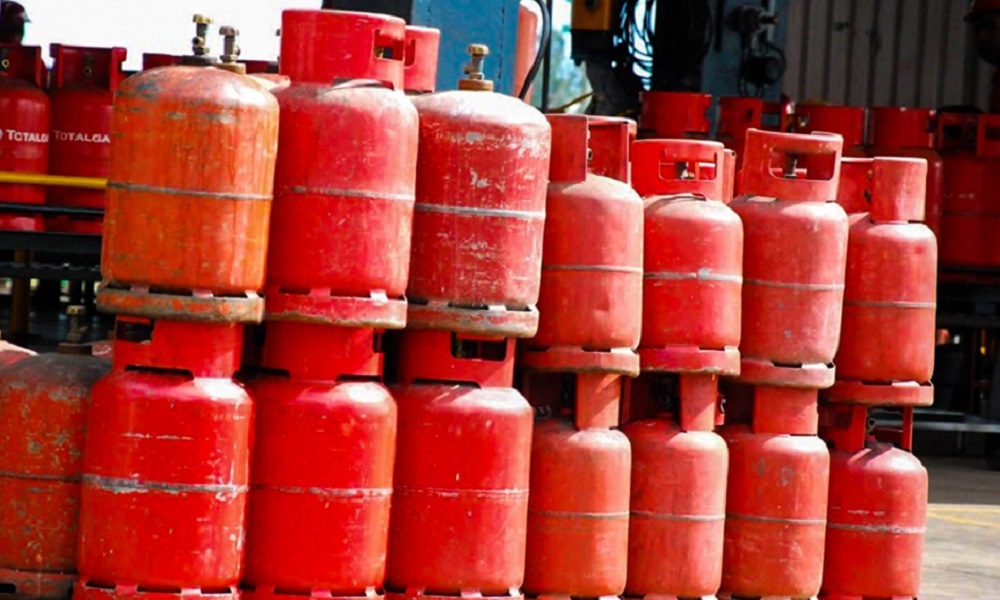
According to the National Bureau of Statistics (NBS), the states of Cross River, Jigawa, and Zamfara in Nigeria have the highest rates for 12.5kg of cooking gas, also known as liquified petroleum gas.


NBS revealed this in their January report on Liquefied Petroleum Gas.

According to the survey, Cross River had the highest average retail price of N13,040.00 for refuelling a 12.5-kilogram cooking gas cylinder, followed by Jigawa (N12,875.00) and Zamfara (N12,725.00).

On the other hand, Kaduna reported the lowest average price at N9,699.50, followed by Niger and Kwara with N10,000.00 and N10,400.00, respectively.

Advertisement

Zone-by-zone analysis revealed that the South-South had the highest average retail price of N12,602.48, followed by the North-West with N12,224.93, while the South-West had the lowest price of N11,189.02.

According to the data, the average retail price of 5 kg of LPG went from N4,962.87 in December to N5,139.25 in January, a monthly rise of 3.55%.

Please don’t forget to “Allow the notification” so you will be the first to get our gist when we publish it.
Drop your comment in the section below, and don’t forget to share the post.

Advertisement
Continue Reading
Advertisement

News

Kalu hails Oluremi Tinubu at 66, Praises Support for Women, Vulnerable Nigerians

Published

on

ADVERTISEMENT
Zoom Ad
ADVERTISEMENT
Zoom Ad

By Gloria Ikibah

Deputy Speaker of the House of Representatives, Rt. Hon. Benjamin Okezie Kalu, has congratulated First Lady Senator Oluremi Tinubu on her 66th birthday, describing her as the “Mother of the Nation”.

Kalu commended the First Lady for her service to the country, particularly her interventions aimed at empowering women, supporting families and vulnerable citizens, and investing in young Nigerians.

In a congratulatory message issued on Monday by his Chief Press Secretary, Levinus Nwabughiogu, the Deputy Speaker said Senator Tinubu’s leadership had reflected compassion and brought what he described as a profoundly human face to the administration of President Bola Ahmed Tinubu.

Advertisement

He also praised her commitment to raising funds for the renovation and completion of the National Library of Nigeria, describing the initiative as symbolic of her vision for the future.

Kalu said: “Your Excellency, your life of service continues to demonstrate that leadership finds its highest expression in compassion. Through your interventions across the states of our federation, particularly your commitment to the empowerment of women, support for families and vulnerable citizens, and investment in the hopes and aspirations of young Nigerians, you have brought a profoundly human face to the administration of His Excellency, President Bola Ahmed Tinubu, GCFR.

“Your remarkable commitment to raising funds for the renovation and completion of the National Library of Nigeria is especially symbolic of your vision for the future. A nation that invests in its libraries invests in the minds of its children”.

The Deputy Speaker further described Senator Tinubu as a source of inspiration to emerging leaders, praising her humility, quiet strength and graciousness in office.

Advertisement

“At 66, we celebrate not only the gift of your life, but the countless lives that have been enriched by your generosity of spirit and commitment to service,” Kalu said.

He prayed for continued strength, sound health and wisdom for the First Lady.

Continue Reading

News

Abbas Hails Oluremi Tinubu @66, Praises Her as ‘Great Mobilise, Unifier’

Published

on

ADVERTISEMENT
Zoom Ad
ADVERTISEMENT
Zoom Ad

By Gloria Ikibah

The Speaker of the House of Representatives, Rt. Hon. Tajudeen Abbas, has congratulated the First Lady, Senator Oluremi Tinubu, on her 66th birthday, describing her as a “great mobiliser and unifier”.

In a congratulatory message issued through his Special Adviser on Media and Publicity, Musa Abdullahi Krishi, on Saturday, Abbas described the First Lady as a dependable spouse, partner and ally to President Bola Ahmed Tinubu.

The Speaker commended her “indefatigable spirit” and high level of patriotism, saying she remained an inspiration to Nigerian women.

Advertisement

He also acknowledged her experience in public administration and women mobilisation, describing her as an experienced political, religious and woman leader.

Abbas praised her resilience in supporting not only the President but also the ruling All Progressives Congress (APC), noting her influence at the grassroots and her efforts to complement the actualisation of the Renewed Hope Agenda.

The Speaker wished the First Lady many more years in sound body and mind, while praying for the success of her husband in the forthcoming presidential election.

Advertisement
Continue Reading

News

Climate Change Threatens West Africa’s Livelihoods, Stability — Experts

Published

on

ADVERTISEMENT
Zoom Ad
ADVERTISEMENT
Zoom Ad

By Gloria Ikibah

Experts have warned that climate change is putting growing pressure on livelihoods, infrastructure and regional stability across West Africa, as lawmakers deliberate on the need for stronger adaptation measures and regional cooperation.

The warning was issued at the second Extraordinary Session of the ECOWAS Parliament and its second Parliamentary Seminar on Monday in Accra, Ghana, where experts examined the theme, “Climate Change as a Driver of Environmental Degradation, Population Displacement and Rising Insecurity in the ECOWAS Region”.

The experts said rising temperatures, extreme weather, drought, unpredictable rainfall, flooding, rising sea levels and land degradation were placing increasing pressure on communities and critical infrastructure across the sub-region.

Advertisement

In a presentation on climate change in West Africa, including risk areas, vulnerabilities and implications for regional stability, the Senior Programme Officer, Climate Change and Ozone Directorate of Ghana’s Environmental Protection Authority, Dr Derek Sarfo-Yiadom, said climate hazards were no longer distant threats.

“Climate hazards are with us,” he said, identifying extreme heat, drought, heavy and unpredictable rainfall, rising sea levels and other weather-related events as growing concerns.

Sarfo-Yiadom said climate hazards became disasters when communities exposed to them lacked the capacity to cope.

According to his presentation, seasonal temperatures in the region have risen by between one and three degrees Celsius since 1970, contributing to hotter heatwaves and increasingly unpredictable weather patterns.

Advertisement

He said changing rainfall patterns were also increasing the risk of flooding, while drought and heat were placing additional pressure on agriculture and livelihoods.

Farmers, low-income communities, coastal settlements and displaced populations were identified as particularly vulnerable to the effects of climate change.

The presentation also highlighted threats to homes, irrigation systems, electricity supply, transport networks, ports, markets and public services.

Sarfo-Yiadom said the consequences of climate change extended beyond the environment, with social and economic implications for communities.

Advertisement

He warned that climate pressures can contribute to displacement and conflict, particularly in communities heavily dependent on agriculture and natural resources.

The expert called for increased investment in climate adaptation, flood-proof zoning and wider climate-risk mapping.

He also urged governments to ensure that early-warning systems reached vulnerable communities and that public authorities were held accountable for climate-related spending.
ECOWAS seeks stronger regional climate action
In another presentation focusing on the ECOWAS regulatory and institutional framework and the need to translate climate commitments into regional action, the Principal Officer, Climate Change and Climate Services at the ECOWAS Commission, Mr Raoul Kouame, said the region needed to harmonise climate policies and standards.

He said member states should also be supported to implement their commitments under the Paris Agreement.

Advertisement

“The challenge is no longer just to define climate commitments,” he said.

Kouame identified institutional fragmentation, differences in national capacities and difficulties in accessing climate finance among the challenges affecting climate action across West Africa.

He called for stronger coordination between regional and national institutions, as well as greater sharing of experience among member states.

He also advocated mechanisms that would enable countries to develop national climate frameworks linked to regional structures.

Advertisement

According to him, regional cooperation should cover climate services, early-warning systems, forest and ecosystem protection, carbon markets and access to climate finance.

According to him, West African countries needed to strengthen their capacity to access available climate funds and develop innovative financing mechanisms to support implementation.

Kouame stressed that ECOWAS had an important role to play in providing regional solidarity and helping member states implement their climate commitments more effectively.

The ECOWAS Parliament has previously identified climate change and environmental protection among areas within its parliamentary responsibilities, including the harmonisation of policies and programmes among member states.
Climate risks cross national borders
A climate, water and meteorology expert with the Permanent Inter-State Committee for Drought Control in the Sahel (CILSS), Dr Abdou Ali, also called for greater regional cooperation in responding to climate and resource pressures.

Advertisement

His presentation examined drought, land degradation and food insecurity, with particular attention to the need for countries to share climate information, data, technical expertise and climate services.

Ali said regional cooperation was essential because climate risks did not stop at national borders.

He highlighted agriculture, coastal areas, biodiversity, disaster risk and human displacement as areas requiring coordinated adaptation measures.

He also emphasised the need to integrate climate action into policies covering agriculture, forestry, energy, transport, industrialisation and waste management.

Advertisement

The expert said regional strategies would require adequate financing, stronger institutions and effective implementation mechanisms to deliver results.

The presentations converged on the need for stronger climate adaptation measures across West Africa, with the experts stressing that responses should reflect the needs and livelihoods of affected communities to avoid creating new vulnerabilities.

The discussions come as West African countries face continued climate variability, with drought in the Sahel and flooding in Gulf of Guinea countries posing risks to food security, water resources, health systems and infrastructure. Regional institutions are increasingly emphasising early warning, data sharing and coordinated responses to climate-related disasters.

Parliamentarians at the Accra seminar are continuing deliberations on the expert presentations, with discussions expected to focus on practical measures that can strengthen climate resilience and address the links between environmental degradation, displacement and insecurity in the ECOWAS region.

Advertisement
Continue Reading

Trending

Copyright © 2024 Naija Blitz News