Connect with us

News

Man Admits Poisoning His Wife To Inherit Her Wealth In Jigawa

Published

on

ADVERTISEMENT
Zoom Ad
ADVERTISEMENT
Zoom Ad

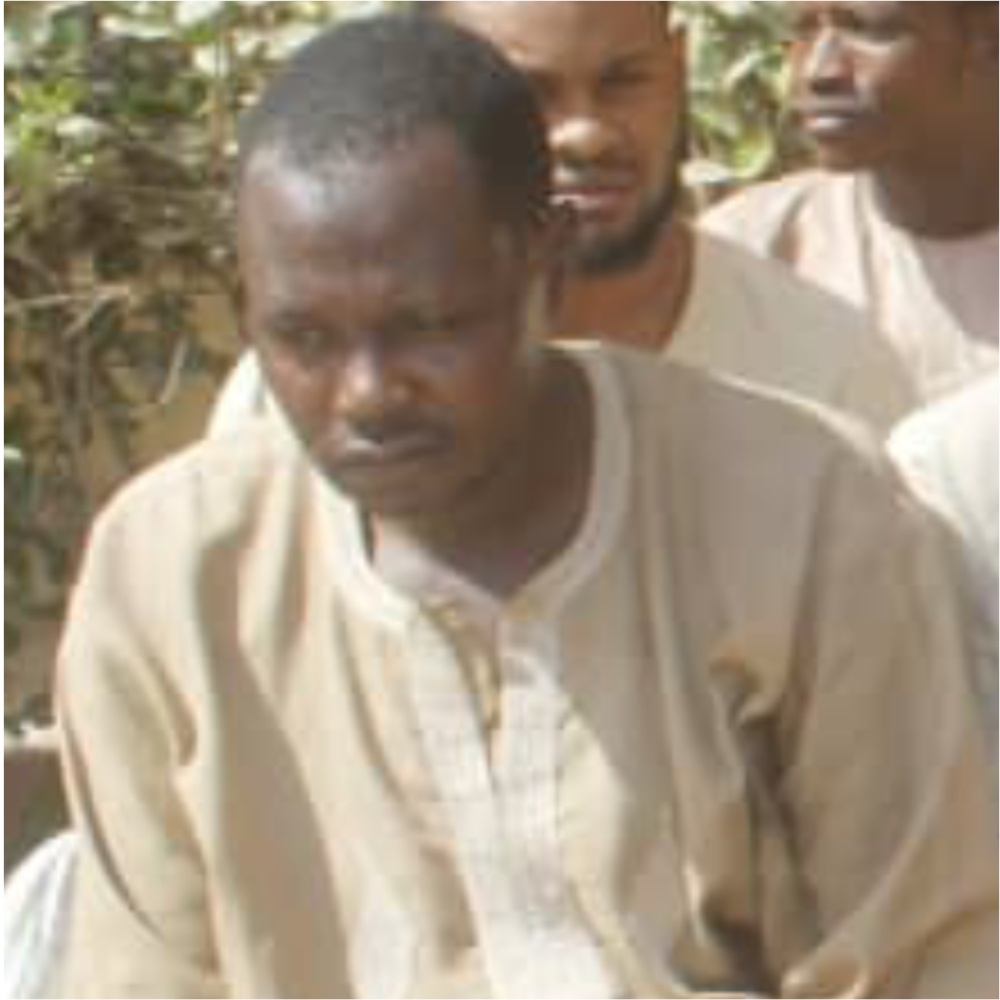
Jigawa State Police Command has apprehended a 40-year-old man, Habu Ibrahim over alleged plan to poison his wife in Danadama village, Sule Tankarkar LGA.


State Police Commissioner, A T. Abdullahi disclosed this in a statement issued to Daily post.

He said the suspect was arrested for allegedly lacing a drink and meat with poison, targeting his 35-year-old wife, Zakiya Uzairu, with the intention of inheriting her wealth.

He said upon receiving the report, detectives from the Sule Tankarkar Division swiftly acted, arresting the suspect at the scene.

Advertisement

CP. Abdullahi said the suspect was brought to the Divisional Police office in Sule Tankarkar for questioning and was later transferred to the State Criminal Investigation Department (SCID) in Dutse for further investigation.

“During the interrogation, the suspect willingly confessed to the crime, confirming the accuracy of the information provided to the police.

“He admitted to intending to kill his wife to gain possession of her livestock, which included goats, sheep, and cows.

“He said the wife narrowly escaped after she perceived the poison and presumed his plan,” the police said.
Advertisement
Continue Reading
Advertisement

News

Federal Character: Tinubu, Omidiran, others task 774 LG chairmen on inclusive governance, accountability

Published

on

By

ADVERTISEMENT
Zoom Ad
ADVERTISEMENT
Zoom Ad

President Bola Ahmed Tinubu has tasked Local Government chairmen across the 774 councils to translate the principles of federal character into practical, inclusive and equitable governance at the grassroots.

President Tinubu, who spoke on Monday at a workshop for local government chairmen in Abuja, stressed that the effectiveness of national governance is ultimately measured by its impact on citizens at the community level.

The workshop, organised by the Federal Character Commission in collaboration with the Progressives Governors Forum, aimed at ensuring the principles of federal character are implemented diligently at the grassroots level.

The two-day workshop, themed “Translating Federal Character Principles into Local Governance: Bridging Policy and Practice,” brought together chairmen of the 774 Local Government Areas, government officials, security agencies and other stakeholders to deepen the implementation of federal character, inclusive governance and grassroots development.

Advertisement

In his keynote address delivered by the Secretary to the Government of the Federation, Senator George Akume, President Tinubu said Nigeria’s diversity remained one of its greatest assets, stressing that the country’s multiplicity of cultures, ethnicities and beliefs must be managed through fairness, justice and inclusion.

According to the President, Local Government Councils occupy a strategic position in Nigeria’s governance architecture because they constitute the closest interface between citizens and the state.

“Policies, no matter how well-crafted, achieve little unless they are effectively translated into action where it matters most, the grassroots,” Tinubu said.

“You must rise above sectional interests and embrace a broader national perspective that prioritises unity over division and inclusiveness over exclusion,” the President said.

Advertisement

Earlier in her welcome address titled “Diversity Must Become Our Strength” the Executive Chairman of the FCC, Hon. Hulayat Motunrayo Omidiran, said the workshop was designed to strengthen the connection between federal character, grassroots governance and national integration.

Omidiran described the gathering as a timely intervention aimed at reinforcing the foundations of unity, fairness, inclusion and peaceful coexistence across Nigeria.

“Our ethnic, linguistic, and religious diversities are not obstacles to nationhood; rather, they are valuable strengths capable of driving national growth when managed with equity, justice, and sincerity of purpose,” she said.

The FCC Chairman said Local Governments were uniquely positioned to manage diversity within communities through equitable distribution of opportunities, fair representation, inclusive leadership and meaningful engagement with citizens.

Advertisement

“The future of Nigeria depends greatly on our collective willingness to promote justice above prejudice, unity above division, and national interest above personal or sectional considerations,” Omidiran said.

Also speaking at the programme, the Minister of Defence, General Christopher Gwabin Musa called for a stronger partnership between Local Governments, communities, traditional and religious institutions, security agencies and the private sector to strengthen security at the grassroots.

In his message tagged “Strengthening Grassroots Security through Inclusive Local Leadership, Community Partnership and Inter-Agency Collaboration,” Musa said insecurity was experienced most directly at the community level, making local knowledge indispensable to effective prevention and early intervention.

“If we are serious about preventing insecurity rather than simply responding to it after it occurs, then the knowledge and experience of those closest to the people must become an integral part of our security effort,” he said.

Advertisement

The Defence Minister backed the proposal for the establishment of Local Government Security Coordination Committees across the 774 Local Government Areas, but stressed that the initiative would only succeed if the committees were functional rather than merely another layer of bureaucracy.

“The objective should be clear, to strengthen the connection between our communities and the security architecture of the country, improve early warning and, where possible, prevent incidents before they escalate,” Musa said.

“When we secure a farming community, we are protecting livelihoods and food production. When we secure a business district, we are protecting investment and employment,” he said.

“The objective is not to create parallel security structures, but to improve coordination, strengthen existing institutions and ensure that every stakeholder contributes effectively within his or her area of responsibility,” Musa said.

Advertisement

Representing the Chairman of the Progressive Governors Forum and Imo State Governor, Senator Hope Uzodimma, the Director-General of the Forum, Folorunso S. Aluko, commended the FCC for partnering with the PGF on the initiative.

Aluko described Local Government as the point where citizens encounter government most directly, noting that functioning primary healthcare centres, accessible community roads, improved sanitation and support for vulnerable citizens were tangible manifestations of government.

“When a primary healthcare centre functions, a community road becomes passable, sanitation improves or vulnerable citizens receive support, government ceases to be an abstract institution, it becomes a living source of dignity, confidence and hope,” Aluko said.

“Autonomy must always travel with responsibility. Greater authority must produce higher standards of transparent budgeting, prudent financial management, merit-based appointments, procurement integrity, audit compliance and meaningful citizen engagement,” he said.

Advertisement

“Local Government Chairmen are not merely administrators of councils; you are custodians of public trust and frontline builders of the Nigerian federation,” he said.

Also speaking at the workshop, the Director-General of the National Orientation Agency (NOA), Mallam Lanre Issa-Onilu, said federal character must be understood not merely as a formula for appointments, but as a principle of belonging, fairness and inclusion.

In his goodwill message at the workshop, Issa-Onilu said the central question of nation-building was how to make every Nigerian, regardless of origin or location, feel that Nigeria belonged to them.

Issa-Onilu linked the workshop to the work of the National Orientation Agency and the National Values Charter, saying national unity could only be sustained when citizens experienced fairness, justice, inclusion and opportunity alongside their responsibilities to the nation.

Advertisement

“Federal Character must therefore be understood as more than a formula for appointments. At its heart, it is a principle of belonging,” he said.

“When development is equitable, we are not merely distributing infrastructure; we are distributing belonging. When opportunities are fairly shared, we are not simply fulfilling constitutional requirements; we are strengthening citizens’ confidence in Nigeria,” he said,” the NOA Director-General said.

The workshop which ends on Tuesday August 25, 2026, is expected to equip the 774 Local Government chairmen with practical knowledge on applying federal character principles to governance, appointments, planning, resource allocation and development, while also strengthening community security, citizen engagement and inter-agency collaboration.

Also in attendance were the Director-General, National Primary Health Care Development Agency (NPHCDA), Dr. Muyi Aina; Director-General, National Bureau of Statistics (NBS), Adeyemi Adeniran; National President, Nigerian Institute of Town Planners Association (NTPIA), Dr. Ogbona Chime; President, Association of Local Governments of Nigeria (ALGON), Dr. Aminu Muazu-Maifata; Managing Director, Nigeria Bulk Electricity Trading Plc (NBET), Mr. Akinola Odeyemi; and Commissioner for Local Government, Kano State, Hon. Tajudeen Usman.

Advertisement
Continue Reading

News

APC reopens membership registration ahead of 2027 elections

Published

on

By

ADVERTISEMENT
Zoom Ad
ADVERTISEMENT
Zoom Ad

The All Progressives Congress has announced plans to reopen its electronic membership registration exercise nationwide from August 31, 2026, as the party begins preparations for the 2027 general elections.

The exercise will be conducted across all wards in the country, with existing members expected to validate their records, while new and prospective members will have the opportunity to join the party.

The APC National Publicity Secretary, Felix Morka, disclosed this in a statement issued in Abuja on Tuesday, urging party leaders, stakeholders and supporters to take advantage of the exercise.

Morka said the electronic registration was aimed at updating and strengthening the party’s membership database while making it easier for the leadership to access accurate membership information.

Advertisement

According to him, the exercise will help the party digitise its membership register, improve the integrity of its records and provide reliable data for effective planning and decision-making.

He said the initiative would also promote internal democracy and demonstrate the APC’s commitment to using technology to strengthen its structures and operations.

“The E-Registration Exercise is designed to digitise the Party’s membership register, ensure the integrity of membership records, enhance efficient access to membership data for planning and management decisions, promote internal democracy, and strengthen the Party’s commitment to democratic innovation in Nigeria,” Morka said.

The party said prospective registrants must be at least 18 years old and possess a valid National Identification Number.

Advertisement

The reopening of the registration exercise comes as political parties intensify their preparations for the 2027 general elections, with the APC seeking to expand and consolidate its membership base across the country.

Continue Reading

News

Nigeria to Push Humanitarian, Youth, Economic Ties at OIC Meeting in Jeddah

Published

on

ADVERTISEMENT
Zoom Ad
ADVERTISEMENT
Zoom Ad

By Gloria Ikibah

Nigeria is set to push for stronger humanitarian cooperation, youth empowerment and economic partnerships when the Organisation of Islamic Cooperation (OIC) Council of Foreign Ministers meets in Jeddah, Saudi Arabia, on August 27.

The Nigerian delegation to the meeting is being led by the Minister of State for Foreign Affairs, Ambassador Sola Enikanolaiye, who said the country’s participation was aimed at securing practical partnerships that would deliver tangible benefits to Nigerians.

The delegation departed from the Mallam Aminu Kano International Airport, Kano, on Tuesday ahead of the meeting.

Advertisement

Speaking to journalists before departure, Enikanolaiye said Nigeria’s participation was in line with President Bola Ahmed Tinubu’s Renewed Hope Agenda and the country’s 4-D Foreign Policy Doctrine of Demography, Development, Diaspora and Democracy.

“This is a journey of strategic partnership and purpose devoid of ideological or religious fixation. Nigeria goes to Jeddah to advance cooperation that delivers real benefits to our people.

“Under President Tinubu’s leadership, our focus goes beyond partisan religious orientation and persuasion. It is about bringing real benefits and development to Nigerians. Our focus remains peace, prosperity, from stronger ties with the Islamic world,” the Minister of State said.

On humanitarian and security cooperation, the minister said Nigeria will advocate the operationalisation of a Nigeria-OIC Working Group on Humanitarian Affairs.

Advertisement

He said the proposed mechanism would strengthen regional responses to insecurity and humanitarian challenges in the Lake Chad Basin and the Sahel.

According to him, the initiative would cover support for interfaith dialogue, the rehabilitation of displaced communities, as well as efforts to tackle terrorism and violent extremism.

The minister also said Nigeria will seek expanded OIC-supported programmes targeting young people, women and other vulnerable groups.

He listed vocational training, women’s empowerment, healthcare and cultural exchanges among areas where Nigeria would seek greater cooperation.

Advertisement

The aim, he said, was to equip Nigerian youths with relevant skills while promoting peace and unity among OIC member states.

On economic diplomacy, Enikanolaiye said Nigeria will use the meeting to showcase the country’s economic reforms and investment opportunities under the Renewed Hope Agenda.

He said priority areas will include agriculture, manufacturing, Business Process Outsourcing, automotive, oil and gas, and commerce.

The minister added that Nigeria will engage OIC investors and institutions on Business-to-Business (B2B) and Business-to-Government (B2G) partnerships to attract foreign direct investment and support economic diversification.

Advertisement

The meeting will also feature the election of a new Secretary-General of the OIC.

Enikanolaiye said Nigeria will participate constructively in the process and work towards the emergence of leadership committed to unity, reform and people-centred programmes across the 57-member organisation.

He also sought to correct what he described as a lack of awareness about the activities of the OIC in Nigeria, noting that the organisation had implemented several programmes and projects in the country without religious bias.

The minister reaffirmed Nigeria’s commitment to multilateralism and stronger solidarity within the OIC, which he described as the second-largest intergovernmental organisation after the United Nations.

Advertisement

He noted that Nigeria had remained an active and prominent member of the OIC since 1986 and continued to play a leading role in promoting peace, development and cooperation among its 57 member states.

“Nigeria remains a committed member of the OIC. We will work with all member states to ensure our collective decisions reflect the aspirations of over 1.8 billion people and contribute to global peace and development,” he added.

The Minister of State is also expected to hold bilateral meetings with his counterparts and OIC officials on the sidelines of the Council of Foreign Ministers meeting.

The discussions are expected to focus on strengthening bilateral relations and advancing Nigeria’s interests in humanitarian affairs, security, youth development and economic cooperation.

Advertisement
Continue Reading

Trending

Copyright © 2024 Naija Blitz News