Economy
First Bank Appoints 5 New Directors As Otedola Takes Over
- /home/naijuinz/public_html/wp-content/plugins/mvp-social-buttons/mvp-social-buttons.php on line 27
https://naijablitznews.com/wp-content/uploads/2024/03/Femi-Otedola-1.jpg&description=First Bank Appoints 5 New Directors As Otedola Takes Over', 'pinterestShare', 'width=750,height=350'); return false;" title="Pin This Post">
- Share
- Tweet /home/naijuinz/public_html/wp-content/plugins/mvp-social-buttons/mvp-social-buttons.php on line 72
https://naijablitznews.com/wp-content/uploads/2024/03/Femi-Otedola-1.jpg&description=First Bank Appoints 5 New Directors As Otedola Takes Over', 'pinterestShare', 'width=750,height=350'); return false;" title="Pin This Post">
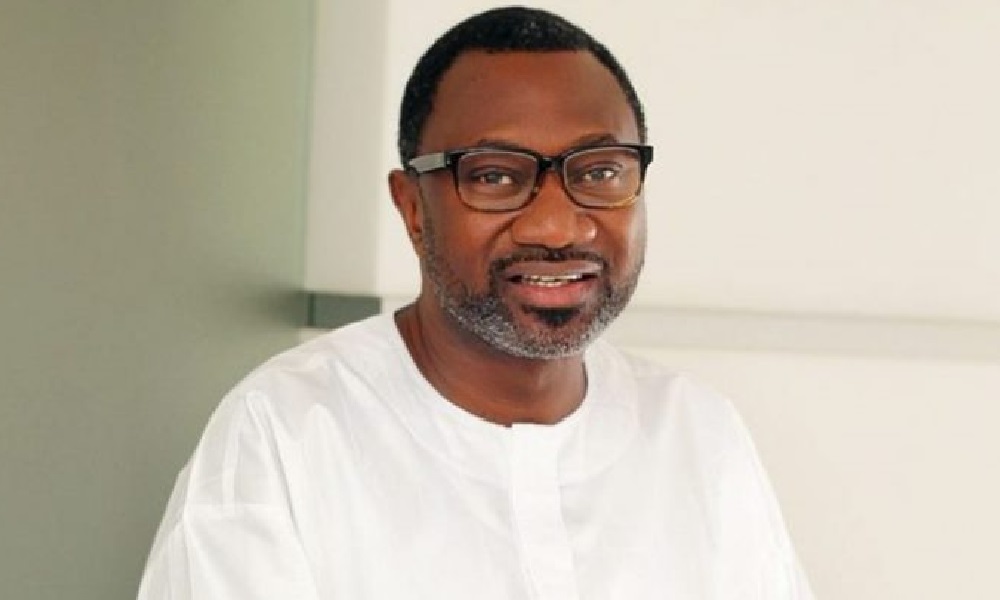
With billionaire Femi Otedola in the saddle as its new Chairman, First Bank of Nigeria Holdings Plc, on Wednesday, appointed two new non-executive directors for the holding company and three new non-executive directors for the First Bank.

Updating the Nigerian Exchange Group of recent development within the bank, the company’s Secretary, Adewale Arogundade, announced the appointment of Olusola Adeeyo and Viswanathan Shankar as non-executive director and independent non-executive director respectively in FBN Holdings.
The company also announced Remilekan Odunlami as non-executive director for First Bank while Anil Dua and Fatima Ali were appointed as independent non-executive directors.

The appointments of the five new directors are subject to the approval of the Central Bank of Nigeria (CBN).
Adeeyo, a former banker and ex-Chairman of AXA Mansard Insurance Plc, is currently the Chairman of Astral Waters Limited, a water bottling and delivery company.
Shankar, the Chief Executive Officer of private equity investments firm Gateway Partners, previously served as the CEO of Standard Chartered Plc.
Odunlami has served as Director at CitiBank Nigeria Limited and FirstBank. She currently sits on the Board of Access Pensions Limited as an Independent Non-Executive Director and the Board of Rand Merchant Bnak Limited as a Non-Executive Director.
Also, Dua has sat on the Board of Dangote GSP Offshore FZE, Seychelles International Mercantile Banking Corporation, Heirs Holdings Oil and Gas Limited, Matador Investment Management Limited and Africa Property Development Managers Limited.
Ali, founder of Santi Food and Beverage Limited, currently sits on the Board of Reconnect Health Development Initiative International, a mental health charity organisation.
Late January, First Bank of Nigeria Holdings Plc appointed Otedola, the 20th richest man in Africa as its new Chairman.
With his appointment, Otedola, also the Chairman of Geregu Power, succeeded Ahmad Abdullahi.
Otedola was recently ranked by American business magazine, Forbes, as the 20th richest African with a fortune of $1.1bn.
Otedola was first appointed to the Board of FBN Holdings Plc on August 15, 2023 as a Non-Executive Director, the company said.
Economy
Over 5,000 fibre cuts recorded in six months – NCC
The Nigerian Communications Commission (NCC) has disclosed that more than 5,000 fibre-optic cable cut incidents were recorded across the country in the first six months of 2026, with road construction, excavation and related civil works identified among the major causes.
The Executive Vice-Chairman of the NCC, Dr Aminu Maida, disclosed this on Tuesday at a stakeholders’ workshop on the protection of fibre-optic cables during road construction, excavation and other activities in Nigeria.
Maida said the high number of incidents required stronger collaboration between telecommunications operators, road contractors, government agencies, regulators and security institutions to prevent further damage to critical telecommunications infrastructure.
According to him, many of the incidents occurred because of inadequate coordination among stakeholders involved in road and other construction activities. He said the consequences of fibre cuts extended beyond the immediate physical damage to cables, stressing that they could disrupt essential services and affect millions of Nigerians.
The NCC boss recalled the nationwide telecommunications disruption in February 2024, when fibre cuts, including those caused by road construction, affected one of the major telecommunications operators. He said millions of subscribers were unable to make calls, send messages or access the internet for several hours, while subscribers who moved to alternative networks caused congestion on those networks.
According to him, the incident demonstrated how damage to one network could quickly have wider national consequences.
“In the first six months of this year alone, more than 5,000 fibre cut incidents were reported from road excavation, construction, and related civil work. A damaged fibre cable is therefore not simply a cost to an operator, it is a cost to Nigerians and to the wider economy.
“Those affected were not numbers in an incident report. They were parents, businesses, workers, and citizens cut off from people and services on which they depended on,” Maida said.
He stressed that preventing fibre cuts should be prioritised rather than waiting to repair damaged infrastructure after incidents had occurred.
Maida said telecommunications operators must provide accurate information on the location of their infrastructure and respond promptly when contacted before construction begins. He added that contractors must check for underground infrastructure before excavation and make adequate plans for its protection.
The NCC chief also urged regulators and security agencies to provide guidance and ensure accountability, stressing that coordination should form part of the design and execution of every relevant infrastructure project.
He said the commission remained committed to working with public and private stakeholders to make coordination a standard practice in road construction and other civil works.
Earlier, the Director of Critical National Assets and Infrastructure Protection in the Office of the National Security Adviser, AVM Effiong Ewa, said the protection of fibre-optic infrastructure was a shared national responsibility.
Ewa noted that telecommunications infrastructure had been designated as Critical National Information Infrastructure, warning that negligence or interference that exposed the assets to damage could constitute an offence under Nigeria’s legal framework.
He called for strict adherence to established protocols, guidelines and procedures during construction and maintenance activities.
Also speaking, the Permanent Secretary, Federal Ministry of Works, Mr Rafiu Adeladan, said the ministry recognised that road and telecommunications infrastructure often operated within the same physical space.
He said excavation, grading, reconstruction, utility relocation and other road activities could inadvertently damage vital fibre-optic infrastructure where adequate coordination and precautions were not in place.
Adeladan called for stronger mechanisms for coordination and information sharing before and during road construction activities. He said road contractors, consultants and relevant agencies should have access to accurate information on the location of telecommunications infrastructure before excavation begins.
On his part, the Permanent Secretary, Federal Ministry of Communications, Innovation and Digital Economy, Engr Nadungu Gagare, said protecting telecommunications infrastructure was not the responsibility of one institution, but required collaboration among government ministries, regulators, security agencies, construction companies, utility providers and other stakeholders.
Gagare said the Federal Government had established a tripartite standing committee on the protection of fibre-optic infrastructure to strengthen collaboration and promote a coordinated approach to infrastructure protection.
He said the committee would also promote compliance with established standards and right-of-way regulations, improve information sharing and support measures to prevent avoidable damage.
The workshop, organised by the Federal Ministry of Communications, Innovation and Digital Economy in collaboration with the Federal Ministry of Works, NCC, Office of the National Security Adviser and Nigeria Security and Civil Defence Corps, is aimed at developing practical measures to protect fibre-optic cables during road construction and other civil works.
Economy
NRS boss, Adedeji under fire over Nigerian economy comment
Nigerians have tackled the Executive Chairman of the Nigeria Revenue Service, Zacch Adedeji, over his recent comment about critics of economic reforms under President Bola Ahmed Tinubu.
DAILY POST reports that in a viral video, Adedeji questioned critics of Tinubu’s economic reforms about what they would have done differently.
“That is what I get worried about when I listen to some people about the economy and everything.
“Just ask them, what would they do differently? Mr President, I don’t want you to wonder. You have elevated the system from what they know and wonder,” Adedeji told President Tinubu.
Adedeji’s comment triggered reactions from Nigerians on X.
Reacting, a development professional and former Director-General of the Bureau of Public Service Reforms, Joe Abah, described Adedeji’s comment as insensitive.
“If true, this is a deeply insensitive statement.
“But to answer the question of what I would have done differently, I can just look at the UK’s Andy Burnham, who is trying to tackle the cost of living.
“In just 19 days, he has removed the 5 percent VAT on domestic electricity (it is 7.5 percent in Nigeria); capped bus fares at £2 per ride by reimbursing private sector operators for the difference in real costs; pledged a 20 percent cut in business rates for pubs and clubs (an important part of British social life); maintained and adjusted Universal Credit to favour the poorest and most vulnerable.
“So, I would have used the increasing tax revenue to tackle the cost of living. That is what I would have done differently at my own level. Hope that helps,” he said on X on Saturday.
Similarly, a lawyer known, Vena Ikem wrote on X: “He should ask himself what all the millions of dollars he is spending mean to the tax he is collecting even from poor people. If karma truly fulfils, this man will get his just deserts in the land of the living. This arrogance is from getting away with stealing tax money.”
Also, Adekunle Oderinde wrote on X: “The entire convoy of Zacch Adedeji is more expensive and longer than the convoy of UK Prime Minister, yet he is talking about suffering Nigerians complaining about the effects of the policies of his principal, President Tinubu, who drives an expensive and long convoy on scarce resources.”
Economy
RMAFC gives NUPRC 48 hours to dissolve host community trust
The Revenue Mobilisation Allocation and Fiscal Commission (RMAFC) has ordered the Nigerian Upstream Petroleum Regulatory Commission (NUPRC) to dissolve a disputed Host Community Development Trust within 48 hours, following allegations that it was established without proper consultation with the affected oil-producing communities.
The order was issued during an investigative hearing in Abuja into the operations of Sterling Oil Exploration and Energy Production Company (SEEPCO) and the implementation of the Host Community Development Trust provisions of the Petroleum Industry Act (PIA).
Speaking at the hearing, RMAFC Chairman Dr Mohammed Bello Shehu said the Commission would continue to protect the interests of oil-producing host communities and ensure they receive the benefits guaranteed to them under the law.
According to a statement issued on Friday by the Commission’s Head of Information and Public Relations Unit, Maryam Umar Yusuf, Dr Shehu described the investigation as a national assignment aimed at promoting accountability in the management of Nigeria’s petroleum resources.
He said the Commission would continue to strengthen its oversight of oil companies and government institutions responsible for implementing the provisions of the Petroleum Industry Act, adding that transparency and accountability remain essential to protecting national revenue and restoring public confidence in the petroleum sector.
Dr Shehu commended members of the Commission’s Investment Monitoring Committee for their work and expressed optimism that the investigation would help ensure that host communities receive the full benefits provided for under the Petroleum Industry Act.
The Chairman of the Investment Monitoring Committee and Federal Commissioner representing Anambra State, Dr Ekene Enefe, led the investigation into SEEPCO’s compliance with the law establishing Host Community Development Trusts.
He said the era in which oil-producing communities endured environmental degradation and social hardship without corresponding development must end.
According to him, both petroleum operators and regulatory agencies must fully fulfil their legal responsibilities to affected communities.
The Committee also expressed concern about SEEPCO’s repeated failure to honour invitations to appear before it, despite earlier engagements.
Dr. Enefe warned that no operator would be allowed to evade legitimate oversight by the Commission.
Addressing officials of the NUPRC, he said RMAFC’s constitutional responsibility requires it to hold every institution in the petroleum industry accountable for the proper discharge of its duties.
He then issued a direct order to the regulator, saying: “We are going to give you 48 hours to dissolve that host community development trust.”
Dr. Enefe also faulted SEEPCO for what he described as its failure to meet obligations owed to host communities.
He said the company would receive a formal notice directing it to settle all outstanding obligations. “We are going to write them, and we are going to give them an ultimatum to pay up what is owed the host communities,” he said.
Enefe added that after completing its investigation, the Committee would forward its findings and recommendations to the appropriate authorities, insisting that the Commission would carry out its constitutional responsibilities without fear or favour.
Earlier, the NUPRC delegation, led by the Director of Host Communities, Mrs. Ufondu Ejiro, defended the Commission’s handling of the Host Community Development Trust.
She told the Committee that the trust had been legally incorporated, properly funded and established in line with the Petroleum Industry Act.
According to her, the Commission received and reviewed documents covering community consultations, governance arrangements, funding plans and Community Development Plans before approving the trust.
She also presented records of contributions to the trust and maintained that the regulator had carried out its responsibilities in accordance with the Petroleum Industry Act and the Host Community Development Regulations.
However, the affected host communities rejected the regulator’s position. Speaking on their behalf, legal representative Mr. Peter Chukwudi argued that several individuals presented as community representatives were not recognised by the affected communities.
He also disputed claims that adequate consultations had taken place before the trust was established.
Chukwudi questioned the level of development in the oil-producing communities despite years of petroleum exploration and urged the Committee to thoroughly investigate the issues raised by residents.
Also speaking, the Anambra State Commissioner for Petroleum and Mineral Resources, Prof. Charles Ofoegbu, called for stronger cooperation between the NUPRC and the Anambra State Government in verifying genuine community representatives and monitoring compliance with legal obligations.
He also called for greater openness in the calculation of statutory contributions, operational expenditure and the execution of community development projects, saying the state government has a responsibility to protect the interests of its oil-producing communities.
The Federal Commissioner representing Rivers State, Ambassador Desmond Akawor, said there appeared to be a communication gap between the regulator and state governments, adding that closer cooperation would improve oversight of petroleum operations.
He also expressed disappointment at SEEPCO’s absence from the hearing and urged all parties to cooperate fully with the ongoing investigation.
The Federal Commissioner representing Kogi State, Abdulazeez Idris King, questioned whether documents submitted by operators alone were sufficient to confirm that genuine consultations had taken place before community representatives were recognised.
Similarly, the Federal Commissioner representing Jigawa State, Hauwa Umar Aliyu, called on regulatory agencies to maintain professionalism, fairness and impartiality while carrying out their statutory duties.
She said regulators must inspire public confidence by giving equal attention to the interests of host communities as well as those of oil companies.
In his closing remarks, Dr. Enefe assured all stakeholders that every submission and documentary evidence presented before the Committee would be carefully examined before recommendations are made.
He said the Committee would continue its work until all relevant facts had been established, adding that the investigation forms part of RMAFC’s broader efforts to improve transparency, strengthen accountability and ensure that oil-producing communities receive the benefits guaranteed to them under the Petroleum Industry Act.
-
News20 hours agoFormer President, Goodluck Jonathan Gets Chieftaincy Title In Bauchi
-
News20 hours agoShehu Sani Reacts As Davido Appeals To Trump Over Osun Election
-
News20 hours agoOsun Poll: Adeleke Demands Fadahunsi’s Arrest Over Alleged Killings Threat Against Accord Members
-
News20 hours agoOkpebholo Sacks SUBEB Chairman
-
Foreign20 hours agoTrump Hid In Catering Truck During Secret Plane Swap Over Iran Threat – Report
-
News20 hours agoOsun 2026: ‘Trump’s People Have Reached Out’ — Davido
-
News19 hours agoASUU declares indefinite strike in Ondo varsities
-
News20 hours agoKatsina deploys 23 APCs, drones, 200 patrol vans against banditry