Connect with us

News

Cement prices decrease by 26% in Abuja

Published

on

ADVERTISEMENT
Zoom Ad
ADVERTISEMENT
Zoom Ad

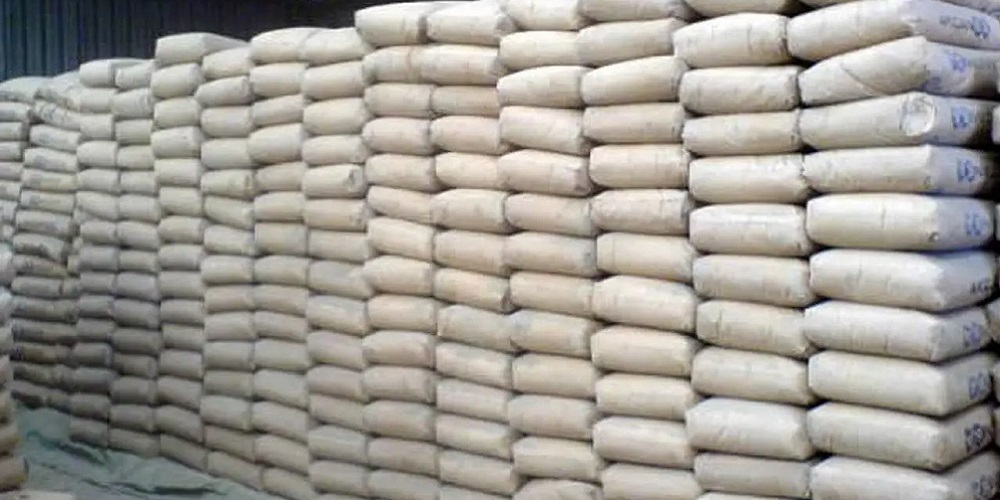
The price of cement decreased between 22 per cent and 26 per cent for a 50kg bag in the Federal Capital Territory within the last five weeks.


A market survey conducted on Thursday by DAILY POST in Jabi, Area 10, Kubwa, Lugbe, Utako, Lifecamp and Gwarimpa showed the price of Dangote and BUA cement dropped to N7,800 and N11,000 per 50kg bag from 10,000 and N15,000 on February 16, 2024.

Rukiyat Abdullahi, a retailer in Kubwa, told DAILY POST that the price has dropped to N7800 for Dangote while BUA is traded at N11,000 per bag.

“Dangote is now N7,800 while BUA is N11,000 per bag from N10,000 and 15,000 it was sold weeks ago”.

Advertisement

Similarly, at Gwarimpa, a retailer, Yinka Adebayo, confirmed that the cement price has dropped compared to what it was sold weeks ago.

“We sell Dangote cement at N7800 per bag while BUA is N11,000 from 10,000 and 15,000; it was sold a month ago”, he told DAILY POST.

Cement was also sold at N7,800 and N11,000 per 50kg in Jabi, Utako, Area 10, and Lifecamp when DAILY POST cement retail outlets.

Reacting to the development, the Director of the Centre for the Promotion of Private Enterprise, Dr Muda Yusuf, said the price reduction comes as a result of an improved macroeconomic environment.

Advertisement

“It results from improved supply chain and macroeconomic environment such as the Naira appreciation against the US dollar at the foreign exchange market”, he said.

DAILY POST recalls President Bola Ahmed Tinubu had asked cement manufacturers to revert to the old price.
Continue Reading
Advertisement

News

We Have the Right to Deal With Illegal Migration— South Africa Fires Back at Nigeria

Published

on

By

ADVERTISEMENT
Zoom Ad
ADVERTISEMENT
Zoom Ad

Nigerian and South African diplomats held tense talks in Abuja on Monday to address a wave of xenophobic attacks against foreigners in South Africa, with both sides invoking “brotherhood” even as deep divisions emerged over responsibility and solutions.

‎The meeting at the Nigerian Ministry of Foreign Affairs came amid months of protests in South Africa — some violent — targeting African immigrants whom demonstrators blame for crime, unemployment and pressure on public services.

Opening the discussions, both delegations addressed each other as “brothers” and referenced Nigeria’s historic support for South Africa’s struggle against apartheid. But the pleasantries quickly gave way to sharp exchanges.

‎Nigeria’s Minister of State for Foreign Affairs, Ambassador Sola Enikanolaiye, accused Pretoria of complicity in the violence.

Advertisement

‎“We have records of Nigerians who have legitimate papers to remain in South Africa, yet they have been attacked,” Enikanolaiye said before the meeting went into a closed-door session.

“And we could see some mob actions in which we saw the police watching, as if they are helpless to address this situation.”

‎South African Minister of International Relations, Ronald Lamola, countered that the country was grappling with “criminality” linked to immigrants, including drug peddling and wire fraud.

“President Cyril Ramaphosa and the government he leads have been outspoken against any intolerance,” Lamola said.

Advertisement

‎He added that South Africa has the right to “deal decisively with irregular migration, undocumented immigrants — including acts of criminality.”

‎South African police say at least four foreign nationals have been killed in attacks linked to the anti-migrant protests, though some African governments repatriating citizens have reported a higher toll.

‎According to an AFP tally based on figures from governments evacuating their nationals, more than 160,000 people have fled South Africa, including about 1,500 Nigerians.

‎Nigeria and Ghana have been among the most vocal critics of Pretoria’s handling of the protests. Reports indicate that in some instances, anti-immigrant groups have stormed homes and dragged people into police vans.

Advertisement

‎Analysts say South Africa, one of the continent’s most industrialised economies, has long attracted both documented and undocumented immigrants. However, high unemployment, weak social services and rising crime have fueled resentment, with immigrants often scapegoated for broader government failures.

‎Vanguard report that the Abuja meeting ended without a public agreement on concrete steps to curb the violence, highlighting the challenge of balancing diplomatic ties with domestic pressure in both countries.

Continue Reading

News

Buhari Media Office Denies PFIPC Link, Says Former President Created Only PEAC

Published

on

By

ADVERTISEMENT
Zoom Ad
ADVERTISEMENT
Zoom Ad

The Buhari Media Office (BMO) has denied reports linking former President Muhammadu Buhari to the controversy surrounding the alleged Presidential Foreign Intervention Promotion Council (PFIPC), describing the claims as false and lacking any factual basis.

In a statement released on Sunday, the BMO clarified that Buhari never established any agency known as the PFIPC and did not approve a ₦1.3 billion allocation for such an organization in the 2026 Appropriation.

According to the office, the only body created during Buhari’s administration was the Presidential Economic Advisory Council (PEAC), which served as an ad hoc advisory committee focused on economic matters.

The BMO explained that the PEAC initially operated from offices assigned to the Chief Economic Adviser to the President at the Federal Secretariat. Throughout Buhari’s tenure, the council functioned without a dedicated budget line.

Advertisement

Instead, its activities were funded through presidential approvals issued to the Minister of Finance, while operational expenses were covered by the State House following presidential authorization.

The statement noted that the PEAC was a part-time advisory body comprising economists and financial experts who provided economic policy advice to the President. Members received no salaries, with only operational costs funded to support the council’s work.

The council was chaired by Professor Doyin Salami, CFR, before his later appointment as Chief Economic Adviser to the President. Other members included Professor Mahmuda Sagagi as Vice Chairman, Professor Ode Ojowu, Dr. Shehu Yahaya, Dr. Iyabo Masha, Professor Chukwuma Soludo, Mr. Bismarck Rewane, and Dr. Mohammed Adaya Salisu, who served as secretary.

The BMO further stated that when the current administration took office in 2023, it neither dissolved the Buhari-appointed PEAC nor renewed the appointments of its members, who considered their tenure to have ended with the expiration of the administration that constituted the council.

Advertisement

It also revealed that the office jointly designated for the Presidential Economic Advisory Council and the Office of the Chief Economic Adviser remained vacant after the transition of power and was only occupied years later.

Rejecting any attempt to associate Buhari with the ongoing PFIPC controversy, the media office insisted that claims suggesting the alleged agency originated under his administration are false, baseless, and unsupported by evidence.

The BMO urged Nigerians to disregard reports linking the former President to the alleged PFIPC, reiterating that the only advisory body established during Buhari’s administration was the Presidential Economic Advisory Council, which operated without a statutory budget line.

Advertisement
Continue Reading

News

Nigeria Customs Unveils Final List of Successful Applicants, Opens Portal for Next Stage

Published

on

By

ADVERTISEMENT
Zoom Ad
ADVERTISEMENT
Zoom Ad

The Nigeria Customs Service (NCS) has officially released the final list of successful candidates for its ongoing recruitment exercise, marking the commencement of the final stage of the employment process.

The Service directed all shortlisted candidates to immediately log in to the official recruitment portal to confirm their selection, complete the required documentation, and accept their provisional offers of appointment within the stipulated deadline.

According to the NCS, successful applicants can verify their status through the official recruitment portal, while notifications are also being sent to candidates via their registered email addresses and SMS.

As part of the final documentation process, candidates are required to upload a Medical Certificate of Fitness obtained from a government-approved hospital. They must also update their current state of residence and click the “Accept Offer” button on the portal.

Advertisement

The Nigeria Customs Service warned that candidates who fail to complete these requirements within one week risk forfeiting their provisional appointments.

Following the successful completion of the online process, candidates will receive a Trainee Identification Number (TIN) ahead of the final documentation and training exercise. The dates, venues and other instructions for the next stage will be communicated through the Service’s official channels.

The Comptroller-General of Customs congratulated the successful candidates and urged them to demonstrate discipline, integrity and professionalism as they prepare to join the Service.

How to Check the Final List

Advertisement

Candidates should:

Visit the official Nigeria Customs Service recruitment portal https://recruitment.customs.gov.ng
Log in with the email address and password used during registration.
Check their recruitment status.
Upload the required Medical Certificate of Fitness.
Update their profile and current state of residence.
Click “Accept Offer” and print the acknowledgement slip for future reference.

The Nigeria Customs Service reiterated that its recruitment exercise is free of charge and advised applicants to ignore fraudsters or individuals demanding payment in exchange for employment.

Advertisement
Continue Reading

Trending

Copyright © 2024 Naija Blitz News