News
Why Price Of Food Won’t Drop Immediately Despite Naira Appreciation
- /home/naijuinz/public_html/wp-content/plugins/mvp-social-buttons/mvp-social-buttons.php on line 27
https://naijablitznews.com/wp-content/uploads/2024/03/3076D10C-B8F8-4217-AB06-2E95FEC83C97.jpeg&description=Why Price Of Food Won’t Drop Immediately Despite Naira Appreciation', 'pinterestShare', 'width=750,height=350'); return false;" title="Pin This Post">
- Share
- Tweet /home/naijuinz/public_html/wp-content/plugins/mvp-social-buttons/mvp-social-buttons.php on line 72
https://naijablitznews.com/wp-content/uploads/2024/03/3076D10C-B8F8-4217-AB06-2E95FEC83C97.jpeg&description=Why Price Of Food Won’t Drop Immediately Despite Naira Appreciation', 'pinterestShare', 'width=750,height=350'); return false;" title="Pin This Post">
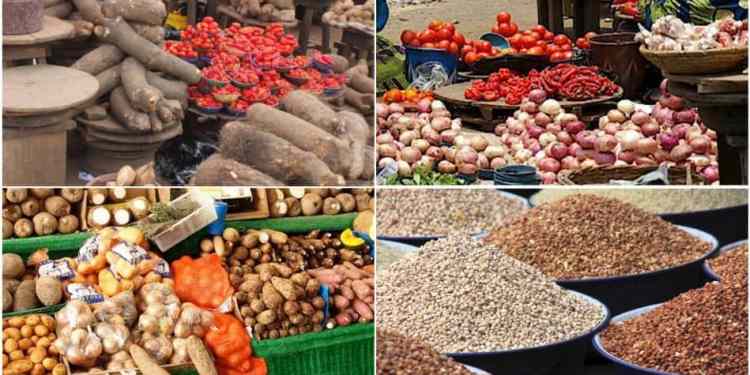
As the Nigerian naira experiences an upturn against the dollar, economists have indicated that the positive effects on the country’s commodity prices might not be immediate.

Speaking to Punch, CEO of Economic Associates, Ayo Teriba, highlighted the time lag in the impact of currency fluctuations on market prices.
According to Teriba, while the strengthening naira is a positive sign for the economy, the translation of this development into reduced commodity prices will not be instantaneous.

Consumers may have to wait before seeing a noticeable decrease in the cost of goods and services, as market dynamics and pricing mechanisms gradually adjust to the new exchange rate reality.
He noted, “Foods that have been bought at the old exchange rate will still be tied to the old exchange rate.
“Whether a month or a quarter, it depends on the duration it takes to order and sell. The effect we should hope to see is that the prices have stopped going up. We call it acceleration.”
Echoing similar sentiments, President of Nigerian Economic Society, Adeola Adenikinju, highlighted the economic rationale behind the delay in price adjustments.
Adenikinju stated, “What people have in stock now was purchased at high prices. If they sell at lower prices, they are going to record losses.
“So until they replace the current one, that is when they will reduce their prices.
“But currently, to avoid losses, they will still sell at the rate at which they bought it. We will only start seeing the current prices of things as current stock is sold and new stock is acquired.”
According to Adenikinju, the central bank’s actions in the next few weeks will also reflect what the sellers will do.
He said, “They will be watching the markets to see if CBN will be able to sustain the stability of the naira.”
Nigeria has been battling soaring inflation, which accelerated to 31.70 per cent in February from 29.90 per cent in the previous month, driven primarily by food inflation, which rose to 37.92 per cent.
To tame the pacing inflation, the CBN raised the benchmark interest rate to 22.75 per cent in February from 18.75 per cent and further reviewed it upward to 24.75 per cent on Tuesday.
According to Professor of Economics, Babcock University, Onakoya Adegbei, the fact that prices go up and never come down is not peculiar to Nigeria.
He said, “Reduction in production usually comes with a lag because of rigidity in production.”
He emphasised that market expectations usually drive the delay.
“There is usually a lag and that is due to the expectation theorem. For example, if you expect the price of rice to increase, you will buy more and keep it in the house, So, it will increase your demand. But if you expect that prices will fall, what you already have you cannot dispose of.
“Reduction in production usually comes with a lag because of rigidity in production. If you already produce a certain product at a certain price and the price in the market is falling, you will then wait to see if the reduction will be sustainable. If you see that it is sustainable, then you can make a move to reduce the prices of your product. It is a lag effect,” Adegbei explained.
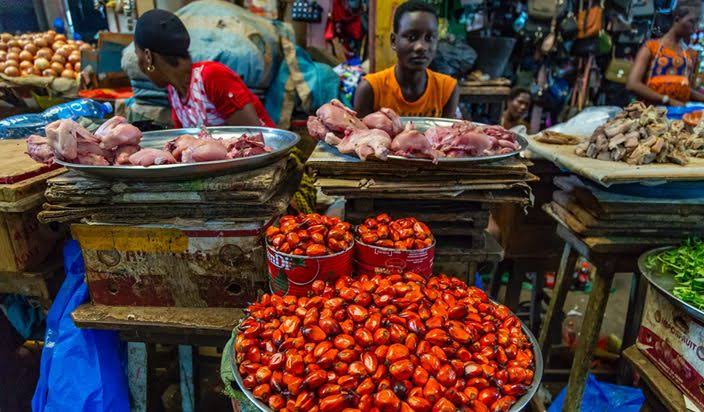
A foodstuff seller at EFAB market, Favour Uche told the platform, “The price of rice didn’t reduce even now that the dollar is down.”
Uche emphasised the challenges faced by traders, including the expenses incurred to maintain product quality amid infrastructural constraints.
“The price of rice didn’t decrease. Even now that the dollar is down, it still hasn’t reduced. For example, a carton of Titus fish cost N90,000 two weeks ago but today, the same carton of fish is sold at N95,000 as of March 29, 2024.
“Even with the fact that the dollar has reduced, but being in the system, I think I understand why. It is because they use one-third of their profit to buy diesel to cool these fish and keep them frozen. After all, there is no light. So, I understand their pain and why the prices are like that,” she added.
Another trader, Abdul Yusuf, who sells meat, asserted, “Price did not come down even with the dollar fall.
“Two weeks ago the price of one kilogramme of meat was selling at N4,800 but now, it is N5,000. So, the price did not come down even with the dollar falling.”
News
“I Paid for His Flight, Hotel, Visa and Brought Him to the UK” — Lady Shares Ordeal After Lover Walked Away
A lady has shared her experience after allegedly sponsoring her partner’s relocation to the United Kingdom, claiming that their relationship ended just four months after he arrived in the country.
According to the woman, she bore the financial burden of making the relocation possible, including paying for his flight, hotel and visa.
However, she alleged that the relationship came to an end only a few months after his arrival in the UK.
The woman further claimed that the man’s family subsequently contacted her and asked her not to report the matter to the UK Home Office.
Sharing her experience, she said: “I paid for his flight, hotel, visa and brought him to the UK. He broke up with me four months after, and his family had the guts to tell me not to inform the Home Office.”
Her account has sparked reactions on social media, with many users debating the potential risks of taking on significant financial responsibility to facilitate a partner’s relocation abroad.
The incident has also renewed discussions about relationships involving immigration arrangements, financial commitments and the expectations that may arise when one partner plays a major role in helping the other relocate.
News
AWALCO Honours NUJ FCT Chair Grace Ike, Hails Her Transformational Leadership
By Gloria Ikibah
The Association of West African Legislative Correspondents (AWALCO) has nominated the Chairman of the Nigerian Union of Journalists (NUJ), FCT Council, Comrade Grace Ike, for a prestigious award in recognition of what it described as her outstanding leadership and contributions to the journalism profession.
The nomination was announced during a courtesy visit by AWALCO executives, led by the association’s President, Comrade Innocent Odoh, to the NUJ FCT Council Secretariat in Abuja.
Odoh applauded Ike’s performance since assuming office, describing her emergence as the first female Chairman of the NUJ FCT Council as a landmark achievement.
He said her leadership had brought visible changes to the council and demonstrated the qualities required to inspire confidence and drive meaningful reforms.
“We are indeed very impressed and inspired. It takes somebody with this kind of courage and commitment, and someone who will take charge of things, and we are really seeing the change,” Odoh said.
He explained that the nomination followed extensive consultations within the association on journalists and media leaders who had distinguished themselves through exceptional service to the profession.
According to him, Ike’s achievements, including her previous role as Chairperson of the House of Representatives Press Corps, made her a worthy candidate for the award.
Odoh disclosed that AWALCO had initially planned to hold the ceremony last year as part of activities marking the 25th anniversary of the ECOWAS Parliament.
However, he said the event had to be postponed after the regional parliament scheduled a separate award ceremony.
He added that the proposed award was also part of the association’s efforts to deepen collaboration with the NUJ FCT Council.
According to him, AWALCO intends to partner with the council to organise seminars, workshops and conferences focusing on democracy, good governance, development and legislative accountability.
Describing the legislature as the backbone of every democratic system, Odoh stressed that parliamentary correspondents have a critical responsibility to examine policies, interrogate democratic processes and ensure that legislation translates into meaningful development for citizens.
With West Africa’s population exceeding 400 million people, he said stronger cooperation between AWALCO and the NUJ will create an opportunity to promote democratic values and strengthen governance across the ECOWAS sub-region.
Responding, Comrade Ike expressed appreciation for the recognition and assured the association of the NUJ FCT Council’s readiness to work closely with AWALCO.
“I really don’t take this award for granted. I’m honoured,” she said.
She emphasised the need for journalists to remain committed to the core values of the profession, including accuracy, fairness, balance and ethical reporting.
According to her, the media remains one of the most important institutions in any society and must continue to serve as a force for accountability and development.
Ike also challenged journalists to broaden their focus beyond traditional reporting areas and pay greater attention to issues capable of driving positive change across Nigeria and the wider West African region.
She reiterated that the welfare of journalists remains one of the key priorities of her administration.
The NUJ chairman also encouraged AWALCO members to uphold the principles of accountability and transparency in all their activities.
She assured the association that the council will support its initiatives through publicity and strategic collaboration.
Ike further urged journalists to critically examine emerging issues affecting democracy in the region, including electoral reforms and other policy proposals capable of strengthening democratic institutions.
She noted that issues with the potential to improve governance should be properly scrutinised and brought into public discourse.
“Leadership is not easy. If you are a leader, you must do everything possible to leave a legacy behind,” she said.
She also encouraged younger journalists to remain committed to changing public perceptions about leadership and service.
According to her, journalists must strive to tell stories that make a meaningful difference and positively impact society.
Also speaking during the visit, AWALCO’s Financial Secretary, Favour Olise, praised Ike’s leadership and urged her to continue mentoring young professionals in the industry.
“Younger ones not in age, younger ones in the journalism profession, carry them along as you are already doing and keep doing the good works,” Olise said.
She described Ike’s achievements as inspiring, particularly her efforts to attract reputable organisations to collaborate with the NUJ.
Olise added that the NUJ chairman’s leadership was contributing significantly to the growth of the profession and strengthening the image of journalism in the Federal Capital Territory.
AWALCO reaffirmed its commitment to strengthening its partnership with the NUJ FCT Council, especially in advancing legislative journalism, promoting democratic accountability and supporting good governance across Nigeria and the West African sub-region.
News
EU Releases €2.3m Emergency Fund as Cholera Cases Surge Across West/Central Africa
By Gloria Ikibah
The European Union has approved €2.3 million in emergency humanitarian funding to help Nigeria, Cameroon, Chad and the Central African Republic contain the worsening cholera outbreak spreading across West and Central Africa.
The intervention comes as the World Health Organization (WHO) reported more than 61,000 cholera cases across the African region within the first five months of 2026, raising concerns over the growing public health crisis.
Nigeria, which has recorded one of the highest disease burdens, will receive the largest share of the funding, amounting to €1.5 million.
According to the European Commission, the support will be used to expand emergency response teams, provide essential medical supplies, distribute cholera treatment kits and strengthen water, sanitation and hygiene interventions.
The funding will also support the treatment of public water sources and household water, improve epidemiological surveillance in hard-to-reach communities and strengthen case management, risk communication and public awareness campaigns.
Cameroon will receive €100,000 to support outbreak containment efforts through the deployment of additional personnel, provision of essential medicines and establishment of more cholera treatment units and oral rehydration centres in affected communities.
In the Central African Republic, €500,000 has been earmarked to improve case management, expand vaccination campaigns and strengthen water, sanitation and hygiene programmes.
The funding will also support surveillance, case detection, community engagement and provision of safe and dignified burials.
Chad will receive €200,000 to improve access to clean water, strengthen sanitation services and support community-based surveillance and treatment programmes aimed at stopping the spread of the disease.
European Commissioner for Preparedness and Crisis Management, Hadja Lahbib, said the outbreak highlighted the devastating consequences of inadequate access to basic healthcare and clean water.
“Cholera is preventable and treatable. Yet it still threatens lives when people lack something as basic as safe water and healthcare.
“At a time when humanitarian needs are growing and resources are shrinking, Europe is not looking away.
“This emergency funding will help our partners act quickly, contain the outbreaks and protect the communities most at risk,” Lahbib said.
Health experts say cholera is caused by the Vibrio cholerae bacterium and is commonly transmitted through contaminated water or food.
The disease can cause severe diarrhoea, leading to rapid dehydration and shock if left untreated.
Although cholera remains a major public health challenge in many developing countries, the European Commission noted that it is not a common health problem in Europe and that the risk of transmission from imported cases remains low.
The latest intervention underscores growing international concern over the spread of cholera across Africa, where poor sanitation, limited access to clean water and humanitarian crises continue to fuel outbreaks.
Public health experts have repeatedly stressed that improving access to safe drinking water and strengthening healthcare systems remain the most effective long-term solutions to preventing future outbreaks.
-
News15 hours agoSee Dollar to Naira exchange rate today, August 17, 2026
-
News19 hours agoAbuja Flooding: FCT Minister’s Aide Takes a Swipe at Adeyanju
-
News15 hours agoNDLEA destroys N301bn worth of cocaine, heroin, opioids, others in Lagos (Photos)
-
Politics15 hours agoEdo Assembly elects Yekini Idiaye Speaker As Agbebaku Resigns
-
News15 hours agoEdo new speaker reveals why speaker was flushed out
-
News14 hours agoOsun Poll: Davido’s Father Alleges APC Spent N60bn on Vote Buying
-
News14 hours agoNigerian lands in Accra Court for attempting to rob three Ghanaian banks
-
News12 hours agoAregbesola hails Adeleke’s victory says “Osun people have given their verdict”