News
Landing Cost Of Petrol Now ₦1,117/Litre
- /home/naijuinz/public_html/wp-content/plugins/mvp-social-buttons/mvp-social-buttons.php on line 27
https://naijablitznews.com/wp-content/uploads/2024/07/Screenshot_20240718-153115.png&description=Landing Cost Of Petrol Now ₦1,117/Litre', 'pinterestShare', 'width=750,height=350'); return false;" title="Pin This Post">
- Share
- Tweet /home/naijuinz/public_html/wp-content/plugins/mvp-social-buttons/mvp-social-buttons.php on line 72
https://naijablitznews.com/wp-content/uploads/2024/07/Screenshot_20240718-153115.png&description=Landing Cost Of Petrol Now ₦1,117/Litre', 'pinterestShare', 'width=750,height=350'); return false;" title="Pin This Post">
By Kayode Sanni-Arewa

The Major Energies Marketers Association of Nigeria (MEMAN) has disclosed that the landing cost of Premium Motor Spirit, also known as petrol, was ₦1,117/litre as of Tuesday, July 16, 2024.
MEMAN disclosed this during a webinar with journalists on Wednesday.

The association revealed that the landing cost of diesel was ₦1,157/litre, while that of aviation fuel was ₦1,127/litre.
MEMAN’s Executive Secretary, Clement Isong, said the costs were obtained from independent energy price benchmark providers.
The association maintained that it would release similar information regularly to keep the masses informed.
According to Punch, filling stations operated by the Nigerian National Petroleum Company Limited (NNPC) and those of the major marketers sell PMS at between ₦617/litre and ₦660/litre, while independent marketers sell for ₦700/litre or more.
NNPC, the sole importer of petrol into Nigeria, has consistently denied subsidising the cost of PMS but refused to disclose the landing cost of the product.
The revelation from MEMAN is almost the first from marketers in the industry as the landing cost appears to have been shrouded in secrecy by the importer of PMS.
An expert in the energy sector, Wumi Iledare told the aforementioned publication that, “The gap between the cost of diesel and petrol in Nigeria is much. It is never like that all over the world. That means something is wrong.
“I don’t know if NNPC is paying subsidies or not, but somebody is absorbing the difference. You can call it under-recovery or subsidy, but the price of petrol today does not reflect the market cost of producing a litre of petrol,” he disclosed.
Iledare added that with the current exchange rate, the price of petrol should not be less than 80 per cent of the price of diesel.

News
Just in: Kwara traditional ruler reportedly dies in kidnappers hideout after demand of N21m ransom
The traditional ruler of Olayinka community in Ifelodun Local Government Area of Kwara State, Oba Salman Olatunji Aweda, has been confirmed dead after his abductors reportedly demanded ₦21 million, two new motorcycles and a jerrycan of petrol for his release.
The monarch’s death was confirmed in an emotional voice message obtained by Sahara Reporters from a member of a committee involved in efforts to secure his freedom.
In the message, the committee member announced the development to residents of Olayinka community, saying several efforts made by family members, residents, community leaders and religious figures to rescue the monarch were unsuccessful.
The committee member described the death as the will of God and urged residents to accept the development.
He said, “Allah in His mercy said in the Holy Qur’an that we all human beings on earth belong to Him, and to Him we shall return, whether when we expect it or when we do not expect it.
News
HoR move to address security challenges, strengthen military architecture
By Ojomah Austin.
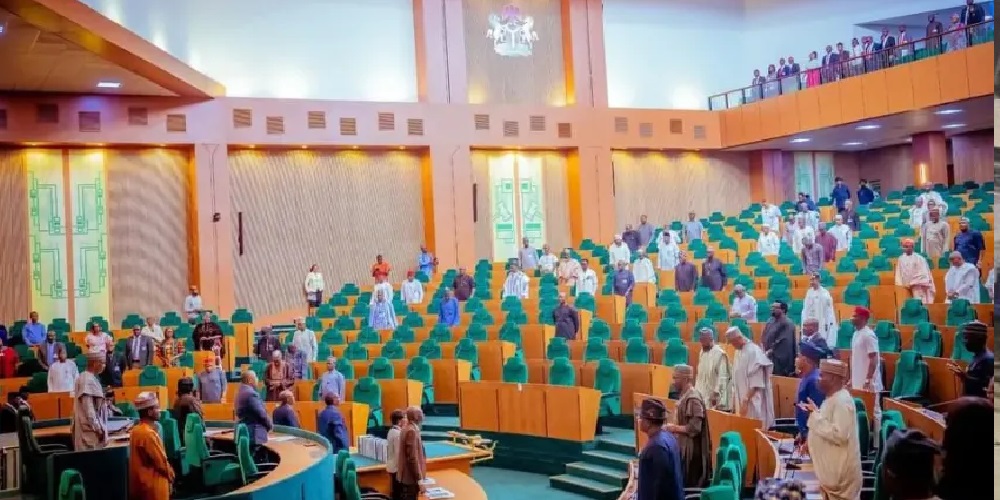
The House of Representatives on Monday commenced a two-day public hearing on a series of defence-related bills aimed at strengthening Nigeria’s military architecture, improving the welfare of service personnel and retirees to combat security challenges.
Speaking at the opening of the hearing at the National Assembly Complex, Speaker of the House of Representatives, Abbas Tajudeen, described the proposed legislation as a direct response to Nigeria’s evolving security challenges and a key component of the 10th House Legislative Agenda.
Abbas noted that the country continues to grapple with insurgency in the North-East, banditry and kidnapping in the North-West, farmer-herder conflicts in the North-Central, separatist agitations in the South-East, as well as emerging threats such as maritime piracy, cyber warfare, and organised crime linked to terrorism.
“We cannot pretend that our nation is at ease. Our Armed Forces are stretched, yet they remain our first and last line of defence,” the Speaker said.
He explained that the bills under consideration seek to strengthen the legal and institutional frameworks governing the military, making it more resilient, accountable, inclusive and capable of responding to modern security realities.
Among the bills before the committee are proposals for the establishment of an Armed Forces Farms and Ranches Scheme to promote food security in conflict-prone agricultural areas, legislation to improve gender representation in the Armed Forces, a comprehensive repeal and replacement of the Armed Forces Act through a new Nigerian Military Force Bill, and a bill to establish a Veterans’ Federation of Nigeria to improve support for retired military personnel.
The Speaker stressed that the hearing was not intended as a “rubber stamp” exercise but a platform for robust and evidence-based engagement.
“I give you my word every memorandum will be read, every oral presentation will be noted, and all relevant contributions will be considered and, where applicable, incorporated into the final reports and bills,” Abbas assured stakeholders.
He urged serving and retired military personnel, civil society organisations, gender advocates, legal experts and ordinary citizens to actively participate in the process, emphasizing that legislative innovation was necessary to address the country’s complex security challenges.
Abbas also commended the House Committee on Defence for organising the hearing and expressed confidence in its ability to conduct a transparent and fair process.
“We are here to serve the Nigerian people and to produce legislation that will make our Armed Forces more professional, more accountable, more gender-sensitive, and more effective in protecting lives and property,” he said.
In his welcome address, Chairman of the House Committee on Defence, Babajimi Benson, described the public hearing as a critical democratic exercise designed to ensure stakeholder participation in the lawmaking process.
According to Benson, defence legislation directly impacts national sovereignty, military effectiveness, operational readiness and the safety of Nigerians, making public input essential.
“The importance of public participation becomes even more significant when dealing with matters of defence and national security,” he said.
He explained that the bills address key areas including military education and professional development, joint operational effectiveness, medical training and healthcare support, strategic research and doctrine development, military governance reforms, food security initiatives, veterans’ welfare and inclusiveness within the Armed Forces.
“Collectively, these proposals represent an important effort to build a stronger, more professional, innovative and future-ready military institution,” Benson stated.
The lawmaker encouraged stakeholders to make oral presentations and submit memoranda, assuring them that all submissions would be carefully reviewed by the committee.
He also paid tribute to officers and soldiers of the Armed Forces of Nigeria for their dedication and sacrifices in safeguarding the nation despite difficult operating conditions.
The hearing also witnessed strong reactions from some veterans who expressed reservations about aspects of the proposed Veterans’ Federation of Nigeria Bill.
Supporters of the proposed (VFN) Bill urged lawmakers to adopt a framework they said aligns with international best practices for veterans’ welfare and representation.
In a policy brief submitted to the Committee, G.A Olonisakin speaking on behalf of veteran stakeholders argued that the debate surrounding the bill should focus on facts, global standards and the welfare of Nigerian veterans rather than on institutional sentiments or nomenclature.
The memorandum noted that in countries such as the United States, the United Kingdom, Canada and Australia, veterans’ organisations such as the American Legion, the Royal British Legion and the Royal Canadian Legion operate as non-governmental charitable associations rather than statutory government bodies.
According to the submission, responsibility for veterans’ welfare in those countries rests with dedicated government agencies, including the United States Department of Veterans Affairs, Veterans Affairs Canada, the United Kingdom’s Office for Veterans Affairs and Australia’s Department of Veterans Affairs.
The stakeholders further argued that Nigeria’s current arrangement, in which the Nigerian Legion combines the roles of both an association and a statutory government body, is uncommon internationally.
They maintained that the proposed VFN model would bring Nigeria closer to global standards by creating a government-driven umbrella body for veterans while preserving the identities of existing associations.
“The proposed Veterans Federation of Nigeria follows international practice by creating one umbrella body for all veterans and veterans’ associations, ensuring inclusiveness across Army, Navy and Air Force veterans, strengthening welfare coordination and improving engagement with government,” the memorandum stated.
The submission also sought to allay fears that the bill would undermine the Nigerian Legion, stressing that the federation would not erase the Legion’s history, traditions or identity.
Rather, it said, the Nigerian Legion would continue to exist as one of the recognised constituent bodies within the proposed federation alongside other veterans’ associations.
The position contrasted with concerns raised by some retired personnel who argued that the bill concentrates leadership positions in the hands of senior officers and called instead for the establishment of a standalone Ministry of Veterans Affairs headed by veterans.
The differing perspectives highlighted the intense interest among stakeholders in shaping the future structure of veterans’ welfare and representation in Nigeria, one of the key issues under consideration during the two-day public hearing.
Also a retired non-commissioned officer and legal practitioner, Sadiqe Nwabuezeh who identified himself as a former sergeant in the Nigerian Army, argued that the draft legislation was overly tilted in favour of senior military officers and failed to adequately accommodate the interests of rank-and-file veterans.
According to him, provisions of the bill appeared to reserve key leadership positions for retired senior officers, including the office of the Director-General, which he said was proposed to be occupied by a retired major general.
He urged lawmakers to reject the bill in its current form and instead consider the establishment of a dedicated Ministry of Veterans Affairs that would be managed by veterans themselves.
“The bill was not properly prepared. It was rushed and concentrates power in the hands of senior officers. We want a level playing ground where all veterans, regardless of rank, can participate in leadership and decision-making,” he told the hearing.
The retired soldier further questioned the involvement of serving military personnel and civilians in handling veterans’ affairs, arguing that retired personnel were best positioned to manage issues affecting former service members.
He maintained that veterans should have greater control over institutions established for their welfare and called for reforms that would guarantee broader representation across all ranks of retired military personnel.
The submission added to a range of perspectives presented by stakeholders as lawmakers continued deliberations on proposals aimed at reforming military administration, strengthening veterans’ welfare and enhancing the effectiveness of Nigeria’s defence sector.
The two-day hearing is expected to produce recommendations that will guide the House Committee on Defence in finalising the bills before their consideration by the House of Representatives.
News
Just in: Nigeria’s inflation rises in three consecutive months
By Ojomah Austin.
Nigeria’s inflation rose for the third consecutive month to 15.93 percent in May 2026 from 15.69 percent recorded in April.
The National Bureau of Statistics disclosed this in its Consumer Price Index and inflation data released on Monday.
This means that in May, the country’s inflation rose on a month-on-month basis by 1.75 percent.
Also, the report showed that food inflation also skyrocketed to 16.96 percent in May, up from 16.06 percent recorded the previous month.
“In May 2026, the headline inflation rate on a month-on-month basis was 1.75 percent, which was 0.39 percent lower than the rate recorded in April 2026 (2.13 percent).
On a year-on-year basis, the headline inflation rate rose to 15.93 percent, up from 15.69 percent in April 2026 and down from 26.06 percent in the same month of the preceding year May 2025.
The Food inflation rate in May 2026 on a month-on-month basis was 2.98 percent, down by 0.65 percentage points from April 2026 (3.63 percent). On a year-on-year basis, it was 16.96 percent and stood at 24.55 percent in the same month of the preceding year, May 2025”.
Recall that the headline inflation rate dropped in March and April, respectively.
Recall the Central Bank of Nigeria retained the country’s interest rate 26.50 percent in its 305th Monetary Policy meeting.
-
Sports20 hours agoReal Madrid complete a Shocking Signing of Chelsea Superstar
-
Opinion24 hours agoChinese Miners Are Not the Architects of Nigeria’s Banditry A Response to Farooq A. Kperogi’s “How Chinese Miners Fuel Nigeria’s Terrorist Banditry”
-
News12 hours agoNot Diabetes And hypertension, Son Reveals Shocking Details About General Rabe’s death
-
News24 hours agoDeputy Speaker Pushes for Home-Grown Defence Industry, Stronger Financial Crackdown on Insecurity
-
News12 hours agoI risked Abacha’s wrath to push for Abiola’s release, says Abubakar
-
Metro12 hours agoPolice Launch Massive Manhunt As Gunmen Abduct Ondo Community Leader
-
Sports20 hours agoEnzo Maresca wants Chelsea Defensive Superstar as Top Target at Man City
-
News12 hours agoAt least 30 Yoruba Monarchs Flee Palaces After Bandits Abduct 11th Oba

Warning: Undefined variable $user_ID in /home/naijuinz/public_html/wp-content/themes/zox-news/comments.php on line 49
You must be logged in to post a comment Login