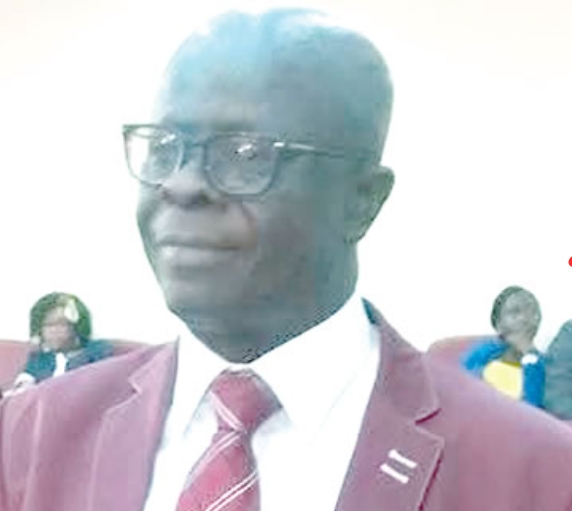
Director General, Bola Ahmed Tinubu (BAT) Foundation, Ipoola Omisore, is an ex-lawmaker and advertising guru. He told BOLA BADMUS stories of his life journey.


Can you tell us your background?
My name is Ahmed Ipoola Omisore. I was born in Ile-Ife on the 8th of July 1948 to a very large family–one of the largest families in West Africa–the Omisore family dynasty. My father was Alhaji Saliu Olayemi, the Baba Adini of Ile-Ife Muslims and the Baale of Olode town in Ife South. I attended Ansar-ul-deen Primary School in 1955, I was one of the first sets of beneficiaries of Chief Obafemi Awolowo’s free education in the old Western Region and I left in 1960 during the Independence. I was one of the beneficiaries of the free rice, free cup, free national flag, and it was very remarkable that the year was the first time I entered Lagos to attend the first Trade Fair and Exhibition at the Bar Beach, which was organised in 1960 for the Independence ceremony by the British. And it was eye-opening for a man from the hinterland to come to the city. 
attended Oduduwa College, Ile-Ife in 1962 and left in 1967. Among my mates in the college was the late Dele Giwa, who was my junior in the primary school. We met again at the college, and we left at the same time. At the college, I was one of the Literary and Debating society’s men. I was a member of the crew of the school magazine called The Touch and Dele Giwa was the editor. I remember that was the time they first introduced what we called Oral English, the phonics of today and Dele Giwa was the sole candidate for Oral English in those days. All of us cut our teeth right from our school days.
What are the earliest memories of your dad?
I knew that my father earmarked me to be a Muslim Alfa (cleric). He wanted me to attend ‘Ile kewu’ to study Arabic and he said ‘among all my children I want you to serve me.’ But luckily enough, I saw my uncle taking his own children to go and register for free primary school education, so I ran and joined them. And those were the days when your right hand must touch your left ear, or your left hand must touch your right ear, and I was lucky to scale through; I was over six years or so then. In secondary school, I remember we had what we called the American corps that were seconded to Nigeria to come and teach. We had one Mr. Epner, a West Indian tutor, who brought exposure to the hinterland, and most of us who went through that school succeeded because of the exposure; people like Dele Giwa, who became a world-famous journalist, like Biodun Sote, who is a professor at UNILAG, like Mulikatu Bello, like Lawal then, who became Controller of WAEC.
And after secondary school…
Leaving secondary school, I had the background of a son of a produce merchant. My father was a produce merchant. I worked at close range with people involved in produce inspection service, grading cocoa and palm kernel in those days which was the highlight of Nigeria’s economy then. So, I insisted on becoming a produce inspector because, in those days, produce inspector was like a Custom officer who makes more money than working as a clerk. And I was employed by the Western Nigeria Ministry of Agriculture, I think, in 1968. That was after my secondary school
I trained at Onireke, seconded to the Wharf, where I became a check tester and transferred back to Ile-Ife as a produce inspector. And in those days, it was beautiful. We were earning £198 a year, £16.10 per month. Even while I was transferred back to Lagos, we were still earning that amount. I was brilliant, I passed assimilated advancement test, which was to be taken by three-year-olds in service. I took it in one and a half years, and I passed. Then my salary went to £207 per annum amounting to £17.10 per month, and that was big. But income tax would take away one pound. While Lagos was paying heavy tax then, the other part of the country was paying less. So, taxation, introduced by Awolowo, was building Western Region then. After about three years, I travelled abroad. I first of all went to Hamburg in West Germany.
What was the motivation to travel when doing well at home?
In my family, we believe in education and as at that time, we had more than 90 Omisores in England. So, it became a culture of every Omisore, after secondary school education, to travel abroad; we have a historical background there. The Omisores, as far back as 1940, were having houses and studying there. So, most of the successful Omisores went through UK and I had to follow suit. The visa was difficult then, you normally get visa at the point of entry. So, if you get to Heathrow and they say no, you’re coming back to Lagos. It’s a greater risk than turning you down at the embassy. I had to go through West Germany, Hamburg, by ship, by rail, to London.
In Germany, I went to study journalism and I discovered that German language is very difficult. So, I chose to go to England. I arrived in England July 1971and I attempted to study insurance. A month to the time I got there, they just changed their entry qualification to OND. So, I said no. I went straight to go and study advertising which was mocked by those around me, but while I was in the college, I remember I was listening to commercials. In those days, on the radio, we used to hear advert calling our attention to one particular popular product people should buy if they wanted to cook, so I like the poetic method and all that.
What really fired your imagination?
I said, “who are those doing this radio adverts?” They said it was advertising people and that was what motivated me to say, “I wanted to study it.” I like things that are literary and imaginative.
So, I joined London Polytechnic, Moorgate for a three-year course. I was quite serious and I had an uncle that told me, “You have to face your studies.” So, I followed them to the library on Saturdays and on Sundays and within six months, I finished the one-year course. So, I now checked the condition of entry for that course, nothing says that you must pass part one before you go to part two.
I said, “I can try part two now.” I looked at it and I went to correspondence school, Rapid Results College, ICS. I took correspondence; I did that at home. The reason why I took that correspondence was actually because of the English teachers. I couldn’t hear them well and I always say, “pardon, pardon” and the whole class will burst out laughing. They knew I am an African and most of them normally made sure that I don’t hear them. So, I now devised a method of reading ahead of the class.
Second year, I went to attend one of the classes. When I finished that subject and I was to go out, they asked “won’t you wait for the next subject?” I said, “I had passed it.” And my classmates then were already in the industry and were top advertising men in their companies. So they said, “What do you mean?” I said, I passed it and I brought out the results sheet. They said this man had done an illegal thing. I read the conditions and nothing says otherwise. The lecturer then replied that “it is true; nothing says he cannot do it.” They went to the institute to find out, the institute said nothing stops me from doing so and that is why if you go to my school in the UK today, my name is still engraved on an 11-storey building as winner of Best African Student Award.
Nigerian Tribune