


By Gloria Ikibah
The Minister of Education, Dr. Olatunji Alausa, has called on the National Assembly to emphasise on funding for the effective take-off of already established institutions rather than creating new ones.
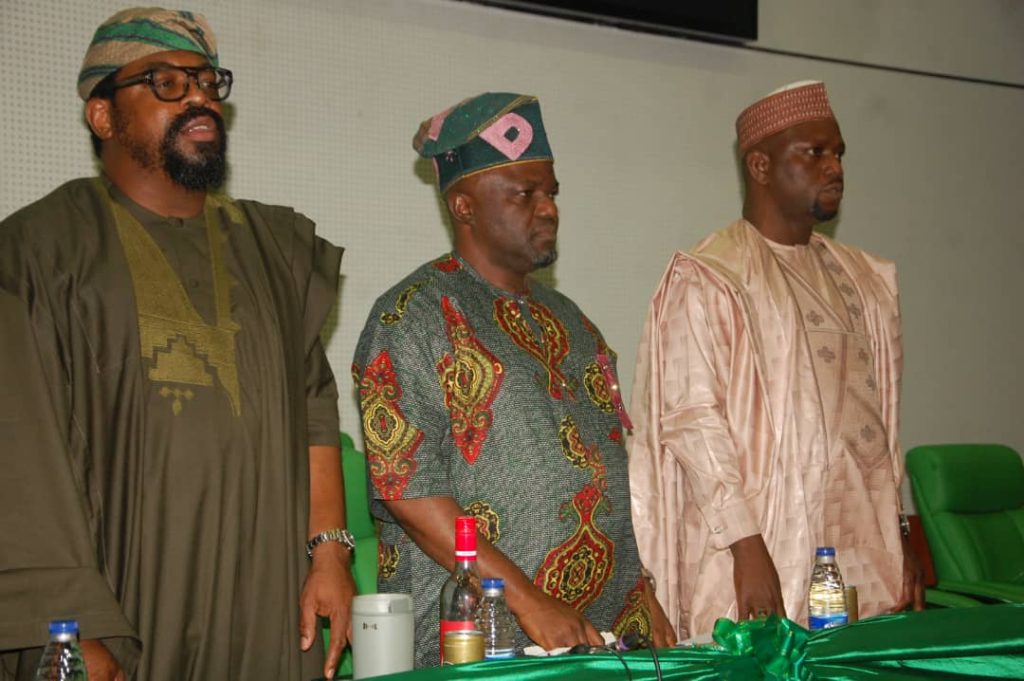
Dr. Alausa stated this at a public hearing organised by the House of Representatives Committee on Federal Polytechnics and Higher Technical Education, while presenting a memorandum on Thursday in Abuja.
The public hearing featured deliberations on three bills:
“A Bill for an Act to Establish the Federal College of Entrepreneurship and Skills Acquisition, Hawul Local Government Area, Borno State (HB.1797) – to provide full-time courses and training in technology, applied sciences, arts, social sciences, humanities, and management.
“A Bill to Amend Section 3(2)(b), the Second Schedule, and Section 31 of the Federal Polytechnics Act, Cap F17, Laws of the Federation of Nigeria, 2004 (HB.1413).
“A Bill to Amend the Federal Polytechnics Act, Cap F17, to review the functions of polytechnics (HB.2114)”.
The Minister speaking against the “Bill for an Act to Establish the Federal College of Entrepreneurship and Skills Acquisition, Hawul”, emphasised that the Federal Government maintains a policy of equitable distribution of federal institutions across states.
According to Alausa, no state should host more than one federal polytechnic, while every state must have at least one. Currently, all states except Sokoto and the Federal Capital Territory are covered under this arrangement.
He asserted that with limited resources, government efforts should be directed at strengthening existing institutions to deliver quality education rather than spreading resources thin by establishing new ones.
Alausa stated, “the Federal Ministry of Education has expanded avenues for establishing private tertiary institutions. States and individuals are encouraged to utilise these channels to support national educational development”.
In view of prevailing funding constraints, he recommended that deliberations on the proposed Federal College of Entrepreneurship and Skills Acquisition in Hawul, Borno State, be suspended.
He also urged the House to ensure that resources are dedicated to improving the quality of education for Nigerian students by consolidating support for already existing institutions.
With regards to the proposed amendments to the Federal Polytechnics Act, the minister raised no objections except for the provision seeking to include representatives of the National Board for Technical Education (NBTE) and the Manufacturers Association of Nigeria (MAN) on the Governing Council of Polytechnics.
“While both organisations play significant roles, their core functions do not directly align with the responsibilities of a polytechnic’s governing council. NBTE serves as a regulatory body, while MAN advocates for the interests of manufacturers”, he stated.
Earlier, the sponsor of the bill, Rep. Usman Balami (PDP–Borno), defended the proposal, citing insecurity and rising unemployment in Borno as pressing reasons for establishing the institution.
He described the proposed college as a strategic response to the growing number of unemployed youth and a means to equip them with skills necessary for self-reliance and economic empowerment.
“This institution will provide diverse training programmes tailored for today’s dynamic job market. It will bridge the gap between theory and practice, producing graduates ready to meet workforce demands”, Balami said.
According to the Borno lawmaker, the college will foster innovation, encourage entrepreneurship, and stimulate economic growth in the region by nurturing local talent and promoting a culture of self-employment.
Earlier in his remarks, the Committee Chairman, Rep. Fuad Laguda (APC–Lagos), noted a general consensus on the importance of skills acquisition in tackling unemployment.
He encouraged stakeholders to make robust contributions, assuring that the committee would carefully consider all submissions in its report.
“With the passage of these bills, Nigerians will have greater access to knowledge and skills in the arts, sciences, technology, humanities, and vocational and technical education,” Laguda said.
He also commended the leadership of the House for their support and the trust reposed in the committee to drive meaningful legislative outcomes.