Connect with us

News

From Trafficking To Freedom: Baby Gorilla Rescued In Turkey To Return To Nigeria

Published

on

ADVERTISEMENT
Zoom Ad
ADVERTISEMENT
Zoom Ad

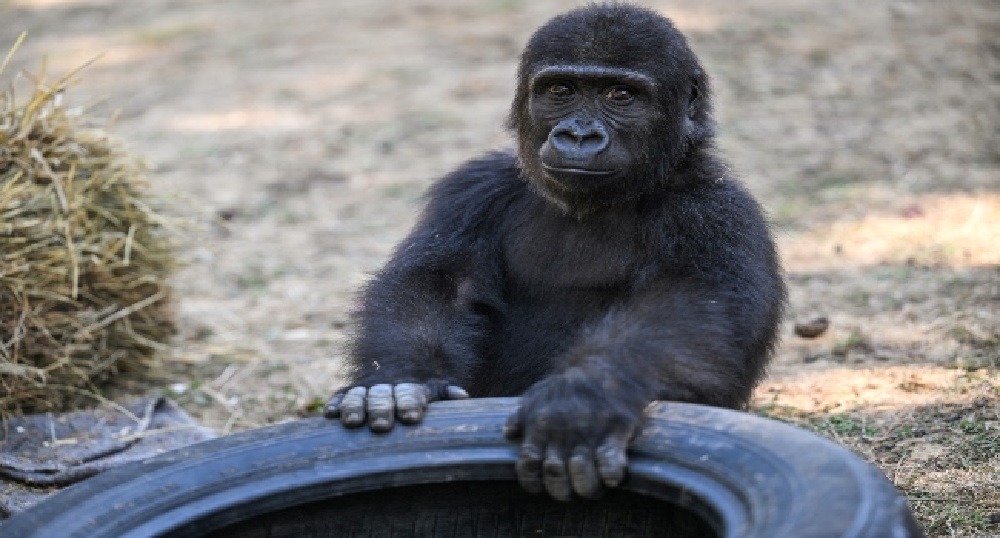
Shining down a lamp-post, the tiny male gorilla almost seems to be laughing as he dodges past his keeper at an Istanbul zoo, where he has called home since being rescued from traffickers.


He was five months old when he was discovered, days before Christmas, crammed into a wooden crate in the cargo section of a Turkish Airlines plane en route from Nigeria to Thailand, his terrified face making headlines across Turkey and beyond.

Nearly nine months on, and Zeytin (Turkish for olive), as he was named, is an entirely different creature from the traumatised infant brought to Polonezkoy Zoo in the hills outside Istanbul to recover from his trafficking ordeal.

His recovery means he will soon be sent back to Nigeria, where he began his journey, Turkish officials say.

Advertisement

Zeytin is believed to be a Western lowland gorilla, a critically endangered subspecies native to the rainforests of Central Africa whose numbers have plummeted in recent decades because of deforestation, hunting, and disease.

West and Central Africa are major sources of trafficking, with a 2013 UN Environment Programme report — the latest official figures available — saying 3,174 great apes were lost annually to illegal trade, based on the numbers seized, with a great many more going undetected.

“It was the first time a gorilla has been confiscated at Istanbul airport. He was found inside a small box, and he was terrified: you could see it in his eyes,” Fahrettin Ulu, regional director of Istanbul’s Nature Conservation and National Parks directorate, told AFP.

The baby gorilla was moved into a special section within the zoo where he was “nurtured with motherly affection.

Advertisement

“When he first arrived, he weighed 9.4 kilograms, and now he weighs 16. And his height has increased from 62.5 to 80 centimetres. In other words, Zeytin, who was once a baby, has become a young gorilla,” he said.

Inside an open area of the zoo, Zeytin races across the grass like an energetic toddler, swinging from nearby tree branches and playing tag with his keeper, only occasionally slowing down to munch on a piece of cucumber or orange.

Ulu explained that under the CITES treaty, limiting the trade of protected species, animals rescued from trafficking must be sent back to the exporting country.

The repatriation process, he said, was being coordinated with the Nigerian authorities and the CITES Secretariat.

Advertisement

“We followed the legal procedures and investigated information regarding the rehabilitation centre in Nigeria, after which we decided to send him back,” he added.

Gorillas Targeted

According to UK-based monitoring group TRAFFIC, buyers are increasingly looking to acquire baby great apes as pets, or for zoos, circuses, shows — or to use for social media content.

“Gorilla babies can be trafficked easily because they are young, very manageable and easy to transport, so the trend is increasing,” said Denis Mahonghol, TRAFFIC’s central Africa director, adding that the trade was “increasingly linked to organised crime networks”.

Advertisement

Although the Turkish authorities have said Zeytin will be repatriated later this month, Mahonghol said the date remained unclear.

He said the Nigerian authorities had told his organisation they were still waiting for Turkey to supply the timeline.

To ensure a safe repatriation process, the country of seizure needed to work closely with the country of origin, which should have its own rescue facilities in place or support from a suitable local NGO, he said.

“In the case of this gorilla, the first thing is to put him in a quarantine area in a rescue centre, and secondly to carry out DNA testing to confirm his origin,” Mahonghol told AFP.

Advertisement

Companionship Awaits

An NGO called Pandrillus Foundation will temporarily care for the gorilla, carry out the testing, and release him into the wild, he said.

Pandrillus Foundation director Liza Gadsby told AFP they were waiting for Zeytin’s arrival and would house him with another young gorilla of the same subspecies.

“At Drill Ranch we have another gorilla, a three-year-old female named Bili, who was confiscated by customs in Lagos two years ago. DNA testing has shown she is a Western lowland gorilla,” she told AFP, saying it was “highly likely” that testing would confirm the same of Zeytin.

Advertisement

“We postponed our plans to transfer Bili to a habitat country sanctuary when we learnt of Zeytin so that he could join her while completing his quarantine. They would both benefit immensely from being together before their next transition.

“These two little orphans have suffered so much already in their very young lives,” she explained.

AFP

Advertisement
Continue Reading
Advertisement

News

Citizen Patience and Collaborative Efforts: A Pathway to Greatness for Tinubu’s Government, By Hajia Hansatu Zannah*

Published

on

ADVERTISEMENT
Zoom Ad
ADVERTISEMENT
Zoom Ad

Nation-building is never the sole responsibility of government; it is a shared endeavor that requires the active participation, patience, and collaboration of citizens. In Nigeria today, President Bola Ahmed Tinubu’s administration faces the daunting task of steering the country toward economic stability, social cohesion, and sustainable development. While policies and reforms are critical, their success ultimately depends on the willingness of citizens to remain patient and supportive during the often difficult process of implementation.

Transformational leadership demands bold decisions—structural reforms, economic adjustments, and institutional restructuring—that may not yield immediate results. In such circumstances, patience becomes a vital national asset. By resisting the urge for instant gratification and allowing time for reforms to mature, Nigerians can help create an environment where government initiatives are given the opportunity to succeed.

Every nation, regardless of its stage of development, grapples with challenges—economic struggles, political transitions, social tensions, and infrastructural gaps. These realities test the resilience of both leaders and citizens. In moments of strain, the attitude of the people toward their country becomes a powerful determinant of progress. Constructive criticism is healthy and necessary for accountability, but outright condemnation and vitriolic attacks against one’s nation can be deeply counterproductive.

Words shape perception, and perception influences reality. When citizens consistently speak negatively about their country, they reinforce hopelessness and despair. This weakens national morale and discourages foreign investors, partners, and allies who rely on the confidence of citizens as a measure of stability. By contrast, balanced and solution-oriented dialogue strengthens Nigeria’s image and inspires collective action.

Advertisement

Collaboration, however, goes beyond compliance—it requires active engagement. Citizens can contribute meaningfully to nation-building by supporting reforms through constructive dialogue rather than resistance, participating in civic duties such as voting, community service, and public consultations. These actions serve as catalysts for greater national progress. At the same time, holding leaders accountable in a respectful and lawful manner is essential. While harsh and divisive criticism may be insidious, patriotism calls for promoting unity across ethnic, religious, and political divides to strengthen national cohesion.

If citizens embrace patience and collaboration, Tinubu’s government stands a better chance of achieving greatness. Economic reforms can stabilize markets, infrastructural projects can transform communities, and social policies can uplift vulnerable populations. Greatness, in this context, is not merely about political success but about building a Nigeria where prosperity, justice, and peace are attainable for all.

Citizens are not passive observers; they are active participants in governance. By engaging in respectful dialogue, supporting reforms, and holding leaders accountable through lawful means, they contribute to the nation’s growth. Patriotism does not mean blind loyalty—it means believing in the possibility of progress and working toward it.

A nation is like a family; disagreements are inevitable, but condemnation destroys trust. Citizens must rise above destructive criticism and embrace constructive engagement. By doing so, they preserve the dignity of their country and create an atmosphere where greatness can flourish. The path to national transformation lies not in tearing down but in building up—through patience, collaboration, and unwavering belief in Nigeria’s future.

Advertisement

The greatness of any government is measured not only by the vision of its leaders but also by the resilience and cooperation of its people. For Tinubu’s administration, citizen patience and collaborative effort are indispensable. Together, government and citizens can write a new chapter in Nigeria’s history—one defined by progress, unity, and enduring impact.

*Hajia Hansatu Zannah is a distinguished member of the Governing Council of the African Union Agenda 2063 and Ambassador Plenipotentiary. She is also the widow of the late Zannah Umar Mustapha, former Deputy Governor of Borno State.*

Continue Reading

News

BREAKING: CBN revokes licences of 46 Microfinance Banks over failure to satisfy regulatory requirements

Published

on

ADVERTISEMENT
Zoom Ad
ADVERTISEMENT
Zoom Ad

The Central Bank of Nigeria (CBN) has revoked the operating licences of 46 microfinance banks across the country, citing their failure to meet key regulatory requirements for continued operation.

The decision takes effect from Wednesday, July 1, 2026, according to a statement issued by the Acting Director of the CBN’s Corporate Communications Department, Hakama Sidi-Ali. The apex bank said the action was taken in line with its powers under Sections 12 and 13 of the Banks and Other Financial Institutions Act (BOFIA), 2020, and was approved by the CBN Governor, Olayemi Cardoso.

According to the CBN, the affected institutions lost their licences after failing to satisfy the conditions required to remain licensed financial institutions.

The bank explained that the revocation was based on one or more regulatory infractions, including insufficient assets to meet liabilities, shutting down operations without obtaining CBN approval, prolonged inactivity and cessation of financial intermediation, failure to commence business within 12 months after receiving a licence, and failure to maintain the minimum capital requirements without impairment from accumulated losses.

Advertisement

The CBN described the move as part of its ongoing efforts to strengthen the nation’s financial system and ensure that all licensed financial institutions operate in compliance with existing laws and prudential regulations.

“The revocation of the licences is part of the Bank’s ongoing efforts to safeguard the stability of the financial sector, protect depositors, and ensure that licensed institutions comply with current laws and regulatory requirements,” the statement said.

The apex bank reiterated its commitment to maintaining a safe, sound and resilient financial system, stressing that it would continue to take appropriate supervisory and regulatory measures where necessary to sustain public confidence in Nigeria’s banking sector.

Advertisement
Continue Reading

News

Tinubu Hails Wike’s Performance, Says All FCT Districts Now Feeling Impact of Governance(Photos)

Published

on

ADVERTISEMENT
Zoom Ad
ADVERTISEMENT
Zoom Ad

President Bola Ahmed Tinubu on Wednesday hailed the performance of the Federal Capital Territory (FCT) Minister, Nyesom Wike, declaring that it has become very evidently clear that all districts in the FCT are now feeling the impact of governance through completed projects that improve the quality of life of residents.

The President, represented by Senate President Godswill Akpabio, spoke while commissioning the Full Scope Development of Akinwumi Ajibola Street, comprising Important Local Streets (ILS) 16, 18 and 19, in Gaduwa District, Abuja.

Describing the project as a practical demonstration of the Renewed Hope Agenda, Tinubu said his administration was focused on delivering projects that address the everyday needs of Nigerians.

“We are here to open a road, but more importantly, we are here to restore access. The Full Scope Development of Akinwumi Ajibola Street is now complete and open for use. In this government, we measure ourselves by finished work. This street is finished work,” he said.

According to the President, residents of Gaduwa endured years of hardship despite owning homes in the district because there was no motorable road linking them to their properties.

“For years, families in Gaduwa built homes here in good faith, yet they had no motorable road to reach those homes. When the rains came, the place became impassable. That is not how a capital city treats its citizens. Under the Renewed Hope Agenda, we came to work, and today that promise is visible on these streets,” he added.

Tinubu commended the Minister of the Federal Capital Territory, Barr. Nyesom Wike, for changing what he described as the culture of project delivery in Abuja through effective supervision, prompt funding and timely completion of projects.

“When the Honourable Minister reviewed the files and saw the neglect, he did not issue another memo. He brought contractors back to site, gave clear targets and backed those targets with funding.

Advertisement

“You have changed the culture of delivery in the FCT. You ended the era of mobilisation without movement and abandoned inner roads. You are taking development from the city centre into the districts and satellite towns so that no resident is left behind. You have my confidence and my commendation,” the President said.

He noted that the completed road would improve mobility, reduce travel time, enhance property values and provide safer access for residents through the provision of drainage and streetlights.

Tinubu also urged residents to protect the infrastructure by preventing vandalism and ensuring drainage channels remain free of refuse.

“We will not stop here. Across the FCT, from the city centre to the area councils, our task is to finish what matters, connect what was separated and ensure that public funds translate into public value,” he said.

Advertisement

Earlier, FCT Minister Barr. Nyesom Wike said the commissioning formed part of the 16th project in the administration’s ongoing 31-day project inauguration programme marking President Tinubu’s third year in office.

According to him, the President had directed upon assumption of office that every district in the FCT must benefit from government projects, irrespective of whether they are located in the city centre or satellite communities.

“You instructed us that every district in the FCT must feel the impact of this administration. Today, I can confidently say that no district can claim it has been neglected. We have taken development to Jahi, Gwarimpa, Katampe, Guzape, Kwali and now Gaduwa,” Wike said.

The minister attributed the rapid execution of projects to the cordial working relationship between the Executive and the National Assembly, which ensured timely budget approvals and releases.

Advertisement

He also cautioned the Abuja Municipal Area Council (AMAC) against naming roads constructed by the Federal Government without due approval.

“If the Federal Government constructs the roads, permission must be obtained before naming them. Do not wait for us to build roads before putting names on them or using them to generate revenue,” he warned.

In her remarks, the Minister of State for the FCT, Dr. Mariya Mahmoud, described the commissioning as another milestone in the implementation of the Renewed Hope Agenda.

She said the project reflected the administration’s commitment to people-oriented infrastructure that improves mobility, enhances economic activities and raises the living standards of residents.

Advertisement

Mahmoud commended President Tinubu, Wike, the National Assembly, contractors, consultants, traditional rulers, security agencies and residents of Gaduwa for their contributions to the successful completion of the project, assuring that the FCT Administration would sustain the pace of infrastructure development across the territory.

Continue Reading

Trending

Copyright © 2024 Naija Blitz News