News
Herbert Macaulay Shouldn’t Have Been Pardoned Alongside Drugs Barons and Criminals – Family
- /home/naijuinz/public_html/wp-content/plugins/mvp-social-buttons/mvp-social-buttons.php on line 27
https://naijablitznews.com/wp-content/uploads/2025/10/Herbert-Macaulay.jpg&description=Herbert Macaulay Shouldn’t Have Been Pardoned Alongside Drugs Barons and Criminals – Family', 'pinterestShare', 'width=750,height=350'); return false;" title="Pin This Post">
- Share
- Tweet /home/naijuinz/public_html/wp-content/plugins/mvp-social-buttons/mvp-social-buttons.php on line 72
https://naijablitznews.com/wp-content/uploads/2025/10/Herbert-Macaulay.jpg&description=Herbert Macaulay Shouldn’t Have Been Pardoned Alongside Drugs Barons and Criminals – Family', 'pinterestShare', 'width=750,height=350'); return false;" title="Pin This Post">
The family of the late Herbert Macaulay has condemned the Federal Government’s decision to include the renowned nationalist in a recent list of posthumous pardons granted by President Bola Ahmed Tinubu.

At a press conference in Lagos on Thursday, the family, supported by elder statesman and Atona Oodua of Yorubaland, Chief Olabode George, said while they appreciated the president’s gesture in recognising Macaulay’s role in Nigeria’s history, it was wrong and demeaning to “lump” him with individuals of questionable character.
“If Papa is to be honoured, he must be honoured independently,” George said speaking on behalf of the Macaulay family.

He stated, “Herbert Macaulay was not a criminal; he was a patriot, a visionary, and grandson of the first African Anglican Bishop. He deserves isolation for national honour, not inclusion in a list of convicts.”
Other members of the family at the briefing were Erelu Adeola Macaulay, Mr. Lanre Oshodi, Ms. Mayokun Thomas, Miss Kofoworola Macaulay, Miss Adeyinka Macaulay, Mr. Ayo Ogunlana, and Miss Turi Akerele, among others.
In his speech titled “Herbert Macaulay: The Father of Nigerian Nationalism,” George said the contributions of the nationalist, engineer, and political pioneer remain enduring.
He noted that Maclaulay laid the foundations of modern Nigerian political consciousness.
“Herbert Macaulay was born in 1864 to a lineage of education, faith, and service. He could have chosen comfort within the colonial system, but instead, he stood against injustice and spoke truth to power,” George added.
He highlighted Macaulay’s activism through the Lagos Daily News, his defense of Oba Eshugbayi Eleko against colonial authorities, and the founding of the Nigerian National Democratic Party (NNDP) in 1923 — Nigeria’s first political party.
“Macaulay’s politics was not about privilege but purpose. He transformed politics from the parlour rooms of colonial officials to the streets and markets of Lagos Island,” George said.
The family and their supporters urged the government to celebrate Macaulay distinctly, through initiatives such as public memorials, educational scholarships, and civic leadership programmes that reflect his values.
They added that his partnership with Dr. Nnamdi Azikiwe led to the formation of the National Council of Nigeria and the Cameroons (NCNC) in 1944, a coalition that advanced the cause of independence.
“Herbert Macaulay died in 1946 while on a campaign for national unity. He was a patriot to his final breath — not a felon to be pardoned,” he said.
George called on the present generation of leaders to embody Macaulay’s ideals, adding, “If we truly seek to honour Herbert Macaulay today, we must not do so with mere words or statues. We must embody his principles in our politics — integrity, accountability, and service to the people.”
News
Osun Poll: APC Heading for Crushing Defeat, Imole Campaign Council Fires Back at National Chairman
By Gloria Ikibah
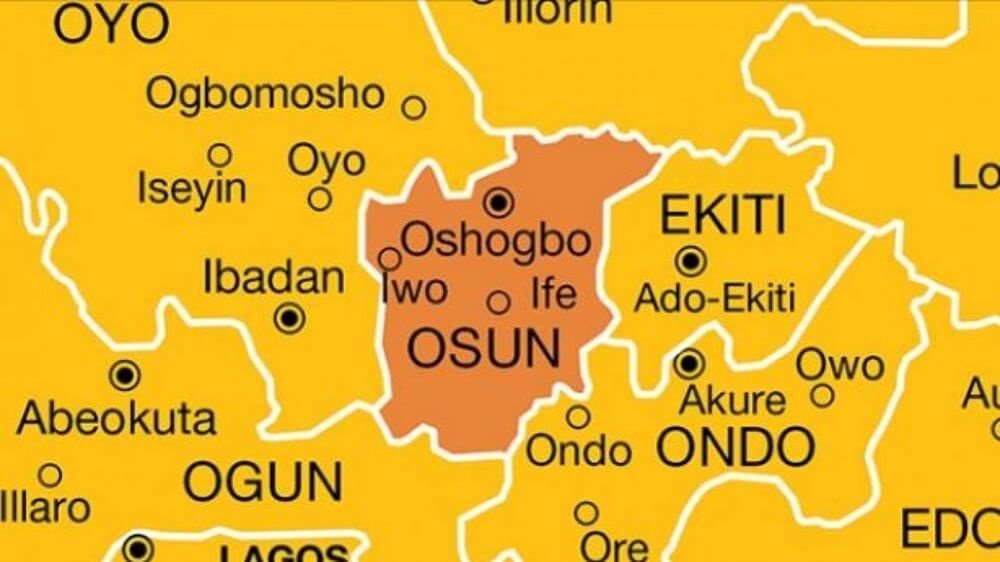
The Imole Campaign Council (TICC) has dismissed claims by the National Chairman of the All Progressives Congress (APC), Prof. Nentawe Yilwatda, that the party’s array of governors, National Assembly members and other political heavyweights would guarantee victory in the August 15, 2026 Osun State governorship election.
Reacting to remarks likening the APC’s political strength to a trailer against a “Keke Napep”, the council described the analogy as a display of political arrogance and evidence that the ruling party had misread the mood of Osun voters.
In a statement signed by the Chairman of its Media and Publicity Committee, Rep. Bamidele Salam, the council argued that elections are determined by the electorate rather than by the number of influential politicians a party can mobilise.
According to the statement, “The people of Osun State are not waiting for political heavyweights from outside the state to decide their future, the electorate are capable of making their own independent choice based on the performance of the government in power.
“The APC National Chairman may have assembled what he calls a political trailer, but he should understand that the people of Osun State are not political cargo to be moved around by outsiders. They are the owners of the mandate, and they alone will determine who governs them.”
The council maintained that the forthcoming governorship election would be decided by the performance of the incumbent administration rather than political rhetoric.
“The August 15 election will not be a contest between a trailer and a Keke Napep. It will be a contest between a performing Governor who has earned the confidence of his people and an APC candidate who is struggling to gain acceptance among the electorate.
“The reality on the ground is that Governor Ademola Adeleke enjoys tremendous goodwill among the people of Osun State because of the visible achievements of his administration. His record in road infrastructure, healthcare, education, workers’ welfare, water supply, agriculture, youth empowerment and other critical sectors speaks directly to the people”, he said.
The campaign council also questioned the popularity of the APC governorship candidate, Munirudeen Bola Oyebamiji, arguing that the party’s dependence on external political figures reflected an inability to build grassroots support within the state.
The council further challenged the APC to focus on presenting policies and programmes instead of relying on political symbolism.
“The APC governorship candidate, Munirudeen Bola Oyebamiji is obviously weak and unpopular, the decision of the APC to rely heavily on political figures from outside Osun is an indication of its candidate’s inability to independently mobilise the people.
“Rather than boasting about the number of governors and National Assembly members being deployed to Osun, the APC should tell the people what its candidate has to offer. The people are interested in issues, performance and credible leadership, not political metaphors”, he said.
The Imole Campaign Council urged the opposition party to respect the intelligence of Osun voters by running an issue-based campaign and offering what it described as credible alternatives ahead of the governorship election.
News
ECOWAS Seeks Sanctions for Member States Ignoring MSME Policies
By Gloria Ikibah
The ECOWAS Commission has called for tougher measures against member states that fail to implement agreed policies designed to support the growth of Micro, Small and Medium-sized Enterprises (MSMEs), warning that the region’s economic ambitions will remain out of reach without effective implementation.
The position was presented on Monday during the ongoing delocalised meeting of the ECOWAS Parliament’s Joint Committee on Industry and Private Sector, Macroeconomic Policy and Economic Research, Administration, Finance and Budget, and Public Accounts in Cotonou, Republic of Benin.
Speaking during a presentation on “Trade Facilitation, Regulatory Reforms and Formalisation,” Dr Tony Luka Elumelu of the ECOWAS Business Council Secretariat argued that the region already has sufficient policies, protocols and legal instruments to drive private sector growth, stressing that the real challenge lies in implementation rather than policy formulation.
He urged member states to shift their attention from producing new frameworks to creating a business-friendly environment that allows enterprises to flourish.
According to him, “We have very good policies, protocols, legal instruments in terms of the private sector development. We also have the MSME Charter. We have created an enabling environment in this particular document for development and growth of the MSMEs but, in summary, my recommendation is that we should implement what we adopt.
“We should make sure that we create an enabling environment for these businesses to thrive and not keep adopting policies. What we need to do is enforce those policies that we have adopted and remove every bottleneck that impedes MSMEs from thriving.”
Elumelu noted that West Africa must become more competitive, especially as the African Continental Free Trade Area (AfCFTA) opens new opportunities across the continent.
He said governments should prioritise investments in transport infrastructure and eliminate unnecessary barriers that continue to frustrate legitimate businesses operating across borders.
He also identified the proliferation of roadblocks and multiple checkpoints across the region as major obstacles to trade and economic integration.
“We need to make sure that we have the necessary infrastructure that our goods will use in terms of moving from one country to another. We also need to look at the vision that we have signed under the AfCFTA protocol.
“In fact, we already know that we are going to compete with other regions, which means that we need to make sure that we do not disturb our people who are trading legitimately, so that at the end, our region will benefit from the economic development and the benefits inherent in the AfCFTA trade.
“The multiple checkpoints, roadblocks, and also the practicality of what we are doing in the region… every legal instrument will always pass through the ECOWAS Parliament before adoption, which means that there should be strategy to put in timelines in terms of implementation. There should also be strategy to be conscious about implementation”, said.
Also speaking, the Principal Programme Officer in charge of Enterprise and Business Promotion at the ECOWAS Commission, Dr Olalekan Afolabi, stressed the importance of moving more businesses from the informal economy into the formal sector.
He said many enterprises across the region remain unregistered, limiting their ability to access finance, markets and government support, and urged parliamentarians to champion policies that encourage formalisation.
Afolabi also called for the effective implementation of the European Union-funded African Trade Competitiveness and Market Access Programme, valued at €50 million.
“How do we implement the African Trade Competitive and Market Access Program of the European Union, which is a 50 million euro project? Some of the responses we give to them include: one, going at the national level and seeing that these policies are properly domesticated. These policies are legislated at the national level and also coming to hold us accountable at the regional level, because we need to report periodically to the Parliamentarians.
“They need to monitor the implementation of some of those projects and this forum, of course, presents an opportunity for things like this”, he noted.
Discussions at the meeting centred on the need for stronger political commitment to implementing existing ECOWAS policies, with participants maintaining that sustained reforms, improved infrastructure and the removal of trade barriers are essential if MSMEs are to become key drivers of economic growth, regional integration and job creation across West Africa.
News
Just in: Dangote gives ₦18.7 trn of his ₦56.2trn wealth to help the needy
Africa’s richest man, Aliko Dangote, plans to donate one-third of his wealth to charity as part of his succession plan, his daughter, Halima Dangote, has revealed.
Halima, a trustee of the Aliko Dangote Foundation, revealed the arrangement in an interview with Bloomberg published on Tuesday, saying the billionaire had secured his family’s support to dedicate 33 per cent of his estate to philanthropy.
According to the Bloomberg Billionaires Index, Dangote’s net worth is estimated at $35.1 billion, meaning one-third of his current fortune would amount to about $11.7 billion if maintained at that level.
Explaining the decision, Halima said her father considers philanthropy central to his legacy and has embedded it into the family’s long-term succession plans.
“He sort of put all the structure in place whereby we focus a lot on health and education. He actually donated 25 per cent to the foundation. If you look at it, it is what we call in Sharia Code in Islam; it means he has donated 33 per cent of his whole inheritance to his foundation,” she said.
“That is how important it is to him because philanthropy needs to be in existence generation after generation.
“So giving back is part and parcel of what we do. We believe we’re here, that our business is successful because of the giving back and because of the philanthropic aspect. That is why the 33 per cent is important.
-
News18 hours agoUK Eases Student Visa Rules for Three African Nations
-
News18 hours agoStolen BVAS, PVCs Will Be Replaced, Osun Election Safe – INEC
-
News12 hours agoKebbi Weds 600 Couples, Pays ₦250k Dowry Each
-
News18 hours agoNigeria, South Africa Set for Fresh Diplomatic Talks Amid Xenophobia Concerns
-
Sports12 hours agoSuper Falcons start title defence today at 2026 WAFCON
-
News17 hours agoNigeria Customs Unveils Final List of Successful Applicants, Opens Portal for Next Stage
-
News17 hours agoSenate Denies Introducing Fresh Ban on Preaching in Commercial Vehicles
-
News4 hours agoJust in: Dangote gives ₦18.7 trn of his ₦56.2trn wealth to help the needy