By Gloria Ikibah


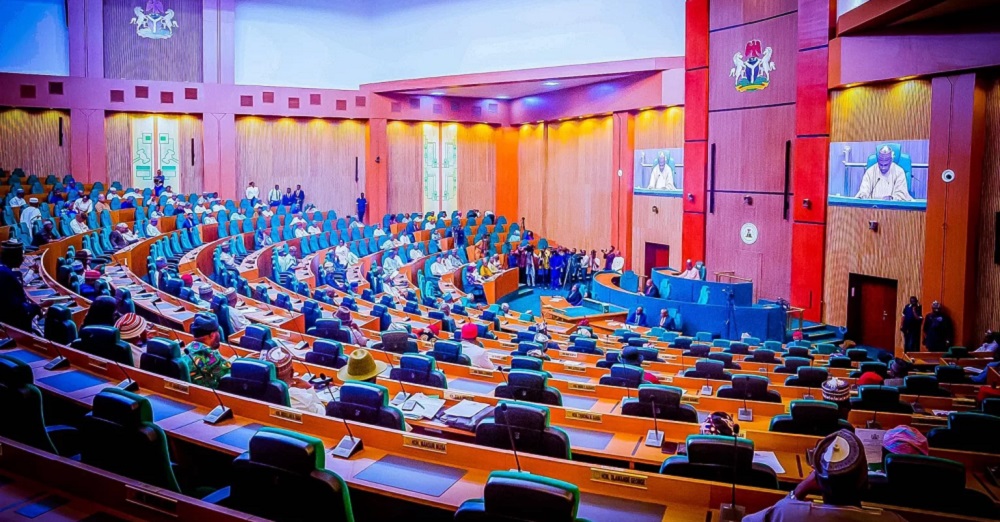
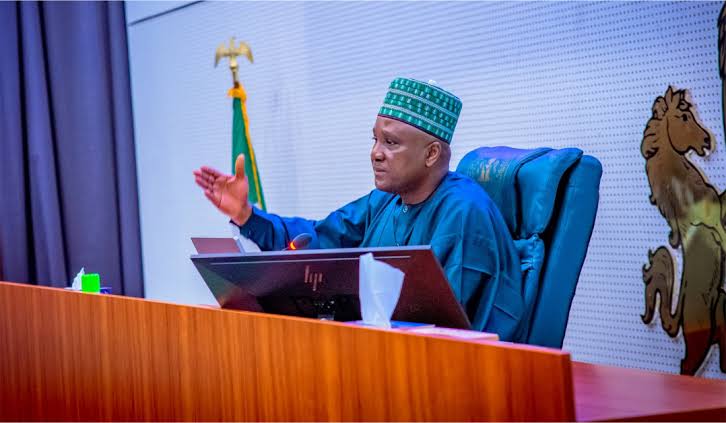
The House of Representatives on Tuesday devoted an extraordinary special session to Nigeria’s deteriorating security situation, with Speaker Rt. Hon. Tajudeen Abbas issuing a sombre and unflinching warning that the nation stands at a moment of “unprecedented national challenges”.
Opening the debate, the Speaker told lawmakers and invited dignitaries that “this moment requires calm heads, careful judgement and thoughtful action, not rushed or sensational responses”, stressing that the House’s decision to suspend all other matters was “neither symbolic nor procedural”, but a reflection of national urgency. 
The gallery was packed with foreign and domestic stakeholders. Notably, officials from the United States Embassy were present, as well as the Speaker of the Parliament of Saint Kitts and Nevis, Rt. Hon. Lanien Blanchette, alongside cabinet ministers and civil-society representatives. Their presence, he said, “highlights the importance of ongoing dialogue between our two nations”.
Speaker Tajudeen delivered a stark assessment of recent violent attacks, which have swept across Kebbi, Niger and Kwara States.
“The last few weeks have been difficult for our country “Communities have suffered severe attacks, including killings and multiple abductions targeting civilians, security personnel and other vulnerable groups,” he said.
He described the attack in Kebbi State as having “shocked the nation”, while the abduction of students in Niger State caused “deep distress”, and the kidnapping of worshippers in Kwara “brought fear to many communities”.
The Speaker commended the swift response of security agencies, noting that it followed “the firm directives of the President”. He highlighted President Bola Tinubu’s dramatic decision to postpone a scheduled and highly publicised trip to the G20 Summit in South Africa “to confront the current challenges directly”.
According to the Speaker, the President ordered the withdrawal of police personnel from VIP duties for redeployment to frontline operations—moves he said “shaped the swift rescue of the worshippers in Kwara State and the successful recovery of several abducted students in Niger State”.
Quoting the President’s recent comments to the Arewa Consultative Forum, he reminded the chamber that “nothing troubles me more gravely than the security crisis bedevilling Nigeria, especially Northern Nigeria.”
Lawmakers rose for a minute of silence after the Speaker paid tribute to security personnel who “serve under exceptionally difficult conditions” and to those who “paid the ultimate price in the line of duty”.
“Their sacrifice will not be forgotten. “We honour their pain, strength, and resilience”, he said.
The Speaker revealed that he visited Kebbi State on Monday with a House delegation, meeting eyewitnesses, bereaved families and local leaders.
“The visit was important not only for the facts it revealed but for the human dimension it brought.
“Parents spoke with distress. Communities expressed fear. Local leaders demonstrated strength and resilience,” he said.
The Speaker warned that the recent wave of attacks appeared “coordinated” and “designed to destabilise our country”.
“They aim to create the impression that violent groups can act without restraint… Their purpose is to instil fear,” he said.
He also condemned the spread of online falsehoods, noting that “misleading posts on social media can inflame communities, cause panic, and erode trust in institutions”, urging Nigerians to rely on official information sources.
Speaker Abbas credited the Tinubu administration with achieving “measurable progress” through reforms in security coordination, citing the freeing of thousands of captives, the return of millions of displaced people, and a decline in mass abductions.
But he warned that new forms of violence were emerging, fuelled in part by instability in the Sahel.
“Illegal arms trafficking has increased,” he said, noting changes of government in Mali, Burkina Faso and Niger had created “ungoverned spaces that armed groups now exploit”.
Turning to recent US legislation—the Nigeria Religious Freedom Accountability Act of 2025—he dismissed its claims that Nigeria permits religious persecution.
“The government of Nigeria does not and will never support or sponsor violence against its own citizens,” he said firmly.
He emphasised that Nigeria’s response to the Bill was “calm and measured”, reaffirming that “dialogue is more productive than recrimination”.
He highlighted ongoing cooperation with the United States, including discussions between National Security Adviser Nuhu Ribadu and US Secretary of War Pete Hegseth on intelligence sharing and counter-terrorism support.
The Speaker also cited historical cooperation from the Trump administration, saying the former president’s approval of A-29 Super Tucano aircraft “saved lives” and “strengthened our capabilities”.
He described Trump’s renewed interest in Nigeria as “an encouraging signal” that deeper security cooperation may again be possible.
The Speaker made clear that the special session was convened not to accuse or condemn but to “provide a frank and calm assessment” and “offer practical recommendations”.
“This is not a party affair but a national discourse.
“Our contributions should be tailored to strengthen Nigeria’s collective response to these attacks,” he said.
He closed with a direct appeal for unity: “Nigerians expect leadership that rises above partisanship and speaks with one voice at moments like this… Our conduct must show that these acts of violence will not weaken our resolve or undermine our unity”.
The session then moved into a closed debate phase under strict House rules.