Connect with us

News

US adds Nigeria to list of countries facing partial travel restrictions

Published

on

ADVERTISEMENT
Zoom Ad
ADVERTISEMENT
Zoom Ad

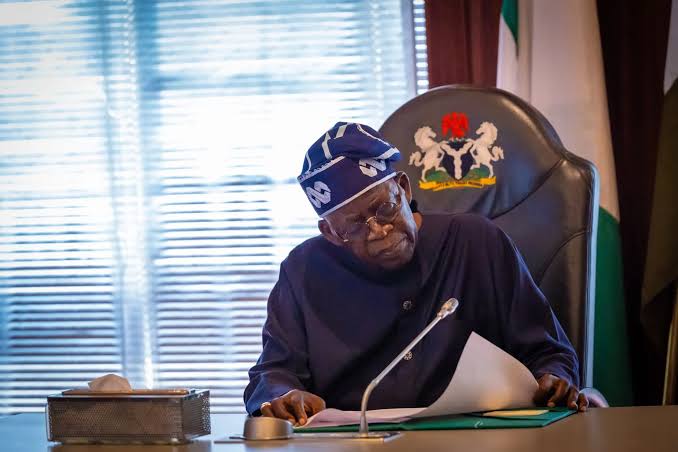
The United States has added Nigeria to a list of countries facing partial travel restrictions, citing “security and documentation” concerns.


The White House announced the presidential proclamation on Tuesday, updating its list of countries facing full and partial travel restrictions.

Nigeria was among 15 mostly African countries, including Angola, Antigua and Barbuda, Benin, Côte d’Ivoire, Dominica, Gabon, and The Gambia, slammed with a partial travel suspension.

Others listed are Malawi, Mauritania, Senegal, Tanzania, Tonga, Zambia, and Zimbabwe.

Advertisement

“Radical Islamic terrorist groups such as Boko Haram and the Islamic State operate freely in certain parts of Nigeria, which creates substantial screening and vetting difficulties,” the White House said, justifying Nigeria’s addition to the list.

“According to the Overstay Report, Nigeria had a B-1/B-2 visa overstay rate of 5.56 percent and an F, M, and J visa overstay rate of 11.90 percent.”

Turkmenistan, which was previously on the list, was removed owing to a demonstration of “significant progress in improving its identity management and information-sharing procedures”.

The Sahelian states of Burkina Faso, Mali, and Niger are among five countries newly placed under full restrictions and entry limitations.

Advertisement

The White House cited operations of “terrorist organizations” in the countries as the reason for making the cut.

The other two additions were South Sudan and Syria.

Full travel restrictions on nationals from Afghanistan, Burma, Chad, Congo, Equatorial Guinea, Eritrea, Haiti, Iran, Libya, Somalia, Sudan, and Yemen remain in effect.

Laos and Sierra Leone, previously under partial restrictions, have now been placed under full restrictions.

Advertisement

“It is the President’s duty to take action to ensure that those seeking to enter our country will not harm the American people,” the White House said.

The proclamation added that the restrictions are necessary to prevent the entry of foreign nationals about whom the US lacks sufficient information to assess the risks they pose, enforce immigration laws, and counterterrorism objectives.

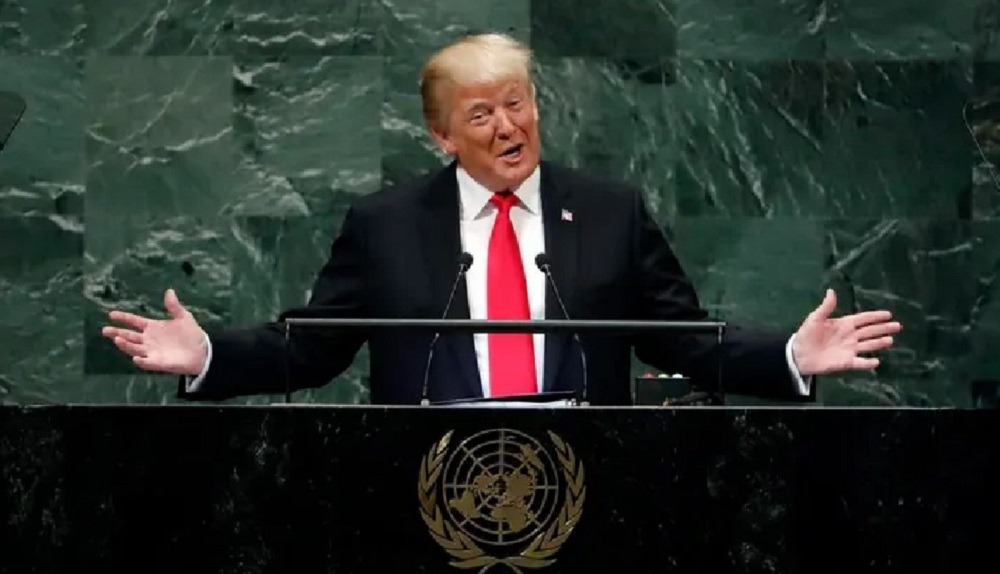
In June, President Donald Trump signed an executive order imposing a full travel ban on nationals of 12 countries.

Advertisement

Advertisement

Trump also placed heightened restrictions on people from seven countries.

The US government asked the affected countries to meet certain requirements within 60 days.

At the time, Nigeria was not included on either of the lists.

However, concerns began to rise after allegations of a Christian genocide peddled by US lawmakers and secessionist groups began to gain momentum.

Advertisement

In October, Trump announced his decision to officially redesignate Nigeria a ‘country of particular concern’ (CPC).

He blamed radical Islamists for the “mass slaughter”.

On Monday, Riley Moore, US congressman, said Nigeria and the US were close to reaching an agreement on a “strategic security framework” aimed at tackling terrorism in the West African nation.

Moore introduced a resolution in the US house of representatives last month “condemning the ongoing persecution of Christians in Nigeria and supporting Trump’s move to redesignate Nigeria a CPC.”

Advertisement

The US congressman spoke of the security cooperation after visiting Nuhu Ribadu, national security adviser (NSA), during a “fact-finding mission” to Nigeria.

Amid the row, the US announced new visa restrictions earlier this month targeting Nigerians accused of undermining religious freedom.

Marco Rubio, secretary of state, said the restrictions will affect those who “knowingly direct, authorize, fund, support, or carry out violations of religious freedom”.

He said the visa policy applies to Nigeria and other governments or individuals that persecute people for their religious beliefs.

Advertisement

This is not the first visa standoff between both countries in 2025.

In July, the US embassy announced a reduction in the validity period and entry allowance for “most” non-immigrant and non-diplomatic visas issued to Nigerians, effectively limiting the legality of their stay in the US to three months with a single entry.

An alleged imbalance in visa reciprocity from Nigeria was cited as the reason for the hard-hitting penalty.

However, diplomatic sources told TheCable Nigeria’s refusal to accept asylum seekers from the US was partly responsible for the visa restrictions.

Advertisement

TheCable learnt that the US also pushed for the option of allowing its citizens to electronically apply for Nigeria’s five-year visa without visiting an embassy, alongside access to the country’s criminal database so that Nigerians with previous criminal records who are now living in America can be identified for deportation.

Yusuf Tuggar, Nigeria’s minister of foreign affairs, met Richard Mills, US ambassador to Nigeria, on Monday.

Though details of their meeting were not made public, the US embassy said the American government looked forward to working with Nigeria on issues of mutual concern.

Advertisement
Continue Reading
Advertisement

News

INEC set to publish details of 2027 Presidential, National Assembly candidates on August 1

Published

on

ADVERTISEMENT
Zoom Ad
ADVERTISEMENT
Zoom Ad

The Independent National Electoral Commission (INEC) will on Saturday, August 1, 2026, publish the particulars of all presidential and National Assembly candidates contesting the 2027 general election for public inspection at its offices across the country.

The publication of the candidates’ details, contained in Form EC9, is in compliance with Section 29(3) of the Electoral Act, 2026, which requires the commission to make the personal particulars of nominated candidates available for public scrutiny within 21 days of receiving them.

Political parties concluded the online submission of the names, personal particulars and other required documents for their presidential and National Assembly candidates on Tuesday, July 14, 2026, after INEC granted a 72-hour extension to the original deadline. ExecutiveBranch

Under the commission’s revised timetable, nominations for presidential and National Assembly candidates were initially scheduled to be submitted between June 27 and July 11, 2026.

Advertisement

Section 29(1) of the Electoral Act, 2026, requires political parties to submit Forms EC9, EC9A, EC9B, EC9C, EC9D and EC9E, containing the names and personal particulars of their nominated presidential and National Assembly candidates, not later than 120 days before the election.

Speaking on whether the 72-hour extension would affect the publication date, INEC Deputy Director of Publicity, Wilfred Osilama Ifogah, said he did not expect any change, although he stressed that he was expressing a personal opinion rather than the commission’s official position.

“I doubt. It might not necessarily affect it. It’s just for the Commission to put the information together and submit it. This is my opinion. I’m not talking officially. When it gets to the time, you will see whether the Commission will publish it or not,” he said.

Meanwhile, the online submission of nominations for governorship and State Houses of Assembly candidates, which commenced on July 18, will continue until August 8, 2026.

Advertisement

INEC has scheduled August 29, 2026, for the publication of the personal particulars of governorship and State House of Assembly candidates through Form EC9.

The commission had earlier conducted party primaries for all elective positions between April 23 and May 30, 2026.

According to INEC’s election timetable, the presidential and National Assembly elections will hold on January 16, 2027, while the governorship and State Houses of Assembly elections are scheduled for February 6, 2027

Advertisement
Continue Reading

News

CSOs, Youth Groups Push for Inclusive NYSC Reform, Convene National Dialogue

Published

on

ADVERTISEMENT
Zoom Ad
ADVERTISEMENT
Zoom Ad

By Gloria Ikibah

A coalition of civil society organisations and youth groups has announced plans to convene a national dialogue on proposed reforms to the National Youth Service Corps (NYSC), seeking to ensure that the review process reflects the views of Nigerians before the Federal Government takes a final position.

The initiative, being organised by the Centre for Equity, Justice and Transparency in partnership with the Save Nigeria Movement, is expected to bring together policymakers, academics, former corps members, youth organisations, security agencies and other stakeholders to examine the future of the scheme and recommend practical reforms.

Convened by legal practitioners Sorkaa Tsembelee and Patrick Agbese, the one-day dialogue aims to generate a comprehensive working document that will be presented to the Federal Government as part of ongoing efforts to review the NYSC Act.

Advertisement

In a statement issued on Friday, the organisers said the forum was intended to provide an inclusive platform where stakeholders could contribute meaningfully to the reform process.

The statementread: “The essence of this dialogue is for critical stakeholders to make input into the proposed NYSC reforms before the President’s administration takes final decisions.

“We will have senior academics, former corps members, youth groups and other members of society to dissect the proposed reforms thoroughly.

“It will thereafter catalyse into a working document for the Federal Government. We will invite the CDS, the Army and others. Let everyone look at it and say their own.”

Advertisement

Established in 1973 after the Nigerian Civil War, the NYSC was designed to promote national unity, encourage integration among young graduates and foster national development through compulsory service outside their states of origin. Over the decades, corps members have played significant roles in education, healthcare, agriculture and community development, particularly in underserved communities.

However, growing concerns over the safety and welfare of corps members, inadequate funding, deployment policies and questions surrounding the relevance of some aspects of the programme have fuelled calls for a comprehensive review.

The organisers said the dialogue will assess whether the scheme still aligns with its founding objectives while identifying legislative and policy changes needed to address present-day realities.

They maintained that while reforms were necessary, the NYSC’s central mission of promoting national cohesion should be preserved alongside efforts to strengthen skills development, entrepreneurship and youth empowerment.

Advertisement

“This is not about tearing down an institution that has served Nigeria well; it is about refining it with the collective wisdom of those who have lived the experience and those who study its impact.

“Former corps members carry practical insights that policymakers often miss, and we want those voices at the table.

“Youth groups and civil society must not be spectators while decisions that will shape the next generation of Nigerian graduates are taken. The dialogue creates the space for genuine, structured input”, it added,.

According to the organisers, discussions will focus on critical issues including corps members’ welfare, security, orientation camp facilities, deployment procedures, funding mechanisms and the effectiveness of the Community Development Service (CDS) programme.

Advertisement

They added that academics will provide comparative analyses of national service models in other countries, while security agencies would offer institutional perspectives on improving the protection of corps members, particularly those posted to areas affected by insecurity.

“We cannot discuss NYSC reforms without hearing from those who secure the environment in which corps members serve. The CDS and the Army have institutional knowledge that is indispensable.

“Their perspectives on logistics, security and inter-agency coordination will enrich the final document.

“Senior academicians will help us situate the proposed reforms within the broader context of nation-building. We need evidence-based contributions, not just opinions”, the said.

Advertisement

The organisers said the ultimate goal was to produce practical recommendations capable of informing both legislative and executive action.

They explained that the final report would reflect contributions from former corps members, scholars, security agencies, youth organisations and civil society groups, providing government with workable proposals for strengthening the scheme without compromising its original mandate.

“The working document that emerges from this dialogue must be something the government can work with.
“It should reflect the views of those who have served, those who teach, those who protect, and those who advocate.

“Anything less would be a missed opportunity. We are calling on all stakeholders to come prepared to engage constructively.

Advertisement

“The future of the NYSC is too important to be decided in isolation. This national dialogue is our contribution to an open, inclusive process”, the statement further read. 

Continue Reading

News

No plans to increase electricity tariffs – Power Minister assures Nigerians

Published

on

ADVERTISEMENT
Zoom Ad
ADVERTISEMENT
Zoom Ad


The Minister of Power, Joseph Tegbe, has declared that President Bola Tinubu’s administration has no intention to jerk up electricity tariffs beyond the current level.

He disclosed this during a media briefing in Abuja on Friday.

According to him, the Tinubu administration’s priorities are improving electricity service delivery, expanding access to electricity, and ensuring that Nigerians pay only for the electricity they consume.

Advertisement

The minister said that, over the last two weeks, the country has consistently generated 5,000 megawatts of electricity.

“We are already witnessing encouraging improvements in electricity generation. Over the course of the last two weeks, we have consistently generated 5,000MW.

“Permit me to address two issues that have generated considerable public discussion. First, there is no policy by this administration to increase electricity tariffs beyond the current level. Our priority is not a tariff increase in the immediate term. Our priority is service improvement, universal metering, and ensuring Nigerians pay only for the electricity they actually consume,” he stated.

He added that the objective of the Federal Government is to provide reliable electricity to homes across the country.

Advertisement

“Our ambition is clear: reliable electricity that powers our homes.”

Tegbe’s comments come amid debate over a fresh electricity tariff hike, fuelled by remarks made by Tinubu’s Special Adviser on Power Infrastructure, Sadiq Wanka.

Nigerian electricity consumers have kicked against the proposed electricity tariff hike.

Advertisement
Continue Reading

Trending

Copyright © 2024 Naija Blitz News