Connect with us

News

US Airforce takes over Benin-Nigeria border airspace, bombs terrorists’ armories

Published

on

ADVERTISEMENT
Zoom Ad
ADVERTISEMENT
Zoom Ad

“The United States Air Force aircraft is presently operating above the Babana crossing used by armed groups for smuggling supplies”-BRANT Philip, American Security expert


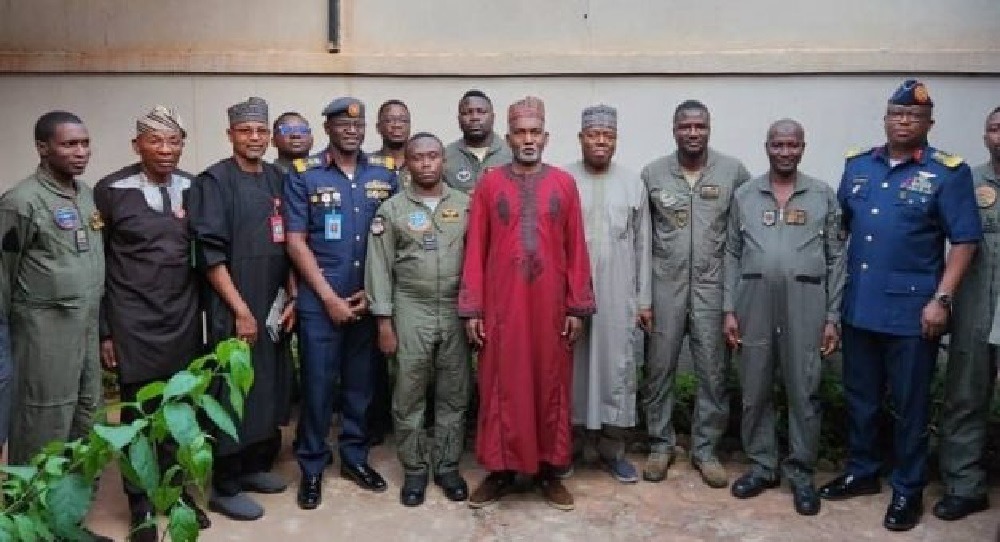
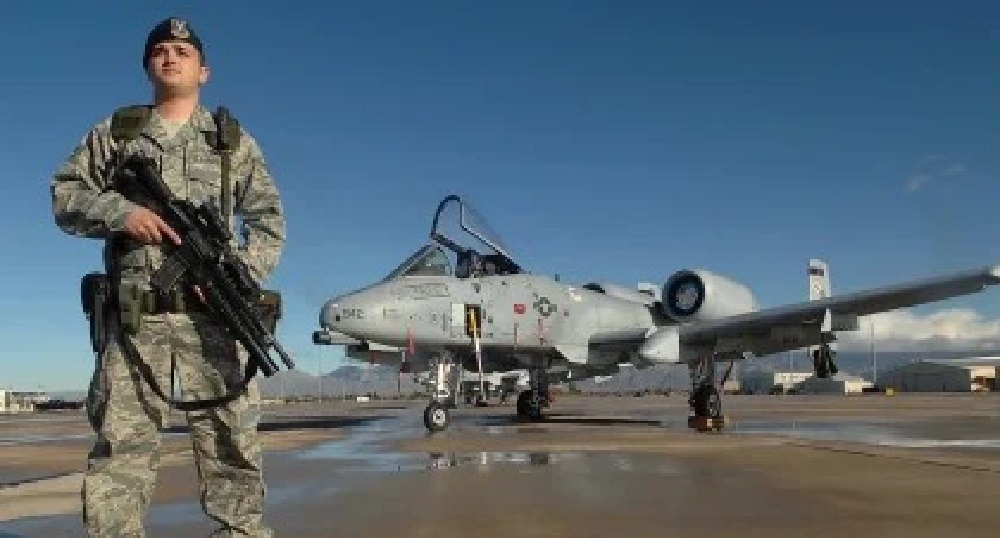
WITHOUT taking chances, the United States Air Force entered the Benin-Nigeria border airspace without using the Nigerian airport, stepped up reconnaissance and massive attack against militants and has begun the operation now in blasting the armoury of the terrorists.

Corroborating this view, Bryant Philip, a top American security operative with specialty in West Africa law enforcement confirmed the latest development by explaining that the United States Air Force ISR aircraft is on an on-going mission above the Nigeria-Benin border skies.

His words: “The United States Air Force ISR aircraft is currently operating above the Babana strategic crossing on the Benin-Nigeria border. This route has long been used by armed groups, particularly JNIM, for smuggling supplies. In August, the Nigerian army clashed with unidentified gunmen.

Advertisement

“The United States resumes ISR missions today in Nigeria, targeting ISWAP zones of influence in Borno State, northeast Nigeria, on the fringes of Lake Chad. It took off from Accra, Ghana. Still not using a Nigerian airport.”

Meanwhile, the Nigerian Army Elite Group, Maroon Beret famously described as Boko Haram’s nightmare stormed the secret enclave of the terrorists’ group and killed over 50 members of the notorious sect inside their make-shift huts in the forest.

As at press time, some 200 West African soldiers, mainly from Nigeria and Ivory Coast, are in Benin Republic to support the government following the failed coup, Benin’s foreign minister says.

Remember, the attempt was foiled after Nigeria deployed fighter jets to drive the mutineers out of a military base and state TV headquarters, where they had declared a takeover.

Advertisement

This is the first time that officials have said how many foreign soldiers were deployed to the country, although it is not clear if some have been withdrawn.

Benin’s Foreign Affairs Minister Olushegun Adjadi Bakari on Thursday said some of the regional troops sent to help had remained in the country “as part of the sweep and clean-up operation”.

The West African regional bloc, ECOWAS, deployed troops from Nigeria, Ghana, Sierra Leone, and Ivory Coast to secure key installations and prevent any resurgence of the violence.

Nigeria, Benin’s large neighbour to the east, said its soldiers had reached there since a few days ago, describing the coup attempt as a “direct assault on democracy”.

Advertisement

Security intelligence showed 50 soldiers from the country had been sent as part of the regional deployment.

“There are currently around 200 soldiers present, who came to lend a hand at the end of the day to the Beninese defence and security forces as part of the sweep and clean-up operation,” said Bakari, while addressing journalists in Nigeria’s capital, Abuja, on Thursday.

Bakari, who was speaking alongside Nigeria’s Foreign Affairs Minister Yusuf Maitama Tuggar, said that by the time the Beninese forces called for help, the coup “was already a failure”.

“When we started discussions for the intervention of Nigeria and the others, under ECOWAS protocol, our military had already pushed them back,” he added.

Advertisement

According to Bakari, what was required was “precise aerial back-up to carry out a surgical operation that targeted the enemy’s key positions without risking civilian casualties”.

Tuggar said that fast diplomatic, military, and intelligence actions between Nigeria and Benin had helped to foil the coup.

Discussions are continuing over how long the regional forces would remain, but Bakari said any decision “will be taken in close collaboration with Benin’s defence and security forces, who have demonstrated their bravery”.

It is not clear if the French special forces who also reportedly helped loyalist troops thwart the coup are still in Benin.

Advertisement

Under intense pressure after a string of successful coups in the region, Ecowas is signaling that it is no longer willing to watch democratically elected governments be toppled by the military.

Bakari praised ECOWAS as “an important tool that allows us to defend democracy and the values of democracy in our regional space”.

Benin’s army has suffered losses near its northern border with insurgency-hit Niger and Burkina Faso in recent years, as jihadist militants linked to Islamic State and al-Qaeda spread southwards.

Talon, who is regarded as a close ally of the West, is due to step down next year after completing his second term in office, with elections scheduled for April.
Advertisement
Continue Reading
Advertisement

News

NIS deports 99 foreigners over irregular migration

Published

on

By

ADVERTISEMENT
Zoom Ad
ADVERTISEMENT
Zoom Ad

The Nigeria Immigration Service repatriated 99 foreigners for irregular migration between July and August 2026, according to its latest operational report.

The report prepared for the Office of the National Security Adviser showed that 90 foreigners were repatriated in July, while nine others were repatriated in August.

The July figure comprised 33 Cameroonians, 38 nationals of Côte d’Ivoire, 15 Pakistanis, four Nigeriens, four Chadians, two Burkinabè, two Central Africans and one national of the Democratic Republic of Congo.

The report identified irregular migration as the primary reason for the repatriations.

Advertisement

It said, “90 foreigners were recorded as repatriated in July, while nine were recorded in August. The cases primarily involved irregular migration, with the July records including nationals of Cameroon (33), Niger (four), Pakistan (15), Côte d’Ivoire (38), Burkina Faso (two), Chad (four), Central African Republic (two) and the Democratic Republic of the Congo (one).”

The NIS also reported rescuing 23 victims of trafficking and other forms of exploitation during the period.

Seven victims were rescued in July, while 16 were rescued in August following interventions at locations including the Murtala Muhammed International Airport, Seme Border, Baji Patrol Post and other locations.

Some of the rescued victims were handed over to the National Agency for the Prohibition of Trafficking in Persons for further care and investigation.

Advertisement

The immigration authorities also apprehended a stowaway at the Murtala Muhammed International Airport in August.

“Seven victims were recorded as rescued in July and 16 in August. The records include interventions at MMIA, Seme Border, Baji Patrol Post, NAIA and other locations, with some victims handed over to the National Agency for the Prohibition of Trafficking in Persons.

“One stowaway was recorded as apprehended at the Murtala Muhammed International Airport in August 2026.

“Twenty-three victims were recorded as rescued across July and August. July interventions accounted for seven victims, including cases involving Thailand, Mali, Egypt and domestic locations. August interventions accounted for 16 victims, including cases intercepted at Seme Border, MMIA, NAIA and Baji Patrol Post,” it said.

Advertisement

In addition, four persons of interest were identified during the period, comprising three in July and one in August.

“The August case involved a potential trafficking victim who was referred to NAPTIP,” it added.

The NIS further disclosed that it had dismantled a fraudulent transnational organised crime syndicate linked to the QNET/Ignite group.

The operation, according to the report, led to the apprehension of the syndicate leaders and 11 facilitators in Lagos and Ogun states.

Advertisement

The service said the interventions formed part of its efforts to strengthen border security, regulate migration and combat transnational organised crime.

The report also highlighted the detection of document fraud, enforcement operations, arrests and prosecutions as part of measures taken by the service to safeguard Nigeria’s borders and prevent the exploitation of migrants.

The NIS said its operations during the period were aimed at ensuring effective migration management while contributing to national security.

Advertisement
Continue Reading

News

NABTEB releases 2026 NBC/NTC results, records 81.24% pass rate

Published

on

By

ADVERTISEMENT
Zoom Ad
ADVERTISEMENT
Zoom Ad

The National Business and Technical Examinations Board (NABTEB) has released results of the 2026 June/July National Business Certificate (NBC) and National Technical Certificate (NTC) examinations.

According to the board, 79,503 candidates, representing 81.24 per cent, obtained five credits and above, including English Language and Mathematics, in the Examinations.

Registrar and Chief Executive Officer of NABTEB, Dr. Aminu Mohammed, announced the results yesterday in Benin at a news conference.

It said the certified craftsmen were among 100,069 candidates that registered for the examinations in 2026, which represented an increase of 7,193 when compared to 92,876 candidates that registered in the 2025 examination cycle.

Advertisement

Mohammed said the increment reflected the growing interest in business and technical education.

He said 97,867 candidates sat for the examinations out of the 100,069 candidates that registered for the examination.

Mohammed said outcome of the examinations was the board’s mandate to promote practical skills. acquisition and occupational competence.

The NABTEB boss said the analysis showed that 79,503 candidates, representing 81.24 per cent, obtained five credits and above, including English Language and Mathematics, in the NBC/NTC Examinations.

Advertisement

He said 89,580 candidates, representing 91.53 per cent, obtained five credits and above, with or without English Language and Mathematics.

According to him, “Comparatively, this performance is significantly higher than that recorded in the May/June 2025 NBC/NTC Examinations, where 61,104 candidates, representing 68.18 per cent, obtained five credits and above including English Language and Mathematics.

“In the same 2025 examination cycle, 74,633 candidates, representing 83.28 per cent, obtained five credits and above, with or without English Language and Mathematics.

“The improvement recorded in the 2026 examination is encouraging and demonstrates the collective effort of candidates, teachers, schools, parents and the wider education system.

Advertisement

“These statistics provide useful indicators of performance; however, beyond the percentages lays the more important question of what these qualifications mean for the future of our young people and for Nigeria’s economic development.”

Dr. Mohammed said the NBC/NTC examinations occupied an important position within Nigeria’s technical and vocational education and training ecosystem.

Continue Reading

News

We’re central to economic activity, workers tell FG

Published

on

By

ADVERTISEMENT
Zoom Ad
ADVERTISEMENT
Zoom Ad

Despite the Federal Government’s latest Gross Domestic Product (GDP) growth figures, the organised labour said that the reported expansion had yet to translate into improved economic wellbeing for civil servants, whose purchasing power continues to weaken amid rising petrol prices and high cost of living.

National President, Association of Senior Civil Servants of Nigeria (ASCSN), Shehu Mohammed, who spoke in Lagos yesterday, on the state of the economy and workers’ welfare, during the South-West zonal workshop of the association, themed “A Shift from Confrontation to Collaboration,” said the contradiction was evident in the fact that civil servants remained central to economic activity while their earnings were being steadily eroded by inflation and rising living costs.

“We are the engine room. We lubricate the economy. Unfortunately, what we are facing today is that as we are lubricating, we are also drying up,” he said.

He said that the quality of economic growth should not be measured solely by increases in GDP, but whether such growth translates into improved disposable income and purchasing power for workers and households.

Advertisement

According to him, the N70,000 national minimum wage has already lost substantial purchasing power to inflation, even before its full implementation across the country.

The labour leader said this had made the next review of the national minimum wage particularly important, stressing that preparations must begin ahead of the 2027 negotiations.

He said that the organised labour would need credible economic data to support its demands at the negotiating table.

Mohammed warned that further increase of fuel price would deepen hardship..

Advertisement

MEANWHILE, the Federal Workers Forum (FWF) has called on the Federal Government to immediately review the salaries of federal workers, demanding a minimum wage of N300,000 and a maximum salary of N1.5 million for officers on Grade Level 17.

The forum also demanded the full implementation of the N70,000 minimum wage, payment of outstanding wage-related arrears and the introduction of additional welfare measures to cushion the impact of the rising cost of living on federal workers.

National Coordinator of the FWF, Andrew Emelieze, and General Secretary, Ogundele Ayodele, made the demands in a statement yesterday and addressed to the Senate President, Speaker of the House of Representatives, President Bola Tinubu, Chief Justice of Nigeria and Head of the Civil Service of the Federation.

Advertisement
Continue Reading

Trending

Copyright © 2024 Naija Blitz News