Connect with us

Opinion

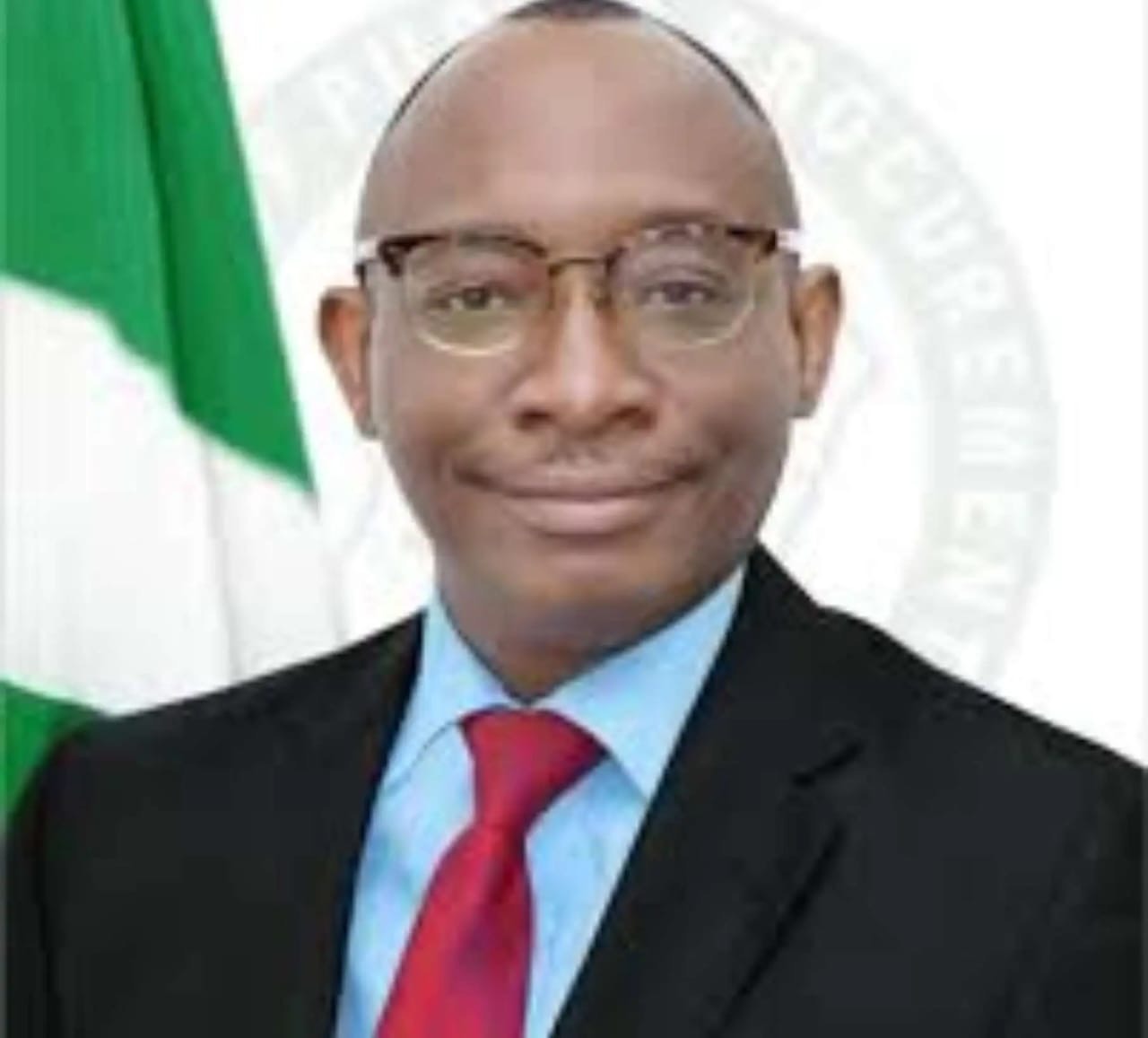
ABIODUN FALEKE: WHY GOOD MEN ARE BORN ON CHRISTMAS DAY By Philip Agbese

Published

on

ADVERTISEMENT
Zoom Ad
ADVERTISEMENT
Zoom Ad

The man Rt. Hon. Chief Abiodun Faleke is as unique as his name, literally translated Ìbí Ìdùnwòsì Àti Ìpè Àṣe, Abiodun, meaning, the birth of festivity, or born on a day of celebration, has been enhancing and fostering the unique role of attracting joy, and prosperity to others.


Born on December 25, he has spent his life embodying the spirit of that sacred day—bringing hope, compassion, and prosperity to those around him. His existence seems almost predestined to reflect the themes of renewal, generosity, and communal harmony that Christmas represents.

In a world where genuine leaders are often scarce, individuals like Faleke stand out as exceptionally rare. His character, shaped by his name, birth date, and lived values, has made him a trusted figure in Nigerian politics and society. As Chairman of the House Committee on Finance and a respected member of the House of Representatives, he carries forward the cherished Yoruba ideals of integrity, service, and collective well-being.

Faleke’s journey reflects a deep commitment to national progress. A loyal stalwart of the All Progressives Congress (APC), he has consistently placed public duty above personal gain. His political career gained national attention when he served as the deputy governorship candidate to the late Prince Abubakar Audu in Kogi State during the 2015 election. Though circumstances beyond his control prevented him from assuming office after Audu’s passing, Faleke’s grace and resilience during that period earned him widespread admiration. It underscored his dedication to service, even in the face of disappointment.

Advertisement

Hailing from Kogi West but born in Ijebu-Ode, Ogun State, Faleke now represents Ikeja Federal Constituency in Lagos. Over the years, he has built an unbreakable bond with his constituents through consistent, people-centered leadership. His approach is rooted in listening, engaging, and delivering results that improve lives. Whether addressing local needs or contributing to national policy, Faleke demonstrates a rare blend of humility, wisdom, and determination.

Beyond the National Assembly, Faleke’s impact extends through deliberate acts of kindness and strategic empowerment. He has invested in education by providing scholarships, supporting schools, and creating opportunities for young people to thrive. Healthcare access has been another priority, with initiatives that ensure quality medical services reach underserved communities. Economic empowerment programs—ranging from skill acquisition to small business support—have helped many families achieve financial stability.
These efforts cut across ethnic, religious, and gender lines, reflecting his belief in inclusive development.

His leadership philosophy aligns closely with the African concept of Ubuntu: “I am because we are.” This principle guides his actions, emphasizing shared progress over individual ambition. Faleke is known for his integrity in public life, transparency in decision-making, and accountability to those he serves. He treats his word as a bond, approaches challenges with compassion, and extends kindness even to those who disagree with him.

As Chairman of the House Committee on Finance, Faleke plays a pivotal role in shaping Nigeria’s economic direction. He advocates for prudent budgeting, efficient taxation, and responsible management of public funds. His work promotes transparency in government spending, ensuring resources benefit ordinary citizens. By focusing on fiscal discipline and equitable allocation, he helps stabilize the economy and rebuild public confidence in institutions.

Advertisement

In an era of economic challenges, his contributions provide a foundation for sustainable growth and improved living standards across the country. Education remains a cornerstone of Faleke’s vision for Nigeria. He views it as the key to unlocking potential and driving societal progress. Through scholarships, infrastructure support, and mentorship programs, he empowers youth to overcome barriers and pursue their dreams. These investments create lasting change, equipping the next generation with the tools to lead and innovate.
Faleke’s advocacy extends to gender equity. He actively supports women’s participation in governance, recognizing their vital role in nation-building. His empowerment initiatives often prioritize women, providing training, funding, and platforms for leadership. This commitment to inclusivity mirrors the Christmas message of unity and shared humanity.

Despite facing political hurdles, criticism, and opposition throughout his career, Faleke has remained steadfast. His ability to rise above adversity highlights his inner strength and unwavering focus on what matters most. This resilience inspires many, showing that principled leadership requires courage and perseverance.

Looking ahead, Faleke continues to champion economic development, social justice, and opportunity for all Nigerians. His policies and programs reflect a deep desire to create a fairer, more prosperous society. The generosity and compassion he displays—qualities often associated with the Christmas season—define his public and private life.

Celebrating Rt. Hon. Chief Abiodun Faleke is more than marking a birthday. It is an opportunity to honor a man who has lived out the true meaning of service. His patriotism, fiscal prudence, and dedication to inclusivity have left a lasting mark on Nigeria.

Advertisement

Like the enduring light of Christmas, Faleke’s legacy shines through his actions, offering hope and renewal to his constituents and the nation. Born on a day of joy and festivity, he has become a living example of what leadership can achieve when guided by purpose and compassion.

His story reminds us that good men are indeed born on Christmas Day—not by chance, but by design. They arrive to spread light, foster unity, and build a better tomorrow. Rt. Hon. Chief Abiodun Faleke is one such man, and his contributions will continue to inspire generations long after the holiday lights have faded.

*Agbese is the Deputy Spokesman, 10th House of Representatives
Advertisement
Continue Reading
Advertisement

Opinion

*WHEN PRIVACY BECOMES CONTENT*

Published

on

ADVERTISEMENT
Zoom Ad
ADVERTISEMENT
Zoom Ad


The Dangerous Normalisation of Leaked Private Conversations

By

Ken Harries, Esq.

Advertisement

There is a point at which political contestation ceases to be an argument about ideas and becomes an assault on the very boundaries that make civil society possible. That point is reached when a private telephone conversation is allegedly recorded, extracted from its original context and released into the public domain as political ammunition.

The latest controversy surrounding an audio recording purported to be a telephone conversation between Senator Godswill Akpabio and Sandra C. Duru, a.k.a. Professor Mgbeke, therefore deserves to be examined beyond the personalities involved. It raises a much larger question: What happens to a society when private conversations become raw material for public propaganda?

Recent reports indicate that Sandra Duru released a nine-minute audio recording on social media and presented portions of it as a private conversation involving the Senate President. Yet, significantly, the recording has not been independently authenticated, and questions remain about the identity of the voices, the circumstances in which the conversation was recorded, and whether the excerpts constitute the complete conversation. Those uncertainties are not minor technicalities; they are at the heart of responsible public communication.

PRIVACY IS NOT A POLITICAL LUXURY
Nigeria’s Constitution is unequivocal in recognising privacy as a fundamental right. Section 37 guarantees and protects the privacy of citizens, including their homes, correspondence and telephone conversations. That constitutional safeguard does not disappear because the individuals involved are politicians, public officials, activists or controversial personalities. Indeed, public office should never be interpreted as a wholesale surrender of personal privacy.

Advertisement

The Nigeria Data Protection Act 2023 reinforces this principle by establishing a legal framework for protecting personal information and regulating its processing. Among its stated objectives are the protection of fundamental rights and freedoms, the safeguarding of personal data, and the requirement that personal data be processed in a fair, lawful and accountable manner.

The central question, therefore, is not whether an audio recording can generate political excitement; it obviously can. The question is whether private communication can be captured, processed, edited, reproduced and disseminated for political purposes without lawful justification, proper authorisation or regard for the rights of the people whose voices and personal information are involved. That is a much more serious question.

THE CYBER DIMENSION CANNOT BE IGNORED
The Cybercrimes (Prohibition, Prevention, etc.) Act, as amended in 2024, also contains provisions concerning unlawful interception of non-public computer communications and judicially authorised interception of electronic communications. The legislation defines interception broadly enough to include listening to or recording communication data in specified circumstances. But legal precision matters, particularly when criminal liability is being discussed.

It would be premature for commentators to declare, without establishing the facts, that the mere existence or publication of this particular audio automatically constitutes a criminal offence under the Cybercrimes Act. If, however, the evidence establishes that a private electronic communication was intercepted or obtained without lawful authority, the circumstances could raise serious questions under the applicable constitutional, data-protection and cybercrime frameworks. That is precisely why an independent investigation matters: the law should determine the legality, not social media.

Advertisement

PUBLIC INTEREST IS NOT A BLANK CHEQUE
There is another important distinction that the Nigerian public must begin to make. A matter involving a public official may be of public interest without every private conversation involving that official becoming public property. Public interest is not the same thing as public curiosity.

A genuine public-interest disclosure ordinarily requires more than the ability to attract clicks, outrage or political engagement. It requires consideration of authenticity, context, provenance, relevance and the legitimate rights of the people involved. A fragment of an alleged private conversation, detached from the circumstances in which it occurred and presented to millions of people without independent authentication, can easily become something very different from responsible whistleblowing.

It can become narrative engineering, particularly when selected material is used to encourage the public towards a predetermined interpretation. When such narrative engineering is repeatedly used to shape public perception, it begins to resemble propaganda rather than public accountability.

THE MORAL QUESTION
There is also a moral dimension that no statute can completely capture. Politics is already a theatre of suspicion, rivalry and competing narratives. If every private conversation is potentially a future weapon, trust disappears from public life. People stop speaking candidly, officials become afraid of legitimate conversations, and citizens become unwilling to engage public figures.

Advertisement

Political communication then gradually degenerates into a marketplace where the most sensational fragment—not necessarily the most truthful account—commands the greatest attention. This is where the conduct surrounding the dissemination of private conversations raises profound ethical questions.

A society that normalises the conversion of private conversations into political weapons risks producing a culture in which nothing is private, context is disposable and reputation is collateral damage. That is not democratic accountability; it is the erosion of the ethical architecture upon which democratic accountability depends.

THE PROBLEM WITH THE “MERCHANT OF PROPAGANDA” MODEL
There is a growing phenomenon in digital politics in which controversy itself becomes a political commodity. The objective is no longer necessarily to establish facts, but to generate a continuous stream of allegations, recordings, screenshots, insinuations and counter-allegations until the public becomes emotionally exhausted and truth becomes indistinguishable from repetition.

The danger is particularly acute when the communicator becomes both the source of the allegation and the narrator of the evidence. That model creates an obvious credibility problem because the public is effectively being asked to accept not merely the allegation but also the interpretation supplied by the person disseminating it.

Advertisement

That is why independent verification is indispensable. A recording should be authenticated, its provenance established, its full context examined and any editing disclosed. The circumstances of its acquisition should also be investigated. Where there are allegations of unlawful interception or misuse of personal data, the appropriate regulatory and law-enforcement authorities should be allowed to do their work.

FREEDOM OF EXPRESSION HAS RESPONSIBILITIES
Freedom of expression is indispensable to democracy, but so is the right to privacy. These principles should not be presented as enemies. Responsible journalism, legitimate whistleblowing and public-interest disclosure have their place, but none of them should become convenient labels for every unauthorised exposure of private communications.

The democratic answer to disputed conduct is evidence, investigation and due process—not digital vigilantism. If the recording is authentic and contains evidence of wrongdoing, the proper response is to submit the evidence to the appropriate institutions and allow the facts to be tested. If it is unauthorised, manipulated, selectively edited or misleadingly presented, those facts should also be established through proper investigation. Either way, the truth deserves a process more rigorous than a Facebook post.

THIS IS BIGGER THAN AKPABIO
The most important lesson from this episode should not be about Senator Godswill Akpabio alone; it should be about the Nigeria we are creating. Today, it may be a conversation involving a Senate President. Tomorrow, it could be a judge, journalist, businessman, civil servant, academic, clergy member or ordinary citizen.

Advertisement

If the principle becomes that anyone who possesses a private recording is entitled to publish it whenever politically convenient, then privacy ceases to be a right and becomes merely a temporary privilege enjoyed by those who have not yet been recorded. That is a dangerous trend with implications extending far beyond the personalities involved in the present controversy.

The constitutional guarantee of privacy cannot be selectively defended, data protection cannot become a slogan deployed only when convenient, and cybercrime legislation cannot be invoked selectively. Political communication cannot be allowed to become a free-for-all in which reputations are tried and convicted on social media before evidence is examined.

LET THE LAW SPEAK
There is, therefore, a compelling case for the relevant authorities to establish the facts surrounding any purported private telephone recording now circulating. Who made the recording? How was it obtained? Was consent given? Was the communication intercepted? Was it edited? Who first disseminated it, and for what purpose? What personal data were processed? Was there a lawful basis for that processing? And does the dissemination violate any applicable constitutional, statutory or judicial protection? Those are questions for evidence, not conjecture.

There is, however, a broader principle worth defending: private communication should not become political ammunition merely because it can generate attention. A democracy requires trust, evidence, restraint and respect for the law. Public accountability is strengthened, not weakened, when allegations are subjected to verification and established processes rather than determined by the velocity of social-media circulation.

Advertisement

The real moral deficit in contemporary public discourse is not that people disagree. It is that the boundaries between legitimate scrutiny and intrusion can become dangerously blurred when private material is circulated without adequate attention to authenticity, context, provenance and applicable law. Once society becomes indifferent to those boundaries, everyone—not merely public officials—has reason to be concerned about the future of privacy.

Ken Harries, Esq., is an Abuja-based Development Communication Strategist.

Continue Reading

Opinion

O.K CHINDA: A QUINTESSENTIAL LEGISLATOR FIT FOR RIVERS “BRICK HOUSE”

Published

on

ADVERTISEMENT
Zoom Ad
ADVERTISEMENT
Zoom Ad

BY

BOLAJI AFOLABI.

Since his emergence as the Governorship candidate of the All Progressives Congress, (APC), for Rivers State in next year’s general elections, the buzz around and about him, his aspirations, and prospects of being the fifth occupant of the “Brick House” – in the 4th Republic has been tremendous. Ogundu Kingsley Chinda; commonly called O.K Chinda, received a state-wide affirmation polling 268,497 total votes across the entire 319 Wards of the 23 LGAs at the governorship primaries of the party, held on July 27th in Port Harcourt, with Rt. Hon. Laori Kwamoti as the Chairman of the Committee. From the get-go, developments revealed that he was (and still) the right choice, as he enjoys overwhelming support of the people. Thereafter, different Groups, Associations, and Bodies were formed to canvass, market his candidacy; while waiting for the Independent National Electoral Commission, (INEC) to signal the commencement of electioneering campaigns.

Little wonder there was spontaneous applause and tumultuous enthusiasm by the people when, INEC on September 19, formally announced the commencement of public campaigns for the Governorship and State Assembly elections, in accordance with the electoral guidelines. Almost immediately, there has been a preponderance of activities by different groups and individuals for the O.K Chinda’s project. According to informed and credible sources, meetings, discussions, and consultations across the State have been on the increase. Campaign messages of varied strands and slants have become a permanent fixture on the social media. Here, voters and residents of Rivers regularly receive varied messages from numerous support groups geared towards ensuring that the name, aspirations, and manifesto of the APC candidate is ingrained in their hearts, heads, and eyes. But why the groundswell support? Why the confidence in a Legislator occupying an executive position?

Advertisement

Somehow, it seems there are certain reasons why Chinda’s governorship ambition is gaining momentum, spreading faster, and winning more converts daily. We will come to this later. From research and empirical reports, the writer discovered that, globally, many Legislators transit to Executive positions. In the United States of America, for instance some of the Governors are former Members of Congress. As of January 2026, over a dozen Governors have previously served in the US House of Representatives. They include Kathy Hochul – New York; Abigail Spanberger – Virginia; Mikie Sherrill – New Jersey; Jeff Landry – Louisiana; Kelly Armstrong – North Dakota; and Greg Gianforte – Montana.

Similar trends are prevalent in some countries in Europe and Africa. In Nigeria, between 1999 and now, there are a few former Members of the House of Representatives that have occupied executive positions; either Governor or Deputy Governor in respective States. They include Abdul’Aziz Yari – Zamfara; Ifeanyi Ugwuanyi – Enugu; Gabriel Suswam – Benue; Seriake Dickson – Bayelsa; Bello Matawalle – Zamfara; and Aminu Tambuwal – Sokoto. A few others like Umar Bago – Niger; and Duoye Diri – Bayelsa are present chief executives. Some leadership experts argue that having legislative experience is a necessary ingredient that will guide Governors towards credible performances. Further, Legislative Houses – particularly at the federal level – is described as a preparatory institution needed towards assuming executive positions in States.

With these backgrounds, it is obvious that Chinda’s choice is resonating with the majority of people in Rivers. Over the years, he has proven himself as one of the most resourceful legislators in Nigeria. With over 15 years in the House of Representatives, as a quintessential lawmaker, responsive politician, and resilient advocate for good governance, and general well-being of the people, Chinda ticks all the boxes to superintendent Rivers. Seriously, given the vagaries of unfortunate issues that affected Executive-Legislature relationship in the out-going government, moving forward, the State needs a chief executive that is grounded in legislative duties. This, Chinda has in quality measures, in addition to his previous public service careers as a Legal Adviser to the Chairman of Obio/Akpor LGA, and Commissioner for the Environment. For Rivers, it is a classic case of “plus-one-for-one” – having a Governor that has two distinctive epaulettes; executive and (federal) legislative experiences.

Many people have concluded that Chinda is OK for Rivers, as he will not learn on the job but hit the ground running. There are merits in this line of thought and public perception. Being the representative of Obio/Akpor in Nigeria’s House of Representatives since 2011, Chinda has posted brilliant achievements in lawmaking, oversight, and representation. He has over 80 Motions and over 30 Bills to his name. He has impacted on his constituents (and some others outside Obio/Akpor) through projects, programmes, and initiatives that cuts across different sectors. These include education, infrastructures, constructions, health, agriculture, and environment. Others are skills development, community development, women empowerment, youth development, capacity building, and humanitarian gestures.

Advertisement

In the past few months, comments by the people have clearly confirmed the broad-based recognition and public endorsements of Chinda’s governorship ambition. Chief Paul Ekeocha, a Port Harcourt based serial entrepreneur believes that, “Rivers cannot ask for more because of Chinda’s passion and commitment to the development of our State and the people. He maintains a humble, simple, accessible, compassionate, and responsible personae that are rare among politicians.” For Madam Gladys Mike-Hart, an educationist, “he has paid his dues as a loyal, reliable, and dependable, and hardworking politician whose consistent performances have benefitted many people, including non-politicians and members of other parties.”

Comrade Thaddeus Priye, an activist and founder of a youth-focussed CSO declared that, “his candidacy has gained huge traction among different groups, associations, ethnicity, political parties, and others. He has emerged and remains the choice of Rivers people.” Alhaji Usman Minjibir, a non-indegene and transporter revealed that, “our Union has decided to support and mobilize votes for him because some of our members have also benefitted from his programmes, as recent as December last year.” To drive home the point, a senior member of one of the opposition parties in the State who begged for anonymity confessed, “it is an uphill task to defeat Chinda because he is not only loved by many people but he has touched the lives of numerous politicians. The truth is that, his acceptance and support base cuts across different parties.”

Indeed, a dispassionate analysis of Chinda’s public service credentials and political odysseys, to a great extent validates the confidence and optimism of the people. His over thirty years career in the private sector, the executive, and legislature is a huge and unique boost to his aspiration. By May next year, Chinda would have grossed 16 years in the House of Representatives as a super-ranking and top-of-the-class lawmaker with numerous trail-blazing and record-breaking feats. Also, his long years of interfacing with the bureaucracy at State and Federal levels should smoothen the pace of governance, and impact positively on leadership. No doubt, considering his pedigree, Chinda is expected to transform from making laws to Making Rivers Work.


Advertisement

* BOLAJI AFOLABI, a Development Communications specialist was with the Office of Public Affairs, The Presidency, Abuja.

Continue Reading

Opinion

ZAMFARA 2027 AND THE CLAMOUR FOR CHANGE

Published

on

ADVERTISEMENT
Zoom Ad
ADVERTISEMENT
Zoom Ad

BY BOLAJI AFOLABI

While many citizens of Zamfara were surprised, others were shocked by the reality that their beloved State will be 30 years in a few months. Worse hit were the young adults in tertiary institutions and post-primary schools, the working-class category, the unemployed, and the increasing group of almajiris who daily, traverse the streets of Gusau and other towns in search of daily meals. Governor Dauda Lawal inaugurated a central planning committee to mark the State’s three decades of existence; scheduled for December 2026. With the extinction of History in our schools, and given the uninspiring commitment of successive governments to education, many people – young and old – may be excused for not being conscious of the advancing-age of Zamfara. With the depth of infrastructure decay, disturbing unemployment, corrosive poverty, pervasive hunger, debilitating hardship, unabated insecurity, and wholesale pauperization of the citizenry, particularly in the last few years such a reaction was expected.

Trust the average politician to latch on any issue for self-adulation, chest-pumping, and ego-tripping, the media handlers of Lawal did just that. They did not allow the opportunity to sneak out of exploitation. They feasted on it for maximum mileage. To prepare the grounds for the “Zamfara-birthday” the media space; particularly the social media was awash with opinions, commentaries, and articles about the “great works” in the State. Analysts who seemed to be in a literary contest tried to out-do, out-wit, and out-shine one another to burnish the image of Lawal, and market his achievements to all Nigerians. After reading one of those articles, Mallam Abubakar Maigari, a civil rights activist quipped, “I very much doubt if this person went round the entire State, it thus appears that he merely weaved the information given to him in beautiful prose.” Comrade Suleiman Bello, a colleague of Maigari commended Lawal for, “a few of the positive things in Gusau, but there is nothing near the imagery being painted in the article.”

Having stumbled on the advocacies, there was an urge to interrogate the veracity of these milestones. It grew in propensity and became inevitable. Perhaps, the discovery that Zamfara, which was created on October 1st, 1996, by former Head of State, Late General Sani Abacha; on the same day with Bayelsa, Ebonyi, Ekiti, Gombe, and Nasarawa States increased one’s desire to probe further. Also, with some knowledge about the political culture of the people, and with the 2027 General Elections fast approaching, one concluded that it was necessary to go, even deeper. The solution on how to go about it came in the most unexpected manner. A few days ago, the writer had a chance meeting with three people – who were part of a team that embarked on a one-week political fact-finding tour of the State.

Advertisement

Insisting on their apolitical status and professionalism, they agreed to share slices of their findings on the condition of anonymity. Taking turns, the “three wise men” spoke about the political situation in Zamfara – particularly, with the general elections fast approaching. As curtain raisers, they lamented about the level of insecurity in the State, which has distorted, if not eroded the agrarian vocation of people in the hinterland. For them, it was a misnomer to discover that a state with the moniker; “farming is our pride” are in a quandary as swathes of arable farmlands are deserted by the people – not for laziness but to protect and preserve lives. They claimed that the level of political consciousness of the people was thousands of miles beyond their hitherto perceptions.

Indeed, a picture of disenchanted citizenry, overarching workforce that are disillusioned by the antics of the political class was painted. The realities on ground outweigh the “eldorado” communicated by government apologists. A member of the group declared that, “across the State, you meet angry, hungry, and pained populace who are eagerly hopeful that their basic needs would be addressed. It may interest you to know that aside from the urban renewals executed by the present administration, nothing meaningful is happening in other towns across the State. From the Central to the West and North Senatorial Districts, the economic squalor, poverty, hunger, hardship, and massive unemployment gives serious concerns. Sadly, politics is the only thriving business in Zamfara; as the vast majority scramble for the crumbs from Leaders – which itself, portends danger to meaningful development.”

Contrary to the calculations and conjectures by political trackers about the state of play in Zamfara, Nigerians may be in for a shocker. Another member of the trio said that, “the present realities shows gradual shift among voters, such that the eventual results of the next elections may confirm the awareness and understanding of the populace to politics and national issues. The fact is that there is schisms in the ruling APC, as Lawal, Senator Yari, and Minister Matawalle are allegedly not together. There are purported issues of mistrust, mutual suspicions, power-tussle, egoistic tendencies, and distortions of political hegemony. While they are fully committed towards the re-election of President Bola Tinubu, the reverse is likely at the Governorship polls. As it is, Nigerians should not be surprised if the outcomes of next year’s elections differ from projections.”

Continuing, the last of the “three wise men” added, “forget the photo-ops of the men splashed in the media, the gulf between them is huge and cannot be dismissed. From reports, it is almost impossible for truce, because it is about present and future political power and relevance. These are known to the majority of the Zamfara populace; though many are diplomatic about it. The clamour for change of guards in Zamfara is real, and gradually takes a life of its own. For many people, having failed in guaranteeing security, Lawal does not deserve re-election. However, two discoveries were shocking. One, Tinubu may score more than the mandatory 25% or win Zamfara, outrightly. Two, the Peoples Democratic Party, (PDP) appears to be the new darling of the people for the Governorship elections, as it is gaining more momentum, and new membership.”

Advertisement

Two events that happened recently, somewhat confirms the issues discussed above. Following his appointment as the Director-General of the APC Presidential Campaign Council, a grand home-coming was organized for Yari by his supporters in Gusau. While addressing the media after a strategic session with his political group, Yari was unequivocal about ensuring that Tinubu wins comfortably in Zamfara. However, he was diplomatic about Lawal. A few days later in Kaduna, Matawalle after an engagement with his political group, took a similar strand. If these scenarios are carefully analysed, it is obvious that both men, who possess commendable followers in Zamfara are not only in sync, but wholly committed towards delivering the State to Tinubu. Stretched further, one can safely conclude – for now – that they seem pococurante to the Lawal re-election project.

In many ways, the frank comments by a senior member of staff of the State’s bureaucracy who pleaded anonymity was instructive, “my schedule involves covering all the LGAs, which I do regularly. Forget whatever those around His Excellency are saying or the message they are telling Nigerians, the facts on ground is that the people are looking beyond him. They are not happy with him and his leadership style. They have concluded to withdraw their support for him. For now, the people are gravitating towards the PDP, which has organic members and support bases throughout Zamfara. Also, those you may call the “original Leaders” of Zamfara politics seems to have resolved to win back executive power from Lawal, described as an ‘outsider’ whose path to victory in 2023 they believed was accidental and unfortunate.”

True, these are interesting times in the politics of Zamfara State, even as the 2027 general elections beckons. In almost a decade, two political developments has shown that the State is one that deserves keen interest and magestrial studies. PDP, the main opposition party, won executive power through the Courts and Ballot in 2019 and 2023 – with Matawalle and Lawal being the major beneficiaries. Are voters going to replicate the damning electoral flooring served Matawalle in 2023 to Lawal in 2027? Are we going to see, once again the triumph of people-power as the consequence for inertia, insensitivity, and imbalances in the polity? Will the power equation be retained and strengthened? Will there be reclaiming of executive power by the legacy group of political egg-heads?

* BOLAJI AFOLABI, a Development Communications specialist was with the Office of Public Affairs, The Presidency Abuja.

Advertisement
Continue Reading

Trending

Copyright © 2024 Naija Blitz News