Connect with us

News

FG generates N8.09trn from VAT, electronic money transfers in 11 months

Published

on

ADVERTISEMENT
Zoom Ad
ADVERTISEMENT
Zoom Ad

The federal government generated the sum of N8.09trn between January and November 2025, analysis of documents of the Federal Account Allocation Committee (FAAC) has shown.


A breakdown showed the government collected N7.69trn from Value Added Tax and N403.68bn from Electronic Money Transfer Levy (EMTL).

Analysis for VAT indicates that the government collected N771.86bn in January but reduced to N654.456bn in February and down to N637.61bn in March.

It increased slightly to N642.26bn in April then N742.82bn in May before experiencing another drop to N678.16bn in June. There was a notable increase to N687.9bn in July and further increase to N722.61bn in August.

Advertisement

September saw the continuous increase to N872.63bn before it further dropped to N719.82bn in October and N563.04bn in November.

For EMTL, January saw a collection of N21.40bn while in February it was N36.63bn and N26.01bn in March. April recorded the collection of N40.48bn while N28.82bn was collected in May.

In June it increased to N30bn and July witnessed further increase to N39.16bn but August’s collection dropped to N33.68bn.

September recorded the highest collection during the year with N53.83bn while there was a slight reduction in October to N49.86bn and N43.4bn was collected in November.

Advertisement

EMTL replaced with stamp duties from January 1

Meanwhile, the Electronic Money Transfer Levy (EMTL) has been replaced with Stamp Duties effective January 1, 2026.

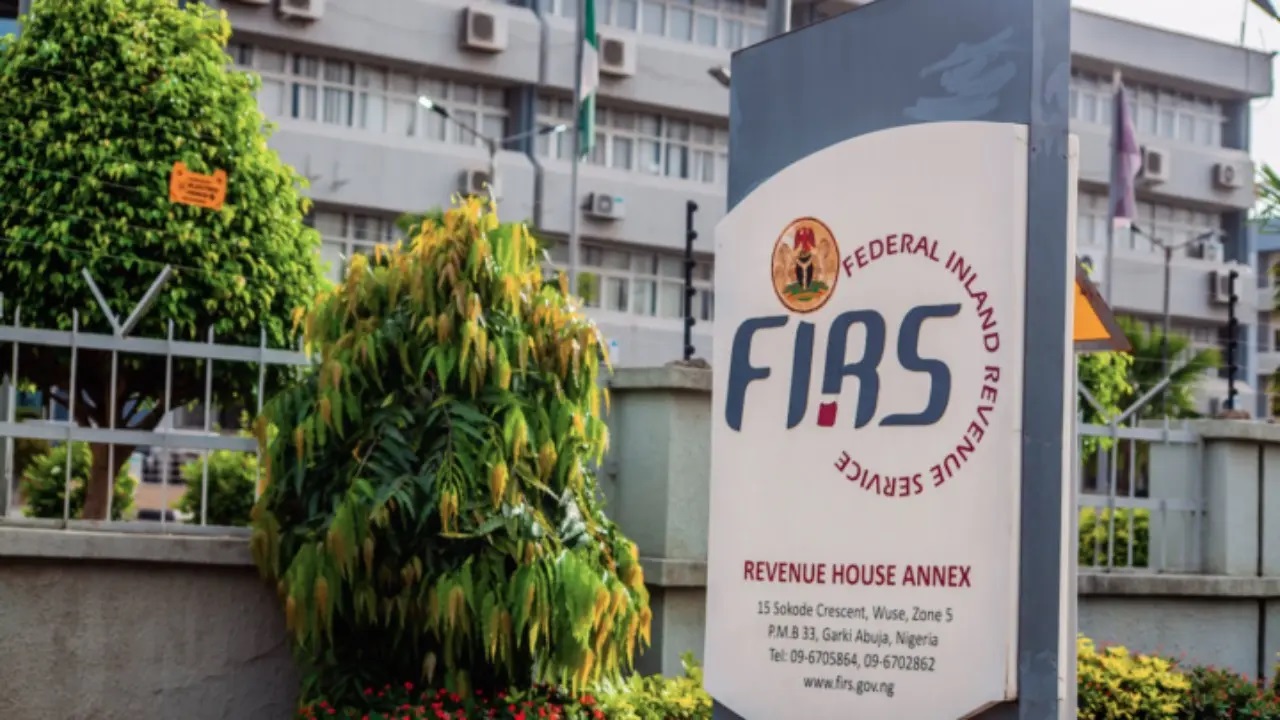
This is in accordance with the Nigeria Tax Act (NTA) 2025, with N50 Stamp Duties charged on account when transfer of N10,000 or more to another beneficiary as mandated by the Federal Inland Revenue Service (FIRS).

A statement by PalmPay to its customers at the weekend said the sender will be charged Stamp Duties and not the receiver.

Advertisement

It read: “In accordance with the Nigeria Tax Act (NTA) 2025, the Electronic Money Transfer Levy (EMTL) has been renamed Stamp Duties effective January 1, 2026. N50 Stamp Duties will be charged on your account when you transfer N10,000 or more to another beneficiary as mandated by the Federal Inland Revenue Service (FIRS).

The sender will be charged Stamp Duties and not the receiver.

These Stamp Duty does not apply to transfers between your own PalmPay accounts where the names and BVN/NIN match.

Please note that PalmPay does not benefit from this stamp duty. It is remitted directly to the Federal Government. The Stamp Duty replaces the Electronic Money Transfer Levy (EMTL).”

Advertisement

Daily Trust reports that EMTL is a small but growing source of government revenue.

It generated N219.11bn in 2024, beating its N174.24bn projection.

That growth was driven largely by the extension of the levy to fintech platforms such as OPay, PalmPay, and Moniepoint.

Initially, EMTL applied only to deposit money banks. However, in December 2024, fintech transactions were also subjected to the same EMTL.

Advertisement

With the expanded stamp duty regime, the government is projecting N456.07bn in revenue in 2026, rising to N579.82bn in 2027 and N752.45bn in 2028.

The projections have been factored into the medium term expenditure framework (MTEF) for the 2026 budget making stamp duty a key pillar of fiscal certainty.

Also, under EMTL, revenue was shared between the federal government (15%), state governments (50%), and local governments (35%). Under the new tax law, the federal share drops to 10%, while states take 55%.

Replacing EMTL with stamp duty is part of a broader package of tax reforms set to take effect in January 2026. The new tax laws were enacted to improve tax collection and grow non-oil revenue.

Advertisement

The extra N50 people have to pay is insignificant in isolation, but multiplied across millions of daily transfers, it adds up to hundreds of billions for the government, and steadily erodes affordability for Nigerians who rely on digital payments to move money quickly and cheaply.

The EMTL was introduced under the Finance Act 2020 and it places a singular and one-off levy of N50 on the recipient of any electronic receipt or transfer of N10,000 or above.

Since its introduction, small business owners and point-of-sale (POS) operators and individual account holders have lamented the erosion of value of transfer made to them.

For instance, if N10,000 was transferred to a recipient with zero account balance for instance, the N10,000 reduces in value.

Advertisement

Many POS operators have particularly raised concern over the N50 levy which they said has led to reduction in their profit bottom-line.

Our correspondent however reports that some of the POS operators have devised several methods to hedge against it.

Daily Trust learnt that POS attendants charge N100 on transactions less than N5,000 and N200 on N10,000 while some of them had to review their charges to remain in business.

From EMTL to Stamp duty explained

Advertisement

Stamp duty is a tax on instruments (written or electronic documents). The Stamp Duties Act Cap. S8 LFN 2004 (“SDA” or the Act”) can be traced to the 1893 Stamp Duties and Stamp Duties Management Acts passed by the British Parliament.

It was enacted and came into force on 1 April 1939. specific amount regardless of the value of the transaction. The Finance Act 2019 (“the FA 2019”), particularly section 52, expanded the scope of the SDA to capture electronic transactions.

The FA 2019 (in section 54 which amended section 89 of the SDA) also expressly introduced stamp duties on bank deposits and transfers. This has been replaced by an Electronic Money Transfer Levy (‘EMTL”) now contained in a new section 89A of the SDA (amended by section 48 of the Finance Act, 2020 (‘the FA 2020”).

The Act, amongst other things, imposes stamp duties on written or electronic instruments (agreements, contracts, receipts etc.). Under the Act, stamp duties may be levied either at an ad valorem or flat rate depending on the type or nature of the instrument.

Advertisement

Chairman of the Presidential Committee on Tax Reform, Mr. Taiwo Oyedele had insisted that no new tax has been introduced in the new tax reform laws which would take effect on January 1, 2026.

According to him, the new government is on record to have repealed, reversed and suspended more taxes.

He listed the taxes that have been suspended to include 5% excise tax on airtime & data; Cybersecurity levy on money transfers; Carbon tax on single use plastics; Excise tax on imported vehicles; Import duties on food items, Agric and pharmaceuticals ; 4% import levy; FRCN charge on private companies and Expatriate employment levy.

In a recent presentation on the new tax laws, Oyedele expressed confidence that the new tax laws would stimulate growth without adding to inflation burden.

Advertisement
Continue Reading
Advertisement

News

JAMB sacks staff member over extortion of candidates

Published

on

By

ADVERTISEMENT
Zoom Ad
ADVERTISEMENT
Zoom Ad

The Joint Admissions and Matriculation Board, JAMB, has sacked one of its staff members for allegedly extorting unsuspecting candidates.

The Board made this known on Monday in its bulletin, stating that the action was part of its renewed efforts to eliminate fraudulent practices within the admission and examination system.

According to JAMB, the sanction against the unnamed staff member showed that its fight against exploitation was not limited to external fraudsters but also applied to employees found abusing their positions.

“The Joint Admissions and Matriculation Board, JAMB, has terminated the appointment of one of its staff members for extorting unsuspecting candidates, in further demonstration of its renewed commitment to flushing out bad eggs from the system,” the board stated.

Advertisement

It further cautioned its employees against engaging in activities capable of undermining its credibility or exploiting candidates and members of the public.

The Board stressed that any staff members found guilty of misconduct would face severe consequences in line with established regulations.

“The Board noted that the action sends a clear and unequivocal message that its zero-tolerance policy on corruption and misconduct applies to everyone, irrespective of status or position,” it added.

The tertiary examination body reiterated that it would not shield any employee who abuses the trust placed in them by candidates or members of the public.

Advertisement
Continue Reading

News

UNICAL suspends nine students over exam misconduct

Published

on

By

ADVERTISEMENT
Zoom Ad
ADVERTISEMENT
Zoom Ad

The Senate of the University of Calabar (UniCal) has suspended nine students for one academic session over their involvement in examination misconduct.

According to a statement by the university’s public relations unit and made available in Calabar on Monday, the suspension was conveyed to the affected students in letters signed by the registrar, Chukwuka Icha.

The action, the university said, followed approval by the Senate following recommendations by its Examination Misconduct Committee (SEMC).

“The affected students have been suspended for the 2026/2027 academic session and are expected to resume their studies in the 2027/2028 academic session.

Advertisement

“Five of the affected students are from the Department of Theatre and Media Studies, Faculty of Arts,” it said.

The others are in the Department of Human Nutrition and Dietetics, Faculty of Basic Medical Sciences; the Department of Geology, Faculty of Physical Sciences; the Department of Pharmacology, Faculty of Basic Medical Sciences; and the Department of Sociology, Faculty of Social Sciences,” the statement said.

The university directed the acting chief security officer, deans, heads of departments, and other relevant units to take note of the suspension and ensure full compliance with the directive.

(NAN)

Advertisement
Continue Reading

News

FCT residents lament fresh hike in cooking gas price

Published

on

By

ADVERTISEMENT
Zoom Ad
ADVERTISEMENT
Zoom Ad

Residents of the Federal Capital Territory (FCT) have lamented a fresh increase in cooking gas prices, saying the development is forcing households to cut consumption, adjust budgets and resort to alternative cooking fuels.

Market checks across Abuja showed that Liquefied Petroleum Gas (LPG) is selling for between N1,380 and N2,000 per kilogramme, depending on location and outlet, after prices had dropped to as low as N1,250 in some areas earlier in September.

The latest increase has reversed some of the relief recorded in July, when improved supply and increased imports reportedly pushed prices down in several parts of the FCT.

For Mrs Rukayyah Muhammed, the increase has already disrupted her household budget.

Advertisement

She said she usually bought a kilogramme of cooking gas for about N1,300 but paid N1,700 at a black-market outlet around Idu Furniture area during at the weekend.

Muhammed said she had to use money set aside for transportation to make up the difference, adding that the rising cost had forced her to consider charcoal as an alternative.

“Now, I have to improvise with a coal stove and use charcoal. Sometimes, that is what I have to do,” she said.

Expressing frustration over the development, she appealed to the government to intervene, saying the rising cost of basic necessities had become unbearable for ordinary households.

Advertisement

“Honestly, I was heartbroken. Please, government should do something about it because the thing is tiring,” she said.

Another resident, Mrs Tunde, said she had noticed a sharp increase in cooking gas prices in recent times.

She said a 12kg cylinder, which previously cost her N16,500 to refill, now cost about N18,750.

Tunde said the increase had affected her household budget, adding that she sometimes resorted to an electric cooker because the gas did not last as long as she expected.

Advertisement

“The gas doesn’t even last for a month. For something that is that expensive, it should be able to serve us much longer,” she said.

She called on the government to make cooking gas more affordable and urged relevant authorities to ensure that weighing metres used by retailers were properly maintained so consumers received the exact quantity they paid for.

Similarly, Mrs Salaudeen said the increase had forced her to adjust her household spending after she had to refill her cylinder earlier than planned.

She said she usually cooked in bulk and stored food in a freezer but had resorted to charcoal for meals such as beans to reduce gas consumption.

Advertisement

“The increase is really affecting me. I can’t cook beans with gas; I have to use charcoal,” she said.

Another resident, Abdulwahab, said the price of cooking gas had risen from between N1,200 and N1,250 to about N1,500 per kilogramme in some locations.

He said he had noticed the increase since the previous week, expressing concern that salaries and purchasing power had not increased in line with the rising cost of basic necessities.

“People’s purchasing power has not increased, and salaries remain the same, while the cost of basic necessities continues to rise. This is very troubling,” he said.

Advertisement

Abdulwahab urged the government to consider measures, including subsidies, to make cooking gas more affordable.

The price fluctuation has also affected retailers, who said the increase had reduced patronage as customers now buy smaller quantities.

A gas operator with E. Adeboluwa International Limited in Life Camp, Mr Andrew, said the price rose from N1,350 to N1,500 per kilogramme.

Andrew said he noticed the increase when he resumed work recently, attributing it partly to transportation costs.

Advertisement

According to him, poor road conditions and rising fuel prices had increased the cost of transporting gas to Abuja.

He said the development had affected sales, as many customers could no longer afford to buy the quantities they previously purchased.

“Many customers now buy smaller quantities. There is no market like before,” he said.

A black-market operator, Muhammed Musa, said he noticed the latest increase about a week ago, adding that he had raised his price from N1,500 to N1,700 per kilogramme after buying from gas stations.

Advertisement

Musa said the increase had led to a decline in patronage, with some customers complaining that the commodity had become too expensive.

He said operators usually added about N200 to cover their costs, while the difference between black-market and gas station prices was generally between N200 and N300 per kilogramme.

Another black-market operator, Usman Haladu, said the price had increased from N1,400 to N1,800 per kilogramme.

Haladu, who said he noticed the increase about four days ago, explained that he was still selling his existing stock at the old price because he had yet to purchase a new supply.

Advertisement

At AA Rano Gas Station in Jabi, the manager, Nuru Sani Adam, said cooking gas was selling for about N1,380 per kilogramme.

Adam described the increase as a concern for consumers who depend on the commodity for their daily cooking needs, calling on the government to provide relief for households.

“We need things to become easier for us. I also use gas for cooking, and we need support because of the difficulties we are facing,” he said.

Small businesses that depend on LPG have also been affected by the rising cost.

Advertisement

Isyaka Mai Shayi, an Indomie and tea seller in Jabi, said he currently bought cooking gas for N1,300 per kilogramme, with 2kg costing him N2,600.

He said when he started the business about three to four years ago, a kilogramme of gas cost about N600.

Mai Shayi said the increase had raised his operating costs, as he relied on LPG to prepare Indomie and tea for customers.

He said some customers had complained about rising prices but continued to patronise his business because they had limited alternatives.

Advertisement

The vendor said he had previously increased the price of his Indomie when gas rose to about N1,100 per kilogramme but was reluctant to raise it again for fear of losing customers.

He called for measures to ease the burden on both consumers and small business owners.

The renewed increase comes barely two months after residents recorded some relief following a drop in LPG prices in parts of Abuja.

In July, market checks showed that the commodity sold for about N1,600 per kilogramme, down from as high as N2,000 in some locations. Outlets in Dutse and Gwarimpa were selling between N1,450 and N1,500, while some retailers in Kubwa, Dawaki, Bwari and Lugbe sold at between N1,650 and N1,700.

Advertisement

Prices reportedly declined further in some areas in early September, with improved supply and increased imports easing pressure on the market.

However, the latest market checks suggest that the relief has not been sustained uniformly, with prices now reaching as high as N2,000 per kilogramme in some parts of the FCT.

At the current price range, refilling a 12.5kg cylinder could cost between N17,250 and N25,000, depending on the outlet.

For households already grappling with high food, transportation and electricity costs, residents said the latest increase had made cooking gas a growing burden on their monthly budgets.

Advertisement

They called on the government and stakeholders in the LPG supply chain to address factors contributing to repeated price fluctuations and ensure more stable supply and affordable prices.

Credit: Daily Trust

Continue Reading

Trending

Copyright © 2024 Naija Blitz News