
Foreign
Spies, drones and blowtorches: How the US captured Maduro

- /home/naijuinz/public_html/wp-content/plugins/mvp-social-buttons/mvp-social-buttons.php on line 27
https://naijablitznews.com/wp-content/uploads/2026/01/teth-1000x575.jpg&description=Spies, drones and blowtorches: How the US captured Maduro', 'pinterestShare', 'width=750,height=350'); return false;" title="Pin This Post">
- Share
- Tweet /home/naijuinz/public_html/wp-content/plugins/mvp-social-buttons/mvp-social-buttons.php on line 72
https://naijablitznews.com/wp-content/uploads/2026/01/teth-1000x575.jpg&description=Spies, drones and blowtorches: How the US captured Maduro', 'pinterestShare', 'width=750,height=350'); return false;" title="Pin This Post">


For months, US spies had been monitoring Venezuelan President Nicolas Maduro’s every move.
A small team, including one source within the Venezuelan government, had been observing where the 63-year-old slept, what he ate, what he wore and even, according to top military officials, “his pets”.
Then, in early December, a planned mission dubbed “Operation Absolute Resolve” was finalised. It was the result of months of meticulous planning and rehearsals, which even included elite US troops creating an exact full-size replica of Maduro’s Caracas safe house to practise their entry routes.
The plan – which amounted to an extraordinary US military intervention in Latin America not seen since the Cold War – was closely guarded. Congress was not informed or consulted ahead of time. With the precise details set, top military officials simply had to wait for the optimal conditions to launch.
They wanted to maximise the element of surprise, officials said on Saturday. There was a false start four days earlier when US President Donald Trump gave approval, but they opted to wait for better weather and less cloud cover.
“Over the weeks through Christmas and New Year, the men and women of the United States military sat ready, patiently waiting for the right triggers to be met and the president to order us into action,” General Dan Caine, the nation’s highest-ranking military officer, told a news conference on Saturday morning.
‘Good luck and godspeed’
The order from the president to begin the mission finally came at 22:46 EST on Friday (03:46 GMT on Saturday).
“We were going to do this four days ago, three days ago, two days ago, and then all of a sudden it opened up. And we said: go,” Trump himself told Fox & Friends on Saturday, hours after the overnight raid.
“He said to us, and we appreciate it… good luck and godspeed,” Gen Caine said. Trump’s order came shortly before midnight in Caracas, giving the military most of the night to operate in darkness.
What followed was a two-hour-and-twenty-minute mission by air, land and sea that stunned many in Washington and around the world.
In terms of scale and precision, it was virtually unprecedented. And it drew immediate condemnation from several regional powers, with Brazil’s President Lula da Silva saying the violent capture of Venezuela’s leader set “yet another extremely dangerous precedent for the entire international community”.
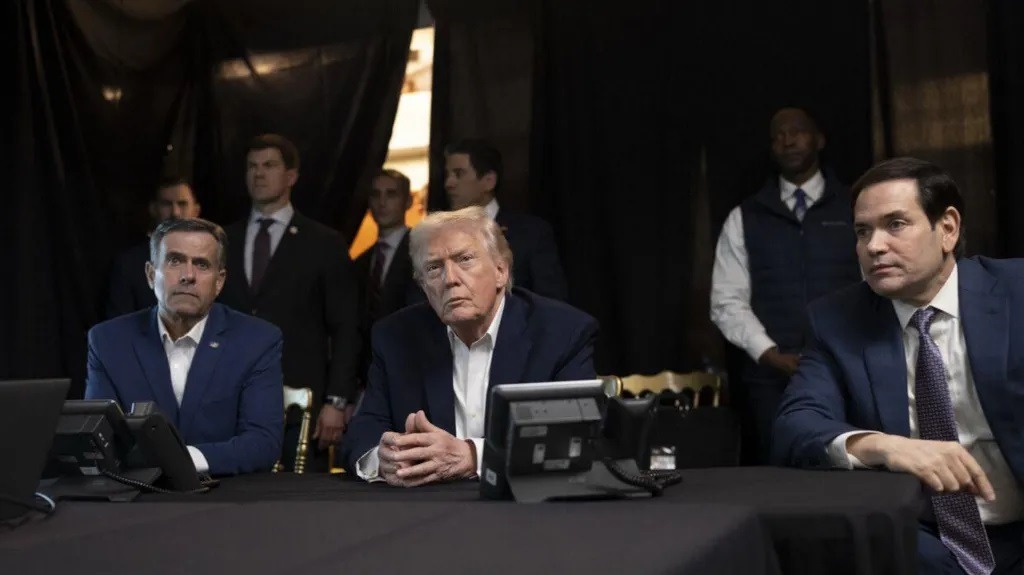
Trump did not follow the mission from the White House situation room. Instead, he was surrounded by his advisers at his Mar-a-Lago club in Palm Beach, Florida, where he watched a live stream of the operation flanked by CIA Director John Ratcliffe and US Secretary of State Marco Rubio.
“It was an incredible thing to see,” Trump said on Saturday. “If you would have seen what happened, I mean, I watched it literally like I was watching a television show. And if you would’ve seen the speed, the violence… it’s just, it was an amazing thing, an amazing job that these people did.”
In recent months, thousands of US troops have deployed to the region, joining an aircraft carrier and dozens of warships in the largest military build-up in decades as Trump has accused Maduro of drug-trafficking and narco-terrorism, and blown up dozens of small boats accused of ferrying drugs through the region.
But the first signs of Operation Absolute Resolve were in the skies. More than 150 aircraft – including bombers, fighter jets and reconnaissance planes – were ultimately deployed through the course of the night, according to US officials.
“It was very complex, extremely complex, the whole manoeuvre, the landings, the number of aircraft,” Trump told Fox News. “We had a fighter jet for every possible situation.”
Loud explosions were heard in Caracas at about 02:00 local time (06:00 GMT), and plumes of smoke were seen rising over the city. “I heard a huge sound, a loud bang,” reporter Ana Vanessa Herrero told the BBC. “It moved all the windows. Immediately after I saw a huge cloud of smoke that almost blocked the entire view.”
She added: “Planes and helicopters were flying all over the city.”
Soon, videos showing numerous aircraft in the skies – and others showing the apparent aftermath of explosions – began to circulate widely on social media. One showed a convoy of helicopters flying at low altitude over Caracas as smoke rose from apparent detonations.
“We woke up at around 01:55 to the roar of explosions and the hum of planes flying over Caracas,” one witness, Daniela, told the BBC. “Everything was plunged into absolute darkness, illuminated only by the flashes of nearby detonations.”
She added: “Neighbours were messaging in the condominium group chat, all confused and unaware of what was happening [and] frightened by the blasts.”
BBC Verify has examined a number of videos showing explosions, fire and smoke in locations around Caracas to identify exactly which sites were targeted.
So far, it has confirmed five locations including Generalissimo Francisco de Miranda Air Base, an airfield known as La Carlota and Port La Guaira, Caracas’ main conduit to the Caribbean Sea.
Some of the US strikes targeted air defence systems and other military targets, officials said. Trump also suggested the US cut the power in Caracas before the mission began, though he did not specify how.
“The lights of Caracas were largely turned off due to a certain expertise that we have,” he said. “It was dark and it was deadly.”
‘They knew we were coming’
As strikes rang out around Caracas, US forces made their way into the city. They included members of the elite Delta Force, the US military’s top special mission unit, sources told the BBC’s US news partner CBS. They were heavily armed – and carried a blowtorch in case they had to cut through the metal doors of Maduro’s safe house.
The troops arrived at Maduro’s location shortly after the strikes began at 02:01 local time, according to Gen Caine. Trump described the safe house as a military “fortress” in the heart of Caracas, saying: “They were in a ready position waiting for us. They knew we were coming.”
The troops took fire when they arrived, and one of the US helicopters was hit but was still able to fly. “The apprehension force descended into Maduro’s compound and moved with speed, precision and discipline,” Gen Caine said.
“They just broke in, and they broke into places that were not really able to be broken into, you know, steel doors that were put there for just this reason,” Trump remarked.
It was only as the operation – which also saw Maduro’s wife, Cilia Flores, seized – was unfolding that Rubio began notifying lawmakers about the action, a decision which has since prompted anger from some in the US Congress.
“Let me be clear: Nicolas Maduro is an illegitimate dictator. But launching military action without congressional authorisation and without a credible plan for what comes next is reckless,” said top Democrat Chuck Schumer, the party’s leader in the Senate.
Briefing Congress ahead of time would have endangered the mission, Rubio told reporters during the news conference on Saturday. “Congress has a tendency to leak,” Trump added. “This would not be good.”
In Maduro’s compound, as elite US troops flooded in, Trump said the Venezuelan president – who has reportedly increased his reliance on Cuban bodyguards in recent months – attempted to flee to a safe room.
“He was trying to get to a safe place, which wasn’t safe, because we would have had the door blown up in about 47 seconds,” Trump said.
“He made it to the door. He was unable to close it. He got bum rushed so fast that he didn’t get into that [room].”
When asked if the US could have killed Maduro, an authoritarian leader who took over the presidency in 2013, if he had resisted arrest, Trump said: “It could have happened.”
On the US side, “a couple of guys were hit”, he said, but no US service members were killed.
In a statement on Sunday, Venezuelan Defence Minister Vladimir Padrino said a “large part” of Maduro’s security team and “soldiers and innocent civilians” were killed in the US operation.
The US had previously offered a $50m (£37m) reward for information leading to Maduro’s arrest. But by 04:20 local time on Saturday, helicopters were leaving Venezuelan territory with Maduro and his wife on board, in custody of the US Department of Justice and en route ultimately to New York, where they are expected to face criminal charges.
Almost exactly an hour later Trump announced the news of his capture to the world. “Maduro and his wife will soon face the full might of American justice,” he said.
Credit: BBC

The United States government announced that it has completed 15 consecutive months without releasing any undocumented immigrants into the country, citing over 3 million deportations alongside a series of tightened visa and citizenship regulations.
According to an official fact sheet released by the Department of State, the measures form part of a broader framework aimed at prioritizing American citizens and overhauling federal immigration enforcement following record-breaking border crossings under the previous administration:
“President Trump has delivered on his promise to fix the immigration system, prioritize American citizens, and protect U.S. citizenship. The border is sealed. The results are undeniable.”
Official figures indicate that more than 3 million foreign nationals have been deported, including thousands of individuals convicted of violent offenses. Alongside border enforcement, federal authorities launched an unprecedented denaturalization campaign targeting individuals accused of obtaining citizenship through fraudulent means, with legal claims already filed against 88 individuals.
The policy shift also extends to social welfare, election integrity, and international travel. Federal agencies terminated public assistance benefits for over 1.4 million ineligible individuals, barred non-citizens from more than a dozen taxpayer-funded healthcare programs, and paused visa processing for 75 high-risk nations.
Furthermore, the administration initiated measures to remove tens of thousands of non-citizens from state voter rolls while introducing a revised naturalization exam designed to evaluate applicants’ understanding of American history and government institutions.
Highlighting the continuation of strict enforcement measures initiated via executive order early in the presidential term, officials underscored the operational shift:
“For 15 straight months, no illegal aliens have been released into the country.”
The broader policy push carries significant international implications, particularly in nations with high visa volumes. The U.S. Mission has issued repeated advisories urging visa applicants and holders to adhere strictly to immigration rules, warning that violations, including overstays, fraudulent claims, or criminal conduct—will result in immediate visa revocation and deportation.
With immigration remaining a central focal point ahead of the 2026 midterm elections, the administration continues to position its hardline enforcement strategy as a necessary restoration of national security, legal order, and fiscal discipline
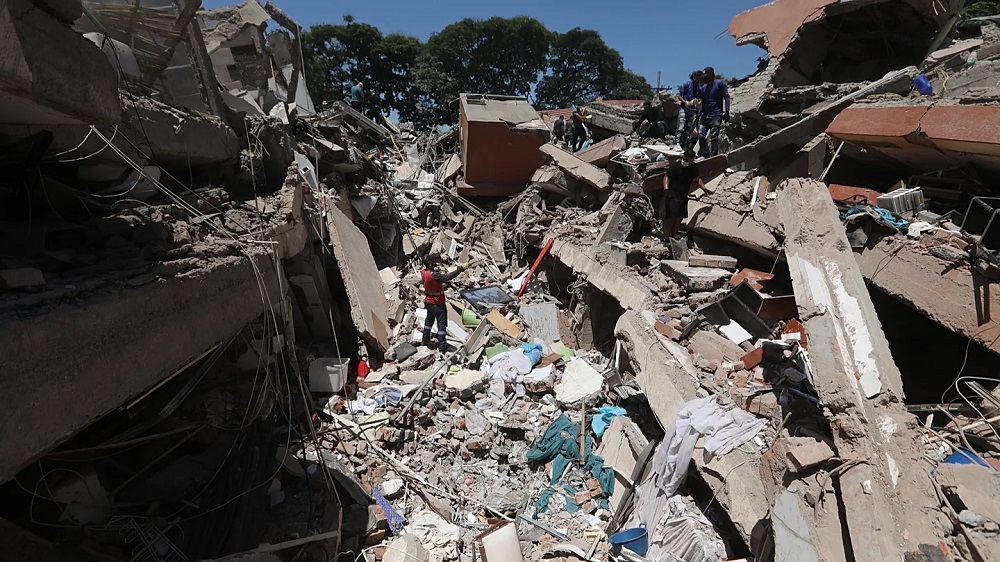
At least 224 people have been killed after a magnitude 7.4 earthquake struck western Colombia, with rescue teams continuing to search collapsed buildings for survivors on Tuesday.
The earthquake struck at 7:34 am local time on Monday, with Cali, Pereira and parts of the Choco region among the worst affected areas.
Authorities warned that the death toll could rise as emergency teams reach more affected communities and assess the extent of the destruction.
Cali authorities reported 35 deaths, while officials in the Risaralda region, where Pereira is located, confirmed at least 40 deaths. Nine people were also reported killed in Choco, two in Caldas and one in Antioquia.
At least 700 people were injured in Valle del Cauca alone, according to President Abelardo de la Espriella, who declared a national state of emergency and said the government’s priority was to rescue people trapped under rubble.
More than 1,600 buildings were reportedly damaged or destroyed, including parts of a historic cathedral in Manizales.
Several upper floors of a hospital in Cali also collapsed, trapping some patients and forcing about 600 others to receive treatment outside amid the debris.
Rescue operations continued overnight and into Tuesday, with soldiers, firefighters, emergency workers, volunteers and relatives searching through collapsed buildings.
In Cali, volunteers formed human chains to remove concrete and other debris by hand, while rescue teams repeatedly stopped to listen for survivors.
Firefighters rescued two women and two children from a collapsed building, while rescuers in Pereira were reportedly in contact with a boy trapped beneath a bakery as cranes were used to remove unstable sections of the building.
Authorities have also deployed engineers, rescue workers and search dogs to Choco, where the scale of the destruction remains unclear because many communities are remote and difficult to reach.
The United States Geological Survey identified San Jose del Palmar, a community of about 4,800 people, as the epicentre. The area is about 400km west of the capital, Bogota.
Colombia’s Geological Service reported 21 aftershocks by late Monday and warned that further tremors were possible.
The rescue effort has been complicated by the geography of Choco, where some communities can only be reached by boat or aircraft.
The government has also imposed nighttime curfews in Cali, Armenia and Manizales, while hospitals in five cities were placed on red alert.
Operations at airports in Pereira, Manizales, Quibdo, Armenia, Cartago and Buenaventura were suspended temporarily to allow structural inspections.
Authorities postponed the Petronio Alvarez Music Festival in Cali, which was scheduled to begin on Wednesday, as well as professional football matches.
International assistance has also begun. The United States announced $15.5m in emergency aid for shelters, food and other relief, while the European Union activated its Copernicus satellite service to support rescue operations.
El Salvador and Mexico also offered to provide rescue teams, medical personnel, supplies and other assistance.
Rescuers are expected to face a critical window in the coming hours as they continue searching for people trapped beneath the rubble.
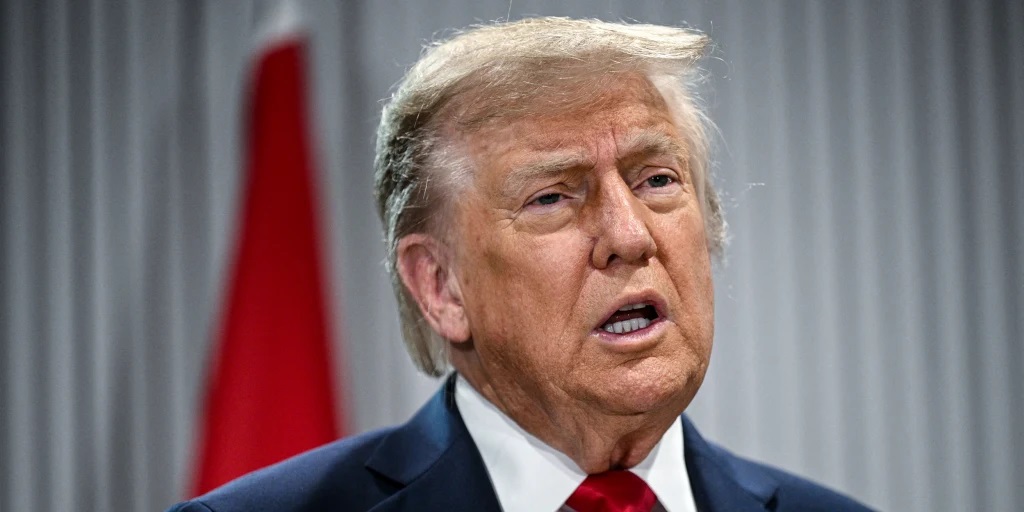
United States President Donald Trump secretly switched aircraft after leaving a NATO summit in Turkey last month amid a reported Iranian threat to target his plane, according to the BBC.
The elaborate security operation reportedly involved Trump being moved from Air Force One to a smaller military aircraft using a catering truck, while journalists and some White House staff travelling with him were unaware of the switch.
US officials told CBS News that American intelligence had detected a credible Iranian threat to fire a missile at the aircraft.
The White House has not directly confirmed that the secret plane switch was carried out because of an Iranian missile threat.
Trump had earlier warned during the summit in Ankara that he was Iran’s “number one target”.
The reported operation took place on 8 July, a day after the US resumed military strikes against Iran following the collapse of negotiations between Washington and Tehran.
Trump had arrived in Turkey aboard a newer Boeing 747-8 aircraft donated by Qatar. However, he announced that he would leave Turkey aboard the older Air Force One “for old time’s sake”.
Footage showed Trump boarding the presidential aircraft at Ankara airport. However, according to a report by the Washington Post cited by the BBC, he was later secretly transferred to a C-32A military aircraft, a modified Boeing 757 commonly used by the vice-president.
The transfer was reportedly carried out using a catering truck that had been raised to the level of the aircraft on the opposite side of the plane from where Trump had initially boarded.
Defence Secretary Pete Hegseth reportedly boarded the C-32A separately using external stairs, helping make the operation appear routine.
Meanwhile, journalists and some White House staff boarded Air Force One and were instructed to keep the aircraft’s window shades closed. They reportedly did not know that Trump was no longer on board.
Trump flew aboard the C-32A to the UK before returning to the older Air Force One. He was later seen leaving the aircraft after it landed at RAF Mildenhall.
It remains unclear how Trump was transferred back to the older presidential aircraft.
He subsequently boarded the Qatar-donated Boeing 747-8 for the final leg of his journey to Washington.
During that flight, Trump spoke to reporters about the security threat but did not reveal details of the earlier aircraft switch.
When asked why reporters had been instructed to lower the window shades during the flight from Turkey, Trump said they were “probably on a dangerous flight” because of threats he faced.
He also said he faced a threat “all the time” and described himself as “number one” on Iran’s list.
US intelligence had previously warned of a specific threat against Trump or his aircraft, according to earlier CBS News reporting.
The New York Times had also reported concerns about the security of the Qatar-donated aircraft, including claims that the Secret Service had urged Trump to switch planes after the NATO summit.
The reports come amid wider scrutiny of the $400m Boeing 747-8 donated by Qatar. The aircraft is undergoing modifications to prepare it for presidential use.
Older Air Force One aircraft are equipped with advanced defensive systems, including technology designed to counter incoming missiles. It remains unclear what comparable systems are currently installed on the Qatar-donated aircraft.
White House communications director Steven Cheung did not directly confirm or deny the reported plane switch. He said the new aircraft was equipped with advanced security measures to protect the president and his staff.
White House press secretary Karoline Leavitt also said the new Air Force One was “perfectly safe” for the president’s travels, while noting that additional upgrades were planned.

Atiku hails US report on Tinubu’s fiscal policy, says ‘I’m vindicated “

Osun Guber: Heavy Security Presence at INEC Office Ahead of Saturday’s Poll

Osun Election: Police Deploy 30 CPs, 15,000 Personnel as DIG Takes Charge of Security



-
 News17 hours ago
APC Women Leader Allegedly Shares Salt, ₦1000 Cash To Osun Residents Days Before Governorship Election
-
 News17 hours ago
Customs Busts Wildlife Syndicate At Abuja Airport, Rescues Two Rare Lion Cubs Bound For Congo
-
 News16 hours ago
Osun Gov Election: APM Candidate Withdraws, Backs Adeleke
-
 News16 hours ago
Army Opens Application For Short Service Combatant Commission Course 50/2027
-

 News16 hours ago
Osun Election: Police Release DIG, CP and Emergency Contact Numbers
-

 News17 hours ago
Fire guts hostel at St Louis College, Jos
-
 News17 hours ago
15 Candidates Battle For Osun Govt House As 2.3m Votes Head To The Polls
-
 News17 hours ago
Shock as Politician Who Swore on Quran to Back Kwankwaso Defects to APC