
News
Shekarau defends Yusuf’s APC defection, recalls Kwankwaso’s past




A former Kano Governor, Mallam Ibrahim Shekarau, has come to the defence of Governor Abba Kabir Yusuf, saying his decision to join the All Progressives Congress (APC) is not betrayal but a legitimate exercise of his political rights.
Shekarau’s remarks comes in response to criticism from Rabiu Musa Kwankwaso, leader of the Kwankwasiyya Movement, who labelled Yusuf a “betrayer” over his intention to defect from the New Nigeria People’s Party (NNPP) to the APC.
His intervention has opened another perspective to the brewing controversy surrounding Yusuf’s defection with implications for the NNPP and the Kwankwasiyya Movement.
“Governor Abba Kabir Yusuf should not be accused of betrayal over his decisions because, political realignments are personal decisions guided by circumstances and consultations.
“I have listened to some of my brother Kwankwaso’s remarks. To me, Kwankwaso has either forgotten what happened in the past or he thought people have forgotten.
“When he was in PDP, he also left with the governorship seat to APC. Why didn’t he drop it for PDP? The way he took PDP’s seat to APC is likely the same way Abba will take the NNPP seat to APC,” he said.
Shekarau added that if such action is being described as offensive, then the precedent was already established by Kwankwaso.
In a viral audio clip, Shekarau, who is associated with the Peoples Democratic Party (PDP), recalled that Kwankwaso defected from the PDP to the APC while serving as Governor, without relinquishing his mandate.
“Governor Abba Yusuf is only following your footsteps,” Shekarau said, questioning why Kwankwaso would accuse Yusuf of betrayal when he had set a similar precedence.
Shekarau, who was a two term Kano Governor between 2003 to 2011, also revisited the formation of the New Nigeria Peoples Party (NNPP), revealing that disagreements over power-sharing arrangements led to his exit from the party.
He claimed that despite being promised a senatorial ticket, he was marginalised in the allocation of positions, prompting him to leave the party.
The former Governor emphasised that political decisions, including defections, should not be framed as betrayal, especially when leaders consult their followers and act in their collective interest.
Shekarau, a former Education minister and ex-senator representing Kano Central (2019–2023), insisted that Yusuf has the right to join any party of his choice, and Kwankwaso’s criticism ignores the political precedence he set.

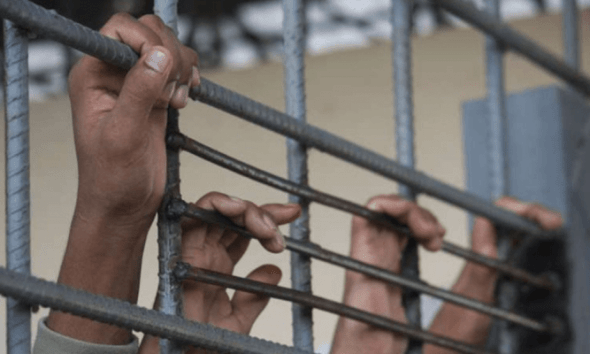
No fewer than six inmates have died within one week following a suspected cholera outbreak at the Kurmawa Maximum Prison in Kano State.
Amnesty International raised the alarm in a post on its official Facebook page, calling on authorities to immediately declare an emergency at the correctional facility.
Amnesty said several other inmates were currently receiving treatment, warning that the death toll could be higher as the suspected disease continues to spread among prisoners.
It urged the authorities to immediately transfer critically ill inmates to hospitals for proper medical attention to prevent further deaths.
The organisation warned that failure to urgently intervene could amount to arbitrary deprivation of life, which it described as a serious human rights violation under international law.
Amnesty also expressed concern over the broader conditions in Nigerian correctional facilities, particularly the prolonged detention of inmates awaiting trial.
According to the organisation, detainees without financial means face greater difficulty having their rights protected, with some spending years in custody without being convicted of any crime.
It further said many inmates were being held in overcrowded and unhygienic cells without adequate food and healthcare.
Amnesty called for urgent reforms to improve conditions in Nigerian correctional facilities and ensure compliance with international best practices.

Popular media personality and self-acclaimed relationship expert, Blessing Okoro, popularly known as Blessing CEO, has reportedly lost her second son while remanded in custody.
The development was confirmed in an online appeal by Amira Agiye, head of the Isaamira Love Foundation, who spoke on Okoro’s behalf to request public financial assistance.
She said, “It is sad to announce to you all that Blessing CEO just lost her second son. My name is Amira Agiye.
“I’m here to appeal on behalf of Blessing CEO, who is currently in custody. I understand that people might have different opinions about her and the circumstances surrounding her case.
“And like every one of us, she deserves compassion and an opportunity for redemption.
She needs N20 million to meet the bail requirements. She also needs N36 million to pay the people she owes who brought the case against her.
“Please, Nigerians, let’s forgive her for the sake of that boy who is still in the mortuary. With Blessing’s full consent and authorisation, I’m appealing to all Nigerians to help donate so we can help her out of this situation.”
Also speaking in a voice conversation played by Amira, Blessing, CEO, said, “My second son, Bryan, was full of life. While in custody, I lost Bryan.
I pray this turns out positive so I can leave this place, pick up the pieces of my life and pay my respects to him.”
Recall that the self-acclaimed relationship expert was remanded in Kirikiri Prison over an N69.15 million property fraud trial.
She was granted N20 million bail in July 2026, with two sureties in like sum, and each surety was required to provide three years’ proof of deposits valued at N20 million.
Following her inability to meet the bail conditions, Blessing CEO, remains in prison facility two months after she was granted bail.

Deaconess Angel Oyakhilome, mother of Pastor Chris Oyakhilome of Christ Embassy LoveWorld Nation fame, is dead.
Reports from Edo State say that she died at the age of 88 yesterday, Friday, September 25, 2026.
A local publication, Esan News Magazine, reported thus:
“An Iroko has fallen. A mother of nations is gone. Heaven has gained a saint.
According to information made available to Esan News Magazine by a prominent member of the Ekagholo Family of Idunwele, Ewu, Esan Central Local Government Area of Edo State, the matriarch of the great Oyakhilome Clan, the beloved mother of our son Pastor Chris Oyakhilome, Deaconess Angel Oyakhilome, fondly called Big Mummy, has transited to glory.
September, 2026, leaving behind a legacy of faith, love, humility and motherhood that touched generations across the world.
“Big Mummy was not just the mother of Pastor Chris. She was the mother of all. A virtuous woman, a prayer warrior, a woman of uncommon grace who raised children that have become global blessings and pride to Esan land.
“Idunwele Ewu is mourning. Ekagholo Family is mourning. Ewu Kingdom is mourning. Esanland is mourning. For we have lost an Okpokhuo, a true jewel of Esan motherhood.
“Her life was a testimony. She lived for God, she lived for family, she lived for humanity. Her laughter brought joy. Her prayers brought strength. Her counsel brought wisdom.
“On behalf of the management and staff of Esan News Magazine and the entire Esan Nation home and abroad, we extend our deepest and heartfelt condolences to our dear elder brother, Pastor Chris Oyakhilome, the entire Oyakhilome Clan, the Ekagholo Family of Idunwele Ewu, and the Christ Embassy family worldwide.
“We mourn with you in this time of grief. We stand with you. We pray that the good Lord who called Mama home will grant you all the fortitude to bear this irreplaceable loss.
“May her gentle, beautiful and faithful soul rest in perfect peace. Rest on, Big Mummy. Rest on, beloved mother of Pastor Chris. Rest on, Iroko of Ewu.
“Adieu Mama!”
Meanwhile, a senior official of Christ Embassy who was contacted by News Express this Saturday afternoon neither confirmed nor denied the report.
He said: “I have heard the news, too, but it is not for me to confirm her death. I mean, she was aged 88.”
The official promised to make relevant contacts, adding: “I am sure that a statement would be issued if the news is true.”

Between Governor Soludo and Peter Obi: The Truth in Between

Six inmates die in one week amid suspected cholera outbreak in Kano prison

Painful: Blessing CEO Loses Son While Still In Kirikiri Prison


-

 News14 hours ago
How AI Could Cause the catastrophic death of a Billion people — Billionaire Bill Gates Warns
-

 Sports13 hours ago
AFCON Qualifier: Nigeria Defeats Madagascar
-

 News22 hours ago
Soludo Govt Admits: ‘Peter Obi Did Well as Anambra Gov Amid Financial Records Dispute
-

 News24 hours ago
Pope Leo XIV Warns Against AI Risks, Urges World to Protect Human Dignity
-

 News23 hours ago
Nigeria @66: Tinubu Urges Citizens to Keep Faith, Says ‘Light At End of Tunnel
-
 News14 hours ago
Police Arrest Officer Who Said Igbo Man Can Never Be President