


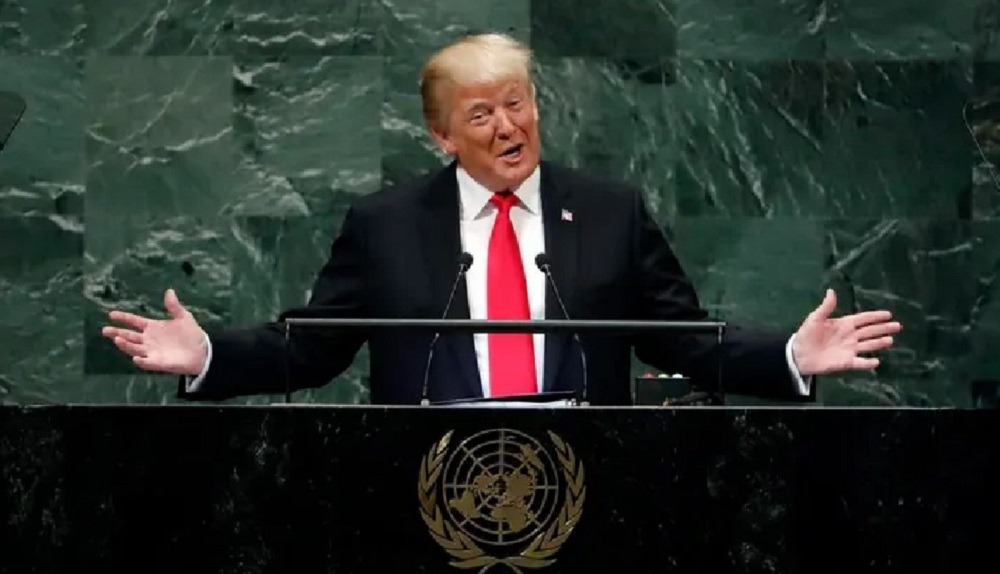
U.S. President Donald Trump has warned that the United States may carry out additional military strikes in Nigeria if attacks targeting Christians persist.
In an interview published by The New York Times on Thursday, Trump said he hoped a recent U.S. operation in northwest Nigeria would be a one-off, but stressed that further action could follow if Christians continue to be killed.
The remarks refer to a military strike carried out on Christmas Day, which Trump and U.S. officials said targeted Islamic State militants at the request of the Nigerian government.
“I’d love to make it a one-time strike,” Trump told the newspaper. “But if they continue to kill Christians, it will be a many-time strike”. Trump also acknowledged that Muslim communities have been affected by violence, but insisted that attacks on Christians were disproportionate.
Trump has repeatedly amplified concerns about the safety of Christians in Nigeria, at times describing the situation as threatening to the future of the faith in the region. His latest statement comes as Nigerians and international observers grapple with how to interpret the U.S. military’s role in Nigerian security affairs.
Nigeria’s government has firmly rejected claims that Christians are being systematically targeted. Officials stress that the country’s security crisis reflects a complex mix of insurgency, banditry, communal clashes and other criminal activity, and that both Christians and Muslims have suffered.
The country’s Foreign Affairs Ministry said the Christmas strike was part of “ongoing structured security cooperation” with international partners, including the United States, to combat terrorism. Abuja has emphasised that operations are aimed at militants and not directed at any religious group.
Nigeria’s north-western and north-eastern regions have long battled violent extremist groups such as Boko Haram and Islamic State West Africa Province (ISWAP). These groups have carried out attacks on communities of all backgrounds, leaving thousands dead, displacing millions, and prompting widespread concern about the nation’s overall security environment.
Analysts caution that framing Nigeria’s insecurity solely as religious persecution oversimplifies a multifaceted crisis involving political, economic, environmental, and social drivers. Recent data show that violence affects civilians regardless of religious affiliation.