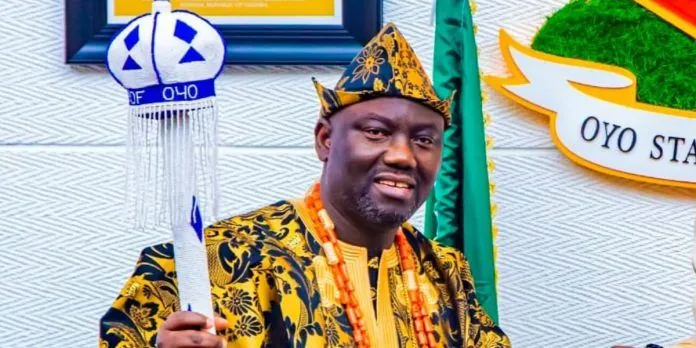
Fresh details have emerged on why the Alaafin of Oyo, Oba Engineer Abimbola Akeem Owoade I, was absent at the inauguration of the Oyo State Council of Obas and Chiefs, amid growing controversy over the rotational chairmanship of the council.


The Alaafin’s Palace, in a press release issued on Thursday, January 15, 2026, faulted claims by Governor Seyi Makinde that he consulted the Alaafin, the Olubadan of Ibadanland and the Soun of Ogbomoso before announcing the rotational leadership arrangement.
In the statement signed by the Director of Media and Publicity to the Alaafin, Mr. Bode Durojaiye, the Palace said at no time did the Alaafin meet with the governor or hold discussions with the Olubadan and the Soun on the issue. 
“The Palace hereby wants to state clearly that there was no time that His Imperial Majesty, the Alaafin of Oyo, Oba Engineer Abimbola Akeem Owoade I, held any meeting with either the State Governor or any of the two traditional rulers mentioned above,” the statement read.
It further stressed that the Alaafin neither endorsed nor made any categorical statement supporting the rotational chairmanship of the Oyo State Council of Obas and Chiefs among the three monarchs.
According to the Palace, the official position of the Alaafin and the entire Oyo community on the matter had already been formally communicated to the governor through a memorandum submitted by the Oyo Council of Elders.
The controversy has also generated reactions on social media, with comments attributed to the Press Secretary to the Olubadan of Ibadanland, Mr. Adeola Oloko, suggesting that the legal framework for a rotational chairmanship of the council had existed since 2011, during the administration of the late Governor Adebayo Alao-Akala.
However, some commentators disagreed sharply with the arrangement. In a strongly worded social media post, Mr. Folaranmi Adewuyi Adegbite described the development as “absurdity of the highest order,” alleging a sustained attempt by political actors to diminish the historical status and influence of the Alaafin institution.
He argued that the structure and composition of the council undermined ancient Yoruba royal hierarchies, questioning the ranking of some traditional rulers over others with deeper historical roots.
The Palace’s statement concluded by making it clear that the Alaafin’s absence from the inauguration was deliberate, hinging on his rejection of claims of consultation and endorsement, as well as the broader concerns of the Oyo community over the process that led to the reconstitution and leadership arrangement of the Council.
The development adds a new layer to the unfolding debate over traditional authority, political influence and the future operations of the Oyo State Council of Obas and Chiefs.