Connect with us

News

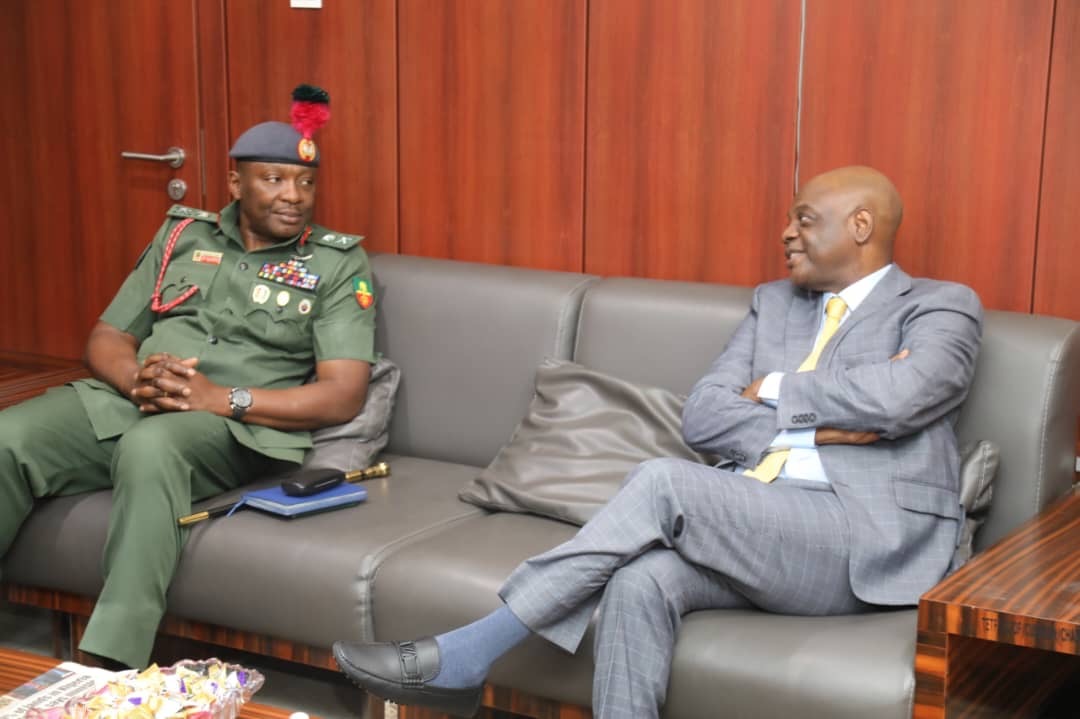
Photo news: New NDA Commandant, Maj Gen Olatoye pays courtesy visit to TETFUND boss, Arc Echono

Published

on

ADVERTISEMENT
Zoom Ad
ADVERTISEMENT
Zoom Ad

The new Commandant of the Nigerian Defence Academy, (NDA), Major General Oluyemi Olatoye on a courtesy call to the Executive Secretary of the Tertiary Education Trust Fund, (TETFUND), Arc Sonny Togo Echono, PhD, FNIA, OON, yesterday.

Continue Reading
Advertisement

News

Reps Open Fresh Probe into N1.12tn Farm Scheme, Summon Insurers Over Gaps

Published

on

ADVERTISEMENT
Zoom Ad
ADVERTISEMENT
Zoom Ad

By Gloria Ikibah

The House of Representatives has intensified its investigation into the troubled Anchor Borrowers Programme, turning its spotlight on insurance providers linked to the scheme amid concerns over weak coverage and alleged fund mismanagement.

At a hearing convened by the House Committee on Nutrition and Food Security, lawmakers began scrutinising the role of the Nigerian Agricultural Insurance Corporation alongside private insurers in a programme valued at over N1.12 trillion.

The session forms part of a broader inquiry into how funds earmarked for agricultural support were handled, including allegations of diversion by government agencies and questions surrounding disbursement by participating financial institutions.

Advertisement

Representing the Managing Director of the Nigerian Agricultural Insurance Corporation, Dayo Babaronti told the committee that the agency insured just over 200,000 farmers, covering about N109 billion under the scheme.

He revealed that the Central Bank deviated from the original framework, which designated the corporation as the sole insurer, by bringing in additional firms, including Veritas Kapital Insurance and Leadway Insurance. Neither company was present at the hearing.

According to him, the corporation’s involvement amounted to only a small fraction of the overall programme, leaving significant gaps in coverage.

He also outlined the corporation’s limited role in other agricultural financing initiatives, including support for smallholder farmers and specific crop programmes, where insurance backing fell far short of funding allocations. In some cases, he noted, the corporation was excluded entirely despite policy provisions.

Advertisement

Tge Committee Chairman, Rep. Chike Okafor, signalled that further hearings would follow, noting that the panel had received numerous complaints from farmers and industry groups regarding inadequate insurance protection.

He explained that the committee will recall the agency for additional questioning, particularly as its submission arrived late, leaving little time for proper review.

Rep. Okafor maintained that the investigation is aimed at uncovering the root causes behind the programme’s shortcomings and ensuring accountability across all institutions involved.

He pointed to early findings suggesting that key stakeholders, especially farmers and commodity associations, were largely excluded from the design and implementation of the intervention, a factor believed to have contributed to its underperformance.

Advertisement

He stressed the committee’s determination to get to the bottom of the issues, stating, “The reason why we are here is because the programmes did not succeed 100%. If they had succeeded 100%, we will not be here.”

Continue Reading

News

Reps Back N248bn Lifeline for Power Firms, Unveil Debt Shake-Up Plan

Published

on

ADVERTISEMENT
Zoom Ad
ADVERTISEMENT
Zoom Ad

By Gloria Ikibah

The House of Representatives Public Accounts Committee has approved sweeping financial reliefs and a long-term debt restructuring plan for three electricity distribution companies, in a move aimed at stabilising Nigeria’s troubled power sector.

The decision grants Kano, Jos and Ikeja DisCos a 10-year window to restructure liabilities running into hundreds of billions of naira, following mounting concerns over the sector’s financial sustainability.

At the heart of the intervention is a combined debt burden of over N248 billion, made up of more than N120 billion in historical obligations and about N128 billion in accumulated interest spanning a decade.

Advertisement

The resolution followed the adoption of a technical subcommittee report linked to findings from the Auditor-General, which highlighted rising debts across eleven distribution companies and growing pressure on the electricity market.

Chairman of the Technical subcommittee, Rep, Mark Chidi Obetta, said the move is part of broader legislative efforts to restore stability and address legacy financial challenges within the industry. He noted that the liabilities of the affected companies form a significant portion of the sector’s overall debt profile.

According to the report, total indebtedness across the eleven DisCos climbed from roughly N1 trillion at the end of 2024 to about N1.3 trillion by September 2025, driven largely by accumulating interest and unpaid obligations.

The committee said its investigation sought to verify these figures, establish the true extent of the debts and understand why the companies have struggled to meet payment commitments.

Advertisement

It confirmed that the liabilities had surged due to continued accruals, while also identifying disputes over interest charges as a major sticking point, particularly among the affected DisCos.

In response, the Nigerian Electricity Regulatory Commission NERC,, directed that interest should not be applied to outstanding invoices between 2015 and 2020, while allowing such charges from 2021 onwards. It also instructed that interest linked to delays involving a financial intermediary be excluded.

As part of the restructuring framework, the report stated, “Based on appearance, submissions and request, the Committee established that Jos and Kano Electricity Distribution Companies remain significantly indebted to NBET. The interest component and accrued debt during government receivership period form a substantial part of Kano Disco’s liabilities.”

It further recommended that, “NBET and NERC should allow Kano Electricity Distribution company (KEDCO), Jos Electricity Distribution Company and Ikeja Electricity Distribution company, with significant legacy obligations to restructure and repay their historical debts totaling N120,061,898,737… over an extended period of not more than 10 years.”

Advertisement

The report also proposed that certain liabilities incurred during periods of government intervention be transferred to a designated liability management body, while calling for a waiver of all accrued interest within the specified period.

Explaining the rationale, it added that the current market structure limits the ability of DisCos to recover costs, noting that revenue collection arrangements prioritise settlement of market obligations before operational expenses are released.

The committee stressed the need for discipline going forward, stating that, “All DisCos should ensure strict compliance with their current market obligations going forward to prevent further accumulation of liabilities.”

Chairman of the committee, Bamidele Salam, cautioned that without decisive restructuring and stronger regulatory oversight, the long-term viability of Nigeria’s electricity distribution system could remain under serious threat.

Advertisement
Continue Reading

News

Kalu Drives Global Backing for New Post-Conflict Peace Blueprint at IPU Assembly

Published

on

ADVERTISEMENT
Zoom Ad
ADVERTISEMENT
Zoom Ad

By Gloria Ikibah

Nigeria’s Deputy Speaker of the House of Representatives, Rt. Hon. Benjamin Kalu, has played a leading role in securing the adoption of a major international framework aimed at strengthening post-conflict recovery and peacebuilding efforts.

The resolution was endorsed at the 152nd Assembly of the Inter-Parliamentary Union in Istanbul, placing legislatures at the heart of efforts to rebuild societies and sustain long-term peace after conflict.

Kalu, who served as co-rapporteur alongside delegates from Jordan and the Netherlands, presented the draft document, which outlines a comprehensive approach to managing post-conflict transitions and restoring stability.

Advertisement

The move reflects a growing global shift towards recognising the central role of parliaments in ensuring accountability, inclusiveness and durability in peace processes.

The newly adopted framework is built around five key pillars, including institutional strengthening, fair economic recovery, social cohesion, inclusive governance and continued international support.

It also places strong emphasis on human and collective security as essential foundations for achieving lasting peace, while encouraging preventive strategies that address the root causes of conflict and promote resilience.

Central to the framework is the principle of national ownership, with countries expected to lead their own recovery efforts through inclusive systems that guide reconstruction, legal reforms and institutional rebuilding.
The approach also stresses that external support must align with national priorities and remain subject to democratic oversight, ensuring that recovery processes are both accountable and sustainable.

Advertisement

Kalu said: “The 152nd Assembly of the Inter-Parliamentary Union urges Parliaments in countries affected by or emerging from conflict to ensure strong national ownership of peace and recovery processes by leading inclusive nationwide consultations, defining priorities through democratic deliberation and legislation, and ensuring that any external support is adapted to local needs, constitutional frameworks and international human rights obligations.

“Parliaments responsible for implementing peace agreements are called upon to give full legal effect to their provisions by incorporating them into national legislation, establishing clear implementation requirements, and creating permanent, cross-party mechanisms to regularly review progress. These should include hearings with relevant actors, such as women and youth groups and representatives of affected communities, to coordinate parliamentary follow-up, ensure continuity, identify gaps early, and uphold commitments across political cycles.

“When addressing the legacies of conflict, parliaments are also urged to establish national transitional justice frameworks by adopting legislation that enables truth-seeking processes, victim-centred reparations, and fair and transparent vetting or amnesty procedures, as well as effective cooperation with national and international accountability mechanisms. This ensures that justice, recognition of past harms and institutional reform form an integral part of sustainable peace.”

Beyond that, the resolution charges parliaments in countries affected by or emerging from conflict to lead inclusive nationwide consultations and ensure external support adapts to local needs, constitutional frameworks, and international human rights obligations.

Advertisement

Through the IPU resolution, Kalu also urged parliaments to establish national transitional justice frameworks that enable truth-seeking processes, victim-centred reparations, and fair vetting or amnesty procedures, while encouraging the use of human security approaches in legislative, oversight, budgetary, and representation functions.

The document also encourages parliaments to rebalance national and international budgetary priorities in favour of peacebuilding and prevention, prioritize conflict-affected populations in reconstruction and financing, and strengthen transparency and anti-corruption safeguards in recovery funds.

It further charges parliaments to support national and community-level reconciliation through inclusive dialogue and trauma-informed initiatives, promote local dialogue processes that bring together communities and former adversaries, and institutionalize the full, equal, and meaningful participation of women and youth across all peace and dialogue processes in line with UN Security Council resolutions 1325 and 2250.

The resolution also asked parliaments to strengthen inclusive political participation by ensuring all affected communities are represented in legislative deliberations, foster constructive political dialogue through cross-party platforms, and work with governments, regional organizations, the IPU, and the United Nations to strengthen international support and funding for peace agreements.

Advertisement

It likewise proposes that parliaments consider lawful mechanisms to facilitate reparations for victims and mobilize resources for reconstruction, including the use of frozen or otherwise immobilized assets where lawful.

The resolution requests that the IPU provide targeted technical assistance to parliaments engaged in post-conflict recovery, including advisory missions, capacity-building, peer-learning, and support in mediation and conflict prevention.

Continue Reading

Trending

Copyright © 2024 Naija Blitz News