News
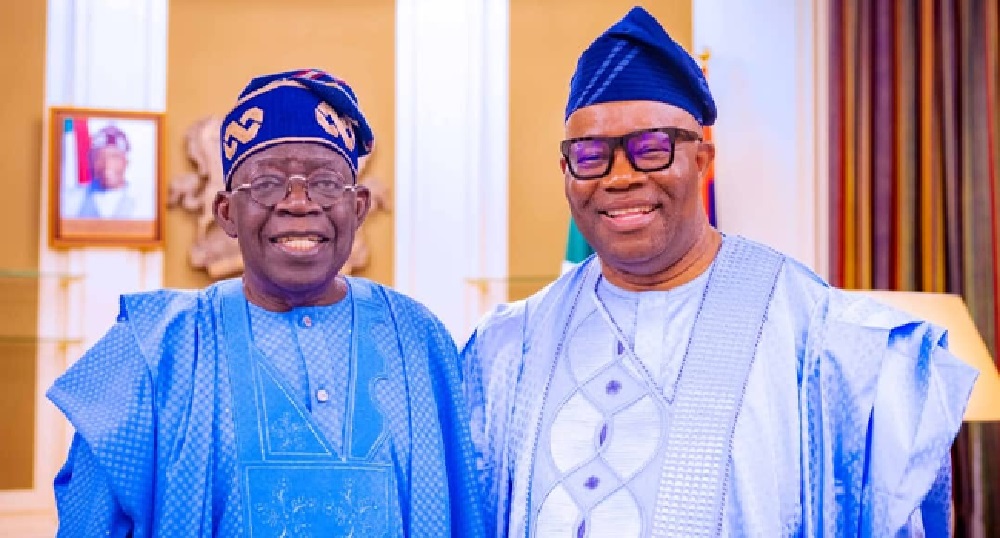
Tinubu To Sign Amended Electoral Act February — Akpabio
- /home/naijuinz/public_html/wp-content/plugins/mvp-social-buttons/mvp-social-buttons.php on line 27
https://naijablitznews.com/wp-content/uploads/2024/12/Tinubu-Akpabio.jpg&description=Tinubu To Sign Amended Electoral Act February — Akpabio', 'pinterestShare', 'width=750,height=350'); return false;" title="Pin This Post">
- Share
- Tweet /home/naijuinz/public_html/wp-content/plugins/mvp-social-buttons/mvp-social-buttons.php on line 72
https://naijablitznews.com/wp-content/uploads/2024/12/Tinubu-Akpabio.jpg&description=Tinubu To Sign Amended Electoral Act February — Akpabio', 'pinterestShare', 'width=750,height=350'); return false;" title="Pin This Post">
President of the Senate, Godswill Akpabio, on Tuesday, disclosed that President Bola Tinubu is expected to sign the amended Electoral Act into law by February, despite intensifying public outcry and nationwide protests over the controversial removal of the phrase “real-time” from clauses on electronic transmission of election results.

Akpabio made the disclosure during Tuesday’s Senate plenary, while announcing an expansion of the Senate’s conference committee from nine to 12 members to align with the House of Representatives’ own delegation.
“We have raised our numbers from nine to twelve to match the figures from our colleagues in the House of Reps. We expect everything to be done in the next few days or in a week. The President is expected to sign this into law in February,” Akpabio stated.

The Senate President’s remarks come as protests under the banner of #OccupyNASS continued at the National Assembly Complex in Abuja, drawing civil society groups, opposition figures and human rights activists demanding electoral transparency.
Among those at the protest was Omoyele Sowore, former presidential candidate and leader of the African Action Congress (AAC), who accused the political elite of pushing regressive laws that undermine electoral credibility.
“This is an exposition that already existed. It is not new. That is why it is a surprise to everyone that this provision was yanked away from the Electoral Act that Akpabio and his friends are trying to put in place,” Sowore said.
He warned that Nigeria’s political class fears transparent processes that would expose their unpopularity.
“These people cannot win in free and fair elections. But the people have a duty to demand processes that guarantee free, legal and transparent elections,” he added.
‘I Prefer Electronic Voting, Not Just Transmission’ — Sowore
While public concern has centred on the removal of “real-time” electronic transmission, Sowore said the focus should be expanded to electronic voting, insisting that election integrity begins at the point of voting, not just result collation.
He said, “My preference is not even electronic transmission of results, because what gets transmitted at the end of the day is what has already been manipulated. I am more interested in electronic voting.
“Whatever people think in their minds that can protect the integrity of their votes, we must defend and support it.”
Sowore also criticised the heavy security deployment at the protest venue, describing it as intimidation against citizens exercising constitutional rights.
He further stated, “It is their job to protect the country, not to attack peaceful protesters. I have warned them that if they try that, they are starting something they cannot predict how it will end.”
He noted the growing frustration among Nigerians, urging security forces to act professionally and avoid escalating tensions.
“Nigerians are very angry at this time, but security agents have a duty to maintain law and order, nothing more, nothing less,” he said.
Reaffirming his revolutionary stance, Sowore rejected gradual reforms, arguing that Nigeria’s problems demand sweeping political change.
Sowore added, “I’m not for baby steps. I’m a revolutionary. Nothing other than revolution will solve this problem. That has always been my position.”
He described the protest at the National Assembly as a reflection of rising political consciousness among Nigerians.
He stated, “When we arrived here, you could tell this place was filled with silent revolutionaries. The giants in them began to awaken when they saw that we were together.”

News
*Hajia Hansatu Zannah Applauds Tinubu, Shettima at Three-Year Milestone*
By Kayode Sanni-Arewa
Hajia Hansatu Zannah, distinguished member of the Governing Council of the African Union Agenda 2063 and Ambassador Plenipotentiary, has extended heartfelt commendations to President Bola Ahmed Tinubu, GCFR, and Vice President Kashim Shettima, GCON, as they mark three years in office.
“This remarkable milestone signifies an era of purposeful leadership that has brought notable triumphs to our nation under President Tinubu’s administration,” Hajia Hansatu remarked during an engagement with select political correspondents in Abuja on Tuesday.
She praised President Tinubu for his unwavering commitment to national unity, economic transformation, and the strengthening of Nigeria’s global reputation. Reflecting on the administration’s achievements, she highlighted progress in infrastructure development, anti-corruption efforts, and initiatives designed to stimulate sustainable economic growth.
“President Tinubu’s three years in office have been defined by a resolute pursuit of policies aimed at revitalizing our economy and enhancing the quality of life for all Nigerians. His dedication to infrastructure expansion, healthcare improvement, and educational advancement is commendable and lays a strong foundation for future prosperity,” she stated.
Hansatu, a seasoned media personality and communication strategist, emphasized the importance of visionary leadership in navigating Nigeria’s current challenges. She expressed optimism that the administration would continue to consolidate its successes while addressing pressing issues such as security, unemployment, and economic stability.
“In these challenging times, Nigeria requires a leader with vision, resilience, and a profound understanding of our diverse cultural and socio-economic landscape. President Tinubu has demonstrated these qualities through his inclusive approach and steadfast dedication to uplifting every segment of society,” she added.
Calling for collective responsibility, Hajia Hansatu urged Nigerians to support the administration’s efforts and remain united in confronting national challenges.
“As this administration celebrates this milestone, let us recommit ourselves to the values of hard work, unity, and patriotism. Together, we can build a Nigeria that is strong, prosperous, just, and equitable—a nation admired across the world,” she said.
She further noted that President Tinubu’s leadership style is distinguished by his detribalized disposition, drawing parallels with the late Chief Moshood Abiola’s inclusive politics. “Asiwaju Bola Ahmed Tinubu has embraced every tribe and religion in Nigeria. His compassion, generosity, and inclusive governance inspire trust and confidence in his leadership,” she affirmed.
Hansatu concluded by reaffirming her personal commitment to supporting President Tinubu and Vice President Shettima in their mission to advance Nigeria’s welfare and development. She pledged to continue serving as an exemplary ambassador both at home and abroad, dedicated to initiatives that promote national progress and unity.
News
AI, skills and innovation key to East Midlands’ digital economy growth, experts say
By Kayode Sanni-Arewa
Experts, technology leaders, academics, investors and entrepreneurs have identified artificial intelligence, digital skills development and innovation as key factors that will shape the growth of the East Midlands’ digital economy.
The remarks were made at the Tech Derby Conference 2026, held at Vaillant Live in Derby as part of East Midlands Tech Week, where stakeholders gathered to discuss the theme, “AI & the Next Digital Economy: Innovation, Opportunities and Responsible Governance.”
The conference focused on how artificial intelligence is transforming industries, creating new business opportunities and influencing the future of work, while highlighting the importance of responsible AI adoption, ethical governance and investment in talent development.
A major highlight of the event was a keynote address by Professor Stephan Reiff-Marganiec, Head of the School of Computing at the University of Derby, who spoke on developing local talent for an AI-ready future.
Professor Reiff-Marganiec emphasised the need for stronger collaboration between universities, industry and communities to prepare people with the skills required to take advantage of emerging technological opportunities.
The conference also featured a presentation by Ajibola Shokunbi of AudioInsight UK, who shared insights into the use of artificial intelligence in music education and demonstrated how research-driven innovation can be developed into practical solutions with real-world impact.
During the panel session titled “AI Governance and Responsible Innovation: Building Trust in the Next Digital Economy,” experts examined issues surrounding accountability, transparency, data governance and public confidence in the adoption of artificial intelligence.
The discussion was moderated by Adepeju Bello, a cybersecurity and financial crime specialist, Director at Tech Derby, and Head of the Tech Advisory & Policy Group (TAG).
Bello said artificial intelligence had moved beyond being a future concept and was already changing how people work, learn, communicate, make decisions and build businesses across sectors such as healthcare, finance, education and entrepreneurship.
“Artificial Intelligence is no longer a future technology, it is already transforming how we work, learn, communicate, make decisions, and build businesses. From healthcare and finance to education, government, and entrepreneurship, AI is creating incredible opportunities for innovation and growth,” she said.
Contributing to the discussion, Rukayat Balogun highlighted the importance of responsible AI adoption, stressing the need for accountability, transparency, effective data governance and meaningful human oversight to build trust in emerging technologies.
Joseph Origbo, PhD Researcher, AI and Digital Innovation Advocate, and Co-Founder of Tech Derby, said responsible innovation required collaboration among universities, businesses, public-sector organisations and technology leaders.
He noted that building a competitive digital economy required not only technological advancement but also investment in skills, partnerships, trust and inclusive growth.
Speaking after the conference, Akindayo Akindolani, CEO of Tech Derby, said the event demonstrated the impact of bringing together founders, professionals, universities, investors, businesses and community leaders around a shared vision.
“Tech Derby was created to build a stronger technology ecosystem in Derby and the wider East Midlands. This conference showed what is possible when founders, professionals, universities, investors, businesses and community leaders come together around a shared vision,” he said.
Akindolani added that AI and digital innovation should not be limited to major cities, noting that Derby had the talent, ideas and ambition to play a significant role in the next digital economy.
He said Tech Derby would continue supporting technology growth through startup programmes, AI workshops, technical training, founder support initiatives and ecosystem partnerships.
Olawale Olatunji, Co-Founder and Event Project Manager, described the conference as a reflection of the region’s growing technology ambitions.
“The Tech Derby Conference 2026 was more than an event; it was a demonstration of what can be achieved when people from different sectors come together with a shared vision for innovation and growth,” Olatunji said.
He added that discussions around AI, responsible innovation, digital skills and business growth reinforced the potential of the East Midlands to become a leading technology hub.
The conference was supported by partners including East Midlands Tech Week, University of Derby, British Business Bank, Mercia Ventures, LemFi, TES Community and other members of the local innovation ecosystem.
Tech Derby said it would continue developing programmes focused on AI training, startup support, hackathons, youth-focused digital activities and partnerships aimed at strengthening the region’s technology landscape.
Omolara Oladipupo, software developer, also spoke on building competitive businesses in the digital economy, highlighting emerging technologies such as agentic AI and other digital tools businesses—particularly SMEs—should monitor over the next five years, alongside practical technologies that can support growth and efficiency.
News
From Blackouts to Breakthroughs: Why West Africa’s Energy Story Is Far From Finished
By Gloria Ikibah
For millions of people across West Africa, electricity remains a privilege rather than a guarantee. While cities grapple with frequent blackouts and ageing infrastructure, many rural communities still live beyond the reach of national grids, relying on candles, kerosene lamps and diesel generators to power their daily lives.
Yet a quiet energy revolution is unfolding across the region.
From Senegal to Ghana, Cabo Verde and Nigeria, solar mini-grids and off-grid renewable energy systems are gradually changing the story, bringing power to villages that have waited decades for electricity. The transformation is creating businesses, improving healthcare, supporting education and opening new economic opportunities.
But as promising projects emerge, a new challenge is becoming clear: generating electricity is no longer the biggest problem. Keeping pace with rising demand, financing expansion and building sustainable systems are proving to be the real test.
Access to electricity has long been one of West Africa’s greatest development challenges. According to the ECOWAS Centre for Renewable Energy and Energy Efficiency (ECREEE), millions of people in the region, particularly in rural areas, still lack reliable access to electricity despite significant progress over the past decade.
The ECOWAS Vision 2050 framework identifies energy access as a critical driver of industrialisation, regional integration and poverty reduction, recognising that economic growth cannot thrive without dependable power supply.
The situation reflects a wider African reality. While investment in renewable energy is increasing, expanding electricity access remains a major challenge because of population growth, financing gaps and ageing transmission infrastructure.
International agencies and reports by Reuters have repeatedly highlighted how frequent power shortages continue to slow industrial production, discourage investment and increase the cost of doing business across the region.
Against this backdrop, renewable energy has emerged as one of West Africa’s most practical solutions.
In Senegal’s Fatick Region, the rural community of Ndiob offers a glimpse of what is possible.
During a recent field mission, members of the ECOWAS Parliament’s Joint Committee on Energy and Mines, Infrastructure, Agriculture, Environment and Natural Resources travelled from Dakar to inspect a solar-powered mini-grid serving three villages.
Managed by Green Impact West Africa under the supervision of Senegal’s Rural Electrification Agency (ASER), the project uses a containerised solar plant equipped with photovoltaic panels and lithium-ion battery storage to supply homes, schools, health centres and small businesses.
The impact is visible everywhere, as street lights illuminate roads that were once dark after sunset. Health centres preserve medicines safely. Schools enjoy longer study hours, while artisans such as welders, tailors and carpenters have expanded their businesses because electricity is available throughout the day.
Women have found new opportunities through food preservation and small-scale processing, while young people are being employed as technicians responsible for maintaining the solar facilities.
For residents, electricity has become more than a public service; it has become an economic asset.
As local resident Mustafa Faye told visiting lawmakers, thst the village now resembles a growing town, attracting residents who work in Dakar but choose to live in Ndiob because of improved living conditions.
Ironically, the success of the Ndiob project has exposed one of renewable energy’s biggest challenges.
Demand is growing faster than supply, especially when more households now own refrigerators and electrical appliances, while businesses require greater power capacity than the original installation was designed to provide.
Residents complain of low voltage and irregular supply, making it impossible to operate high-energy equipment such as air conditioners and larger machinery.
But the problem is not peculiar to Senegal. Across West Africa, many mini-grid projects were initially designed as pilot schemes serving small populations. As communities expand and local economies improve, electricity consumption rises sharply, placing enormous pressure on existing infrastructure.
Battery storage remains another major constraint.
Solar energy is abundant throughout West Africa, but without sufficient storage capacity, electricity generated during the day cannot always meet evening demand when households and businesses consume the most power.
Operators also face high maintenance costs, logistical difficulties in reaching remote communities and the challenge of replacing specialised equipment.
The biggest obstacle may not be technology but investment. This is because renewable energy projects require significant upfront capital, while returns often take years to materialise. Rural communities with low incomes may also struggle to pay electricity bills consistently, especially during agricultural off-seasons.
This makes long-term sustainability difficult without continued support from governments, development finance institutions and private investors.
Recognising these challenges, lawmakers at the ECOWAS Parliament’s five-day delocalised meeting in Dakar adopted resolutions calling for accelerated deployment of decentralised renewable energy systems across the region.
The Parliament recommended stronger financing mechanisms, harmonised regulations, improved quality standards for renewable energy equipment and greater support for productive uses of electricity that generate income for rural communities.
The lawmakers also urged increased backing for ECREEE and renewed efforts to address financial challenges affecting the West African Power Pool (WAPP), the regional electricity integration project designed to enable cross-border power trading.
For many policymakers, sustainable rural electrification will depend on community ownership rather than government intervention alone.
Speaking after the field visit, ECOWAS Parliament Vice Chairman of the Committee on Infrastructure, Hon. Ahmed Munir, said renewable energy projects are already creating jobs and reducing poverty across rural communities.
According to Munir, lawmakers witnessed women producing and selling ice blocks, tailors expanding their businesses and young technicians maintaining solar installations.
“We saw prosperity, not just electricity,” he said.
Munir argued that communities should actively invest in renewable energy enterprises instead of waiting for governments or foreign investors to solve every problem.
His position reflects a growing consensus among energy experts that local participation increases project sustainability while creating stronger economic incentives for maintenance and expansion.
The experience in Ndiob demonstrates that electricity is not simply about switching on lights.
Reliable power supports cold storage for farmers, reduces post-harvest losses, improves healthcare delivery, strengthens education and creates opportunities for entrepreneurship.
Every additional connection has the potential to generate employment and stimulate local economies. The visit also exposed a broader reality confronting West Africa’s energy transition: solar panels alone will not solve the region’s electricity deficit.
Greater investment in battery storage, stronger transmission systems, local technical skills, supportive regulations and innovative financing models will all be required if renewable energy is to achieve its full potential.
West Africa possesses one of the world’s richest solar resources, but the challenge is no longer whether the region has enough sunshine.
The real question is whether governments, investors and communities can work together to transform that natural advantage into reliable electricity capable of powering homes, businesses and industries for generations to come.
If the lessons from Ndiob are any guide, the future is already taking shape. What remains is ensuring that the infrastructure grows as quickly as the ambitions of the people it serves.
-
News19 hours agoSouthern Parkway Service Lanes to End Gridlock, Transform Abuja’s Southern Corridor, Tinubu Assures
-
Metro7 hours agoAlleged Drug Trafficking: Billionaire, Two Others Face Trial in Lagos
-
Foreign7 hours agoUS Targets Alleged ISIS Funding Network, Names Nigerian
-
News7 hours agoBenin monarch to place a curse on kidnappers, armed robbers, fixes date
-
Sports7 hours agoSuper Eagles: Chelle, NFF Reach New Contract
-
News7 hours agoHajj: NAHCON concludes return of pilgrims’ airlifts
-
News7 hours agoIGP bans unauthorised social media use by Police Officers
-
News18 hours agoINEC formally confirms winners of by-elections, issues certificates of return