Connect with us

News

Akpabio urges Muslims to pray for peace, practice compassion during Ramadan 

Published

on

ADVERTISEMENT
Zoom Ad
ADVERTISEMENT
Zoom Ad

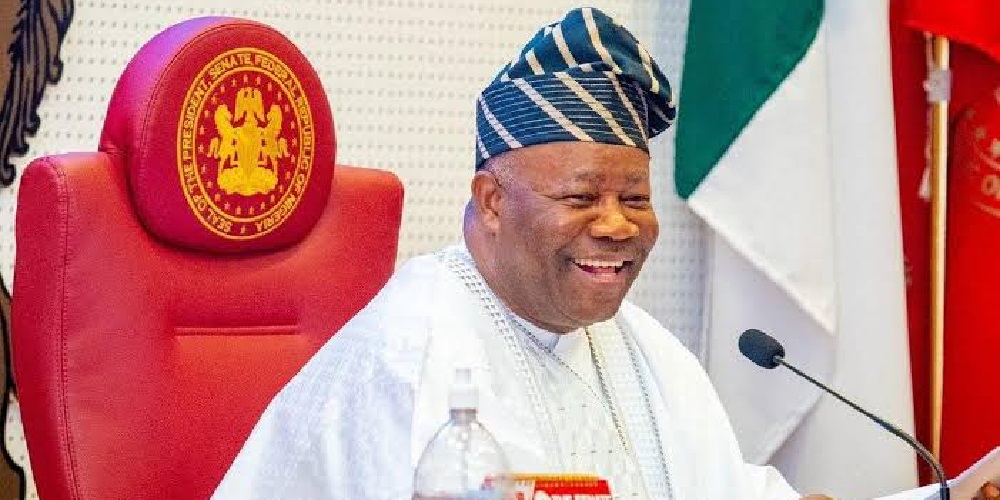
As the holy fast of Ramadan begins, President of the Senate, Senator Godswill Akpabio, GCON has enjoined the Muslim faithful to use the period to pray for peace in the country and the world. 

He also advised them to use the exercise to practice compassion and engender understanding among people.
Akpabio gave the counsel in a goodwill message signed by his Special Adviser on Media and Publicity, Hon. Eseme Eyiboh.

“As the Muslim community prepares to observe the holy month of Ramadan, I extend my warmest greetings and felicitations to all Muslims in Nigeria and around the world.

“I wish to urge the Muslim ummah to use this sacred period as a time for spiritual reflection, self-improvement, and renewal. 

Advertisement

“I encourage you to also utilise this occasion an opportunity to strengthen your faith, practice compassion, and promote peace and understanding.

“May this Ramadan bring peace, prosperity, and blessings to your families and Nigeria at large. 
“I wish you a peaceful and spirit-filled exercise, and may your fasting, prayers, and good deeds be accepted by Allah”.

“Happy Ramadan to all Muslims and may Allah bless us all.”
Advertisement
Continue Reading
Advertisement

News

Ekiti poll: Oyebanji, deputy receive certificate of return

Published

on

By

ADVERTISEMENT
Zoom Ad
ADVERTISEMENT
Zoom Ad

The Independent National Electoral Commission (INEC) has presented certificate of return to Biodun Oyebanji, the Ekiti State governor and winner of the off-cycle 2026 governorship election held on Saturday in the state.

The commission on Sunday declared Mr Oyebanji, the governorship candidate of the All Progressives Congress (APC), winner of the election after polling 319,224 votes across the 16 local government areas in the state.

The electoral commission presented the certificates to Mr Oyebanji and his deputy, Monisade Afuye, on Tuesday, at a ceremony held at the INEC state headquarters, along New Iyin Road in Ado-Ekiti, the state capital.

In his address, the state’s resident electoral commissioner, Bunmi Omoseyindemi, thanked residents of the state for showing resilience and commitment to democracy, and for conducting themselves in a peaceful manner during the election period.

Advertisement

Mr Omoseyindemi stated, “I wish to express profound appreciation to the people of Ekiti State for their peaceful conduct, resilience and commitment to democracy throughout the electoral process. The election was conducted in a peaceful, transparent, free, fair and inclusive manner.”

The REC also appreciated stakeholders, including security agencies, the media, civil society organisations, election observers and election officials, for their cooperation and professionalism in ensuring the smooth conduct of the exercise.

He charged the governor-elect and the deputy governor-elect to embrace the responsibility of leadership with humility, inclusiveness and dedication to the welfare of residents of the state.

He stated, “To the governor-elect and deputy governor-elect, I congratulate you on your victory at the polls. This certificate being presented today is not just a symbol of electoral success but a solemn reminder of the trust and expectations reposed in you by the people of Ekiti State.”

Advertisement

He also called on all other contestants to embrace the spirit of sportsmanship, peace and democratic engagement.

The REC said, “To all the contestants, I urge that the spirit of sportsmanship, peace and democratic engagement be sustained so as to continue to deepen our democracy.”

In his speech, Mr Oyebanji stated that his victory at the poll was made possible by God and the support of President Bola Tinubu, adding that the president particularly exercised courage by amending the Electoral Act.

The governor also commended INEC for being professional in the conduct of the election, stating that lessons derived from the exercise would contribute to the success of future elections.

Advertisement

“I am grateful to the president of the Federal Republic of Nigeria, Asiwaju Bola Ahmed Tinubu. After God, the next person responsible for this victory is the president. I am very grateful to him for his support and encouragement, especially for the courage to amend the Electoral Act,” Mr Oyebanji stated.

“Ekiti election was the first election after the Act was signed into law and you can see INEC’s performance. It was a great improvement. I thank INEC for being professional, for being fair and for being just,” he said.

Mr Oyebanji vowed to serve residents of the state with humility, fear of God and commitment to the people’s welfare.

He stated, “I promise Ekiti people that I will continue to serve them with humility, fear of God and the commitment that they hold dear.”

Advertisement

He also encouraged his co-contestants to join hands with his administration to implement the vision of shared prosperity.

According to Mr Oyebanji, his administration is ready to work with other contestants in the election by aligning programmes and policies that could foster the interests of residents of the state.

“I also invite all other contestants to join hands with us in our quest to continue the implementation of our shared prosperity. I have had conversations with two of them and I visited one of them so that we can align our policies and programs in the interest of our people,” he said.

The governor said there was no loser or winner in the election, noting that the victory must be seen as a win for democracy.

Advertisement

“Elections are over. We are one. We must put behind all those issues, either before the primaries or after. Let us come together as one. That is the only way we can continue to develop as a people. Nobody has won this election. There is no winner, there is no loser. It is democracy that has won,” Mr Oyebanji stated.

Continue Reading

News

State police bill suspicious, timed for politics – Senator Maidoki

Published

on

By

ADVERTISEMENT
Zoom Ad
ADVERTISEMENT
Zoom Ad

Senator Garba Maidoki, who represents the Kebbi South Senatorial District, has raised concerns over the proposed State Police Bill before the National Assembly, describing the legislation as suspicious and politically motivated, while vowing to oppose its passage in its current form.

Speaking on Channels Television’s Politics Today, Maidoki, who recently defected from the All Progressives Congress (APC) to the African Democratic Congress (ADC), questioned both the timing and the process surrounding the proposed constitutional amendment, arguing that lawmakers had been denied adequate time to scrutinise the 146-page draft before its consideration.

The senator said although the principle of state policing was not inherently flawed, Nigeria had failed to effectively implement existing laws, raising doubts about the effectiveness of introducing new legislation.

“Some of us that have worked in multinational companies always want best practices to be brought home. The principles in themselves are not bad, but what we are saying is that we have laws already. Let us practise what we have first so that we can see the difference and identify the gaps,” he said.

Advertisement

According to Maidoki, there was no guarantee that the provisions of the proposed law would be implemented when existing laws and constitutional provisions had largely remained ineffective.

He criticised the handling of the bill by the National Assembly, alleging that lawmakers were given the voluminous document only shortly before its scheduled passage.

“This is a 146-page draft bill. Good practice requires that after a public hearing, the final draft should be shown to those who made presentations so they can determine whether their views were captured and, if not, why they were excluded,” he said.

Maidoki lamented that only members of the National Assembly had access to the document and argued that the bill was being rushed through without adequate consultation.

Advertisement

“The only people who have this document are members of the National Assembly. We were given this thing today, and tomorrow, whether we like it or not, it will be passed. No senator can stand up against it,” he said.

The lawmaker, however, insisted that he and like-minded colleagues would oppose the bill despite what he described as an inevitable outcome.

“We are going to go against it because it is unprincipled. But I can guarantee you that whether we attend or we do not attend, this bill will be passed tomorrow,” he stated.

Maidoki also questioned President Bola Tinubu’s push for state police at this stage of his administration, suggesting that the proposal was linked to political calculations ahead of the 2027 general elections.

Advertisement

“If the president wanted to fight insecurity, why did he wait until the year of the election? We have been crying and complaining for three years. Now, with less than one year to the election, it is the time you want to change the Constitution, implement the bill and make Nigeria safe,” he said.

The senator acknowledged that it was better to address insecurity late than never but maintained that the timing of the bill raised legitimate concerns.

“It is very suspicious. I need to take this document to my constituents and legal experts to examine it and tell me what is right and what is wrong,” he added.

Maidoki revealed that the bill would likely have been passed earlier if not for the death of a member of the National Assembly, which delayed proceedings.

Advertisement

The senator further accused the National Assembly of passing laws that serve the interests of a few individuals rather than the broader Nigerian public.

“I have come to the conclusion that every law the National Assembly has made was designed to meet the interests of specific individuals or specific interests, not Nigerians,” he said.

He described the legislative process surrounding

the bill as embarrassing and inconsistent with democratic standards, alleging that lawmakers were expected to approve large sections of the document without thorough debate.

Advertisement

“I cannot understand how a 146-page document can be handled by simply turning pages from four to ten, ten to twenty, and so on. It is a shame in a committee of civilised nations,” Maidoki said.

The proposed State Police Bill is an executive bill which is part of ongoing efforts to reform Nigeria’s security architecture amid growing concerns over insecurity across the country.

Continue Reading

News

National Assembly moves to place security funding on first-line charge

Published

on

By

ADVERTISEMENT
Zoom Ad
ADVERTISEMENT
Zoom Ad

The National Assembly is considering a constitutional amendment that would place security funding on the first-line charge of the Federation’s revenue as part of efforts to tackle the country’s growing security challenges.

The proposal is contained in Bill No. 8 among the measures recommended for passage by the House of Representatives Committee on Constitution Review.

The amendment seeks to alter Section 81 of the Constitution to include the Armed Forces among institutions entitled to direct funding from the Consolidated Revenue Fund of the Federation.

Currently, agencies enjoying first-line charge funding under the Constitution include the Independent National Electoral Commission (INEC), the National Assembly and the Judiciary through the National Judicial Council (NJC).

Advertisement

Speaking at the Chatham House Africa Programme Roundtable in London on Tuesday, Deputy Speaker of the House of Representatives, Benjamin Kalu, said security has remained the foremost priority of the 10th National Assembly since its inauguration in June 2023.

Addressing the theme, “Nigeria’s 2027 Elections: How to Ensure Electoral Integrity Amid a Deepening Security Crisis,” Kalu said the legislature has deployed its constitutional powers to confront insecurity through increased funding, enhanced oversight and ongoing efforts to establish state police.

He noted that allocations to the security and defence sector have risen from ₦2.98 trillion to ₦5.41 trillion in the 2026 budget, representing an 81 per cent increase over the past three years.

According to him, committees of the House are working closely with the executive arm of government and security agencies to monitor expenditure and ensure effective implementation of security-related projects and programmes.

Advertisement

Kalu expressed confidence that sustained investment, stronger oversight mechanisms and institutional reforms would strengthen the country’s capacity to address insecurity and safeguard democratic processes ahead of future elections.

The Deputy Speaker said, “Through its appropriation powers, the National Assembly has ensured that security funding has grown consistently and remains the single largest sectoral allocation in the national budget. Since the 10th Assembly commenced in June 2023, security and defence allocations have risen from 2.98 trillion naira to 5.41 trillion naira in the 2026 budget, an increase of over 81% in 3 years, and the single largest sectoral allocation for three consecutive years.

“We are also advancing a constitutional amendment to make security funding a first-line charge on the national budget, guaranteeing its release before other lines and removing it entirely from the uncertainty of discretionary timing. We believe it will pass. Because the protection of citizens is not a budget item that should compete for space.

“Through its oversight function, our committees have worked in partnership with the executive and the security agencies to ask the questions that strong institutions must ask of themselves. Not to find fault, but to find answers. How are appropriated funds being deployed? Where are the gaps between planning and execution? What does implementation look like on the ground? This is the work of a legislature that takes its constitutional responsibility seriously, and it is work we conduct in the spirit of shared commitment to a more secure Nigeria.

Advertisement

“Resources must translate into results and parliament’s role is to help ensure that they do that. Through its representative function, the House has considered over 1,500 substantive motions in its first three legislative years, between June 2023 and June 2026, with between 350 and 400 of them specifically focused on security matters.

“The majority addressed issues of urgent public importance, including banditry, kidnappings, attacks on farming communities, and the protection of vulnerable populations. These were not procedural gestures. They produced results.

“Resolutions led to the summoning of security chiefs before the House. They mandated the recruitment of forest guards. They secured commitments to protect schools in high-risk areas and to establish permanent security outposts in communities that had been left exposed.”

He disclosed that under its representative mandate, the House has considered over 1,500 substantive motions between June 2023 and June 2026, about 400 of which focused mainly on security, banditry, kidnappings, attacks on farming communities, and protection of vulnerable populations.

Advertisement

According to him, the motions led to the concrete actions of summoning security chiefs, mandating recruitment of forest guards, securing commitments to protect schools in high-risk areas, and pushing for permanent security outposts in exposed communities.

The Deputy Speaker also said that the National Assembly has passed the revised Cybercrimes Act 2024 and the Control of Small Arms and Light Weapons Act 2024 while advancing the Joint Doctrine and Warfare Centre Bill for better coordination among armed forces.

On state Police which he described as the “legacy initiative” of President Bola Ahmed Tinubu, Kalu said the piece of legislation that was overwhelmingly passed with 289 votes in the House recently would enhance the security of the country.

He argued Nigeria’s centralised police, designed before independence has failed to provide quick response, fast enough for a 923,000 sqkm nation with over 230 million people.

Advertisement

He said: “we have passed the revised Cybercrimes Act 2024 and the Control of Small Arms and Light Weapons Act 2024. We are advancing the Joint Doctrine and Warfare Centre Bill to institutionalise coordination across the armed forces.

“The reform I want to speak about most specifically, because it bears most directly on the 2027 elections, is the State Police Bill, the legacy initiative of President Bola Ahmed Tinubu, which the House of Representatives passed with 289 votes. And as I speak here right now, the Senate is in chamber considering this bill for further legislative actions.

“The case for state police begins with a simple question about response time. When a security incident occurs in a Nigerian community today, how long does it take for help to arrive? The honest answer, in too many communities, is: too long.

“Studies of centralised policing in large federations consistently demonstrate that response times beyond 15 minutes allow situations to escalate from manageable to irreversible. In communities distant from federal police infrastructure, that window closes long before the response arrives.

Advertisement

“Nigeria’s current centralised policing architecture was designed before independence. It was not designed for the security complexity of a 923,000 square kilometre or a population of over 230 million people in 2026.

“State police addresses this directly. The officer who comes from a community knows its roads, its markets, its people, its tensions. The officer who knows the forest will police the forest better than those hired from outside”, he said.

while allaying the fears of many Nigerians on the possible abuse of the State Police, Kalu said the bill inherently carries formidable guardrails, saying “I am clear about the safeguards. State police is not a licence for political capture.

“The bill mandates merit-based recruitment, national minimum standards, independent state police service commissions for oversight, state assembly accountability and strict constitutional limits on political interference.

Advertisement

“The concern about governors weaponising state police is legitimate, and we have legislated against it. What is not legitimate is allowing that concern to perpetuate a policing model that is visibly failing the communities it exists to protect. Currently, it is obsolete and must be done with”.

Speaking on electoral matters, the Deputy Speaker said the Electoral Act 2026, signed by President Bola Ahmed Tinubu on 18 February this year on the ongoing efforts to achieve the credibility of the elections in Nigeria, carries some reforms to close what the 2022 Act left open.

He listed some of the reforms to include making electronic transmission of results to IReV a legal obligation admissible before the election tribunals, with 10 years imprisonment for officers who announce false results and empowering INEC to review declarations made under duress or contrary to procedure within seven days to correct errors before they become court cases.

It also include creating a permanent National Electronic Register of Election Results accessible to every citizen as certified documents; keeping voter registration open until 90 days before elections while allowing transfers and downloadable PVCs to reduce disenfranchisement; and requiring parties to submit verified digital membership registers 21 days before primaries, abolishing indirect primaries to enforce “one member, one vote” and transparent candidate selection”.

Advertisement

He said even though the country was yet to arrive at its democratic journey, it is making steady progress in all facets of its national life.

He said, “We know this better than anyone. 27 years of democracy is, by the measure of nations, a young journey. We have made mistakes. We have faced security challenges that have tested the limits of our institutions and we have not always had the answers we wished we had. But we have never stopped asking the right questions.

“We have never stopped building. What I have shared today is not a finished story. It is a progress report from a legislature that is working, that is learning, and that believes deeply that the democratic project in Nigeria is worth every difficult reform it demands”.

Advertisement
Continue Reading

Trending

Copyright © 2024 Naija Blitz News