Connect with us

News

Confusion in Kano as INEC expunges NNPP, other opposition parties from election ballot

Published

on

ADVERTISEMENT
Zoom Ad
ADVERTISEMENT
Zoom Ad

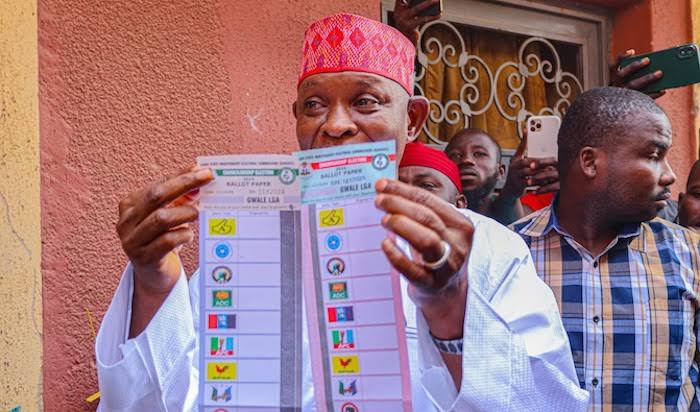
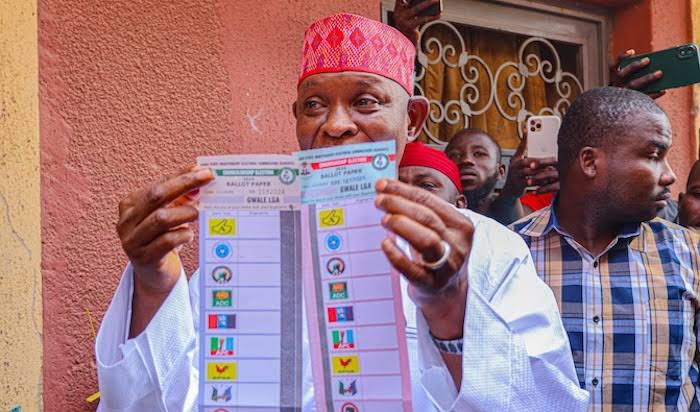
Confusion in Kano State following the exclusion of major opposition parties from the ballot for Saturday’s by-election.


The Independent National Electoral Commission (INEC) will conduct the poll in the Municipal and Ungogo state constituencies.

However, key parties expected to contest are missing from the final list of candidates.

The Peoples Democratic Party (PDP), the New Nigeria Peoples Party (NNPP), and a coalition linked to the African Democratic Congress (ADC) are not on the ballot.

Advertisement

Consequently, their absence has sparked criticism and allegations of unfair treatment.

The by-election is meant to fill two vacant seats in the Kano State House of Assembly. The vacancies arose after the deaths of the lawmakers representing the affected constituencies last year.

INEC has maintained that it is ready to conduct a credible exercise. At a media briefing ahead of the poll, the Resident Electoral Commissioner in Kano, Abdul Zango, assured journalists of the commission’s preparedness.

“All political parties were given equal opportunity to nominate candidates. The commission is fully prepared to conduct a transparent and credible election,” Zango had said.

Advertisement

Despite this assurance, INEC’s final list shows that only nine parties were cleared. Those listed include Accord, Action Democratic Party, Action Peoples Party, African Action Congress, All Progressives Congress, Allied Peoples Movement, Peoples Redemption Party, Young Progressives Party, and Zenith Labour Party.

INEC has not given a detailed public explanation for excluding the major opposition parties. This has further fueled speculation and anger among party leaders and supporters.

The NNPP, which has been battling internal divisions in Kano, is among the most vocal critics. The party is reportedly split into three factions and submitted multiple candidates for the two constituencies.

Reacting to the development, the Boniface-led faction of the NNPP accused INEC of deliberately shutting the party out of the process. Senator Mushud El-Jibril Doguwa spoke on behalf of the faction.

Advertisement

“We duly submitted our candidates for the Municipal and Ungogo constituencies, but INEC refused to recognise our party for reasons best known to them,” Doguwa said.

He described the action as an attack on democracy. “This is a clear attempt to sideline us from the democratic process. We will not accept it. We are already consulting our lawyers and will institute legal action against INEC,” he added.

Attempts to reach leaders of the Kwankwasiyya and Abdullahi Abiya-led factions of the NNPP were unsuccessful as of press time.

The PDP has also faulted the electoral body over its exclusion. The party’s Kano State Chairman, Alhaji Yusuf Kibiya, accused INEC of breaching the Electoral Act.

Advertisement

“We were ready and willing to participate in this by-election,” Kibiya said. “However, INEC only gave us four days to conduct our primaries and submit the names of candidates. That is not sufficient time, and it undermines the spirit of the law.”

He described the situation as harmful to democratic practice and said the party was reviewing its next steps.
News

Tinubu Declares End to Neglect of FCT Satellite Towns as Karu Water Project Comes on Stream(Photos)

Published

on

ADVERTISEMENT
Zoom Ad
ADVERTISEMENT
Zoom Ad

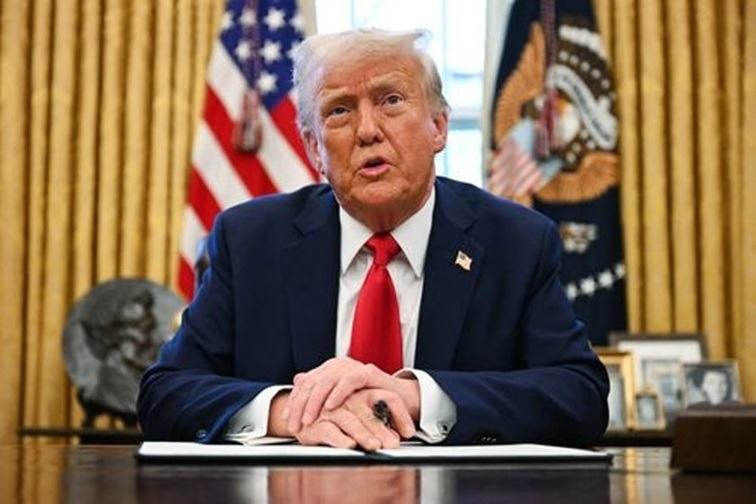
President Bola Ahmed Tinubu on Monday, declared that the era of neglect of satellite towns in the Federal Capital Territory (FCT) is over, saying his administration remained committed to ensuring that basic infrastructure and public services reach communities long excluded from development.

Tinubu, represented by Vice President Kashim Shettima, made the declaration while commissioning the Water Supply Network to Karu Satellite Town and Environs in Kurudu Community along the Karu-Karshi Road, Abuja.

Describing access to clean water as a fundamental human right, the President said the project was a practical demonstration of the administration’s resolve to translate the Renewed Hope Agenda into tangible benefits for ordinary Nigerians.

“We are here not just to cut a ribbon, but to breathe life into a fundamental human right that has eluded this bustling community for far too long. Today, we declare that the era of neglect for our satellite towns is officially over,” Tinubu said.

He recalled that when the administration launched the Renewed Hope Agenda, it entered into what he described as a “sacred covenant” with Nigerians to ensure that governance delivers meaningful improvements in people’s lives.

According to him, the government was determined to move beyond policy pronouncements and provide critical infrastructure to underserved communities.

Advertisement

“When we launched the Renewed Hope Agenda, we promised that governance would no longer be a theoretical exercise confined to the boardrooms of city centres while our people in the periphery thirsted for basic amenities. We promised a government that listens, plans and delivers,” he said.

The President revealed that the Karu Water Supply Project was conceived following his directive that the Greater Abuja Water Supply Project should not be limited to the city centre but extended to satellite communities where a large proportion of the FCT’s working population resides.

He noted that the administration approved funding for the project without bureaucratic delays, enabling contractors, CGC Nigeria Limited, to complete the work ahead of schedule.

The project, he said, comprises more than 194 kilometres of secondary and tertiary pipeline networks designed to provide treated and potable water to residents of Karu, Orozo, Jikwoyi, Kurudu and neighbouring communities.

“To demonstrate our commitment, we did not allow the traditional shackles of bureaucratic delay to obstruct funding. Because we paid on time, the contractors worked on time. Today, ahead of schedule, we are commissioning over 194 kilometres of pipeline networks bringing safe and potable water directly to the doorsteps of our people,” he said.

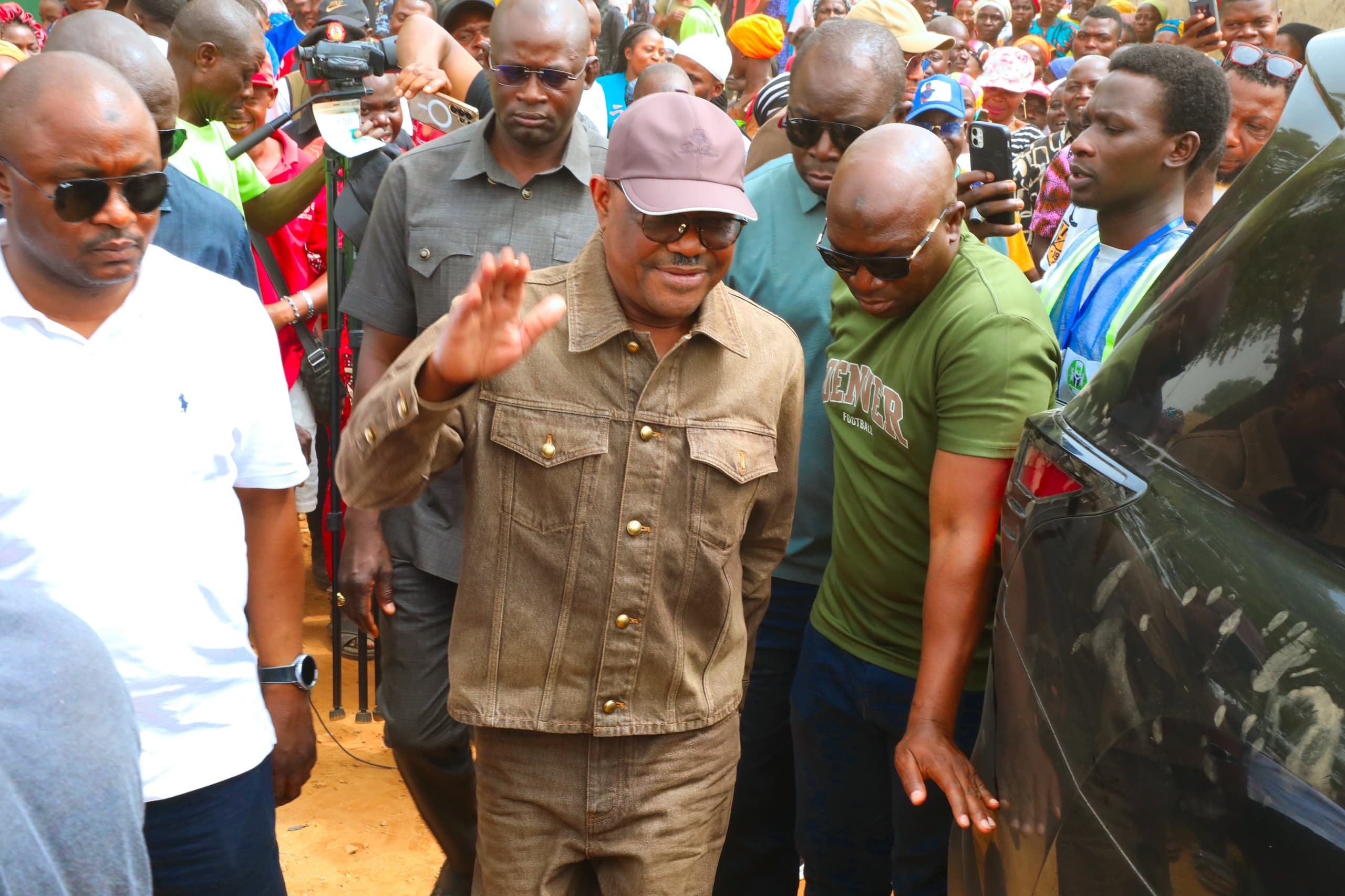
Tinubu used the occasion to commend the Minister of the Federal Capital Territory, Nyesom Wike, for what he described as impactful leadership and efficient project execution.

Advertisement

“Leadership is not measured by the eloquence of television commentary or the bitterness of empty rhetoric. Leadership is measured by tangible, verifiable impact on the lives of ordinary citizens.

“What we are witnessing in the FCT today across transport, healthcare, education, housing, roads and now water infrastructure is a testament to what happens when vision meets executive capacity. Thank you, Mr Project, for your leadership,” he said.

The President observed that residents of Karu had, for decades, depended on boreholes and water vendors despite the rapid growth of the community, stressing that the project would improve public health, sanitation and economic productivity.

He also urged residents to protect the infrastructure from vandalism and illegal connections.

Advertisement

“This infrastructure belongs to you. It was built with your commonwealth and designed for your well-being. I urge you to safeguard these installations and treat this water as the precious resource that it is,” he added.

Earlier, Wike expressed appreciation to the President for supporting people-centred projects across the FCT, particularly in satellite communities that have historically suffered infrastructure deficits.

The minister said the Karu Water Supply Scheme was executed in direct response to Tinubu’s directive that critical infrastructure should extend beyond the city centre to communities on the outskirts of Abuja.

According to him, the FCT Administration remained committed to implementing projects and programmes that improve the quality of life of residents across the territory.

Advertisement

Also speaking, Minister of State for the FCT, Dr Mariya Mahmoud, described the project as a landmark achievement in the Federal Government’s commitment to improving living conditions through strategic infrastructure investment.

She said the water network fulfilled a long-standing aspiration of residents and reflected the practical impact of the Renewed Hope Agenda.

Mahmoud noted that the project would enhance public health, strengthen sanitation, stimulate economic activities and reduce the burden faced by families who have endured years of inadequate access to potable water.

She called on residents to take ownership of the facility to ensure its sustainability for future generations.

Advertisement

Providing an overview of the project, Executive Secretary of the Federal Capital Development Authority (FCDA), Richard Dauda, said the scheme was designed to improve access to potable water in Karu and surrounding communities.

According to him, the project utilised an existing reservoir and connected more than 1,000 distribution lines to serve Karu, Jikwoyi, Kurudu and adjoining settlements.

Dauda thanked President Tinubu for supporting what he described as a transformational intervention that would significantly improve the welfare of residents.

For years, residents of the Karu axis have relied heavily on private boreholes and water vendors, with community leaders repeatedly calling for the extension of municipal water services. The new network is expected to reduce dependence on unsafe water sources and lower water costs for households and businesses in one of Abuja’s fastest-growing satellite towns.

Advertisement
Continue Reading

News

110bn SUVs Procurement: Respect Separation of Powers, pro-democracy group warns critics of N’Assembly

Published

on

ADVERTISEMENT
Zoom Ad
ADVERTISEMENT
Zoom Ad

A pro-democracy organisation, the Advocates of Social Justice for All (ASJA), has warned Civil Society Groups and critics of National Assembly over the controversial N110 billion reportedly spent on the procurement of official vehicles and support allowances for lawmakers in 2023, to stop undermining the institution of the Parliament.

A Federal High Court sitting in Lagos, had penultimate Wednesday, declared that the sum of N40bn used to procure 360 Sports Utility Vehicles (SUVs) for Members of the House of Representatives, and 109 SUVs for Members of the Senate; and the sum of N70bn used for support allowances for the newly inaugurated Members of the 10th National Assembly, as appropriated for in the 2022 supplementary budget, did not meet the standard procurement laws.

Declaring the appropriation and expenditure of the total sum of N110bn by the National Assembly as “unlawful”, Justice Yellim Bogoro ordered the Senate President, Senator Godswill Akpabio, and Speaker of the House of Representatives, Hon. Tajudeen Abbas, “to ensure that all future procurements or expenditure of public funds by the National Assembly comply strictly with due process requirements and are also guided by the principles of transparency, accountability and value for money.”

Two weeks after the judgement, the Plaintiff in the matter, the Socio-Economic Rights and Accountability Project (SERAP), in a statement, insisted that Members of the National Assembly must refund the said N110bn to the Federal Government coffers.

Advertisement

But in a statement issued on Monday, ASJA questioned the recent judgment of the Court which reportedly declared the expenditure unlawful, arguing that the ruling raises significant constitutional issues concerning the operational autonomy of the legislature.

The statement signed by Dr. Torkuma Asongo, the Executive Director, the group maintained that the National Assembly, as an independent arm of government, possesses the constitutional authority to make budgetary provisions necessary for the effective discharge of its legislative responsibilities.

According to the group, the procurement of official vehicles for federal lawmakers should not be interpreted as an act of extravagance, but rather as a necessary measure to enable legislators effectively carry out oversight functions, constituency engagements, committee assignments, and other official duties across the country.

“The National Assembly remains one of the critical institutions of democracy, and its Members require adequate operational support to effectively discharge their constitutional mandate. Official vehicles for lawmakers should be regarded as essential tools for legislative work rather than luxury items,” the statement read.

Advertisement

The group also criticised the call by SERAP for the refund of the funds, describing the move as premature and potentially capable of generating unnecessary institutional tension.

It argued that, rather than exerting public pressure on the legislature, concerned parties should allow the judicial process to run its full course, including any appellate proceedings.

ASJA further emphasised the importance of upholding the doctrine of separation of powers, cautioning against actions that could undermine the independence and integrity of the legislature.

“The principle of separation of powers is fundamental to constitutional democracy. While accountability and transparency remain essential, care must be taken to ensure that the constitutional independence of the legislature is not eroded through undue interference or public sensationalism,” the group warned.

Advertisement

ASJA urged civil society organisations and other stakeholders to approach issues concerning the National Assembly with objectivity and restraint, noting that sustained efforts to delegitimise the parliament could weaken democratic institutions and diminish public confidence in governance.

The group therefore called for continued respect for the National Assembly as the country’s foremost representative institution, insisting that strengthening democratic institutions remains essential to Nigeria’s democratic consolidation.

Continue Reading

News

South Africa deploy security personnel nationwide ahead of anti-migrant deadline

Published

on

ADVERTISEMENT
Zoom Ad
ADVERTISEMENT
Zoom Ad


South African police will beef up security nationwide ahead of a June 30 deadline set by fringe anti-illegal immigration groups for undocumented foreigners to leave, law enforcement authorities said on Monday.

The country, one of Africa’s largest and most industrialised economies, has been on edge following weeks of sometimes violent xenophobic unrest that has left at least two people dead.

Small but organised groups have issued an ultimatum for undocumented migrants to exit or face consequences, a demand with no legal force.

Advertisement

“The South African Police Service has elevated its operational readiness across all provinces, with comprehensive deployment plans in place to protect communities, critical infrastructure and key public spaces,” acting police minister Firoz Cachalia said.

He stressed the right to peaceful protest but warned: “Criminality, intimidation, violence, the destruction of property and any attempt to undermine public safety will not be tolerated”.

The military would secure strategic sites such as airports and stand ready to assist police if needed, said Defence Minister Angie Motshekga.

“Indeed, if, and I hope it is not going to reach that point, called upon by the police to support, we will, but basically ours is around the key points,” she said.

Advertisement

South Africa, a longstanding magnet for migrant labour, faces joblessness above 30 per cent and a history of periodic anti-foreigner violence, fuelled by claims migrants drive crime and steal jobs.

Past flare-ups have been deadly: 62 people were killed in 2008 riots, with further outbreaks in 2015 and 2016.

Violence in 2019 saw armed mobs descend on foreign-owned businesses around Johannesburg, leaving at least 12 people dead — 10 of them South African citizens.

The latest tensions come ahead of local government elections scheduled for November 4.

Advertisement

During the voter registration at the weekend, gunmen shot dead four people linked to political parties in separate incidents.

Two of those killed were affiliated with the opposition Umkhonto we Sizwe (MK) party, which is headed by ex-president Jacob Zuma, South Africa’s leader between 2009 and 2018.

The third, a Democratic Alliance ward candidate, was shot in the Western Cape, while an African National Congress ward councillor was killed in the Eastern Cape.

Advertisement
Continue Reading

Trending

Copyright © 2024 Naija Blitz News