

Connect with us

News

ECOParl: Free Movement Key to West Africa’s Economic Future – Official 

Published

on

ADVERTISEMENT
Zoom Ad
ADVERTISEMENT
Zoom Ad

By Gloria Ikibah

Free movement of persons and labour mobility experts say is key to West Africa’s push for deeper regional integration and the success of the African Continental Free Trade Area (AfCFTA).

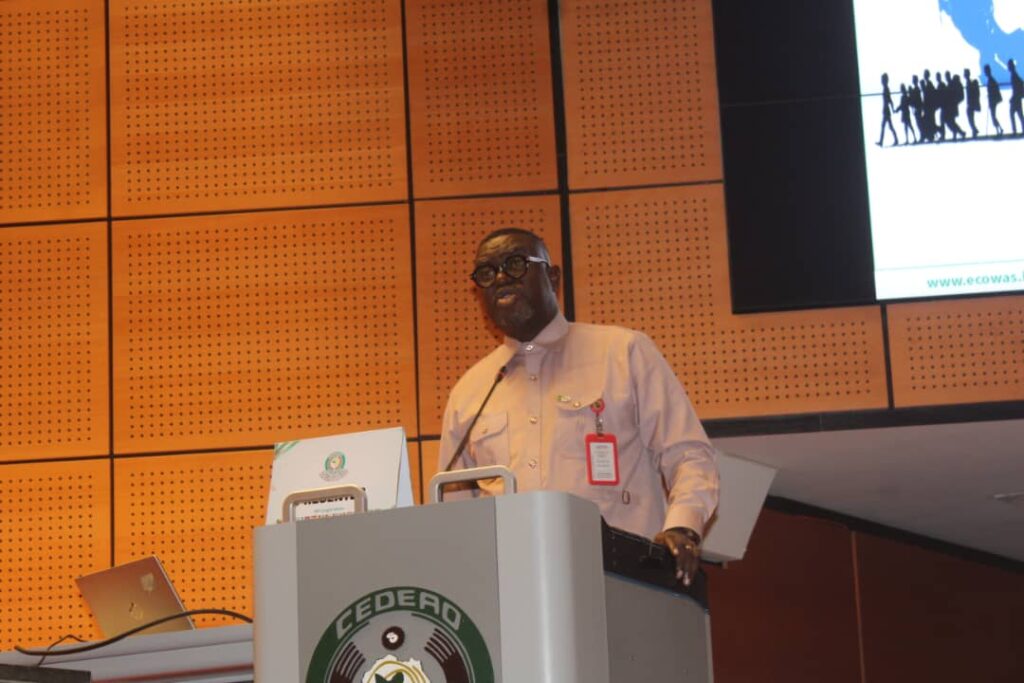
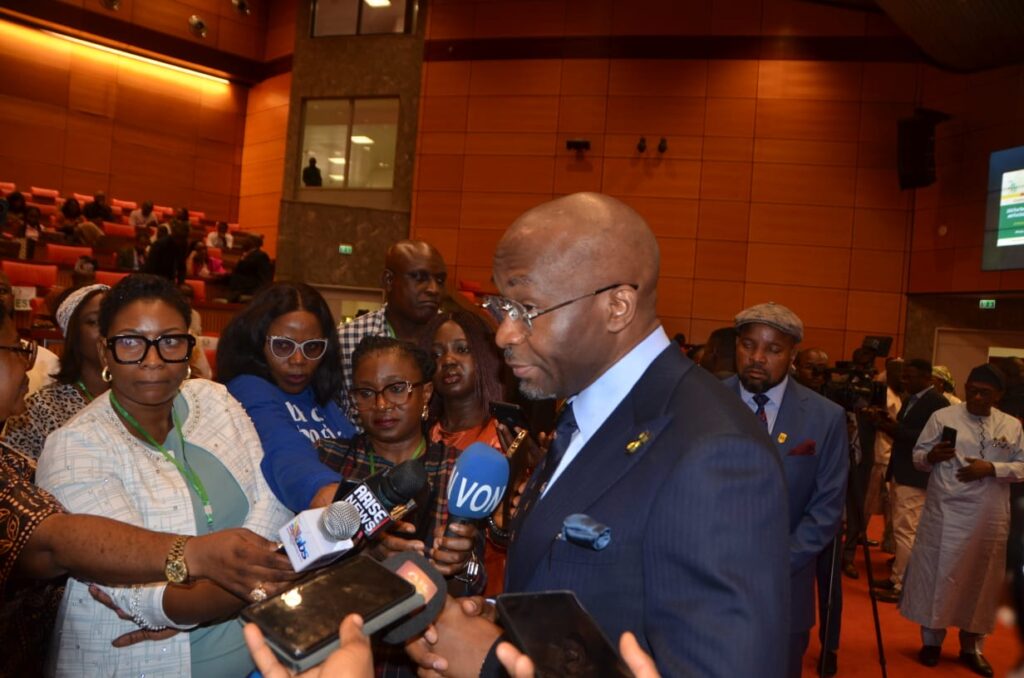
Presenting a detailed brief to lawmakers at the ongoing 2026 First Ordinary session of the ECOWAS Parliament, ECOWAS Director of Free Movement of Persons and Migration, Albert Siaw-Boateng, described human mobility as “a catalyst for regional integration and AfCFTA success”.

He urged Member States to close persistent gaps in labour governance while consolidating decades of progress under the bloc’s landmark mobility framework.

Advertisement

Siaw-Boateng reminded Parliament that the ECOWAS Free Movement Protocol, adopted in 1979 and revised in 1993, remains “a core element of the regional integration agenda” and is fully aligned with continental ambitions, including the African Continental Free Trade Area.

The Protocol, implemented in three phases, provides for the right of entry, residence and establishment across the region.
Under the first phase — the right of entry — citizens of Member States are permitted visa-free travel with a passport and health certificate. The controversial 90-day stay limitation is currently under review in national legislations, with ECOWAS pushing for its abolition.

The second phase grants the right of residence, enabling citizens to seek and undertake income-earning employment in line with national provisions. The third phase — the right of establishment — allows migrants to participate in economic activities, including the creation and management of enterprises, under the principle of non-discrimination.

“Free Movement Right of Entry is fully implemented.

Advertisement

“What remains is strengthening implementation in areas that align mobility with labour standards and protections,” Mr Siaw-Boateng stated.

Turning to the ECOWAS Regional Migration Policy, he stressed that reliable data is fundamental to effective governance.

The policy rests on nine pillars, including promoting free movement, managing labour migration and student mobility, strengthening protection for people on the move, addressing the gender dimension of migration, tackling climate-related displacement, and enhancing regional migration governance.

“Building a harmonised regional data collection and management system provides the very foundation for ECOWAS policymakers to develop evidence-based migration and development policies that are tailored to the region’s demographic realities,” he said.

Advertisement

The ECOWAS Director highlighted key labour migration instruments adopted by ECOWAS Heads of State, notably the Common Approach to Migration, endorsed in 2008, which seeks to strengthen the migration-development nexus while minimising negative impacts.

He also pointed to the recently validated ECOWAS Labour Migration Strategy and Action Plan (2025–2030), aimed at promoting “safe, regular and rights-based labour mobility in West Africa”.

Complementing this is the ECOWAS Decent Work Regional Programme, which seeks to address decent work deficits, including through the development of Labour Market and Migration Information Systems (LMMIS) to generate “standardised, reliable and valid data” for policy design.

While notable gains have been made, Mr Siaw-Boateng acknowledged persistent challenges.

Advertisement

Among them are limited labour inspection for migrant workers, weak portability of social protection benefits, insufficient labour market information sharing, and uneven implementation of the Free Movement Protocol in some Member States.

He revealed that approximately 70 per cent of migrant workers in the region operate within the informal sector, underscoring the need for inclusion in social protection systems.

Other structural challenges include fragmented migration data, skills mismatches due to low recognition of qualifications, and gaps in cross-border labour rights protection.

To address these, ECOWAS is pursuing the development of a regional labour inspection network, advancing a regional Technical and Vocational Education and Training framework, and strengthening compliance monitoring mechanisms.

Advertisement

Mr Siaw-Boateng briefed Parliament on several ongoing programmes, including the EU-funded “Support to the Free Movement and Migration of Persons” project (FMM West II), implemented jointly with international partners.

He cited progress on the ECOWAS National Biometric Identity Card (ENBIC), harmonisation of drivers’ licences, the introduction of an ECO-Visa, and the establishment of a regional mechanism to remove obstacles and harassment affecting inter-state vehicles.

The Commission is also collaborating with the African Union Commission, the International Labour Organization, and the International Organization for Migration on labour migration governance, social protection portability, and harmonised labour migration statistics for the 2024–2028 period.

He stressed that labour mobility directly supports industrial development, addresses skills gaps, strengthens small and medium-sized enterprises, promotes women and youth inclusion, and bolsters informal cross-border trade.

Advertisement

He also argued that effective mobility frameworks would accelerate AfCFTA implementation by enabling businesses to access skills and markets across borders seamlessly.

Looking ahead, he identified robust implementation of the ECOWAS biometric identity system, private sector engagement, digital labour mobility platforms, and skills mobility partnerships as critical opportunities.

“Aligning free movement with labour standards and protections must remain our priority,” he told lawmakers, stressing that mobility without protection risks undermining the integration agenda.

As deliberations continue, Parliamentarians are expected to consider legislative and oversight measures to reinforce labour governance and ensure that the promise of a borderless ECOWAS translates into tangible economic and social gains for West African citizens.
Advertisement
Continue Reading
Advertisement

News

Gov Muftwang flags-off 4th Man O’War national camping exercise 

Published

on

By

ADVERTISEMENT
Zoom Ad
ADVERTISEMENT
Zoom Ad

Plateau State Governor, Caleb Mutfwang, has reaffirmed his administration’s commitment to making education the cornerstone of sustainable development, declaring that government will continue to invest in measures that guarantee a safe, secure and conducive learning environment capable of restoring the state’s reputation as a centre of academic excellence.

Governor Mutfwang made the declaration through the Commissioner for Education, Dr. Mrs. Kachollom Pyam Gang, while declaring open the 4th Man O’ War Nigeria National Camping Exercise in Jos.

The week-long programme, holding from August 9 to 15, 2026, at the Citizenship and Leadership Training Centre, Shere Hills, is themed “Strengthening Community-Based Safe School Framework for a Secure and Resilient Nigeria,” with the sub-theme “Building Safer Schools Through Partnership, Preparedness and Collective Responsibilities.”

Describing the initiative as timely and strategic, the governor disclosed that the Plateau State Government is set to train one thousand security personnel who will be deployed to school communities across the state to strengthen safety and enhance the protection of students, teachers and educational facilities.

Advertisement

He noted that the initiative forms part of the administration’s broader efforts to rebuild confidence in the education sector and create an atmosphere where learning can thrive without fear.

Governor Mutfwang stressed that quality education cannot flourish in an atmosphere of insecurity, adding that his administration remains determined to work with relevant stakeholders to ensure that every child in Plateau State has access to safe and inclusive learning spaces.

He commended Man O’ War Nigeria and the Safe School Initiative for championing practical solutions aimed at addressing security challenges confronting schools across the country.

Speaking at the event, the National Coordinator of the Safe School Initiative Nigeria, Hajia Halima Ibrahim, said the camping exercise was designed to strengthen the resilience of host communities in protecting schools from security threats.

Advertisement

She described Man O’ War Nigeria as a critical implementation partner whose nationwide presence and grassroots structure have positioned it to drive the objectives of the Safe School Initiative across the federation.

In his remarks, the National Commander of Man O’ War Nigeria, Adedamola Gbenga, explained that the exercise is a national capacity-building programme intended to equip coordinators from all the 774 Local Government Areas of the country with the knowledge, skills and practical strategies required to support the implementation of the Safe Schools Initiative.

He expressed optimism that participants would return to their various communities better prepared to promote school safety, assuring parents and the public that the training would contribute significantly to creating more secure learning environments ahead of the new academic session.

Also speaking, the Plateau State Safe School Coordinator, Brigadier General G. Shipi (Rtd.), described the collaboration between government agencies and Man O’ War Nigeria as both timely and strategic.

Advertisement

He urged participants to effectively utilise the knowledge acquired during the training to strengthen community-based security structures and foster safer school environments across Nigeria.

The opening ceremony attracted a broad spectrum of stakeholders, including representatives of the Nigerian Army, the Nigeria Police Force, the Nigeria Security and Civil Defence Corps, the Department of State Services, the Chairman of Jos North Local Government Council, academics, traditional rulers and other partners committed to advancing school safety and improving educational security nationwide.

Continue Reading

News

Osun Election: Police Release DIG, CP and Emergency Contact Numbers

Published

on

By

ADVERTISEMENT
Zoom Ad
ADVERTISEMENT
Zoom Ad

As preparations intensify for the forthcoming Osun State Governorship Election, the Nigeria Police Force has urged members of the public to promptly report emergencies, security concerns and other election-related incidents through designated contact lines.

The public can reach the police through the following numbers:

📞 DIG Election: 08139235585
📞 CP Election: 08134277587
📞 Control Room: 08108756818

Members of the public who wish to report cases of police misconduct can contact the Complaint Response Unit on:

Advertisement

📞 08057000001
📞 08057000002
📞 08057000003

The police urged residents to remain vigilant, peaceful and law-abiding, stressing that timely reporting of incidents would help security agencies respond effectively and maintain a safe environment before, during and after the election.

Your voice matters. Report promptly. Stay peaceful. Help keep Osun safe.

Major Candidates in Osun Governorship Election

Advertisement

The 2026 Osun State Governorship Election is shaping up as a closely contested race, with 14 candidates on the ballot. However, the contest has largely centred on three major candidates — Governor Ademola Adeleke of the Accord Party, APC candidate Bola Oyebamiji, and ADC candidate Najeem Salaam.

Ademola Adeleke — Accord Party

Ademola Adeleke is seeking re-election for a second term as governor of Osun State.

Adeleke, who won the 2022 governorship election on the platform of the Peoples Democratic Party (PDP), is now contesting under the Accord Party.

Advertisement

His campaign is anchored on his administration’s record in office, with the governor seeking to retain the state’s top political position for another four years.

Bola Oyebamiji — APC

The All Progressives Congress (APC) is represented by Munirudeen Bola Oyebamiji, a former Commissioner for Finance in Osun State and former Managing Director of the National Inland Waterways Authority (NIWA).

Oyebamiji emerged as the APC candidate and is regarded as one of the strongest challengers to Adeleke.

Advertisement

The APC is banking on its political structure and support base across the state to return the party to power in Osun.

Najeem Salaam — ADC

Najeem Salaam, the candidate of the African Democratic Congress (ADC), is another prominent contender in the election.

Salaam is a former Speaker of the Osun State House of Assembly and has considerable political experience in the state.

Advertisement

His candidacy has also attracted attention as the ADC seeks to strengthen its presence in Osun and across the country ahead of the wider political contests leading to the 2027 general elections.

The Three-Way Contest

With the election approaching, the race is increasingly being viewed as a three-way contest involving Adeleke, Oyebamiji and Salaam, although other candidates are also participating.

The election will therefore test the strength of the incumbent governor’s political machinery, the APC’s efforts to reclaim Osun and the ADC’s growing influence in the state’s political landscape.

Advertisement

With voters across the state expected to decide who will govern Osun for the next four years, security, voter turnout, electoral integrity and the ability of the candidates to mobilise supporters peacefully are expected to be critical factors in determining the outcome.

Continue Reading

News

Army Opens Application For Short Service Combatant Commission Course 50/2027

Published

on

By

ADVERTISEMENT
Zoom Ad
ADVERTISEMENT
Zoom Ad

The Nigerian Army has opened applications for eligible Nigerians seeking commission into the force under the Short Service Combatant Commission (SSCC) Course 50/2027.

The Army announced the commencement of the recruitment exercise in a statement released on Tuesday, saying the application is open to qualified civilians and serving military personnel who meet the required conditions.

Successful applicants will undergo training and, upon commissioning, serve as SSCC officers in the Combat Arms, including the Infantry and Armour Corps, as well as Combat Support Arms comprising the Artillery, Engineers, Signals and Intelligence Corps.

Prospective applicants are required to visit the official Nigerian Army recruitment portal at nashortservice.army.mil.ng and select the SSCC option.

Advertisement

Applicants are expected to carefully follow the instructions provided on the portal when completing their applications.

The Nigerian Army urged members of the public to disregard any recruitment portal or announcement claiming that applications were opened before the official publication.

The Army also advised prospective applicants to rely only on information published through its official channels.

Applicants and members of the public were further encouraged to watch for official recruitment jingles on television and radio stations following the announcement.

Advertisement

The deadline for applications is Saturday, October 17, 2026.

Continue Reading

Trending

Copyright © 2024 Naija Blitz News