News
Reps Demands Full Disclosure from Customs, NPA, CBN, NACCIMA Over Pre-Shipment Probe
…direct agencies to file comprehensive records as investigation resumes

By Gloria Ikibah
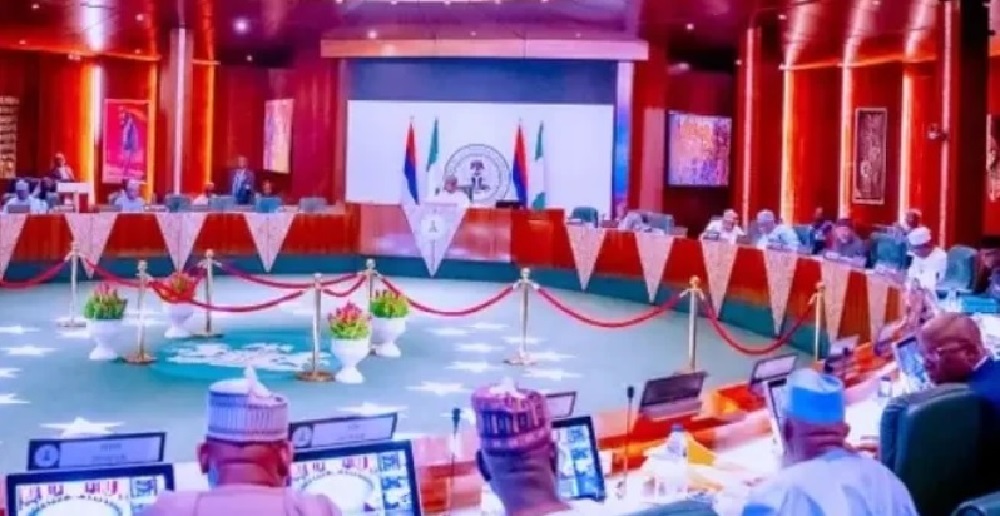
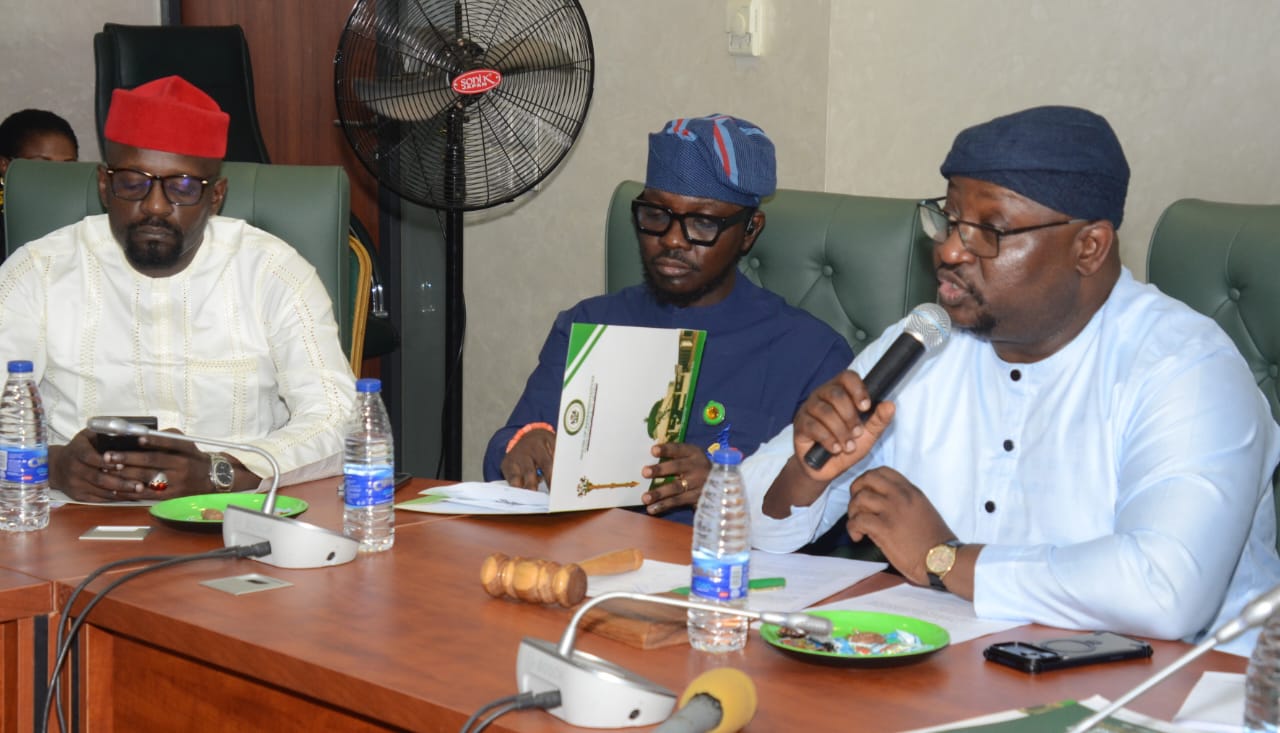
The House of Representatives has stepped up its investigation into pre-shipment inspection of exports and the alleged non-remittance of crude oil proceeds, directing key government agencies and a major private sector body to submit detailed documentation on their roles.

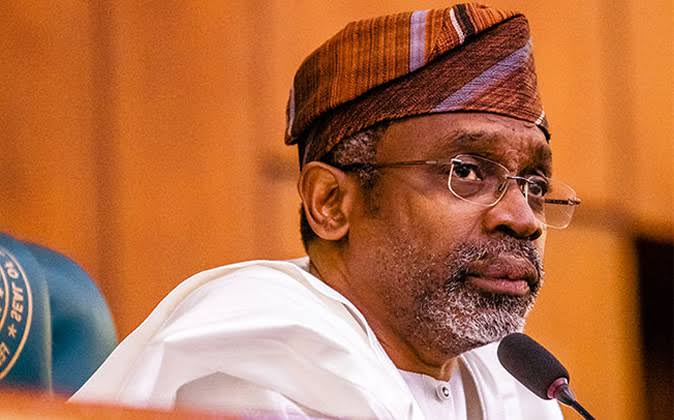
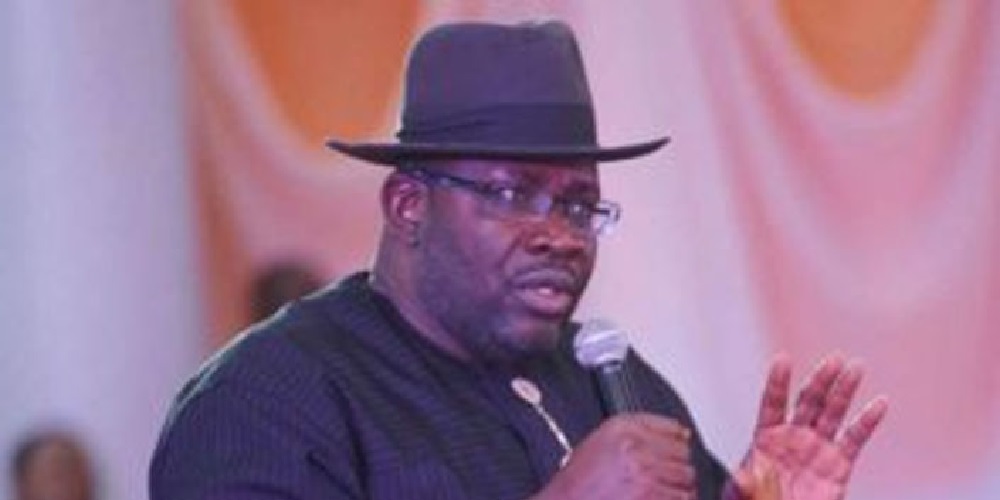
At a resumed hearing on Wednesday, the Chairman of the Ad-hoc Committee on the Investigation of Pre-Shipment Inspection of Exports and the Non-Remittance of Crude Oil Proceeds, Rep. Seyi Sowunmi, instructed the Nigeria Customs Service (NCS), Nigerian Ports Authority (NPA), Central Bank of Nigeria (CBN) and the Nigerian Association of Chambers of Commerce, Industry, Mines and Agriculture (NACCIMA) to provide comprehensive records requested by the committee.
The directive followed presentations by representatives of the agencies, which the committee described as incomplete and not sufficiently up to date. Lawmakers indicated that fresh dates will be communicated for the agencies to return with fuller submissions.
Earlier in the session, the organisations outlined their respective responsibilities in relation to the pre-shipment of oil and non-oil exports at various terminals across the country.
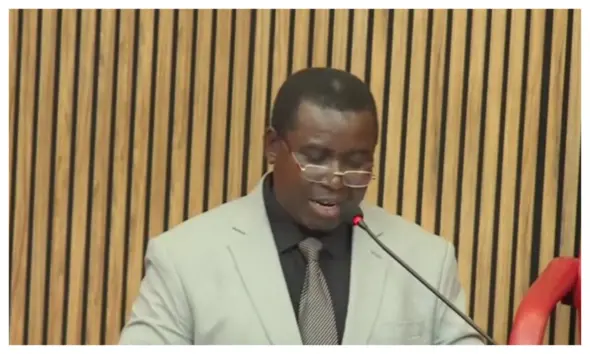
Representing the Comptroller-General of Customs, Bashir Adeniyi, Deputy Comptroller-General Caroline Diagwan told the committee that the Service’s involvement in pre-shipment processes is guided strictly by its establishing Act and other relevant laws. She explained that Customs operates within the statutory framework governing export procedures and compliance.
The committee maintained that a clearer and more detailed account of each institution’s role is essential to determine whether due process has been followed and whether export proceeds, particularly from crude oil shipments, have been properly accounted for.
She said, “Our role as regards export of food is we get what we call NXP, and then certificate of inspection, as well as export permit. We now make sure that those documents tally with what has been exported at the point of export. So we do examination as well as physicalization of food.
“That is the role we play.We make sure that what is being exported tallies with the documents sent to us by the CBN, that’s the NXP, and then the export permit from NUPRC. We are there at the point of inspection. After inspection, that’s when they do the exportation. Customs are there with other government agencies.
“We don’t collect export duties, actually. And we don’t really know how much money they are paying to the government, because that’s not our purview. So as long as the documents they issue to us clearly with what is there physically, they are good to go.
“The export takes place at export terminals under oil and gas command in Port Harcourt, as well as other commands in Edo Delta. So these controllers of these commands, they send monthly returns to the headquarters on all the activities, which include all exports as well as imports”.
On his part, a Director of the CBN, Dr Musa Nakurji, who represented the CBN Governor, Yemi Cardoso stated that, the CBN acts as the rallying point of the activities of the other agencies through platforms that process the data and information.
He said, “So, regarding the issue of pre-shipment inspection, by the Act of 1992, Central Bank is actually saddled with the responsibility of the administrative side of it. So let me first of all start by making a bit of a correction. If you look at the pre-inspection act, Central Bank does not appoint the pre-inspection agent.
“Then the second thing again, in terms of the form NXP, we don’t send anything manually to Customs.The process is automated. And Customs latch on to that to get their report.
“So in Central Bank, we have the trade monetary system. This is happens on that the trade monetary system and the SVP. So from the bank, the commercial bank of the exporter, they open the form NXP.
“And now there is what is being referred to as clean certificate of inspection. So anything that is going out, the pre-inspection agent will have to inspect that in terms of the quantity, the quality and the value. If they do that and they’re satisfied with what they have, they now issue a CCI”.
In his submission, the General Manager in charge of Tariff at the Nigerian Ports Authority (NPA), Ibrahim Lukman, who represented the Managing Director and Chief Executive Officer, Dr Abubakar Dantsoho, outlined the authority’s involvement in the pre-shipment process.
He explained that the NPA deploys designated agents to export terminals, where they monitor activities and transmit relevant information back to the authority.
According to him, the agency operates within clearly defined statutory boundaries and collaborates closely with other government bodies in carrying out its responsibilities at the ports.
Also addressing the committee, a Director of the Nigerian Association of Chambers of Commerce, Industry, Mines and Agriculture (NACCIMA), Dr Emmanuel Akeh, described the organisation as the umbrella body for chambers of commerce across the country. He clarified that NACCIMA plays no role in crude oil exports. Its function, he said, is limited to issuing certificates of origin for non-oil exports — trade documents used to verify the source and authenticity of goods being shipped abroad.
“Because part of the problems Mr. President is trying to cure is that we should account for every cover that accrues to the nation. And that is what this committee seeks to achieve.
“Please, we’re going to get back to you, we’re going to write to you, and then, any necessities that we need, submit on time”.
The Committee Chairman underscored the importance of the inquiry. He noted that the investigation is central to efforts aimed at plugging revenue leakages and ensuring that the country does not continue to lose much-needed income through gaps in the export process.
The Committee therefore ruled that, the agencies will be informed about the dates to appear before the Committee and submit the needed comprehensive documents requested.
News
Troops rescue 31 abductees, neutralize terrorist kingpin in Katsina, Kebbi
Troops of the Joint Task Force North West, Operation FANSAN YAMMA, have rescued 31 abductees and neutralized two terrorists, including a suspected kingpin, during separate operations in Katsina and Kebbi states.
The military also arrested two suspected terrorists and recovered ammunition, a motorcycle, camouflage clothing and other items during the operations conducted on September 14 and 15, 2026.
The Media Information Officer of the Joint Task Force North West, Lieutenant Colonel Aliyu Danja, disclosed this in a statement issued on Wednesday, September 16.
According to the statement, troops in Katsina rescued 10 kidnap victims, comprising three males and seven females, after responding to distress reports from Unguwan Daudu and Unguwan Chibauna communities in Funtua Local Government Area.
The troops reportedly launched a hot pursuit of the fleeing terrorists and engaged them in a gun battle, forcing them to abandon the victims.
Among those rescued was an infant.
The victims were subsequently taken into military custody for necessary assistance and further action.
21 Victims Rescued in Kebbi
Also on September 14, troops operating in Kebbi State responded to a distress call following the abduction of civilians from Fafala Village in Kangiwa Local Government Area.
Acting on intelligence, the troops launched a fighting patrol towards Fafala and Dandikwa, where they reportedly engaged the terrorists in a heavy exchange of gunfire.
The terrorists were forced to withdraw from the area, allowing the troops to continue their operation and rescue 21 kidnapped victims.
The rescued civilians were later reunited with their families.
Terrorist Kingpin Killed in Katsina
The following day, September 15, troops in Katsina reportedly foiled an attempted terrorist attack on communities in Matazu and Kankara local government areas.
Acting on intelligence, the troops moved towards a suspected terrorist hideout and engaged the group with superior firepower.
The military said two terrorists were killed during the encounter, including Abbah Alhassan, whom it identified as a known terrorist kingpin.
Other terrorists reportedly escaped into the surrounding bush.
Troops recovered 10 rounds of ammunition, a motorcycle, a cutlass, camouflage clothing and suspected Indian hemp from the area.
Two Suspects Arrested
In another operation on September 15, troops arrested two suspected terrorists around the Yantumaki general area of Dan Musa Local Government Area of Katsina State.
Preliminary interrogation reportedly indicated that the suspects were associated with a suspected terrorist kingpin identified as Mannori.
The suspects remain in military custody while investigations continue.
The Joint Task Force said the operations demonstrate its continued efforts to rescue kidnapped civilians, disrupt terrorist networks and restrict the movement and operational freedom of armed groups across its area of responsibility.
The task force also commended residents for providing security-related information and urged members of the public to remain vigilant and promptly report suspicious movements and activities to the nearest security agency.
News
NASS Transmits 2026 Constitution Amendment Bill to 36 State Assemblies
By Gloria Ikibah
The National Assembly has transmitted the Constitution of the Federal Republic of Nigeria, 1999 (Sixth Alteration) Bill, 2026 to the Houses of Assembly of the 36 states for consideration and approval.
The transmission, carried out on Wednesday, September 16, 2026, marks the next stage in the ongoing constitutional alteration process and was undertaken pursuant to a directive from the leadership of the National Assembly.
The Clerk to the National Assembly, Kamoru Ogunlana, Esq., said the Bill was transmitted to the state legislatures in compliance with the provisions of Section 9 of the 1999 Constitution, as amended.
Under Section 9, a bill seeking to alter the Constitution cannot be passed by either chamber of the National Assembly unless it is approved by resolutions of not less than two-thirds of the Houses of Assembly of the 36 states.
The state legislatures are therefore required to consider the proposed constitutional amendments in accordance with their respective legislative procedures and communicate their resolutions to the National Assembly after completing their deliberations.
Although the Constitution does not stipulate a specific timeframe within which state Houses of Assembly must respond to a constitutional alteration bill, the National Assembly said the state legislatures are expected to communicate their decisions within 30 days of receiving the Bill.
The National Assembly, however, stressed that the 30-day period is an administrative timeframe and not a constitutional deadline.
According to the Clerk, the timeframe is intended to promote an orderly, coordinated and timely conclusion of the constitutional amendment process while respecting the constitutional independence of the state legislatures.
What the Constitution Requires
Nigeria’s Constitution sets a deliberately high threshold for constitutional amendments because changes to the country’s supreme law require approval beyond the National Assembly alone.
In addition to the required approval by at least two-thirds of the state Houses of Assembly, Section 9 prescribes other legislative requirements depending on the particular constitutional provisions being altered.
The process generally involves the introduction and passage of the alteration Bill by the National Assembly before it is transmitted to the state legislatures for consideration. The resolutions of the state assemblies are subsequently communicated to the National Assembly for the next stage of the process.
The requirement for state-level approval gives the 36 Houses of Assembly a constitutionally recognised role in determining whether proposed amendments can proceed.
The National Assembly said it recognises this responsibility and respects the independence of the state legislatures in considering the Bill.
National Assembly Seeks Coordinated Process
In the statement, the Clerk said the transmission was intended to facilitate the orderly discharge of the state assemblies’ constitutional responsibilities rather than interfere with their legislative processes.
“The National Assembly remains committed to ensuring that the constitutional alteration process is conducted in strict compliance with the Constitution,” the statement said.
It added that the process would be guided by due process, institutional cooperation and respect for the legislative responsibilities of all tiers of the legislature.
The National Assembly will await the resolutions of the 36 state Houses of Assembly before taking the subsequent steps required under the Constitution.
The transmission of the Sixth Alteration Bill comes amid continued efforts to amend aspects of Nigeria’s 1999 Constitution, a process that requires cooperation between the federal and state legislatures because of the constitutional threshold for altering the nation’s supreme law.
The statement was signed by Kamoru Ogunlana, Esq., Clerk to the National Assembly.
News
REVEALED: 11 Nigerian-Born Lawyers Hit by U.S. Disciplinary Actions Over Professional Violations
At least 11 Nigerian-born lawyers practising or based in the United States have faced suspension or other disciplinary measures over alleged or established professional violations, according to disciplinary records cited in a report by The Peoples Gazette.
The cases span several years and involve different jurisdictions and regulatory bodies, including state bar authorities, U.S. immigration authorities and the Board of Immigration Appeals.
The disciplinary matters range from unauthorised practice of law and failure to meet professional obligations to alleged misrepresentation, neglect of clients’ cases and mishandling of client funds.
The sanctions are not identical, and the grounds for disciplinary action vary from one case to another. Some of the lawyers have also reportedly been reinstated, while others remain suspended or have not been reinstated.
Below is a summary of the lawyers and the disciplinary actions reported against them.
1. Aloysius O. Ejimakor
Aloysius O. Ejimakor was suspended from practising law in New York for nine months in 2004 following disciplinary proceedings over alleged false claims concerning his professional qualifications.
According to a U.S. Department of Justice document, the Office of General Counsel for the Executive Office for Immigration Review commenced proceedings against him in July 2003.
The proceedings alleged that Ejimakor violated federal regulations by making false statements concerning his qualifications.
The report states that he had not been reinstated following the suspension.
2. Abiola O. Adesioye
Abiola O. Adesioye, based in the District of Columbia, was suspended in July 2025 by the Board of Immigration Appeals from practising before the board, U.S. immigration courts and the Department of Homeland Security.
The suspension followed an order issued by the District of Columbia Court of Appeals on March 25, 2025.
According to the report, disciplinary counsel for the Executive Office for Immigration Review and the Department of Homeland Security jointly petitioned for her immediate suspension under applicable federal regulations.
The Board of Immigration Appeals granted the petition pending the final resolution of the disciplinary proceedings.
3. Emelike Nwosuocha
Emelike Nwosuocha, who died on July 21, 2024, aged 64, faced disciplinary proceedings before his death.
According to the report, he was posthumously suspended for three years in 2024 over professional misconduct.
The disciplinary matter included an alleged failure to provide an affidavit required under an earlier suspension and failure to pay attorney fees owed to a defendant in a medical negligence lawsuit.
In 2023, Nwosuocha had reportedly received a six-month suspension after failing to respond to a disciplinary grievance.
The relevant disciplinary authorities subsequently affirmed the suspension.
4. Michael Ozulumba
Michael Ozulumba, who is based in Massachusetts, was reportedly suspended from practising before the Internal Revenue Service and the Executive Office for Immigration Review for two years.
The reported disciplinary findings involved professional misconduct, neglect of client cases and misrepresentations.
However, the supplied material contains a reference to a 2027 board decision. Since that date is still in the future as of September 16, 2026, that portion requires independent verification and has therefore not been treated here as an established past event.
5. Michael Imevbore Ojo
Michael Imevbore Ojo, based in Houston, Texas, was suspended from practising law for 12 months by the Evidentiary Panel of the District 4C05 Grievance Committee of the State Bar of Texas.
The disciplinary action reportedly involved alleged violations of Texas professional conduct rules, including neglect, failure to communicate with clients and failure to cooperate with a State Bar investigation.
-
Metro19 hours agoNigerian Army Speaks of Possible Attacks on Churches, Schools
-
News19 hours agoSuspected Fulani Militias K!ll Christian Leader In Plateau
-
News16 hours agoPDP Warns APC Governors: ‘Ignore Wike at Your Own Peril’
-
News15 hours agoObi: Wike Was Happier, Healthier When We Worked Together
-
Economy18 hours agoNigeria’s inflation falls to 15.39% as food inflation slows – NBS
-
Opinion16 hours agoSurging Energy demands and challenges of Ai