


By Gloria Ikibah
The House of Representatives has raised alarm over the continuing killings in communities within the Kwande/Ushongo Federal Constituency of Benue State, calling on the Federal Government and security agencies to immediately intensify military operations to halt the violence.
The concern was brought before lawmakers during plenary on Thursday through a motion of urgent public importance sponsored by Rep. Terseer Ugbor.
He drew attention to a series of recent attacks carried out by armed groups believed to be mercenaries and bandits in several communities in Kwande Local Government Area.
According to the lawmaker, the assaults have left many people dead and injured while homes, farmlands and other property have been destroyed. The violence has also forced numerous residents to flee their communities.
Rep. Ugbor highlighted a deadly incident on 3 February 2026 when gunmen stormed the Abande and Anwase communities in the Turan district. At least 17 people were killed during the attack, including a Mobile Police officer. Several others sustained injuries as houses were razed and livelihoods wiped out.
He noted that other communities have also come under similar assaults, including Anem and Tomataan in the Ikyurav-Ya area, as well as parts of Ikyov in Ushongo Local Government Area.
The lawmaker further informed the House of another violent episode on 5 March 2026, when armed attackers struck Mbaav community in Mbadura Council Ward and Mbachoon community, along with nearby settlements in Yaav Council Ward. Sixteen people lost their lives in that incident, while several others were left wounded.
The motion has intensified calls within the chamber for stronger security intervention to restore safety in the affected communities and prevent further bloodshed.
“As we speak here today Mr Speaker, a mass burial is currently planned to bury some of the people who recently lost their lives to these attacks,” Ugbor said.
The lawmaker disclosed that during an on the spot assessment of the affected areas on March 8, he observed that although a full battalion of the Nigerian Army had been deployed to the area, the troops were facing operational constraints that hinder effective response.
He also noted that the operational mandate of the deployed forces appeared unclear, raising questions about whether the mission was intended as a peacekeeping effort or a full combat operation aimed at flushing out armed groups and bandits operating in the area.
Ugbor further warned that the porous Nigeria Cameroon border corridor in Benue State has created easy entry and exit routes for armed groups, providing safe havens in ungoverned spaces.
He added that illegal mining activities in the mineral rich border region were also attracting criminal networks and fueling illicit activities that worsen insecurity.
The lawmaker also expressed concern that the Kashimbila area in neighbouring Taraba State had become a staging ground for attackers, warning that without urgent intervention the violence could escalate and deepen the humanitarian crisis.
The House unanimously adopted the motion urgi g the Federal Government and security agencies to immediately deploy additional technological and logistical support, including drones, surveillance assets and modern combat equipment, to security forces operating in Kwande Local Government Area.
The lawmakers also called on the Federal Government to transform the Benue Nigeria Cameroon border area into an Export Processing Zone (EPZ) with strong security and economic infrastructure to promote legitimate economic activities and deny criminal groups safe havens.
The House further urged the government to impose an immediate ban on illegal mining in the affected areas and establish strict regulatory monitoring to prevent criminal exploitation of mineral resources.
It also mandated the House Committees on Defence, and National Security and Intelligence to liaise with relevant agencies for the prompt implementation of the resolutions and report back to the House.
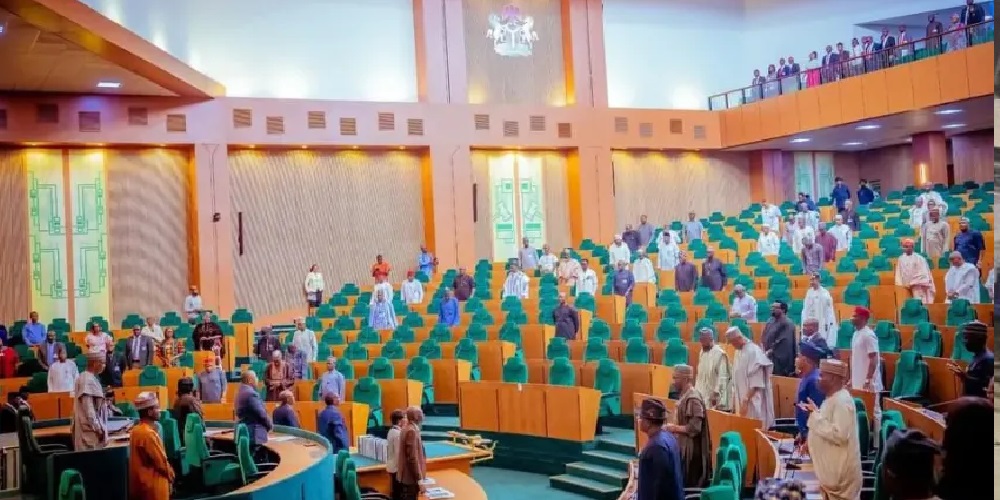
The House observed a one-minute silence in honour of victims of the attacks.