Foreign
Night of Annihilation: World Leaders Erupt as Hypothetical Iran Wipeout Sparks Global Crisis Fears
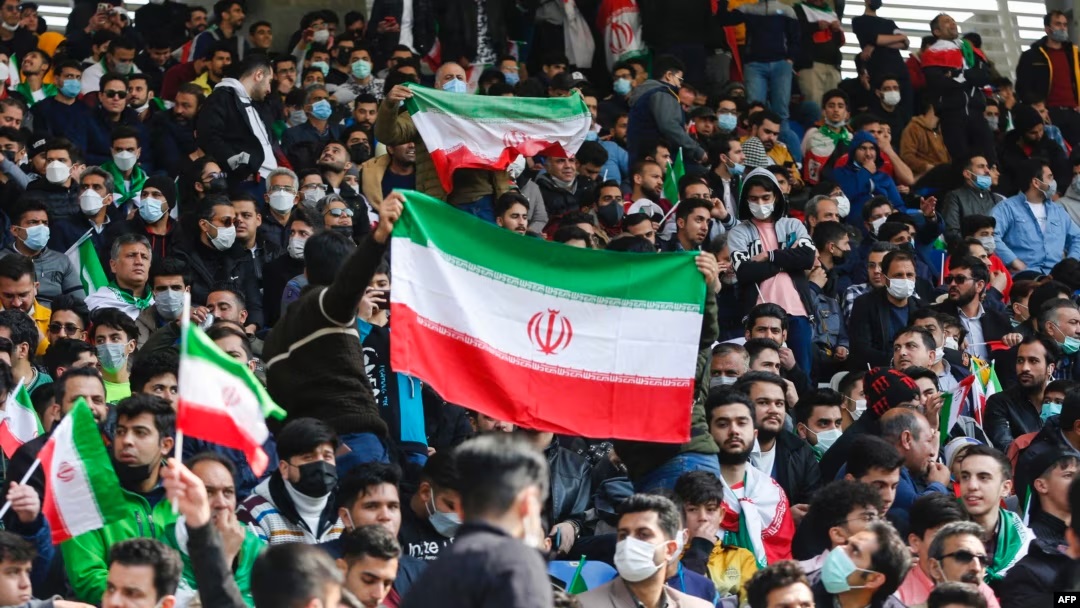
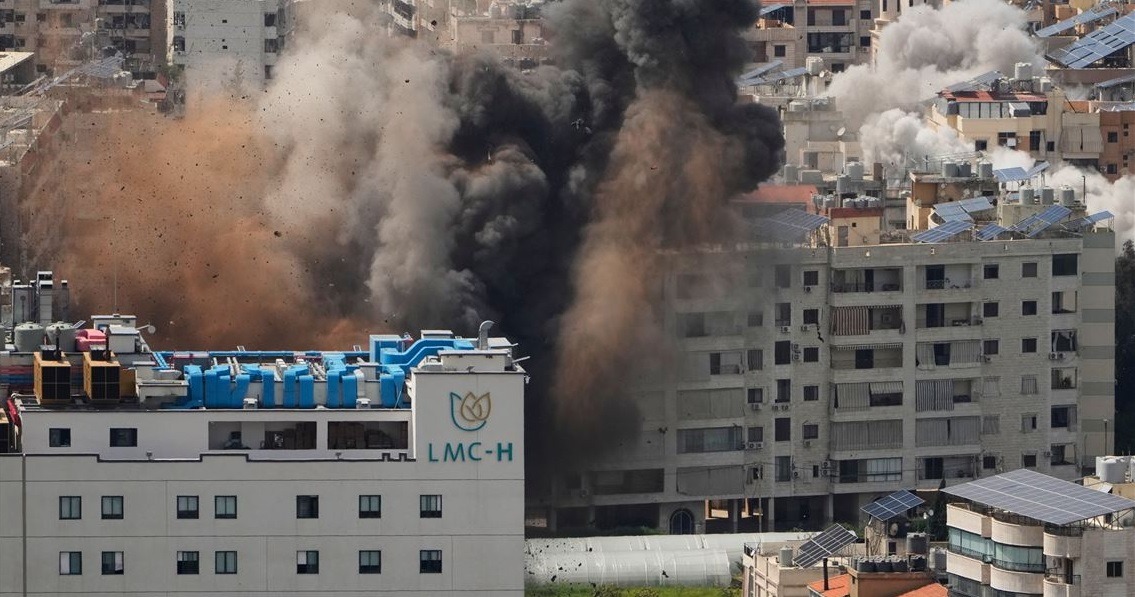
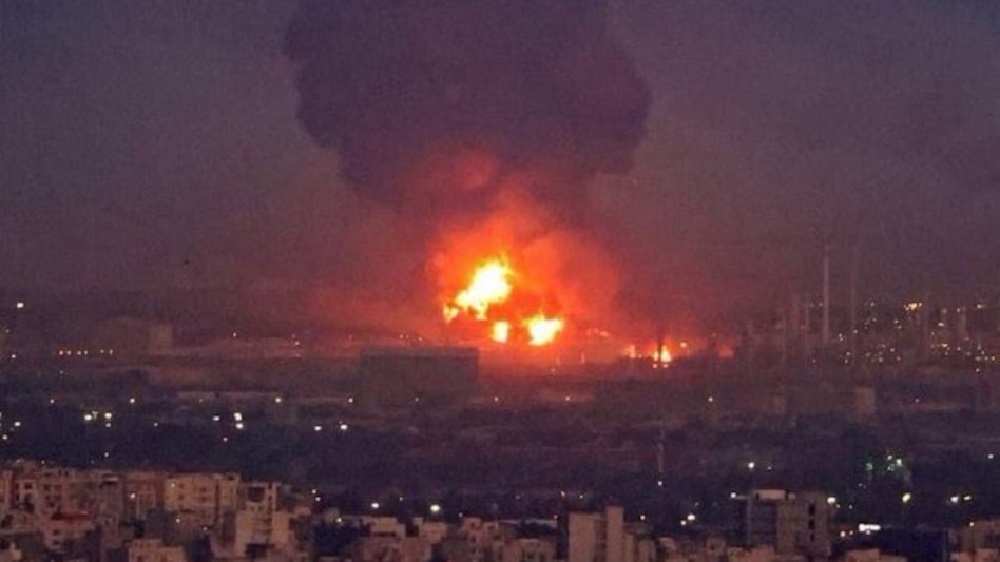
A scenario in which Iran is wiped out in a single night would trigger one of the most intense global reactions in modern history, with world leaders expected to respond with outrage, fear, and urgent calls for international intervention.

Though hypothetical, current geopolitical tensions offer a clear blueprint of how such a catastrophic event would be received across the world stage.
Global Shock and Emergency Diplomacy

The United Nations would immediately convene an emergency session of its Security Council, as global leaders demand explanations and accountability.
Western nations, including key European powers, would likely condemn the act as a grave breach of international law, warning that the destruction of a sovereign state sets a dangerous precedent.
Diplomatic channels would shift into crisis mode, with urgent efforts to prevent further escalation.
Major Powers Split Along Familiar Lines
Global reaction would quickly fracture along geopolitical alignments.
The United States and its closest allies may justify the action under security grounds—particularly if tied to nuclear or military threats—though such support would likely be cautious and politically contested.
In contrast, Russia and China would strongly condemn the attack, describing it as unlawful and destabilizing, while pushing for sanctions or international investigations.
Across Africa, Asia, and Latin America, many governments would warn that such an act undermines global sovereignty and could normalize extreme military aggression.
Middle East on the Brink
The immediate region would face the most dangerous fallout.
Iran’s allies and affiliated armed groups across the Middle East would likely launch retaliatory actions, targeting strategic interests tied to perceived perpetrators.
Countries such as Saudi Arabia and United Arab Emirates would heighten security, fearing spillover violence, while Israel would brace for direct and indirect reprisals.
Analysts warn the region could descend rapidly into a multi-front conflict.
Oil Markets in Chaos, Global Economy Shaken
Iran’s strategic position along the Strait of Hormuz—one of the world’s most critical oil transit routes—means its sudden destruction would send shockwaves through global energy markets.
Oil prices would likely surge dramatically, triggering:
Fuel shortages
Rising inflation
Economic instability, especially in import-dependent economies like Nigeria
The ripple effects could push already fragile economies toward crisis.
Humanitarian Catastrophe and Legal Fallout
Beyond geopolitics, the humanitarian consequences would dominate global discourse.
A single-night wipeout implies mass civilian casualties on an unprecedented scale, prompting:
International war crimes investigations
Emergency humanitarian interventions
Massive refugee displacement across neighboring regions
Global human rights organizations would demand accountability, while legal experts debate the implications under international law.
Fears of a Wider Global Conflict
Security analysts warn that such an घटना would not end conflict—it would escalate it.
Retaliatory cycles, alliance obligations, and military mobilizations could quickly expand beyond the Middle East, drawing in global powers and raising the specter of a broader international war.
Conclusion
Even as a hypothetical, the idea of wiping out Iran in a single night underscores the fragility of global stability.
The likely outcome is clear:
Immediate global condemnation
Deep geopolitical divisions
Regional military escalation
Severe economic and humanitarian crises
Rather than ending tensions, such an act would almost certainly ignite a far more dangerous and unpredictable global confrontation.
Foreign
Second Tragedy in Two Days: Student Gunman Kills Four at Middle School
A devastating shooting at a middle school in southeastern Turkey on Wednesday has left at least four people dead and 20 others wounded. The incident, which occurred in the province of Kahramanmaras, marks a harrowing second day of educational violence in the region, an anomaly in a country where school shootings are exceedingly rare.
The local governor, Mukerrem Unluer, confirmed to reporters that the fatalities included three pupils and one teacher. The perpetrator, identified as an eighth-grade student at the school, also died during the attack.
According to Governor Unluer, the assailant, typically aged 13 or 14 arrived at the institution concealing an arsenal within his backpack. The weapons, which authorities believe belonged to his father, a retired police officer, included five firearms and seven ammunition magazines.
“An eighth-grade student entered two classrooms occupied by fifth-grade students and opened fire indiscriminately,” Governor Unluer stated. The victims in the fifth grade are generally between the ages of 10 and 11.
The Governor further disclosed that four of the wounded are currently in critical condition and are undergoing emergency surgery.
Television footage from the site depicted a harrowing scene as police cordoned off the school gates while frantic crowds gathered nearby. Ambulances were seen transporting at least two victims from the premises as emergency services worked to stabilise the survivors.
The Justice Minister, Akin Gurlek, announced via the social media platform X that a formal investigation has been launched into the circumstances surrounding the massacre. Authorities are expected to scrutinise how the minor gained access to his father’s service weapons.
This tragedy follows a similar incident on Tuesday in the neighbouring province of Sanliurfa, where a former student opened fire at a school, wounding 16 individuals including staff and pupils before taking his own life.
The back-to-back attacks have sent shockwaves through the Turkish nation, prompting urgent discussions regarding firearm security and the safety of academic environments.
Foreign
Magyar slams Orbán for shunning Hungarians, calls Russia ‘security risk’
Prime Minister of Hungary Péter Magyar on Monday scolded Viktor Orbán for not paying attention to the problems affecting Hungarians while focusing on issues in other countries.
In a speech after the electoral victory, Magyar assured his administration would refrain from interfering in the domestic affairs of other nations, urging foreign governments to do the same.
The prime minister noted that Orbán played a five-dimensional chess game, saying the attitude was probably one of the reasons for his defeat at the polls.
According to Magyar, his predecessor often talked about Ukraine, Russia, Iran, the Iranian Shah, the Iranian Ayatollah, and the United States presidential election.
“If he had been woken from his sleep, he would have said that he won the US presidential election, not Donald Trump,” the PM mocked.
Magyar criticized the Kremlin and advised Europe to prepare to protect itself. “The Russian state is a security risk,” he declared, recalling Hungary “felt the Russian bear before.”
The leader vowed his government will do “everything for diversification” of Hungary and Russia, but clarified that Budapest will not “decouple” relations with Moscow.
The PM, however, expressed opposition to Ukraine’s accelerated accession to the EU: “It is absolutely absurd for a country at war to be admitted to the European Union.”
Magyar also said he will not initiate a phone conversation with President Donald Trump and President Vladimir Putin but will respond if the leaders or their officials reach out.
Russian Foreign Minister Sergey Lavrov on Monday declined a detailed response to Magyar’s comment that he will not engage in negotiations with Russia
“We are ready to build relations with the new government,” the diplomat told reporters. “Much will depend on how it defines and pursues its national interests.”
Foreign
Facing Backlash Trump Deletes AI Jesus-Like Image
U.S. President Donald Trump has removed an artificial intelligence-generated image of himself from social media after it sparked widespread backlash from religious groups and commentators who described it as offensive and inappropriate.
The image, originally shared on his Truth Social account late Sunday, portrayed Trump in flowing robes with a glowing hand placed on a seemingly ill individual, while other figures appeared to look on in reverence. An American flag was also visible in the background of the scene.
The post was deleted on Monday following growing criticism, including strong reactions from Christian leaders who accused the president of crossing a line with religious symbolism.
Responding to questions about the image, Trump denied any intent to portray himself as Jesus Christ. “I did post it, and I thought it was me as a doctor and had to do Red Cross,” he told reporters. “It’s supposed to be me as a doctor, making people better. And I do make people better. I make people a lot better.”
However, the explanation did little to calm concerns, as several religious commentators and conservative Christian voices within his political base condemned the post as disrespectful.
Among the critics was journalist Megan Basham, who described the image as “OUTRAGEOUS blasphemy” and called for an immediate apology. She further urged the president to retract the post and seek forgiveness.
The controversy also drew a formal response from the Knights Templar, which publicly condemned the image and demanded an apology, arguing that the depiction disrespected core Christian beliefs.
This is not the first time Trump has faced scrutiny over religious-themed imagery. In previous instances, he has shared or been associated with posts placing him alongside biblical figures or in symbolic religious settings, often drawing mixed reactions from supporters and critics alike.
Some of his close allies have also previously used religious comparisons in describing his political role, further intensifying debates about the intersection of politics, personality, and religious symbolism in his public communications.
The latest incident has reignited discussion over the use of AI-generated imagery in political messaging and the boundaries of religious representation in modern digital campaigning.
-
News23 hours agoIran slams US blockade as ‘grave violation of sovereignty’
-
News23 hours agoEl-Rufai distances self from comments on political aspirations attributed to associate
-
News21 hours agoEdun Urges Developing Countries to Adopt Measures to Cushion Global Shocks
-
News18 hours agoJune Deadline Non-Negotiable, Wike Warns Contractors as FCT Targets Tinubu’s Anniversary For Projects Commissioning(Photos)
-
Opinion5 hours agoWhy PDP Should Pick Dr Olotu Akpodiete as Candidate for Ughelli North, South and Udu Federal Constituency
-
News16 hours agoInsecurity: Nine feared killed in Benue attack
-
News17 hours agoFinally, NAF releases list of successful candidates
-
Foreign5 hours agoSecond Tragedy in Two Days: Student Gunman Kills Four at Middle School