News
Nigeria intensifies push to host AU Monetary Institute, signals readiness at Spring Meetings

- /home/naijuinz/public_html/wp-content/plugins/mvp-social-buttons/mvp-social-buttons.php on line 27
https://naijablitznews.com/wp-content/uploads/2025/03/Wale-Edun-Finance-minister6-e1716914156170.webp&description=Nigeria intensifies push to host AU Monetary Institute, signals readiness at Spring Meetings', 'pinterestShare', 'width=750,height=350'); return false;" title="Pin This Post">
- Share
- Tweet /home/naijuinz/public_html/wp-content/plugins/mvp-social-buttons/mvp-social-buttons.php on line 72
https://naijablitznews.com/wp-content/uploads/2025/03/Wale-Edun-Finance-minister6-e1716914156170.webp&description=Nigeria intensifies push to host AU Monetary Institute, signals readiness at Spring Meetings', 'pinterestShare', 'width=750,height=350'); return false;" title="Pin This Post">


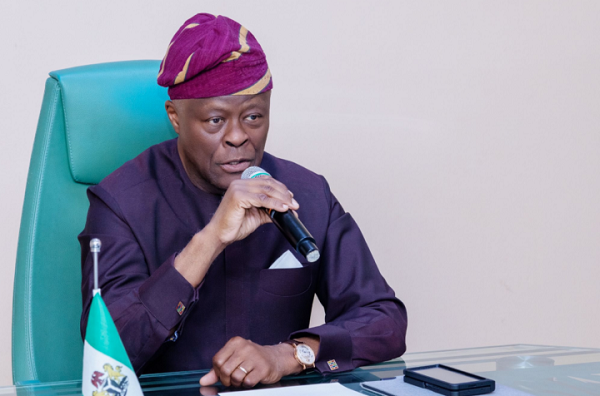
Nigeria has intensified its bid to host the African Union’s African Monetary Institute (AMI), with the Federal Ministry of Finance leading coordinated efforts to secure the institution ahead of its planned 2026 operationalisation.
The renewed push was articulated on the sidelines of the IMF/World Bank Spring Meetings in Washington D.C., where Nigeria is advancing its case as a credible host for the continental institution central to Africa’s monetary integration agenda.
Speaking through the Permanent Secretary of the Ministry, Mr. Raymond Omachi, the Honourable Minister of Finance and Coordinating Minister of the Economy, Wale Edun, underscored the country’s full political and institutional backing for the initiative. He stated that Nigeria has moved beyond policy commitments to concrete delivery, with the necessary infrastructure and administrative arrangements already in place.
The Ministry emphasised that hosting the AMI aligns with Nigeria’s broader economic strategy of positioning Abuja as a hub for continental financial coordination. It noted that the institute represents a critical step toward deeper monetary cooperation, improved macroeconomic convergence, and a more integrated African financial system.
Earlier, the Governor of the Central Bank of Nigeria, Olayemi Cardoso, had reaffirmed Nigeria’s readiness through his representative, the Deputy Governor, Economic Policy, Mr. Muhammad Abdullahi. He indicated that a dedicated office facility has already been secured in Abuja and made available for inspection, reflecting the country’s preparedness to meet host country obligations.
According to the Ministry, Nigeria remains actively engaged with the African Union and is prepared to conclude all required agreements to ensure a seamless take-off of the institute within the stipulated timeline.
The African Monetary Institute, approved in February, is designed to strengthen policy coordination, stabilise exchange rate frameworks, and lay the groundwork for eventual monetary unification across the continent.
Senior continental stakeholders at the meetings reinforced the significance of the initiative. The African Union Commissioner for Economic Development, Trade, Tourism, Industry and Minerals, Francisca Tatchouop Belobe, described the institute as a pivotal step toward a single African currency and deeper economic integration.
Similarly, Chief Economist and Vice President of the African Development Bank, Kevin Urama, noted that the institute would strengthen financial stability, improve debt sustainability, and address structural constraints posed by multiple currencies across the continent.
Nigeria’s engagement at the Spring Meetings reflects a deliberate effort to translate continental commitments into operational outcomes, with the Federal Ministry of Finance driving alignment across policy, infrastructure, and diplomatic channels.
News
Political Earthquake in Zamfara as Eight APC Lawmakers Quit Party, Reportedly Eye Wike-Backed Rainbow Coalition
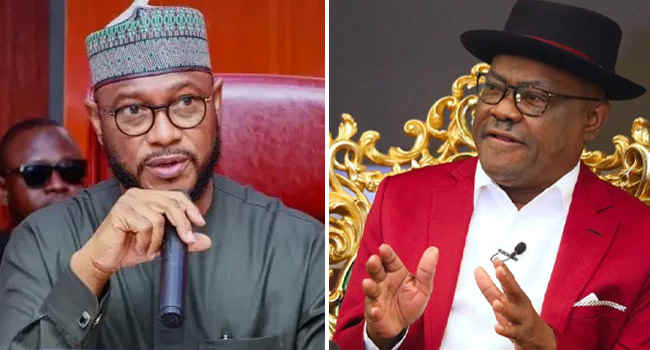
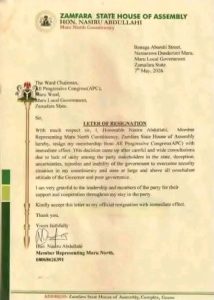
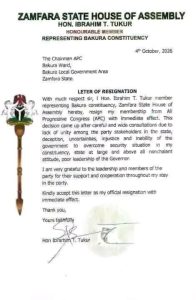
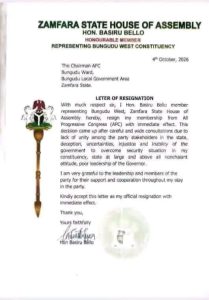
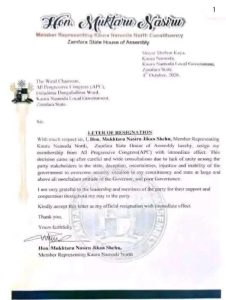
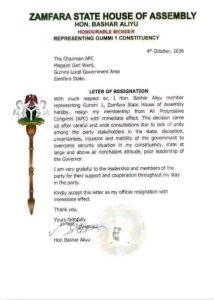
A major political shake-up has hit Zamfara State ahead of the 2027 general elections, following the defection of eight members of the State House of Assembly from the All Progressives Congress (APC), in a move that could reshape the political landscape of the state.
The lawmakers announced their resignation from the APC during plenary at the Zamfara State House of Assembly in Gusau, the state capital.
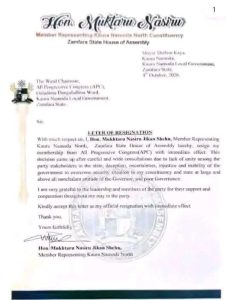
The defectors represent Mafara South, Maradun One, Bakura, Bukkuyum North, Gummi One, Bungudu North, Maru North and Kaura constituencies.
Their departure marks a significant blow to the APC’s strength in the state legislature, coming amid growing political realignments as politicians and party leaders intensify manoeuvres ahead of the 2027 elections.
Although the lawmakers have yet to officially announce their next political destination, sources within the Assembly suggest they are likely to join the Peoples Democratic Party (PDP), which currently controls the Zamfara State Government.
There are also indications that the defectors may align with the broader political movement associated with the Minister of the Federal Capital Territory, Nyesom Wike, and his Rainbow Coalition. However, the lawmakers have not publicly confirmed any formal alliance with the group.
With 24 members, the Zamfara State House of Assembly could witness a significant shift in its political balance following the exit of eight lawmakers, representing one-third of its total membership.
The development adds to the growing wave of political defections and behind-the-scenes negotiations across the country as political actors begin positioning themselves for the 2027 general elections.
The latest move could also trigger further political calculations within Zamfara, particularly as rival parties seek to strengthen their influence ahead of the next electoral cycle.
As of press time, the Zamfara State chapter of the APC had yet to issue an official statement on the lawmakers’ resignation or the possible political implications of their departure.
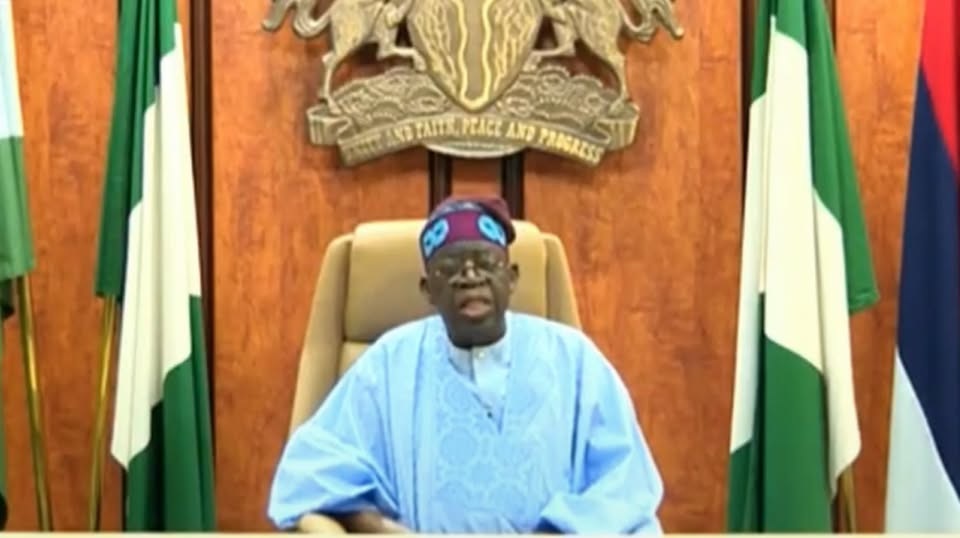
The Kano State Police Command has arrested five people for allegedly damaging billboards and posters of President Bola Ahmed Tinubu, Governor Abba Kabir Yusuf and other politicians in the state.
The Commissioner of Police, Ibrahim Adamu Bakori, disclosed this while answering questions from journalists on security measures and the enforcement of the ban on public horse-riding in Kano.
Bakori said the suspects were arrested following investigations into the destruction of properties during tensions surrounding horse-riding and public processions in the state.
He said investigations had been concluded and the suspects had been charged to court, adding that the command would continue to take legal action against anyone found to have committed offences capable of threatening public peace.
The arrests followed a public outing by the Emir of Kano, Aminu Ado Bayero, on Sunday.
The commissioner said reports indicated that some of those accompanying the emir allegedly destroyed posters and billboards belonging to President Tinubu, Governor Abba Kabir Yusuf and other politicians.
He said the incident further heightened tensions amid the lingering Kano Emirate dispute.
News
Tinubu’s lawyers agree there are errors in U.S. Court filing on 1990s drug probe, demand amendment

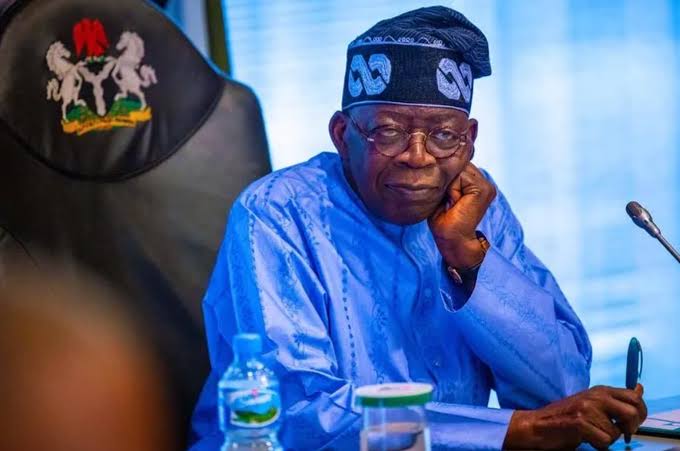
President Bola Tinubu’s legal team has acknowledged factual and drafting errors in an earlier court filing in the United States concerning records of a decades-old narcotics investigation, asking a federal judge for permission to correct the disputed passages while maintaining its original legal arguments.
The development emerged from a motion filed on October 1, 2026, before the U.S. District Court for the District of Columbia in an ongoing Freedom of Information Act (FOIA) lawsuit instituted by American transparency activist Aaron Greenspan.
The case, Greenspan v. Executive Office for U.S. Attorneys et al., Civil Action No. 23-1816 (BAH), centres on Greenspan’s efforts to compel U.S. government agencies to release records relating to Tinubu and an investigation dating back to the late 1980s and early 1990s.
In the motion titled “Motion to Amend Response Brief [DE 98],” Tinubu’s lawyers asked the court to authorise the replacement of their earlier response to Greenspan’s motion for summary judgment, citing errors in Part 1.c of the original filing.
The legal team admitted that the disputed section contained incorrect references to the year 1993, Tinubu’s public office and a comparison involving student enrolment.
According to the lawyers, their central argument was that the investigative events between 1988 and 1992 occurred decades before Tinubu was elected President of Nigeria.
However, they conceded that the argument had been presented “inadequately and incorrectly” in relation to the references to public office and 1993.
The lawyers also acknowledged a separate mistake in a comparison between the age of the investigative records and a student-enrolment event, explaining that the enrolment event had actually occurred before the historical events under discussion.
“Both issues occurred during the drafting and revising process by the undersigned counsel, occurred unintendedly, and were not found and edited prior to filing,” the motion stated.
They further disclosed that Greenspan had identified both errors in his subsequent reply to the earlier court submission.
Despite admitting the mistakes, Tinubu’s legal representatives insisted that the corrections would not alter the substance of their defence.
“In the proposed amended response, the substance of the argument in part 1.c remains unchanged,” they stated.
Their position is that Tinubu’s privacy interests in records concerning events from decades ago should remain protected, notwithstanding his subsequent emergence as Nigeria’s president.
The legal team also informed the court that it had consulted Greenspan and his lawyers about the proposed corrections before submitting the motion.
According to the filing, Greenspan did not oppose the correction of the brief, paving the way for the request to be considered without opposition from the plaintiff.
Tinubu’s lawyers consequently urged the court to permit the amended response to replace the earlier filing, identified as Document 98. They also submitted a proposed order for the judge’s consideration.
However, the attached order was clearly marked as a proposed document and contained a blank space for the judge’s signature. The filing therefore does not establish that the court had approved the request as of the date of submission.
The amended response also reiterates Tinubu’s opposition to Greenspan’s demand for additional records from the Federal Bureau of Investigation (FBI) and the Drug Enforcement Administration (DEA).
Among other arguments, the President’s lawyers contend that the disputed information is protected under the law-enforcement privacy exemption of the Freedom of Information Act and the Privacy Act.
They maintain that the records concern events that took place long before Tinubu assumed the presidency and argue that his current position does not automatically extinguish his privacy rights.

Political Earthquake in Zamfara as Eight APC Lawmakers Quit Party, Reportedly Eye Wike-Backed Rainbow Coalition

Five nabbed for allegedly destroying Tinubu’s posters in Kano

Tinubu’s lawyers agree there are errors in U.S. Court filing on 1990s drug probe, demand amendment


-

 News13 hours ago
Imo Police Locate Kidnappers’ Camp, Reveal Why Abducted Corps Members Are Yet to Be Rescued
-
 News13 hours ago
Was Tinubu’s Speech AI-Generated? Elon Musk’s Grok AI Makes Strong Revelation
-
 News21 hours ago
Confusion As Abductors Of Oyo Corps Members Demand ₦50m Ransom For Each Victim
-

 News13 hours ago
Edo 2027: APC Chairman ‘AK-47’ threat – Amnesty International Makes Strong Demand
-

 News13 hours ago
How I Hired Cars To Get Drivers Abducted By My Gang, Kidnap Suspect Reveals
-

 News13 hours ago
INEC Alerts Nigerians To Fake Voter Registration Website