News
Bring Your Children Back To Nigeria To Lead Your “Operation Wetie,” South-West PDP Tells Makinde
- /home/naijuinz/public_html/wp-content/plugins/mvp-social-buttons/mvp-social-buttons.php on line 27
https://naijablitznews.com/wp-content/uploads/2024/10/images-68.jpeg&description=Bring Your Children Back To Nigeria To Lead Your “Operation Wetie,” South-West PDP Tells Makinde', 'pinterestShare', 'width=750,height=350'); return false;" title="Pin This Post">
- Share
- Tweet /home/naijuinz/public_html/wp-content/plugins/mvp-social-buttons/mvp-social-buttons.php on line 72
https://naijablitznews.com/wp-content/uploads/2024/10/images-68.jpeg&description=Bring Your Children Back To Nigeria To Lead Your “Operation Wetie,” South-West PDP Tells Makinde', 'pinterestShare', 'width=750,height=350'); return false;" title="Pin This Post">
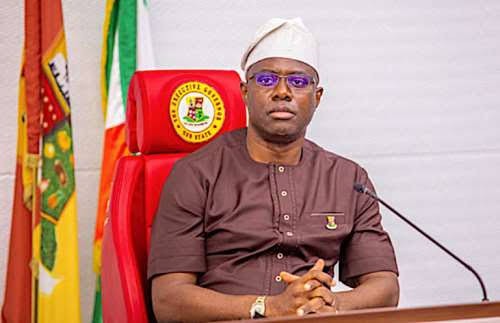
The South West chapter of the Peoples Democratic Party has told the Governor of Oyo State, Seyi Makinde, to ensure that all his children come back to Nigeria, from where they are schooling abroad to be part of the “operation wetie” (Political Violence) that he preached in Ibadan today.
Makinde had invoked the violent political history of “Operation Wetie”, a campaign of deadly political violence that rocked the Western Region of Nigeria in the mid-1960s.
It was adapted from the Yoruba phrase meaning “wet or soak” homes and vehicles of perceived political opponents with petrol before setting them ablaze.
Makinde made this inciting comment at the National Summit of All Opposition Political Party Leaders in Ibadan, Oyo State today.

Reacting through its Publicity Secretary, Hon. Akinloye Oyeniyi, the PDP in the Southwest Zone disowned the summit saying; “the meeting was a jamboree staged to revive Governor Seyi Makinde’s dwindling political fortune and hand him the vice presidential candidate’s ticket of the David Mark-led ADC.”
The party, which also described Makinde’s comment as reckless, and unbecoming of a sitting governor, added that the Southwest will not be available to be used as a political war-zone by any disgruntled and selfish politician.
Clarifying the status of the meeting, Oyeniyi said; “The event was a meeting of a coalition masquerading as an all-opposition-parties summit. It did not represent the PDP or the broader opposition in Nigeria. Rather, it’s to serve the interest of the person whose scheming is to get the vice presidential ticket of the coalition through the back door.”
The party commended former President Olusegun Obasanjo for staying away from the meeting, saying his absence made it clear to the world that he is not part of that group.
Oyeniyi further alleged that the summit was convened by Governor Makinde as a face-saving move.
“The governor has swallowed embers that are now burning his chest, reason he assembled those whose records do not reflect seriousness, in Ibadan, to chart a fresh course into further chaos in their coalition,” he said.
The statement addressed former Vice President Atiku Abubakar and few others, reported to have attended the summit, urging them to emulate the statesmanship displayed by former President Obasanjo and ensure their names are not associated with endless controversy.
“The chairman of that already failed and defeatist occasion did not show up. It is not an event to be graced by any reasonable and reputable person,” the statement added.
Addressing the Oyo State governor directly, the party said: “There is a difference between influence and illusion. This latest political fakery has again confirmed your self-inflicted free fall from grace; and the people of Oyo State shall speak clearly against all these relentless chaoses in 2027.”
The party thanked its members in the zone and maintained that it remains committed to providing credible opposition and a viable alternative for Nigerians, but would not be part of gatherings designed to deceive the public.
News
Just in: Dangote gives ₦18.7 trn of his ₦56.2trn wealth to help the needy
Africa’s richest man, Aliko Dangote, plans to donate one-third of his wealth to charity as part of his succession plan, his daughter, Halima Dangote, has revealed.
Halima, a trustee of the Aliko Dangote Foundation, revealed the arrangement in an interview with Bloomberg published on Tuesday, saying the billionaire had secured his family’s support to dedicate 33 per cent of his estate to philanthropy.
According to the Bloomberg Billionaires Index, Dangote’s net worth is estimated at $35.1 billion, meaning one-third of his current fortune would amount to about $11.7 billion if maintained at that level.
Explaining the decision, Halima said her father considers philanthropy central to his legacy and has embedded it into the family’s long-term succession plans.
“He sort of put all the structure in place whereby we focus a lot on health and education. He actually donated 25 per cent to the foundation. If you look at it, it is what we call in Sharia Code in Islam; it means he has donated 33 per cent of his whole inheritance to his foundation,” she said.
“That is how important it is to him because philanthropy needs to be in existence generation after generation.
“So giving back is part and parcel of what we do. We believe we’re here, that our business is successful because of the giving back and because of the philanthropic aspect. That is why the 33 per cent is important.
News
Panic over mass arrest of Onitsha market leaders as Intersociety raises alarm, petitions IGP
The International Society for Civil Liberties and the Rule of Law (Intersociety) has raised an alarm over what it described as the repeated harassment, arbitrary arrest and detention of leaders of the Ozomagana Building Materials Market in Onitsha, petitioning the Inspector-General of Police (IGP) to intervene in what it insisted is a civil dispute that has been criminalised.
The rights group alleged that the ongoing property dispute involving Modebe Enterprises Limited and the Ozomagana Building Materials Market Association had been turned into a channel for intimidation, warning that the continued use of police officers to intervene in the matter was escalating tensions instead of resolving the crisis.
In the petition, Intersociety said it was “deeply disturbed by the dangerous criminalisation of a purely civil matter,” adding that the situation had resulted in “series of arbitrary police arrests, unlawful detentions and acts of intimidation.”
According to the organisation, the dispute centres on the implementation of a lease agreement between Modebe Enterprises Limited and the market association over several properties on Modebe Avenue, Onitsha.
The group, however, argued that disagreements arising from the agreement ought to be resolved through lawful civil processes rather than police action.
It alleged that officers attached to the IGP’s Special Investigation Unit in Abuja had repeatedly arrested and detained market leaders under the guise of investigating alleged threats to life.
“The matter has become a conduit pipe for intimidation and extortion by some senior police officers from the IGP’s Special Investigation Unit and their subordinates,” the organisation alleged.
It added: “The crisis has led to repeated police harassment, arbitrary arrest and detention, and criminalisation of what is circumstantially a civil matter.”
Intersociety claimed that since November 15, 2025, more than six separate arrests had been carried out against leaders of the market.
It specifically named former Chairman of the Ozomagana Building Materials Market, Obiora Okoro, alongside Ikechukwu Aneke, a former Assistant Secretary, and Chigozie Ejiofor, a former Treasurer, as among those allegedly arrested and detained.
The organisation further alleged that some of those arrested were subjected to unlawful detention and possible custodial extortion.
According to the group, “court cases have arisen and pronouncements made by a Nnewi High Court in April 2026 have allegedly been flouted with impunity.”
It warned that the continued use of law enforcement agencies in the dispute could undermine confidence in the justice system.
“The poor handling of the issue has led to denials and counter-denials associated with the lease agreement and its implementation, to the extent that criminalisation and harvest of extortion have been brought into it and escalated,” Intersociety stated.
The organisation urged the Inspector-General of Police to immediately review the actions of officers involved in the matter and prevent further arrests over what it described as a commercial disagreement.
It maintained that the dispute should be allowed to run its course through the courts rather than through police intervention.
“Using allegations of threats to life as a pretext to repeatedly arrest and detain parties in a civil dispute only worsens the crisis and deepens public distrust,” the group said.
Intersociety also appealed to relevant authorities to ensure that all parties involved respect ongoing judicial proceedings and seek lawful means of resolving the conflict.
The organisation reiterated that “justice must not only be done but must be seen to be done,” warning that continued intimidation of market leaders could further heighten tension within the commercial community in Onitsha.
It called for an end to what it described as the misuse of security agencies in private disputes, insisting that the rule of law must prevail.
News
Reps Broker Truce Between Importers, Refiners to Drive Downstream Oil Sector Reforms
By Gloria Ikibah
The House of Representatives has stepped in to ease rising tensions between petroleum importers and local refiners, opening discussions with key operators in the downstream oil and gas industry as part of efforts to build consensus on reforms aimed at guaranteeing energy security, stable fuel supply and long-term sector growth.
The move came during an interactive session organised on Tuesday by the House Committee on Petroleum Resources (Downstream), where executives of the Depot and Petroleum Products Marketers Association of Nigeria (DAPPMAN), Independent Petroleum Marketers Association of Nigeria (IPMAN) and Major Energies Marketers Association of Nigeria (MEMAN) met with lawmakers to examine the future of the industry.
Deliberations focused on finding the right balance between encouraging local refining and maintaining adequate fuel supplies across the country.
Chairman of the committee, Rep. Ikenga Ugochinyere, said the engagement reflected the House’s commitment to carrying stakeholders along in shaping reforms for the sector, stressing that meaningful progress could only be achieved through collaboration.
“We are here not to interrogate, not to accuse and not to put anyone on trial. We are here to listen. We are here to talk to one another as partners who share one common destiny, a Nigeria where energy is affordable, supply is stable and no citizen suffers because petroleum products are out of reach,” he said.
He assured operators that the National Assembly will not introduce policies affecting the downstream sector without extensive consultations with industry players whose investments sustain the country’s fuel distribution network.
According to him, Nigeria’s energy landscape is changing rapidly with increasing domestic refining capacity, shifting import patterns and renewed efforts to strengthen pipeline security and improve distribution.
“The marketers, depot owners, independent operators and major marketers remain the bridge between government policy and the pump. When that bridge is strong, Nigerians enjoy stable prices and reliable supply. When it is weak, the entire nation feels the consequences,” he stated.
Ugochinyere pledged that the committee will carefully study submissions from stakeholders before proposing legislative measures aimed at encouraging investment, strengthening local refining, promoting healthy competition and ensuring affordable and uninterrupted fuel supply.
He also assured industry operators that the committee will continue to embrace dialogue rather than confrontation in carrying out its oversight responsibilities.
Presenting DAPPMAN’s position, Executive Secretary of the association, Olufemi Adewole, called on the Nigerian Midstream and Downstream Petroleum Regulatory Authority (NMDPRA) to develop practical operating-stock guidelines in line with Section 182 of the Petroleum Industry Act.
He said the framework should establish clear standards for stock measurement, reporting, quality assurance and accessibility, while emphasising that strategic reserves should be assessed not only by product volume but also by the industry’s capacity to finance, transport and deploy products quickly during emergencies.
DAPPMAN also proposed the creation of a joint market-monitoring framework involving the NMDPRA and Federal Competition and Consumer Protection Commission to track product availability, monitor market concentration, ensure fair treatment of operators and identify early signs of supply disruptions.
The association further urged government to prioritise investment in roads, rail infrastructure, inland waterways, pipelines and petroleum depots to reduce reliance on long-distance trucking from coastal supply centres.
It also advocated the establishment of a permanent government-industry consultative platform bringing together regulators, refiners, marketers, NNPC Limited, transport agencies and security institutions to periodically review supply conditions, infrastructure gaps and emerging risks.
In its presentation, IPMAN described the downstream petroleum industry as one of Nigeria’s most strategic economic sectors, noting that it plays a critical role in supporting households, transportation, agriculture, healthcare, industry and national security.
The association observed that the implementation of the Petroleum Industry Act, fuel price deregulation, rehabilitation of state-owned refineries and the emergence of large private refineries have positioned Nigeria to become a leading refining and petroleum distribution hub on the African continent.
However, it warned that several obstacles continue to slow the industry’s progress, including high financing costs, multiple taxation, exchange rate volatility, inadequate storage and transportation infrastructure, pipeline vandalism, limited access to refinery products by independent marketers, delayed payment of bridging and NTA claims, and insufficient engagement with stakeholders.
IPMAN therefore urged the committee to support reforms that would improve logistics, strengthen competition, lower distribution costs, attract investment and ensure the sustainable availability of petroleum products nationwide.
Speaking on behalf of MEMAN, Executive Secretary Clement Isong acknowledged that Nigeria now has the capacity to refine petroleum products locally, satisfy domestic demand and export refined products.
He, however, cautioned against placing blanket restrictions on fuel imports, arguing that government should retain the flexibility to approve imports whenever necessary to protect national energy security.
According to him, strategic imports remain essential during supply shortages and unexpected market disruptions, helping to shield consumers from sharp price increases and fuel scarcity.
Isong also recommended that Nigeria establish a strategic petroleum reserve capable of sustaining at least 60 days of national consumption to cushion the country against global supply shocks and price volatility.
He cited the Liquefied Petroleum Gas market as an example where increased imports successfully bridged supply gaps and stabilised prices, demonstrating the importance of timely regulatory intervention.
While reaffirming MEMAN’s support for policies aimed at boosting domestic refining, he maintained that decisions on petroleum imports should remain the responsibility of the Federal Government and the NMDPRA to ensure adequate supply, preserve healthy competition and protect consumers.
Although stakeholders expressed differing views on the future of petroleum imports and domestic refining, they agreed on the need for consistent government policies, improved infrastructure, stronger regulatory coordination and sustained engagement to build a more resilient and competitive downstream petroleum industry capable of meeting Nigeria’s long-term energy needs.
-
News14 hours agoUK Eases Student Visa Rules for Three African Nations
-
News23 hours agoJust in: Ahead 2027, Kano NDC Senators Meet Tinubu over Planned Defection to APC
-
News14 hours agoStolen BVAS, PVCs Will Be Replaced, Osun Election Safe – INEC
-
News9 hours agoKebbi Weds 600 Couples, Pays ₦250k Dowry Each
-
News23 hours agoReps Back President Tinubu’s Economic Reforms, Subject 13 Commerce Bills to Public Scrutiny
-
News14 hours agoNigeria, South Africa Set for Fresh Diplomatic Talks Amid Xenophobia Concerns
-
Sports9 hours agoSuper Falcons start title defence today at 2026 WAFCON
-
Opinion14 hours agoMutfwang’s Apology Was Statesmanship, Not Historical Revisionism