Connect with us

News

Wave of Defections Hit APC In Northern Nigeria As Senators, Lawmakers Resigned from Party Over Primaries

Published

on

ADVERTISEMENT
Zoom Ad
ADVERTISEMENT
Zoom Ad

A wave of political defections has rocked the All Progressives Congress (APC) in Bauchi State following the fallout of its 2026 primaries, as several lawmakers, former candidates, and party chieftains dumped the party over allegations of irregularities and lack of internal democracy.Politics


The development has seen prominent politicians, including Senators and members of the House of Representatives, resigning their membership of the APC and joining opposition parties, particularly the Peoples Redemption Party (PRP).

Leading the latest defections is the Senator representing Bauchi South Senatorial District, Shehu Buba Umar, who announced his resignation from the APC and formally joined the PRP after withdrawing from the party’s governorship primary, which he said was marred by irregularities.

He was followed by the Senator representing Bauchi North, Samaila Kaila Dahuwa, who also exited the APC after losing his return ticket, citing lack of fairness and internal democracy within the party.

Advertisement

In his resignation statement, Buba Umar accused the APC of “absence of internal democracy, marginalisation of genuine party members, and disregard for grassroots voices,” adding that his move to the PRP followed extensive consultations with political associates, youth groups, women organizations, and stakeholders across Bauchi State.

According to him, the PRP offers a more people-focused platform anchored on justice, transparency, and accountability, stressing that his new political direction is aimed at strengthening democratic governance and improving the welfare of citizens.

“Our people deserve better governance, better opportunities, and leadership that truly listens,” he said, urging his supporters to join him in building a stronger movement within the PRP.

The wave of defections also includes members of the National Assembly. The lawmaker representing Jama’are/Itas-Gadau Federal Constituency, Rabilu Bala Kashuri, resigned from the APC after failing to secure a reelection ticket.

Advertisement

Similarly, former deputy governorship candidate and ex-lawmaker, Shehu Aliyu Musa, also dumped the party, citing poor leadership, injustice, and lack of cohesion among APC stakeholders in the state.

In another resignation, former Bauchi State House of Assembly Majority Leader and aspirant for Katagum Federal Constituency, Tijjani Mohammed Aliyu, accused the APC primaries of being predetermined, alleging vote allocation and violations of party guidelines.

He described the process as a “selection exercise” rather than a democratic primary, saying it undermined the founding principles of the party.

Also leaving the party is traditional titleholder and politician, Abubakar Dahuwa Abdulkadir, who condemned the primaries as unfair and discriminatory, while accusing the party of failing to conduct direct primaries in his constituency.

Advertisement

Another aspirant, Sulaiman Sunusi Lalaye, resigned from the APC, stating that his decision was based on persistent irregularities and injustice within the party structure.

He formally notified the party of his withdrawal from the House of Assembly race, adding that he could no longer continue under what he described as a compromised system.

Similarly, Rabi’u Abubakar Bishi also announced his resignation, citing internal crises and unfair treatment of members.

He said his exit was necessary to remain committed to his principles of good governance and political integrity.

Advertisement

Across Bauchi State, aggrieved APC members continue to accuse the party of lacking transparency in its primary elections, alleging that candidates were imposed rather than elected through proper democratic processes.

As the political tension deepens, observers say the mass defections could significantly reshape the political landscape in Bauchi ahead of the next general elections.

Continue Reading
Advertisement

News

UK Court acquits ex-Prtroleum minister, Diezani of all six bribery charges

Published

on

ADVERTISEMENT
Zoom Ad
ADVERTISEMENT
Zoom Ad


Ex-Nigerian Minister of Petroleum Resources, Diezani Alison-Madueke, has been found not guilty by a London jury of six bribery charges following a rare corruption trial involving a former high-ranking energy official.

Alison-Madueke, who served as petroleum minister between 2010 and 2015 under former President Goodluck Jonathan, faced five counts of accepting bribes and one count of conspiracy to commit bribery. She denied all the allegations.

Prosecutors alleged that the 65-year-old former minister enjoyed “a life of luxury” in London, allegedly funded by oil and gas industry figures seeking lucrative contracts in Nigeria, a country long challenged by corruption and mismanagement in its oil sector.

Advertisement

However, Alison-Madueke maintained that she never received any bribes and insisted she had no control over the awarding of government contracts.

After proceedings at Southwark Crown Court, the jury returned not guilty verdicts on all six charges after more than 46 hours of deliberation, according to Reuters.

The acquittal marks a setback for British authorities, who had pursued the case for over a decade following corruption allegations against the former minister.

She was tried alongside oil industry executive Olatimbo Ayinde, 54, who faced one count of bribery related to Alison-Madueke and another count of bribery of a foreign public official.

Advertisement

Her brother, Doye Agama, 69, was also charged with conspiracy to commit bribery in relation to payments allegedly made to a church connected to him.

Both Ayinde and Agama denied the allegations and were likewise acquitted by the jury.

Continue Reading

News

Judicial Independence Requires Security, Dignity for Judges — Tinubu

Published

on

ADVERTISEMENT
Zoom Ad
ADVERTISEMENT
Zoom Ad


President Bola Ahmed Tinubu on Wednesday said judicial independence cannot be guaranteed without providing judges with adequate security, dignity and a conducive environment to discharge their constitutional responsibilities.

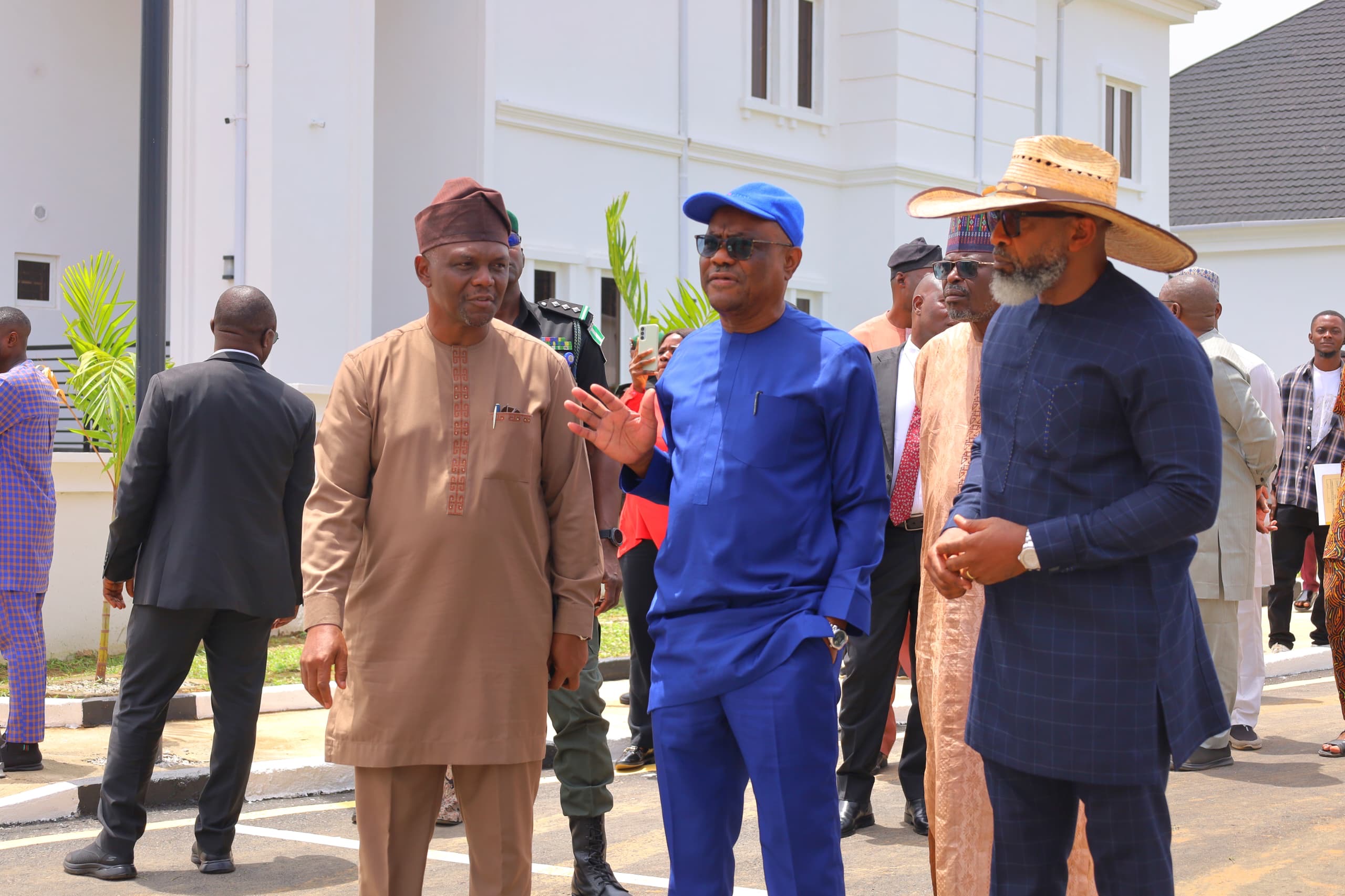
Tinubu stated this while commissioning 10 residential quarters for Justices of the Federal High Court in Katampe District, Abuja, a ceremony performed on his behalf by Vice President Kashim Shettima.

The President described the project as a strategic investment in the judiciary and a demonstration of his administration’s commitment to strengthening democratic institutions and the rule of law.

Advertisement

According to him, the provision of quality accommodation for judicial officers goes beyond infrastructure development and reflects government’s resolve to reinforce one of the most critical pillars of democracy.

“We are not just opening houses. We are reinforcing a key pillar of our democracy: the Judiciary. This is what vision and political will can deliver,” Tinubu said.

He noted that the commissioning came a day after the inauguration of similar residential quarters for Justices of the Court of Appeal, stressing that the projects were part of deliberate efforts to rebuild trust in public institutions under the Renewed Hope Agenda.

“Judicial independence is not an abstract idea. It requires a secure and dignified environment. We cannot ask judges to deliver justice without fear or favour if their safety and peace of mind are uncertain,” the President stated.

Advertisement

He added that the new quarters would provide security, comfort and dignity for judges while reaffirming government’s recognition of the vital role they play in interpreting the nation’s laws.

“By providing these modern quarters, we give our Justices security, comfort and dignity. This is our statement that Nigeria values those who interpret her laws,” he said.

Tinubu commended the Minister of the Federal Capital Territory, FCT, Nyesom Wike, for driving key infrastructure projects across Abuja and delivering on the mandate to transform the nation’s capital.

“When I gave you the task of making Abuja a world-class capital, I knew you would deliver. You have not disappointed me. From roads to projects like this, you have shown that performance is what counts in public service,” he added.

Advertisement

The President also appreciated the leadership of the judiciary for its collaboration with the executive arm, describing the relationship as beneficial to national development.

He charged the beneficiaries of the quarters to remain committed to fairness, transparency and integrity in the administration of justice.

“As we provide these homes, we ask for your continued commitment to swift, fair and transparent justice. Let these quarters be places of reflection and integrity. Let your judgments strengthen our democracy,” Tinubu said.

Earlier, the Minister of the Federal Capital Territory, Nyesom Wike, said the provision of modern accommodation for judges was a practical demonstration of government’s commitment to judicial independence and the rule of law.

Advertisement

Wike disclosed that after the completion of housing projects for Court of Appeal and Federal High Court Justices, the FCT Administration would on July 7 commission 22 residential quarters for judges of the FCT High Court.

“Yesterday, we commissioned 10 quarters for Court of Appeal Justices. Today, we are commissioning 10 quarters for Federal High Court judges. On July 7, we will commission 22 units for the FCT High Court, all built to the same standard,” he said.

The minister further revealed that construction of residential quarters for judges of the National Industrial Court and members of the Code of Conduct Tribunal had commenced and would be completed by January 2027.

According to him, judicial independence cannot be discussed in isolation from the welfare and working conditions of judicial officers.

Advertisement

“It cannot be independent when you cannot talk about giving them an efficient environment to work and improving their welfare. These are things that will make independence of the judiciary and uphold the rule of law,” Wike said.

He disclosed that the Katampe area was being developed as a dedicated judicial district, with plans for additional security infrastructure, including a police station, to guarantee the safety of judges.

Wike also urged beneficiaries to maintain the facilities and preserve the quality of the estate.

Chief Judge of the Federal High Court, Justice John Tsoho, noted that the long-standing accommodation challenges facing judges have been a matter of deep concern for decades, noting that the steps to address them were met with mixed reactions in the media.

Advertisement

Tsoho commended Tinubu and Wike for the bold steps taken despite critics in the media to provide befitting accommodation to judges and improve the welfare of judicial officers.

“As judges, while we shape the legal direction of society on a daily basis through the pronouncements we make in the courtroom, we seldom have the occasion to speak publicly without courting controversy or being misunderstood.

“It is deeply encouraging and gives immense hope to the judiciary and the nation at large to see that the welfare of career professionals is being taken seriously.

“This commitment allows our judicial officers to find peace and stability in their vital roles,” he said.

Advertisement

In her remarks, Minister of State for the FCT, Dr. Mariya Mahmoud, described the project as a significant investment in the administration of justice and the consolidation of democratic institutions.

She said the judges’ quarters reflected the Federal Government’s commitment to providing the judiciary with the infrastructure required to operate with dignity, independence and excellence.

Mahmoud commended President Tinubu for his visionary leadership and unwavering support for initiatives aimed at strengthening key institutions of governance.

She also praised Wike for his commitment to delivering transformative infrastructure projects across the Federal Capital Territory.

Advertisement

According to her, the newly commissioned quarters would enhance the welfare of judicial officers, strengthen justice delivery and serve as enduring symbols of government’s commitment to the rule of law and institutional excellence.

Continue Reading

News

Nigeria positioned to lead Africa’s digital and creative transformation, EU Ambassador says

Published

on

ADVERTISEMENT
Zoom Ad
ADVERTISEMENT
Zoom Ad


Nigeria is well positioned to lead Africa’s digital and creative transformation, Ambassador Gautier Mignot, European Union Ambassador to Nigeria and ECOWAS, said at the third edition of the Omniverse Africa Summit in Lagos.Speaking at the opening of the summit, Ambassador Mignot said Nigeria’s youthful population, entrepreneurial energy and growing innovation ecosystem provide a strong foundation for digital transformation, innovation and economic growth.“The new economy, digital and creative, offers a fantastic opportunity,” he said, noting that young Nigerians are uniquely positioned to drive innovation because they are part of a generation that has grown up with digital tools and technologies.

The summit brought together innovators, entrepreneurs, policymakers, researchers, investors, creatives and development partners from across Africa and beyond to explore how technology, innovation and collaboration can accelerate economic growth and create opportunities for young people.

Ambassador Mignot said the European Union and Nigeria have identified the digital and creative sectors as a strategic priority within their partnership and highlighted ongoing investments aimed at supporting the country’s digital transformation.“In Nigeria, the EU supports the entire digital value chain, from governance to infrastructure, from skills to entrepreneurship,” he said.He highlighted several ongoing initiatives, including a recently signed €45 million agreement between the European Union and Nigeria on digital development, support for the rollout of 90,000 kilometres of fibre-optic infrastructure across the country, the European Union’s contribution to Nigeria’s digital public infrastructure agenda, and support for the Three Million Technical Talent initiative.The Ambassador also pointed to programmes that support entrepreneurship, innovation and skills development, including the Digital Transformation Centre Nigeria, co-funded by the European Union and the German Government and implemented by GIZ.

Advertisement

The programme supports digital innovation, entrepreneurship and technology adoption among young Nigerians and businesses.He also highlighted the Nigeria Jubilee Fellows Programme, funded by the European Union and implemented by the United Nations Development Programme in partnership with the Federal Government of Nigeria, which helps connect young graduates with workplace opportunities and practical experience.German Ambassador to Nigeria, Annett Günther, said: “The future will not be built in silos. It will be built through cooperation across sectors, institutions and borders.

The future will be connected.”She described Nigeria as home to one of Africa’s most dynamic innovation ecosystems and said Nigerian entrepreneurs are increasingly shaping global trends in areas ranging from financial technology and artificial intelligence to agribusiness, health innovation, manufacturing and the creative industries.“Nigerian innovators are not simply adapting to global trends.

They are shaping them,” she said.Ambassador Mignot said one of the strengths of Omniverse Africa is its ability to bring together the full innovation ecosystem in a single space.“Policymakers, founders, investors, creatives, researchers, development partners and business leaders are all here, all together,” he said.“Because Nigeria’s digital future will not be built in silos. Technology, creative industries, finance, education, manufacturing, agriculture and public services are no longer separate worlds.

They are converging.”He said the summit provides an opportunity to transform conversations into partnerships and ideas into practical solutions that can support inclusive and sustainable growth.“The future is connected, but connection must be turned into impact,” Ambassador Mignot said.“Let us connect innovators with investors, policy with practice, creativity with technology, and Nigerian talent with global opportunities.”The summit featured discussions on digital transformation, artificial intelligence, entrepreneurship, green technology, future skills, research collaboration and innovation financing, highlighting the growing role of partnerships in shaping Africa’s economic future.The European Union partnered with Omniverse Africa as part of its broader commitment to supporting innovation, entrepreneurship, digital transformation and youth opportunities in Nigeria and across the continent.

Advertisement
Continue Reading

Trending

Copyright © 2024 Naija Blitz News