Economy
FAAC: FG, states, LGs share N2.257tn April revenue

- /home/naijuinz/public_html/wp-content/plugins/mvp-social-buttons/mvp-social-buttons.php on line 27
https://naijablitznews.com/wp-content/uploads/2024/04/FAAC.jpg&description=FAAC: FG, states, LGs share N2.257tn April revenue', 'pinterestShare', 'width=750,height=350'); return false;" title="Pin This Post">
- Share
- Tweet /home/naijuinz/public_html/wp-content/plugins/mvp-social-buttons/mvp-social-buttons.php on line 72
https://naijablitznews.com/wp-content/uploads/2024/04/FAAC.jpg&description=FAAC: FG, states, LGs share N2.257tn April revenue', 'pinterestShare', 'width=750,height=350'); return false;" title="Pin This Post">


The Federal Government, states and local government councils shared a total sum of N2.257 trillion from the Federation Account in April.
Director, Press and Public Relations, Office of the Accountant General of the Federation, Bawa Mokwa, disclosed this in a statement on Monday.
The revenue was shared at the May 2026 Federation Account Allocation Committee, FAAC, meeting held in Abuja.
The N2.257 trillion total distributable revenue comprised distributable statutory revenue of N1.260 trillion , distributable Value Added Tax, VAT, revenue of N747.088 billion, and augmentation of N250.000 billion.
This indicated that total gross revenue of N3.184 trillion was available in the month of April 2026. The total deduction for cost of collection was N113.756 billion, while total transfers, refunds, and savings were N813.839 billion.
According to the statement, gross statutory revenue of N2.378 trillion was received for the month of April 2026. This was higher than the sum of N1.699 trillion received in the preceding month by N678.224 billion.
Gross revenue of N806.617 billion was available from VAT in April 2026. This was higher than the N664.425 billion available in the month of March 2026 by N142.192 billion.
The communiqué stated that from the N2.257 trillion total distributable revenue, the Federal Government received a total sum of N787.351 billion, and the state governments received a total sum of N772.360 billion.
The local government councils received N540.152 billion, while the sum of N157.254 billion (13% of mineral revenue) was shared with the benefiting states as derivation revenue.
On the N1.260 trillion distributable statutory revenue, the statement stated that the Federal Government received N580.942 billion and the state governments received N294.661 billion.
The local government councils received N227.172 billion, and the sum of N157.254 billion (13% of mineral revenue) was shared with the benefiting states as derivation revenue.
From the N747.088 billion distributable VAT revenue, the Federal Government received N74.709 billion, the state governments received N410.898 billion, and the local government councils received N261.481 billion.
The Federal Government received N131.700 billion of the N250.000 billion, the state governments received N66.800 billion, and the local governments received N51.500 billion.
In April 2026, Companies Income Tax, CIT, CGT, SDT, import duty, oil and gas royalty, and VAT increased significantly, while Petroleum Profit Tax, PPT, and hydrocarbon tax, HT, decreased considerably.
Excise duty and CET levies decreased marginally.


The Black Market Dollar-to-Naira Exchange Rate for 1st September 2026 Can Be Accessed Below.
NOTE: The exchange rate changes hourly. It depends on the volume of dollars available and the Demand. This means…you can buy or sell 1 dollar at a certain rate, and the price can change (high or low) within hours.
The official naira black market exchange rate in Nigeria today, including the Black Market rates, Bureau De Change (BDC), and CBN rates.
The exchange rate fluctuates hourly based on the supply and demand of dollars in the market.
What’s the dollar to naira black market today, 1st September 2026?
The exchange rate for a dollar to naira at Lagos Parallel Market (Black Market) players sell a dollar for ₦1405 and buy at ₦1390 on Monday, 1st September, 2026, according to sources at Bureau De Change (BDC).
Please note that the Central Bank of Nigeria (CBN) does not recognize the parallel market (black market), as it has directed individuals who want to engage in Forex to approach their respective banks.
Dollar to Naira Black Market Rate Today
Dollar to Naira (USD to NGN) Black Market Exchange Rate Today
Selling Rate ₦1405
Buying Rate ₦1390
Dollar to Naira CBN Rate Today
Dollar to Naira (USD to NGN) CBN Rate Today
Highest Rate ₦1343
Lowest Rate ₦1320
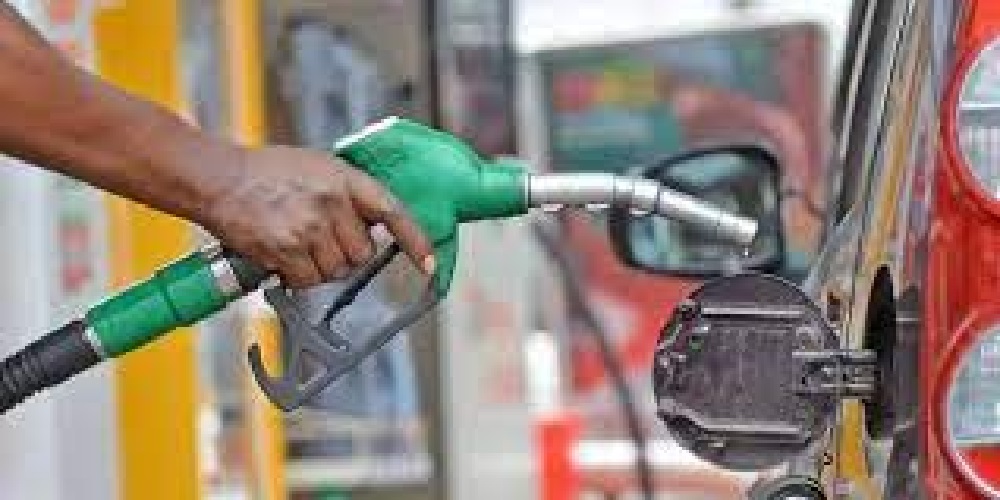
The Nigerian National Petroleum Company Limited (NNPCL) has increased the pump price of Premium Motor Spirit (PMS), commonly known as petrol, at some of its retail outlets in Abuja.
The latest adjustment has pushed the price of petrol at affected NNPCL filling stations to ₦1,345 per litre, representing a ₦75 increase from the previous price of ₦1,270 per litre.
Checks conducted on Monday showed that NNPCL stations in parts of the Federal Capital Territory, including outlets around Gwarinpa and Wuse Zones 4 and 6, were dispensing petrol at the new price.
The increase comes amid a fresh wave of upward adjustments in petrol prices by several marketers across the country.
NNPCL Stations Adjust Pump Price
A staff member of an NNPCL retail outlet, who spoke on condition of anonymity, confirmed that the company had adjusted its pump price on Monday.
“Our petrol pump price was raised to ₦1,345 per litre today (Monday),” the attendant said.
The latest development means motorists who purchase 50 litres of petrol at the affected NNPCL stations will now spend approximately ₦67,250, compared with ₦63,500 under the previous ₦1,270-per-litre price.
The increase is expected to put additional pressure on motorists and other consumers who rely heavily on petrol for transportation and business activities.
Other Marketers Also Increase Prices
The NNPCL adjustment follows similar price reviews by several independent petroleum marketers over the weekend.
Filling stations operated by MRS, Ranoil, Empire Energy and other downstream operators reportedly increased their petrol prices by between ₦20 and ₦80 per litre in different locations.
The varying adjustments highlight the increasingly market-driven nature of petrol pricing in Nigeria, with retail prices differing depending on the marketer, location, supply costs and prevailing market conditions.
Motorists in Abuja and other parts of the country are therefore expected to continue seeing different pump prices from one filling station to another.
Dangote Refinery Raises Ex-Depot Price
The latest pump price increases came after Dangote Refinery reportedly adjusted its ex-depot price for petrol.
The refinery increased its gantry price by ₦65, taking it from the previous level to ₦1,265 per litre.
The ex-depot price is a major component of the cost structure faced by petroleum marketers before transportation, logistics, storage, operational expenses and other charges are added before the product reaches retail filling stations.
An increase at the depot level can consequently result in higher pump prices if marketers pass the additional cost on to consumers.
Rising Petrol Imports Raise Concerns
The latest petrol price adjustments have also emerged amid renewed concerns over the increasing volume of imported petrol entering the Nigerian market.
The development has attracted attention because Nigeria’s domestic refining capacity, particularly following the commencement of operations at the Dangote Refinery, has been expected to reduce the country’s dependence on imported refined petroleum products.
However, petrol imports have continued to account for a significant portion of the country’s total supply.
Data from the Nigerian Midstream and Downstream Petroleum Regulatory Authority (NMDPRA) reportedly showed that imported petrol accounted for 43.3 per cent of total PMS supply in July.
The figure has raised concerns within the domestic refining and downstream petroleum sector.
Dangote Refinery Raises Concern Over Imports
The Dangote Refinery had previously expressed concerns about the increasing volume of imported petrol into Nigeria.
The refinery reportedly threatened to restrict petrol sales to importers and marketers amid what it described as a surge in imported products.
The development has contributed to an ongoing debate over competition, supply sources and pricing within Nigeria’s downstream petroleum industry.
While domestic refiners are seeking to expand their share of the local market, petroleum marketers continue to source products from different suppliers based on prevailing commercial conditions.
What the Latest Increase Means for Nigerians
The latest increase in Abuja is likely to generate concern among motorists and businesses, particularly those already dealing with high operating and transportation costs.
Petrol price movements often have a wider impact on the economy because the product is heavily relied upon for transportation, power generation and the distribution of goods and services.
An increase in pump prices can therefore raise transportation fares and increase the cost of moving food, agricultural produce and other commodities.
For businesses that depend on petrol-powered generators and vehicles, the additional cost could also translate into higher operating expenses.
With NNPCL stations now selling petrol at ₦1,345 per litre in some parts of Abuja, motorists will be watching closely to see whether other filling stations follow with further increases in the coming days.
The latest adjustment also adds to recent concerns that petrol prices could continue rising if depot prices and other supply-related costs remain elevated.
The Nigerian naira is opening the new trading week around the ₦1,300-per-dollar range, with the latest official Nigerian Foreign Exchange Market (NFEM) data showing a closing rate of about ₦1,337.29/$1 at the end of Friday’s session.
According to the Central Bank of Nigeria (CBN), the NFEM rate stood at ₦1,337.2873 per dollar on August 28, while the closing rate was ₦1,337.0000. The official NFEM rate is calculated using a volume-weighted average of transactions in the market.
The naira had strengthened during the previous week, moving from ₦1,349.99/$1 on August 24 to ₦1,337/$1 on August 28, representing an appreciation of about 0.96 percent.
In the parallel market, the dollar was quoted at about ₦1,400 on Friday, according to market data published by AbokiFX. This was ₦7 lower than the ₦1,407/$1 recorded the previous day.
The latest parallel-market rate leaves a gap of roughly ₦63 between the informal market and the official NFEM rate.
Meanwhile, a live indicative USD/NGN rate available early Monday puts the dollar around ₦1,346.78, although this should not be confused with the official NFEM closing rate, which reflects the most recent completed trading session.
Market data also showed continued strength in foreign exchange liquidity. NFEM turnover reached $1.06 billion in one trading session last week, while Nigeria’s foreign reserves continued to provide support for the naira.
For today, Monday, August 31, 2026, the dollar-to-naira rate is therefore around ₦1,337/$1 at the latest official NFEM close, while the parallel-market rate is around ₦1,400/$1. Rates may change as trading activity resumes and demand and supply conditions evolve.
It is important to note that rates offered by banks, Bureau de Change operators and other dealers may differ from the published NFEM and parallel-market reference rates because of transaction margins and market conditions.

ACIPA Backs Ibrahim Khalid’s Conversion to Christianity, Warns Against Threats

Fake Agency: Reps Trace 58 Bank Accounts, 12 Entities to Adeyemi Over Alleged PFIPC

Shettima @60: Speaker Abbas Hails VP’s Service, Loyalty to Tinubu




-
 News20 hours ago
“Go Back and Repair Our Road!” — Enugu Residents Turn APC Campaign Ground Into Assessment Session(Video)
-

 Health23 hours ago
Abuja hospital denies organ trafficking, suspends kidney transplant services
-

 Politics23 hours ago
PHOTOS: Umahi’s 28-year-old son sworn in as Ebonyi LG chairman
-
 News23 hours ago
Lagos begins enforcement of 2026 parking permits, warns defaulters
-
 News23 hours ago
NLC rejects petrol price hike, demands more crude for refineries
-

 Metro23 hours ago
Ogun Issues Fresh Flood Alert, Urges Residents In Vulnerable Areas To Relocate
-

 Sports23 hours ago
Deadline Day: Man City Agree To Sign Fernandez For £125m
-

 News23 hours ago
Tin Can seizure: Arms Centre boss denies Ribadu link