Connect with us

News

Nigeria Needs Policy and Legislative Resilience to Turn Reforms into Results, Says Hajiya Fatima Usman-Katsina

Published

on

ADVERTISEMENT
Zoom Ad
ADVERTISEMENT
Zoom Ad

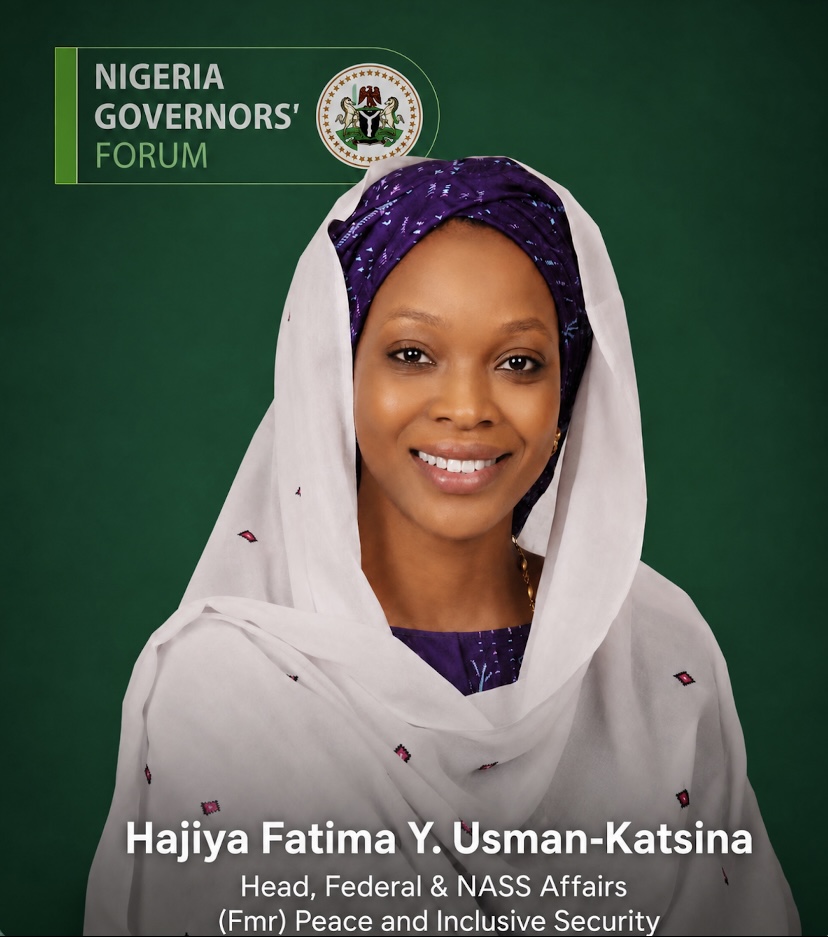
Head Federal and National Assembly Affairs, Hajiya Fatima Y. Usman-Katsina has called on federal and state governments to adopt Policy and Legislative Resilience (PLR) as a practical framework to strengthen institutions, improve fiscal discipline, deepen citizen participation, and ensure that Nigeria’s ongoing reforms deliver measurable results.

Usman-Katsina said Nigeria is at a critical governance moment, with major reforms moving from legislation into implementation amid rising fiscal, political, security and development pressures.

She noted this in a statement she personally signed stating that” while laws and policies are important, their real value depends on the capacity of institutions to sustain implementation, adapt to changing realities, and remain focused on citizen-centred outcomes.

“Nigeria does not only need new laws and policies. It needs institutions that can sustain reforms, adapt under pressure and deliver measurable outcomes for citizens,” she said.

Advertisement

According to her, Policy and Legislative Resilience refers to the ability of governments, particularly sub-national governments, to respond effectively to political, fiscal and development challenges through stronger policies, laws, regulations and implementation systems.

She explained that many well-intentioned policies fail not because they lack vision, but because the institutions responsible for implementation often lack the resilience, coordination, accountability and feedback mechanisms required to turn policy ambitions into results.

“Resilience is not a passive state, it is a matter of inner strength, determination, persistence and the willingness to look inward and move forward with clarity of purpose,” Usman-Katsina stated.

She observed that PLR is especially important for Nigerian states as they confront revenue pressures, rising expenditure obligations, service delivery gaps, security concerns and growing citizen expectations.

Advertisement

She added that state governments must look inward, optimise existing revenue systems, eliminate bottlenecks, improve the quality of expenditure, and strengthen the link between budgets, laws, and visible development outcomes.

Usman-Katsina identified four core pillars of Policy and Legislative Resilience.The first is inclusive representation, communication and coordination, ensuring that governors, budget planners, legislators, MDAs and citizens are connected through credible consultation and feedback mechanisms.

The second is sustainable policy and legislative support, which requires continuous review, advocacy, regulatory stability and institutional routines that preserve reform objectives beyond political cycles.

The third is strengthened oversight, involving joint monitoring by communities, legislators and implementing agencies to improve accountability, reduce wastage and ensure that public spending produces tangible benefits.

Advertisement

The fourth is internal optimisation and consolidation, which requires governments to identify savings, improve revenue collection, remove bottlenecks, streamline regulations and align state-level policies with national development priorities.

She stressed that citizen engagement must move beyond ceremonial consultation to become a standard part of policy design, budgeting, legislative review, implementation tracking and public accountability.

“Citizens are no longer passive recipients of policy. They are active stakeholders whose priorities, experiences and feedback must shape how laws are designed, budgets are prepared, and projects are implemented,” she said.

Usman-Katsina also called for community-led needs assessments to be institutionalised as part of legislative and budget processes, noting that policies become more resilient when they are rooted in the lived realities of communities.She further stated that Nigeria’s ongoing reform environment provides a timely opportunity to embed PLR into governance systems. She said reforms in taxation, public finance, social investment, security, health, human capital development and sub-national governance will only achieve lasting impact if supported by resilient institutions and measurable implementation frameworks.”PLR is about turning reforms into systems that last. Done right, it creates governance value chains that improve service delivery, attract investment, support local enterprise, strengthen inclusive security, raise incomes and expand employment,” she added.She urged governments, legislatures, MDAs, development partners, and civic actors to adopt PLR as a practical tool to improve policy implementation, legislative effectiveness, fiscal accountability, and citizen trust.Usman-Katsina concluded that Nigeria’s reform momentum must now be matched with resilient institutions, inclusive governance, evidence-based decision-making and a stronger culture of accountability.

Advertisement

About Hajiya Fatima Y. Usman-Katsina

Hajiya Fatima Y. Usman-Katsina is Head, Federal and National Affairs. She is also the Pioneer Female Head of Peace and Inclusive Security at the Nigeria Governors’ Forum.

Continue Reading
Advertisement

News

Nigeria-Côte d’Ivoire Reaffirm Strong Ties as Ambassador Nwaobiala Presents Credentials

Published

on

ADVERTISEMENT
Zoom Ad
ADVERTISEMENT
Zoom Ad

By Gloria Ikibah

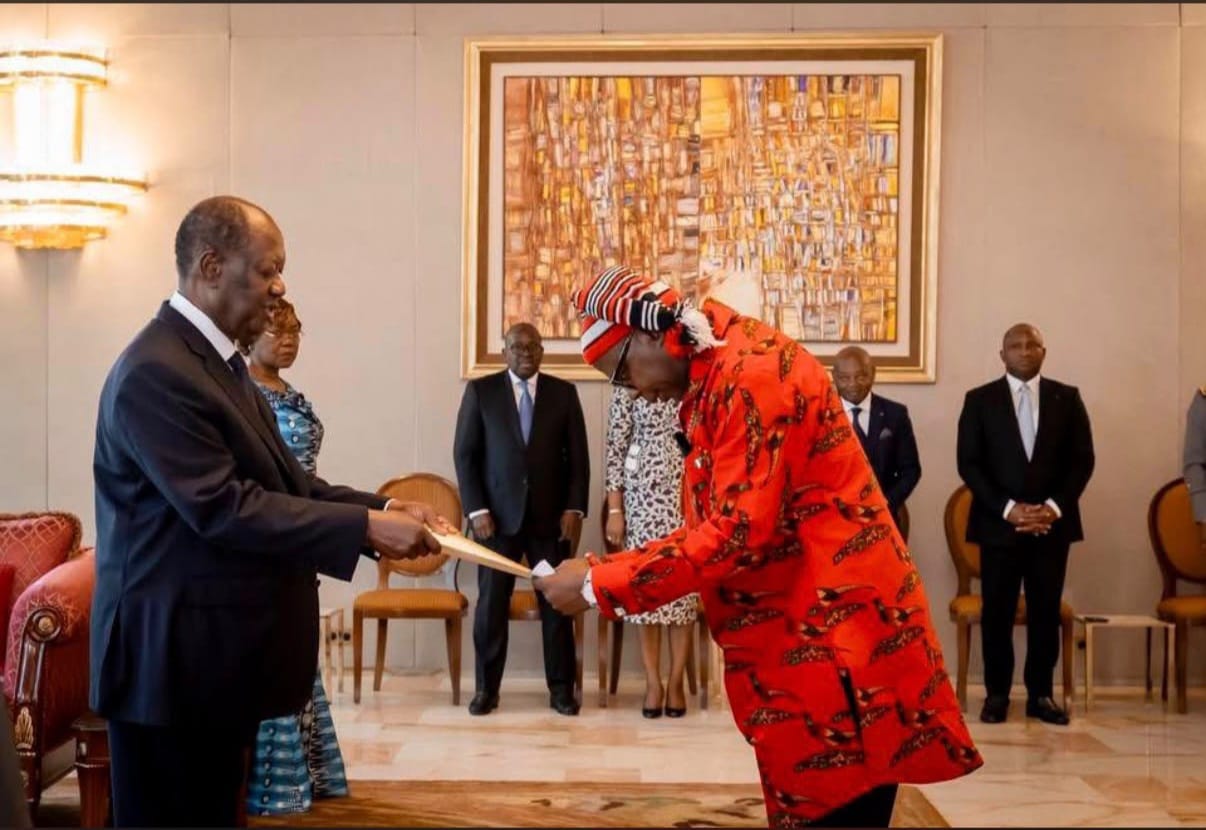
Nigeria and Côte d’Ivoire have reaffirmed their commitment to deepening bilateral relations and advancing regional cooperation following the formal presentation of Letters of Credence by Nigeria’s Ambassador to Côte d’Ivoire, His Excellency Ezenwa Chukwuemeka Nwaobiala.

The ceremony, held at the Presidential Palace in Abidjan on 18 June 2026, officially marked the commencement of Ambassador Nwaobiala’s diplomatic assignment after his appointment by President Bola Ahmed Tinubu. The envoy was accompanied by his wife, Lady Chidinma Nwaobiala, during the presentation to President Alassane Ouattara.

During the event, Ambassador Nwaobiala conveyed the goodwill of the Nigerian President to his Ivorian counterpart and reaffirmed Abuja’s commitment to strengthening the long-standing relationship between the two West African nations.

Advertisement

According to a statement issued by the Ministry of Foreign Affairs, President Ouattara welcomed the Nigerian envoy and underscored the importance of the enduring friendship between both countries, expressing his willingness to work closely with the ambassador to expand cooperation in areas of shared interest, particularly regional integration and economic development.

The ceremony highlighted the strong diplomatic ties between Nigeria and Côte d’Ivoire and reinforced their common resolve to promote peace, stability and prosperity across the West African sub-region.

Speaking later at a reception organised in his honour by members of the Nigerian community in Côte d’Ivoire, Ambassador Nwaobiala reflected on the deep historical and cultural links between the two countries.

The ambassador also expressed appreciation to President Bola Ahmed Tinubu and the leadership of the Ministry of Foreign Affairs for the confidence placed in him, pledging to serve Nigeria with dedication and integrity.

Advertisement

“Nigeria and Côte d’Ivoire are bound not only by geography, but by history, shared aspirations and an unwavering commitment to the ideals of African unity and prosperity.

“I express gratitude to President Bola Ahmed Tinubu and the leadership of the Ministry of Foreign Affairs for the confidence reposed in me and pledge to undertake my responsibility as Ambassador with humility, a sense of duty and firm resolve to advance the enduring interests of Nigeria while strengthening the bonds of friendship and partnership between the two brotherly nations”, he said.

Ambassador Nwaobiala further assured Nigerians and his host country of his determination to promote stronger cooperation and mutual understanding throughout his tenure.

He pledged his “commitment to fostering greater understanding, mutual respect and productive collaboration for the benefit of the peoples of the two countries,” while urging the international community to embrace dialogue and partnership as the foundation for global progress.

Advertisement

“Nations around the world should continue to build bridges and partnerships, in place of walls and partitions”, he added.

His presentation of credentials comes as Nigeria continues to strengthen diplomatic engagement across Africa, with renewed emphasis on regional integration, economic cooperation and collective efforts to advance peace, security and sustainable development within the Economic Community of West African States (ECOWAS) and beyond.

Continue Reading

News

Court sends Sowore to Kuje Prison

Published

on

ADVERTISEMENT
Zoom Ad
ADVERTISEMENT
Zoom Ad

The Federal High Court in Abuja has ordered activist and AAC presidential candidate Omoyele Sowore remanded at Kuje Correctional Centre pending a ruling on his bail.

Justice Mohammed Umar made the order Monday after Sowore failed to appear in court on June 16.

The judge had revoked his bail and issued a bench warrant for his arrest.

—Motion for stay filed—

Advertisement

Sowore’s new counsel, Adeyinka Olumide-Fusika, has now filed a motion seeking to stay the court’s earlier decision.

Justice Umar adjourned the matter to June 24 to hear the application.

Sowore arrived in court Monday with supporters, some carrying placards.

He’s being prosecuted by the DSS over X and Facebook posts where he allegedly called President Bola Tinubu “a criminal”.

Advertisement

He denies the allegations.

The DSS was represented by Akinkolu Kehinde, SAN, who made the oral application for the bench warrant on June 16.

Continue Reading

News

Ex-Justice Minister to relax in jail for 25 Years

Published

on

ADVERTISEMENT
Zoom Ad
ADVERTISEMENT
Zoom Ad

A South Korean court has sentenced former Justice Minister Park Sung-jae to 25 years in prison over his role in the failed martial law declaration made by former President Yoon Suk Yeol in 2024.

The Seoul Central District Court found Park guilty of taking part in an “insurrection” after prosecutors accused him of supporting actions linked to Yoon’s controversial move. The verdict was shared through a recording posted online.

ifeanyi-Okowa-delta
Yoon announced martial law during a late-night address in December 2024, but the decision lasted only about six hours. Lawmakers quickly gathered at the National Assembly and voted against the declaration, forcing it to end.

Yoon was later convicted of leading an insurrection and is currently being held while he appeals a life imprisonment sentence. He also received a 30-year prison term earlier this month over allegations that he sent drones to North Korea to “manufacture a national crisis” as a reason to introduce martial law.

Advertisement

Prosecutors said Park held a meeting with justice ministry officials shortly after the martial law announcement. They claimed he discussed prison space in case authorities moved to arrest people considered opponents of the government.

Judge Lee Jin-gwan said Park’s actions placed the country’s democratic system at risk.

“Due to the actions of the defendant, the country nearly faced a situation in which the people’s fundamental rights and the basic order of liberal democracy could have been violated,” the judge said.

The judge added that Park failed to act despite concerns raised during the meeting about the legality of the move.

Advertisement

As justice minister, Park “ignored the various opinions that had been raised at the meeting regarding the illegality of the Dec 3 insurrection”, Lee said.

Prosecutors had requested a 20-year jail term, accusing Park of misusing his position and weakening the rule of law.

They said he had “reduced the law to a tool of insurrection in his abuse of power and posed a challenge to the rule of law”.

Park, who had remained free during his trial, was taken into custody after the court delivered its judgment.

Advertisement

The martial law declaration caused major political unrest in South Korea. It sparked public protests, affected the country’s financial markets and surprised international partners, including the United States.

Several former officials linked to Yoon’s administration have also received prison sentences. Former Prime Minister Han Duck-soo is serving 15 years, while former Interior Minister Lee Sang-min received a nine-year sentence.

Former Defence Minister Kim Yong-hyun was sentenced to three years in prison for exposing classified military information connected to the alleged insurrection.

Yoon’s wife, Kim Keon Hee, is also serving a four-year prison sentence over separate charges involving stock manipulation and bribery.

Advertisement
Continue Reading

Trending

Copyright © 2024 Naija Blitz News