News
Presidency Breaks Silence On Gbajabiamila Alleged Bribery Scandal
- /home/naijuinz/public_html/wp-content/plugins/mvp-social-buttons/mvp-social-buttons.php on line 27
https://naijablitznews.com/wp-content/uploads/2024/09/Gbajabiamila.jpeg&description=Presidency Breaks Silence On Gbajabiamila Alleged Bribery Scandal', 'pinterestShare', 'width=750,height=350'); return false;" title="Pin This Post">
- Share
- Tweet /home/naijuinz/public_html/wp-content/plugins/mvp-social-buttons/mvp-social-buttons.php on line 72
https://naijablitznews.com/wp-content/uploads/2024/09/Gbajabiamila.jpeg&description=Presidency Breaks Silence On Gbajabiamila Alleged Bribery Scandal', 'pinterestShare', 'width=750,height=350'); return false;" title="Pin This Post">
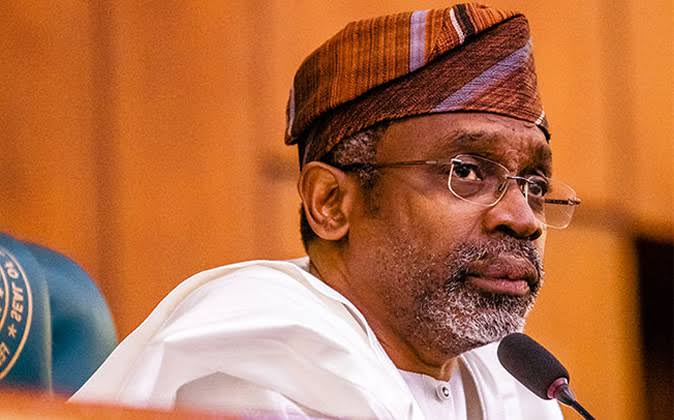
The Presidency has dismissed allegations of bribery levelled against the Chief of Staff to the President, Femi Gbajabiamila, describing them as false and the handiwork of a man allegedly posing as the Director-General of a non-existent government agency.

The Presidency was reacting to allegations made by the acclaimed Director-General of the Presidential Foreign Intervention Promotion Council/Presidential Economic Advisory Council, Prince Adeniyi Adeyemi.
Adeyemi had accused Gbajabiamila of demanding ₦27.4 billion as a take-off grant for the agency and alleged that the Chief of Staff received ₦400 million through proxies to facilitate his appointment, with an outstanding balance of ₦200m.

The claimant had also urged President Bola Tinubu to constitute an independent panel to investigate the allegations and compel the Chief of Staff to step aside pending the outcome of the probe.
However, in a statement issued on Wednesday, the Special Adviser to the President on Information and Strategy, Bayo Onanuga, dismissed the allegations, accusing Adeyemi of peddling falsehood.
“We are aware of the public interest in the matter of a man called Adeyemi Adeniyi Matthew, who has been parading himself as the director-general of a fictitious Presidential Foreign Intervention Promotion Council cum Presidential Economic Advisory Council,” Onanuga said.
He explained that the Office of the Chief of Staff was the first to alert security agencies about the existence of the alleged fake agency after complaints were received from the Nigerian Investment Promotion Commission that another body appeared to be operating at cross-purposes with it.
“The office of the Chief of Staff to the President first blew the whistle on the existence of the illegal agency, following complaints from officials of the Nigerian Investment Promotion Council that another government agency appeared to be functioning at cross-purposes with it,” he said.
According to Onanuga, Gbajabiamila, on October 17, 2025, wrote to the Department of State Services and the Nigeria Police Force, requesting an investigation into individuals allegedly forging appointment letters purportedly issued from his office.
“The Chief of Staff, on October 17, in a letter, asked the DSS and the Police to probe the activities of ‘fraudsters and imposters’ forging appointment letters purportedly from his office.
“The letter to the security agencies was accompanied by a copy of the forged appointment letter, a copy of the request for a note verbal to the Ministry of Foreign Affairs, and pictures of engagements obtained from the illegal agency’s website,” he stated.
Onanuga added that concerns over the purported agency had also been raised within the Ministry of Foreign Affairs.
He disclosed that in a letter dated October 15, 2025, and signed by Ambassador Anderson Madubuike, the ministry sought clarification from the Office of the National Security Adviser and the Chief of Staff regarding the status of Adeyemi’s agency after he reportedly met with ambassadors at the Wells Carlton Hotel and Apartments in Abuja without the ministry’s involvement.
He further explained that the Office of the National Security Adviser subsequently wrote to the Office of the Secretary to the Government of the Federation on October 20, while the OSGF later sought clarification from the Chief of Staff.
“On 29 October, the OSGF wrote to the Chief of Staff requesting clarification. ‘This has become expedient owing to several requests from governmental and non-governmental bodies seeking to ascertain the status of the appointment under consideration,’” Onanuga quoted.
The presidential spokesman maintained that Gbajabiamila had already informed the Ministry of Foreign Affairs that he never issued any appointment letter to Adeyemi.
“Two days earlier, the Chief of Staff sent his own clear rebuttal to the Foreign Affairs Ministry, stating that he had never issued an appointment letter to Adeyemi as director general of the fake Presidential Foreign Investment Promotion Council.
“The Chief of Staff could not have issued a letter of appointment to a non-existent agency. Moreover, the Chief of Staff does not make appointments or write letters, as these are the exclusive preserve of the Office of the Secretary to the Government of the Federation,” he added.
Onanuga also cited findings from the police investigation, alleging that Adeyemi forged documents and falsely presented himself as a government appointee.
“The police were able to establish that the agency Adeyemi purportedly headed was fictitious, that he forged his appointment letter and the documents recovered in his office and home, that he falsely paraded himself as a government appointee, and that he falsely solicited a note verbal from the Foreign Affairs Ministry to enable him and his staff to obtain US visas,” he said.
According to him, investigators also discovered that Adeyemi allegedly operated 34 bank accounts, including nine opened in the names of fictitious agencies.
Onanuga said the police further found that Adeyemi allegedly used fake documents to fraudulently open a Central Bank of Nigeria account by misleading the Office of the Accountant-General of the Federation.
He, however, noted that investigators established that no government funds had been paid into the account.
News
Northern Leaders Seek Unity As Almajiri, Insecurity Threaten Region
Northern leaders and stakeholders have acknowledged deep-rooted social, political and leadership failures across the region, warning that insecurity, neglect of education, corruption, elite rivalry and the Almajiri crisis are threatening the future of Northern Nigeria.
The concerns were contained in the communiqué of the third Late General Hassan Usman Katsina Memorial Conference organised by the New Vision Development Initiative (NEVDI) at Arewa House, Kaduna.
The communique of the conference which held on July 25, 2026, with the theme, “From Sacrifice to Strategy: Rekindling General Hassan Usman’s Katsina Vision for Prosperous Northern Nigeria,” was released over the weekend. The conference brought together political, traditional and religious leaders, academics and other stakeholders.
Major-General Alwali Kazir, a former Chief of Army Staff, chaired the conference, while President Bola Tinubu was represented by Alhaji Ibrahim Masari.
Chairman of the Northern Elders Forum, Prof. Ango Abdullahi, presented a special report, while Dr Usman Bugaje of the Arewa Research Development Project delivered the lead paper, which was discussed by Prof. Siddique Abubakar Mohammed of the Centre for Development Research and Training, Zaria.
The conference said that after years of discussing the problems confronting the North, the region could no longer remain at the level of diagnosis without taking decisive action.
It identified insecurity, displacement of farmers, the persistence of the Almajiri system and the large number of out-of-school children as some of the most serious challenges requiring urgent intervention.
The gathering was particularly critical of what it described as a declining value system in the North, saying wealth had increasingly been elevated above knowledge in determining leadership.
It also expressed concern that corrupt individuals and sycophants were sometimes accorded greater respect than morally upright citizens.
The conference criticised what it called the waste of community resources on extravagant weddings, naming ceremonies and other celebrations, arguing that such wealth could instead be mobilised to tackle poverty and promote community development.
It also raised concern over the neglect of girl-child education, saying girls should be equipped with sufficient education and skills to sustain themselves and their families.
The communiqué equally lamented corruption across different sectors, including among some religious leaders, warning that such conduct had contributed to the erosion of traditional values such as truth, dignity, respect, sacrifice, fair play, promptness and dedication to duty.
Another major concern was the absence of reliable demographic planning.
According to the conference, the North does not sufficiently track how many people are born, die, marry or relocate, making meaningful development planning difficult.
The stakeholders also blamed persistent quarrels among Northern political, traditional and religious leaders for weakening the region.
“The North must have unity of purpose for development of the region,” the communiqué stated, stressing that meaningful development would remain difficult without cooperation among its leaders.
The conference also criticised what it described as endless campaigning and rhetoric by the political elite, declaring that the time had come to translate the legacy of General Hassan Usman Katsina into concrete action.
It further called for a review of approaches to insecurity, saying methods adopted since 2009 had failed to produce the desired results.
Almajiri Crisis Takes Centre Stage
At the heart of the resolutions was a commitment to confront the Almajiri problem, which participants identified as one of the gravest threats to the North’s human capital, economic competitiveness, security, social cohesion and sustainable development.
NEVDI resolved to develop a model for removing Almajiri children from the streets and providing them with meaningful education and opportunities.
Under the proposed initiative, influential and willing philanthropists would be mobilised across the Northern states to support the programme. A common implementation template would also be designed, while a committee of trustees would supervise the project.
The conference stressed, however, that success should not merely mean moving children from the streets into classrooms.
It said the ultimate objective should be to ensure that every child, irrespective of gender, location, disability, economic circumstances or educational tradition, receives meaningful learning, skills and competencies capable of providing a pathway to productive citizenship.
The communiqué warned that the crisis could no longer be addressed through conferences, television and radio discussions, fragmented interventions or short-term projects.
It called for sustained and coordinated action involving governments, development partners, civil society organisations, communities, philanthropists, individuals and the private sector.
NEVDI pledged to translate the resolutions of the conference into “practical, testable and scalable solutions.”
The communiqué was signed for the organisation’s Board of Trustees by retired Colonel Lawan Gwadabe.
News
‘I Don’t Want to Return to Nigeria’ — Chimamanda Adichie Speaks After Son’s Death
Nigerian author Chimamanda Ngozi Adichie has revealed that the death of her 21-month-old son, Nkanu, has profoundly changed her feelings towards Nigeria, saying she no longer wants to return to the country.
Adichie made the disclosure in an interview with The New York Times, where she was asked whether Nigeria still felt close to her heart.
“My feelings toward Nigeria have changed,” the award-winning author said, before adding, “I do not want to go back to Nigeria.”
Nkanu, one of Adichie’s twin sons, died in December 2025 following a medical emergency at Euracare in Nigeria.
According to Adichie, Nkanu initially developed a fever and was placed on antibiotics by her husband, Ivara Esege. However, when his condition failed to improve, he was taken to hospital for further medical evaluation.
She said her son was sedated with propofol during an MRI before suffering cardiac arrest and dying the following day.
Recounting the devastating experience, Adichie said a doctor approached her after the procedure and told her: “Well, look, they gave him too much Propofol.”
“That was his exact words, which I will never forget until the day I die,” she recalled.
Adichie had previously raised allegations of medical negligence concerning her son’s treatment. The circumstances surrounding Nkanu’s death are currently the subject of a coroner’s inquest, amid disagreements between the family and the hospital over what happened.
The author said her children could ultimately be the only reason she would consider returning to Nigeria, noting that her daughter still regards the country as her “happy place.”
Reflecting on the loss of her son, Adichie described her grief as surreal.
“I mean, it is so surreal, all of this. I still can’t believe we’re talking about my son who died,” she said.
“You’re going through something, but you also feel like you’re outside of it.”
News
Break-Up Fears Grip UK as Scotland, Wales, Northern Ireland Leaders Plot New Constitutional Front
Leaders of Scotland, Wales and Northern Ireland are set to meet in Cardiff on Monday in an unprecedented summit that could intensify calls for greater autonomy and a potential break-up of the United Kingdom.
Scottish First Minister John Swinney, Welsh First Minister Rhun ap Iowerth and Northern Ireland First Minister Michelle O’Neill are expected to discuss a joint approach to constitutional reform, including the right of their respective nations to determine their own futures.
They will be joined by Mary Lou McDonald, president of Sinn Féin and leader of the opposition in the Republic of Ireland.
The meeting at the St David’s Hotel overlooking Cardiff Bay is expected to focus on four broad areas: the economy, energy, relations with Europe and the wider international community, and self-determination.
The leaders are also expected to endorse a joint declaration asserting the democratic right of Scotland, Wales and Northern Ireland to determine their constitutional futures, potentially including independence referendums.
The gathering comes amid growing pressure for a major overhaul of the UK’s constitutional structure and greater powers for the devolved nations.
‘Status quo is not sustainable’
Swinney, whose Scottish National Party (SNP) has long campaigned for Scottish independence, has described the meeting as evidence of a fundamental shift in the political landscape.
“For the first time ever, Scotland, Wales and Northern Ireland are led by pro-independence first ministers,” he said, arguing that the development showed that the existing constitutional arrangement was becoming unsustainable.
“The momentum behind serious constitutional change is undeniable,” Swinney added.
He has also suggested that Westminster must prepare for a future in which the United Kingdom’s current structure could fundamentally change.
Independence and Irish unity
The summit could give fresh momentum to separate constitutional campaigns across the three nations.
In Scotland, the SNP continues to press for another independence referendum, while Plaid Cymru is seeking greater autonomy for Wales.
Northern Ireland’s Sinn Féin, meanwhile, is campaigning for Irish reunification under the terms of the Good Friday Agreement.
Sinn Féin is expected to use Monday’s meeting to argue that preparations for a referendum on Irish unity should begin now.
A party source said the agreement provided a democratic route for Northern Ireland to determine its future and that Irish unity should no longer be treated as a distant possibility.
Wales demands more powers
For Wales, the talks are also expected to focus on demands for greater control over taxation, public spending, policing and rail infrastructure.
Plaid Cymru is particularly pushing for Wales to receive revenues generated from the Crown Estate, including income from seabed areas used for offshore wind projects, rather than having the money transferred to the UK Treasury.
The party has argued that closer cooperation among the three devolved nations could deliver practical benefits while strengthening their collective bargaining position with Westminster.
Burnham pushes back
The growing constitutional debate has also drawn attention from Andy Burnham, who has previously indicated that another Scottish independence referendum could potentially be considered if there were a clear public consensus.
However, Burnham has since insisted that another referendum is not on the table before the next UK general election.
In a letter to Swinney, he said there was no clear consensus for Scottish independence and no evidence that a majority in Northern Ireland currently wanted to leave the United Kingdom.
Burnham also pointed to Labour’s 2024 election manifesto, which stated that the party did not support Scottish independence or another referendum.
He argued that reopening the issue would distract from the government’s priorities of economic growth and tackling the cost-of-living .
-
News20 hours agoPCN Seals 797 Drug Outlets, Shuts Kano Illegal Medicine Cluster
-
News20 hours agoINEC Unveils Final List Of Presidential Candidates For 2027 Election
-
News20 hours agoYou Can’t Insist You Won 2023 Election After Supreme Court Gave Final Ruling’ – Tinubu Presidency Tackles Peter Obi
-
News15 hours ago2027: Peter Obi Launches Four-Year Reform Plan
-
News20 hours agoSanwo-Olu Explains Delay In Opening Ojota-Opebi Link Bridge
-
News20 hours agoBosun Tijani Withdraws From ITU Deputy Secretary-General Race
-
News14 hours agoJust in: Five Islamic Clerics Reportedly Abducted After Praying for Tinubu’s Re-Election at Senator Yari’s Residence
-
Metro20 hours agoUK Prosecutors Confirm Poco Lee Still Due In Court Over Sexual Offence Charges