

Economy
Dangote breaks ground on $17bn Kenya refinery
- /home/naijuinz/public_html/wp-content/plugins/mvp-social-buttons/mvp-social-buttons.php on line 27
https://naijablitznews.com/wp-content/uploads/2024/09/images-2024-09-03T084333.396.jpeg&description=Dangote breaks ground on $17bn Kenya refinery', 'pinterestShare', 'width=750,height=350'); return false;" title="Pin This Post">
- Share
- Tweet /home/naijuinz/public_html/wp-content/plugins/mvp-social-buttons/mvp-social-buttons.php on line 72
https://naijablitznews.com/wp-content/uploads/2024/09/images-2024-09-03T084333.396.jpeg&description=Dangote breaks ground on $17bn Kenya refinery', 'pinterestShare', 'width=750,height=350'); return false;" title="Pin This Post">
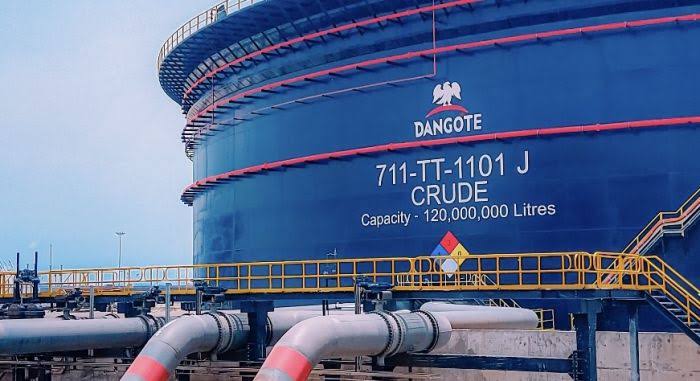
Dangote Industries Limited has commenced preliminary works on its proposed $17bn, 700,000-barrels-per-day refinery in Kenya, marking the first major step towards what is expected to become East Africa’s largest refining project.
The company said the project has advanced beyond the planning stage, with the site already selected, soil tests ongoing and engineering and design work underway ahead of construction.
According to Reuters, the refinery, which will be located on Lamu Island off the Kenyan coast, is expected to take about three years to complete and will supply refined petroleum products to Kenya and neighbouring countries, reducing East Africa’s dependence on imported fuels.
The development comes as Bloomberg reported on Tuesday that President of the Dangote Group, Aliko Dangote, plans to build the refinery at an estimated cost of up to $17bn as part of efforts to expand his refining empire into East Africa.
Citing a spokesman for Dangote Industries Ltd., Bloomberg reported that the proposed refinery would replicate the company’s refinery in Lagos and process about 700,000 barrels of crude oil per day when completed.
The report read, “A new mega-refinery to be built at the Kenyan coast by Africa’s richest person will cost as much as $17bn, a spokesman for Dangote Industries Ltd. has confirmed.
“Billionaire Aliko Dangote personally pledged to the leaders of Kenya and Uganda that he would set up a replica of his 700,000-barrel-a-day refinery outside Lagos in East Africa. The refinery would take about five years to build.”
According to the report, Dangote personally assured the Presidents of Kenya and Uganda that he would establish the refinery in East Africa. The report recalled that Kenyan President William Ruto announced in May that Dangote would commence construction of the refinery this year.
Speaking to Reuters, Dangote Industries’ Vice President for Oil and Gas, Devakumar Edwin, said the company had made significant progress on the project. “The site has been selected, soil tests are underway, and design and engineering work has commenced. Kenya was the choice from the beginning,” he told Reuters.
According to Bloomberg, Dangote said the coastal town of Lamu in southeastern Kenya was selected as the preferred location “for commercial and technical reasons,” although he did not provide further details.
The report added that Tanzania had initially been considered as a possible location for the refinery before Kenya emerged as the preferred destination.
The project represents Dangote Group’s biggest refining investment outside Nigeria and forms part of the company’s ambition to expand refining capacity across Africa following the commencement of operations at its 650,000-barrels-per-day refinery in Lagos.
Devakumar disclosed that the refinery would be financed through a combination of internally generated cash, bonds, and proceeds from the company’s planned initial public offering.
He, however, declined to state the exact cost of the project, saying it would be comparable to that of the Lagos refinery. The Lagos refinery, built by Aliko Dangote, eventually cost more than $20bn before commencing operations in 2024.
Reuters reported that the project was initially estimated at about $9bn in 2013, but costs escalated following the relocation of the site, engineering challenges, currency weakness, the COVID-19 pandemic and global inflation.
The investment comes as Dangote is simultaneously pursuing another ambitious expansion programme in Nigeria, where the capacity of the Lagos refinery is being doubled from 700,000 barrels per day to 1.4 million barrels per day by 2028. Once completed, the Nigerian complex is expected to become one of the world’s largest refining facilities.
Dangote Industries Limited has also unveiled plans to increase its combined refining capacity to 2.1 million barrels per day across Nigeria and Kenya as part of its long-term strategy to expand its footprint across Africa.
Edwin disclosed this during a recent visit by a delegation from the Republic of the Congo’s national oil company, Société Nationale des Pétroles du Congo, to the Dangote Petroleum Refinery in Lagos.
He said the expansion would raise the group’s total refining capacity to 2.1 million barrels per day, comprising 1.4 million barrels per day in Nigeria and the planned 700,000-barrels-per-day refining complex in Kenya to serve East African markets.
He also disclosed plans by the group to invest an additional $46bn between 2026 and 2028 across its refining, cement and fertiliser businesses as part of its drive to accelerate industrialisation across Africa.
The proposed Kenyan refinery reflects a growing recognition across Africa that local refining has become increasingly critical to energy security, foreign exchange conservation, and industrial development.
For decades, despite producing millions of barrels of crude oil daily, Africa has remained heavily dependent on imported refined petroleum products because of inadequate refining capacity.
Data show that while Africa contributes about seven per cent of global crude oil production, refining capacity across the continent declined by roughly one-third over the past two decades as ageing refineries suffered years of underinvestment, operational inefficiencies and poor maintenance.
The commissioning of the Dangote refinery has begun to reverse that trend. The refinery reached full operational capacity shortly before the recent Middle East tensions involving Iran, helping Nigeria significantly reduce its dependence on imported petrol and other refined products while improving domestic fuel availability.
Its success has renewed interest among African governments and private investors seeking to replicate the model in other parts of the continent. Beyond Kenya, several countries are now pursuing similar projects to strengthen their domestic refining industries.
In Mozambique, Nigerian businessman Benedict Peters has indicated interest in developing a proposed 200,000-barrel-per-day refinery, while Uganda is advancing plans to construct a 60,000-barrel-per-day refinery to meet domestic demand and supply neighbouring markets in Kenya and Tanzania.
According to the African Petroleum Producers’ Organisation, Africa currently exports about three-quarters of the crude oil it produces while importing approximately 70 per cent of the refined petroleum products consumed across the continent.
This imbalance has continued to expose African economies to volatile international fuel prices, high transportation costs, and foreign exchange pressures.
The proposed Kenyan refinery is therefore expected not only to strengthen East Africa’s energy security but also to deepen regional trade in refined petroleum products, reduce import dependence and stimulate industrialisation across the region.
Africa possesses abundant crude oil reserves but has historically lacked sufficient refining infrastructure to process its production locally. As a result, many oil-producing countries export crude oil and import expensive refined petroleum products, exposing their economies to global supply disruptions and price volatility.
The commissioning of the 650,000-barrel-per-day Dangote Petroleum Refinery in Nigeria marked a major shift in the continent’s refining landscape, boosting local fuel production and encouraging governments across Africa to prioritise investments in domestic refining capacity.
The proposed Kenyan refinery represents one of the continent’s most ambitious downstream projects and could significantly reshape fuel supply dynamics in East Africa while advancing the African Union’s broader agenda of industrialisation and regional energy integration.
Economy
Cardoso, Okonjo-Iweala to lead Africa emerging markets forum
The Governor of the Central Bank of Nigeria (CBN), Olayemi Cardoso, and the Director-General of the World Trade Organisation (WTO), Dr Ngozi Okonjo-Iweala, will headline the 7th Africa Emerging Markets Forum scheduled to hold in Abuja on July 29 and 30, 2026.
The two global economic leaders are expected to feature in a high-level fireside dialogue that will focus on how African economies can navigate growing global uncertainties, sustain reform efforts, deepen regional integration and unlock long-term growth opportunities.
Hosted by the Central Bank of Nigeria in partnership with the Emerging Markets Forum (EMF) and the Centre for the Study of the Economies of Africa (CSEA), the forum will bring together senior policymakers, central bankers, ministers, economists, development partners and private-sector leaders from across Africa and beyond.
The event, which will take place at the CBN Headquarters in Abuja, is themed “Building Resilience Amidst Geoeconomic Uncertainties.”
Organisers said discussions will centre on practical policy responses to an increasingly fragmented and unpredictable global economic landscape.
The forum will also feature keynote addresses from the Minister of Finance and Coordinating Minister of the Economy, Taiwo Oyedele, and the Minister of Science, Technology and Innovation, Dr Kingsley Udeh, highlighting the role of coordinated fiscal, monetary and innovation policies in driving Africa’s economic transformation.
Other notable participants expected at the gathering include Indermit Gill, Chief Economist and Senior Vice President for Development Economics at the World Bank Group; Harinder Kohli, Founding Director and Chief Executive of the Emerging Markets Forum; and Professor Adamu Ahmed, Vice-Chancellor of Ahmadu Bello University.
Over the two-day event, participants will examine issues shaping the future of emerging economies, including macroeconomic stability, regional integration, cross-border payments, financial technology, infrastructure development, foreign direct investment, technology transfer and artificial intelligence.
Deliberations will also focus on food price volatility, inflation management and the effectiveness of monetary policy transmission in fragile and post-crisis economies.
According to the organisers, the forum is designed to encourage open dialogue on strategic economic challenges facing emerging markets while identifying practical and adaptable policy solutions.
They noted that the event reflects the commitment of the Central Bank of Nigeria and its partners to strengthening regional cooperation, promoting evidence-based policymaking and advancing innovative approaches that support sustainable and inclusive economic growth across Africa.
Economy
Again, NNPCL Increases Fuel Price For Second Time In Two Days
The Nigerian National Petroleum Company Limited, NNPCL, has increased the pump price of Premium Motor Spirit, PMS at its retail outlets for the second time in less than two days.
A market survey by DAILY POST showed that NNPCL raised its petrol price to N1,335 per litre on Wednesday from N1,270 per litre on Tuesday.
This means that the state-owned filling station increased its fuel price by N65 per litre.
The new price has been implemented at NNPCL filling stations in Wuse Zone 6 (Berger), Zone 4, and other outlets in Abuja and its environs.
Recall that on Tuesday, NNPCL increased its petrol pump price by N115 per litre to N1,270 per litre.
The latest increase comes amid continued petrol price volatility in the country’s downstream oil sector following Dangote Refinery’s resumption of the sale of refined petroleum products in U.S. dollars.
DAILY POST reports that crude oil prices rose by nearly 4 percent on Wednesday as airstrikes intensified in the Middle East.
Economy
Old telecom rules can’t handle AI, digital era, says NCC
The Nigerian Communications Commission has said Africa’s telecommunications regulators must overhaul traditional regulatory approaches to keep pace with rapid technological changes, warning that existing frameworks were no longer adequate for an industry increasingly driven by artificial intelligence, satellite services, cloud computing and digital public infrastructure.
The Executive Commissioner for Stakeholder Management at the NCC, Rimini Makama, stated this on Tuesday in Abuja during the Head of Regulators Roundtable held on the sidelines of the ongoing 7th Ordinary Session of the Conference Preparatory Committee of the African Telecommunications Union.
Makama said the telecommunications landscape had become significantly more complex, requiring regulators to rely on data and market intelligence rather than conventional regulatory methods.
“Our discussion today turns on one question that matters to every regulator in this room. How do we use data and evidence to make decisions that are smarter, more transparent, and more focused on our consumer? Our markets are no longer simple,” she said.
She added, “Broadband is expanding, satellite services are arriving, AI, cloud computing, and digital public infrastructure are reshaping our sector. The old regulatory approaches were built for a simpler time. They are no longer enough.”
According to her, regulators across Africa now possess unprecedented volumes of technical, market and consumer data, but the real challenge lies in converting that information into better regulatory decisions.
“To stay ahead of the problem and not just react to it, we need trusted intelligence,” Makama said.
She explained that because African digital markets were becoming increasingly interconnected, regulators faced similar responsibilities in protecting consumers, promoting competition, attracting investment and strengthening network resilience.
“The challenge is not collecting it. The challenge is turning it into better decisions,” she said.
Makama said the NCC had developed a regulatory intelligence ecosystem that integrates multiple data sources, including quality of service and quality of experience indicators, consumer complaints, compliance analytics and market intelligence to support evidence-based policymaking.
“It brings several data sources into one place, so that our decisions rest on evidence, quality of service, and quality of experience data, consumer complaints, compliance analytics, and market intelligence. We will walk you through some of the recent cases where this intelligence led to real and measurable outcomes,” she said.
She urged regulators across the continent to deepen collaboration by sharing practical experiences and developing trusted approaches to data verification, advanced analytics and consumer-focused regulation.
Makama also challenged participants to examine how regulators could ensure the independence and accuracy of regulatory data, remove barriers to information sharing and measure consumer experience beyond conventional quality-of-service metrics.
Earlier, the Executive Vice-Chairman of the NCC, Dr Aminu Maida, said African regulators were increasingly confronted with common challenges despite operating under different legal and institutional frameworks.
According to him, discussions among regulators now routinely revolve around investment, infrastructure resilience, satellite communications, cybersecurity, affordability, artificial intelligence and emerging technologies.
“We may regulate markets of different sizes, operate under different legal frameworks, and respond to different national priorities. But the realities of our work are often remarkably similar,” Maida said.
He added, “Someone asks, how are things back home? Five minutes later, we are discussing investment, infrastructure resilience, satellite services, cyber security, affordability, artificial intelligence, or the latest technology that has arrived just in time to test the regulatory framework we thought had finally settled.”
Maida said such shared experiences underscored the need for stronger collaboration among African regulators to avoid addressing similar problems independently.
“The challenge that one regulator is trying to solve has already been encountered in one form or another by a colleague elsewhere on the continent. So, the question really is how we make that exchange of experience more deliberate, more systematic, and more useful to our institutions,” he said.
He described the roundtable as an opportunity to strengthen evidence-based regulation by encouraging the use of data, market intelligence and practical experience in policymaking.
Also speaking, the Executive Commissioner, Technical Services, Sunday Oshadami, said the NCC had prioritised transparency by ensuring operators clearly understood regulatory obligations and by making key performance information available to subscribers.
He said the commission had also invested in satellite monitoring capabilities to strengthen oversight of satellite communications and improve regulatory compliance.
According to Oshadami, the commission had established facilities to monitor developments in satellite communications and continued to invest in standard monitoring solutions to support effective regulation as new technologies gain prominence.
The PUNCH earlier reported that stakeholders in Nigeria’s telecommunications sector on recently backed the Nigerian Communications Commission’s draft business rules for Mobile Virtual Network Operators, while urging the regulator to strengthen enforcement to resolve persistent operational and commercial disputes between MVNOs and Mobile Network Operators.
-
News6 hours agoUK Eases Student Visa Rules for Three African Nations
-
News17 hours agoFugitive drug kingpin, ex-int’l footballer bag 24 years jail term for cocaine importation(Photos)
-
News17 hours agoReps Order IGP to Produce Alleged Fake Presidential Council DG as Probe Uncovers Fresh Forgery Claims
-
News6 hours agoStolen BVAS, PVCs Will Be Replaced, Osun Election Safe – INEC
-
News16 hours agoAGF Reveals Alleged Hijacked State House Letter Helped Fake Agency Get Recognition
-
News14 hours agoJust in: Ahead 2027, Kano NDC Senators Meet Tinubu over Planned Defection to APC
-
News21 hours agoWe don’t have current negotiations with US — Iran
-
News6 hours agoNigeria, South Africa Set for Fresh Diplomatic Talks Amid Xenophobia Concerns