
Foreign
Trump orders new round of strikes after calling Iranian leaders ‘scum’

- /home/naijuinz/public_html/wp-content/plugins/mvp-social-buttons/mvp-social-buttons.php on line 27
https://naijablitznews.com/wp-content/uploads/2026/03/Donald-Trump-1000x512.jpg&description=Trump orders new round of strikes after calling Iranian leaders ‘scum’', 'pinterestShare', 'width=750,height=350'); return false;" title="Pin This Post">
- Share
- Tweet /home/naijuinz/public_html/wp-content/plugins/mvp-social-buttons/mvp-social-buttons.php on line 72
https://naijablitznews.com/wp-content/uploads/2026/03/Donald-Trump-1000x512.jpg&description=Trump orders new round of strikes after calling Iranian leaders ‘scum’', 'pinterestShare', 'width=750,height=350'); return false;" title="Pin This Post">


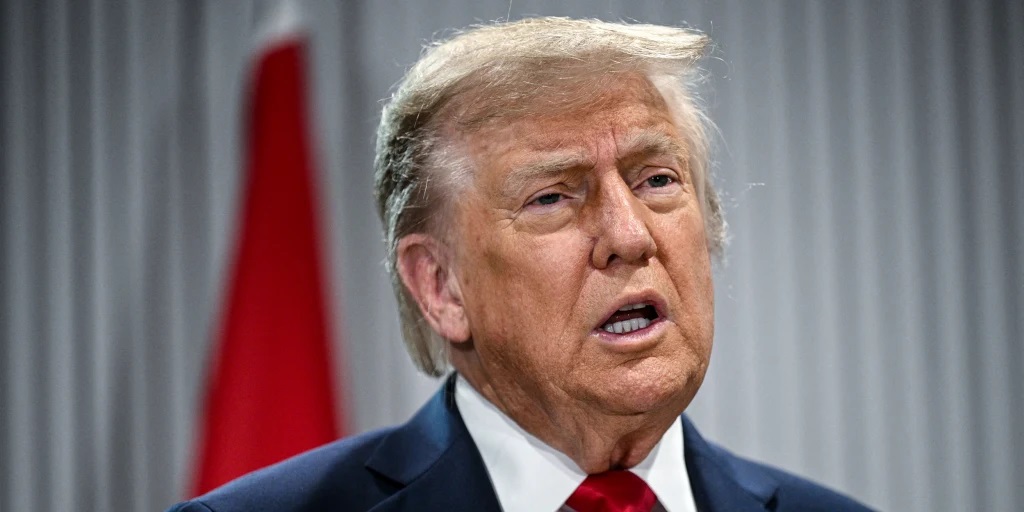
U.S. forces on Wednesday attacked Iran for a second consecutive day, officials said, hours after President Donald Trump declared the ceasefire between Washington and Tehran “over” and predicted that additional U.S. military action “probably” would occur.
American forces carried out the strikes at the direction of the president “to further degrade [Iran’s] ability to threaten freedom of navigation in the Strait of Hormuz,” according to a statement from U.S. Central Command, which oversees military operations in the region. The waterway has been a source of friction both militarily and economically in recent weeks, as Iranian forces have been accused of attacking commercial vessels and the United States has responded.
Trump, writing on social media, characterized the renewed assault as “retribution for yesterday’s bombing of ships by Iran.”
“If it happens again, it will get much worse!” the president warned in his Truth Social post, which was accompanied by an image of a billowing fire.
Speaking in Turkey earlier Wednesday, Trump said that “I think” a tenuous ceasefire agreement reached between U.S. and Iranian officials in June was “over.” However, he later qualified his remarks, saying that any military action would end “very quickly” and that he didn’t think the U.S. military would return to full-scale war.
Trump’s remarks, at a meeting of NATO leaders here in Ankara, followed a separate U.S. assault on Iranian territory — involving more than 80 strikes — ordered in response to attacks on ships passing through the Strait of Hormuz.
Trump said the U.S. hit Iran “very hard last night” and would “probably hit them hard again tonight.”
The president also suggested that the U.S. could reimpose a naval blockade on Iran and that Washington was “not attacking at the highest level,” repeating previous threats to strike infrastructure such as bridges, desalinization facilities and electricity plants. U.S. officials declined to detail what might be planned but said in a social media post later in the day that more than 20 U.S. warships remain in the Middle East.
Oil prices had eased but quickly spiked on Wednesday. Brent crude futures rose more than 5 percent to over $78 per barrel on fears that a renewed war would further disrupt energy supplies.
But Trump offered an evolving account of his plans in multiple appearances over the course of the day, by nightfall suggesting that any additional fighting was likely to remain contained.
“I don’t think it’s going to start again,” he said at a news conference before returning to the United States. “I think it’s going to go very quickly. They hit a couple of ships, and so we hit them much harder. … We use their language. We speak their language.”
The president spoke after Iran launched heavy retaliation overnight, with the Islamic Revolutionary Guard Corps saying it had targeted 85 U.S. military facilities in Bahrain and Kuwait on Wednesday, according to the semiofficial media outlet Fars.
“They’re scum. They’re sick people. They’re led by sick people, and they’re vicious, violent people,” Trump said in his comments earlier Wednesday. “Far as I’m concerned, it’s just a waste of time dealing with them. They’re liars … there’s something wrong with them. They’re cuckoo. As far as I’m concerned, it’s over.”
Trump said that talks with Iran could continue but that he was deeply skeptical they would be productive.
“They can talk, but I think they’re wasting their time. They’re a bunch of lying guys,” Trump said. “They’re bad people, and frankly, I don’t want to waste my time with them. Now, I’ll let our wonderful negotiators keep talking if they want, but I don’t see it.”
Later in the day, Trump declared that he was Iran’s top target for assassination.Ask The Post AIDive deeper
“I’m their number-one target. It’s out all over the place,” he said. “Because they’re scum. That’s the way they act, and that’s the way they’ve done it for 47 years.”
Adding to speculation about Iranian threats to his life, Trump also abruptly announced Wednesday that he would not be departing Turkey on the new Qatari luxury 747 that he debuted as Air Force One last week. Instead, he said he would depart on one of the older, smaller 747s that have been in service since 1990, jumping back on the fancier plane in Britain.
The Qatari jet — whose $400 million overhaul was accelerated by the U.S. Air Force when it took possession of the plane last year — is unlikely to have the same self-defense capabilities as the older, highly modified plane. That could pose a problem when flying out of Turkey, which shares a border with Iran.
Trump framed the move as a chance for U.S. service members based in Britain to explore the new jet. But asked Wednesday whether he had changed his plans because of security concerns, he didn’t answer directly.
The president’s tone about Tehran was a marked change from his assessment of Iranian leaders just weeks ago, when he praised their interest in making a deal shortly after they agreed to the ceasefire.
Asked why he was now dismissing them as scum, Trump said that “I got to know ’em.”
The secretary general of the International Maritime Organization, Arsenio Dominguez, in a statement Wednesday urged shipowners to avoid exposing their crews to danger by crossing the Strait of Hormuz “as long as the safety and security of crews cannot be assured.”
The U.S. and Iran reached a preliminary peace deal last month to reopen the strait to shipping traffic while continuing to discuss the thornier nuclear issue and possible lifting of U.S. sanctions against Tehran. The strait is a crucial shipping choke point through which 20 percent of global oil products normally flow.
But the tentative agreement appeared to collapse less than halfway through the 60 days that negotiators had allotted to reach a more durable accord. Trump previously expressed hope that the negotiations would lead to strict controls on Iran’s nuclear program.
The renewed hostilities were a setback for the president, who cited his concern about becoming a new Herbert Hoover as a major reason for seeking peace when he announced the initial deal last month. Hoover was president at the start of the Great Depression in 1929.
Iranian leaders, too, had seemed to be interested in peace. The country has been focused on days of mourning and funeral rites for its supreme leader, Ayatollah Ali Khamenei, who was killed in an airstrike during the first hours of the war.
But negotiations have stalled. Talks began with days of delays before Vice President JD Vance flew to Switzerland to kick them off. And the two sides traded barbs, and sporadic strikes, from the get-go. Trump expressed frustration on Wednesday that Iran’s public representation of what was being discussed differed from his understanding.
“We make a deal. Everyone’s agreed. No nuclear weapon. We make a deal. They go outside, joke to the press, they say we never even talked about it,” Trump said.
Iran’s leaders in recent days have appeared emboldened, with several senior officials appearing in public for the first time since the start of the war as part of the mourning rituals for Khamenei.
The possible resumption of war sparked some concern in Congress, which has sought to restrict Trump’s ability to keep fighting.
In June, the House and Senate passed a resolution to block Trump from resuming military action in a bipartisan effort to rein in the Iran war. The White House has argued that the measure does not have the force of law, setting up a clash with congressional Democrats who sponsored the legislation.
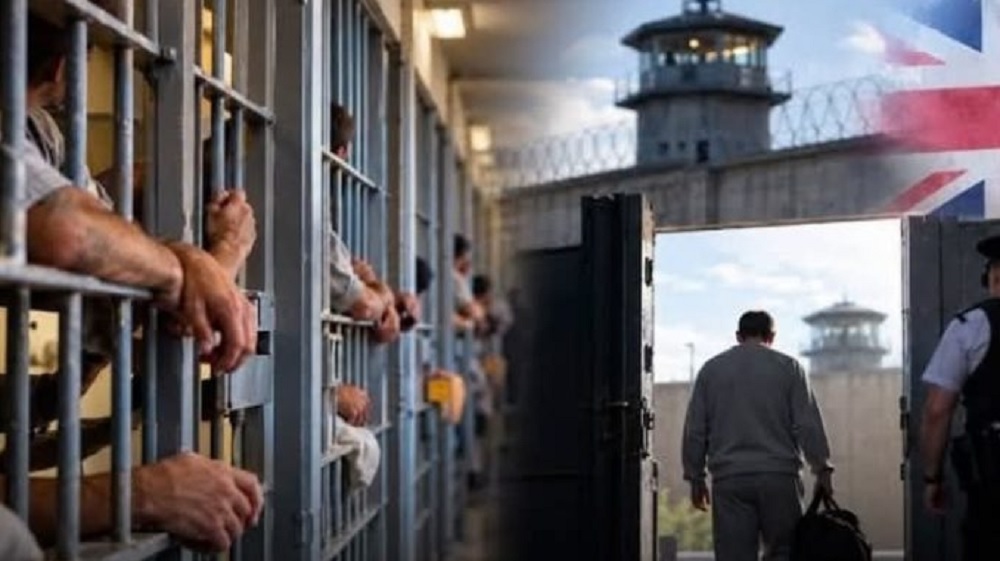
Hundreds of inmates across England and Wales are expected to walk free from prison on Thursday under an expanded early release programme, amid concerns that many could be left homeless and the probation system may struggle to supervise them.
About 2,000 offenders, including domestic abusers and violent criminals, are scheduled for release over the next month, while another 3,000 will be freed in phases over the following year to ease prison overcrowding. The initial target of 6,000 was reduced following Prime Minister Keir Starmer’s intervention.
However, probation officers have warned that accommodation shortages could force some former inmates onto the streets, despite evidence that securing housing after prison helps reduce reoffending.
A probation source told The Guardian: “We have a handful of places for ex-offenders and they are full. We are now looking at releasing some people straight on to the street.”
Enver Solomon, chief executive of charity Nacro, warned that homelessness after incarceration could increase the likelihood of offenders returning to prison.
Meanwhile, probation officers’ union Napo accused prison authorities of ignoring the challenges facing the service, including staff shortages, excessive workloads and problems with electronic monitoring.
Its national chair, Ben Cockburn, described the situation as absolute denial.
The expanded scheme, introduced under the 2026 Sentencing Act, allows eligible prisoners serving fixed-term sentences to qualify for release after serving one-third instead of 40%.
However, certain offenders, including those convicted in child grooming gang cases, indecent a§§ault and mansla¥ghter, are excluded.
The Ministry of Justice also announced plans to expand electronic tagging, but a recent watchdog report revealed that some offenders waited up to five months for monitoring devices, with only 55% of GPS and radio frequency tags installed on schedule.
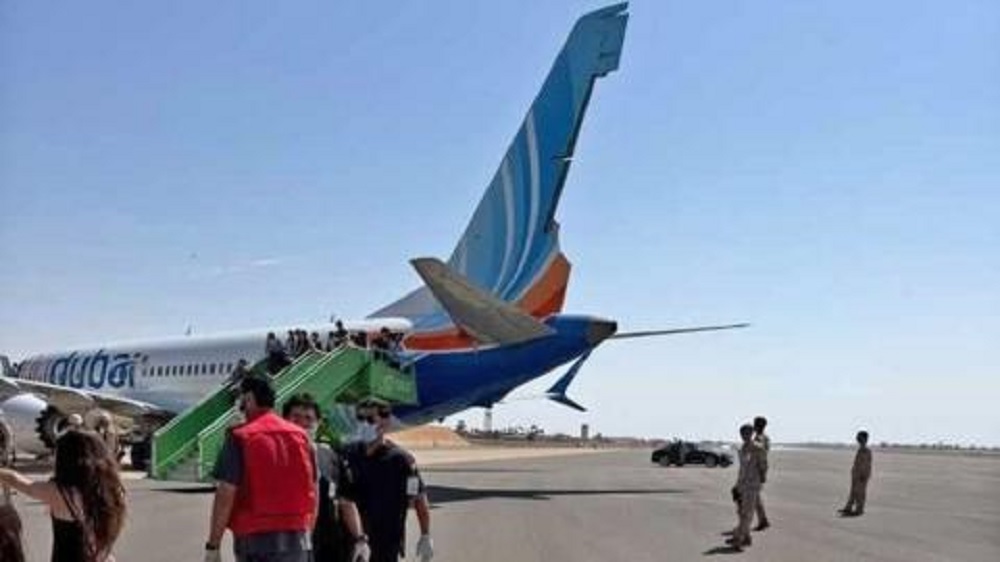
Passengers aboard a Flydubai flight from Dubai to Israel were thrown into panic on Wednesday after one of the pilots allegedly stabbed his co-pilot and attempted to take control of the aircraft.
The incident occurred aboard Flydubai Flight FZ1073, carrying about 150 Israeli passengers, as the Boeing 737 was travelling from Dubai to Israel.
According to flight-tracking data cited in reports, the aircraft dramatically lost approximately 13,000 feet in about 30 seconds and veered off its course, triggering fears that the plane could crash.
The situation reportedly escalated when passengers heard screams coming from the cockpit. Some passengers subsequently rushed toward the cockpit after it was opened and found one of the pilots bleeding.
A passenger who spoke to Israel’s Channel 12 described the terrifying moments aboard the aircraft.
“We heard screams on the plane. Then they opened the cockpit and we saw blood, and someone had stabbed the pilot with a pocketknife.”
The passenger added: “We prayed. There were also moments when we thought we weren’t going to make it out alive.”
According to the reports, two other pilots who were aboard the flight intervened and took control of the aircraft, preventing a potentially catastrophic outcome.
The aircraft was subsequently diverted and made an emergency landing at Tabuk Airport in northwestern Saudi Arabia, where security personnel took charge of the situation.
The passengers were later safely evacuated from the aircraft.
Israeli officials described the incident as one in which a “major disaster was narrowly avoided.”
Israeli security agencies, including the Israel Defense Forces (IDF), Mossad and Shin Bet, are reportedly examining the incident as a possible act of terrorism.
The circumstances surrounding the alleged stabbing, including the identity and motive of the attacker and how the cockpit was accessed, remain subject to investigation.
NewsMediaNG will continue to monitor developments as authorities provide further details.
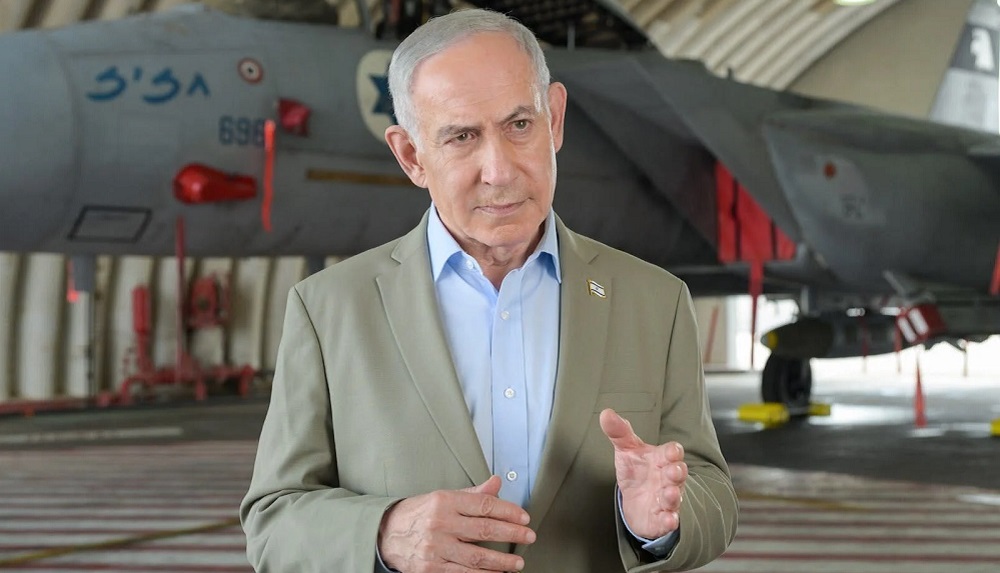
Israeli Prime Minister, Benjamin Netanyahu on Tuesday issued a stern warning to Israel’s enemies, declaring that the country’s military will continue to operate on all fronts and will reach any threat anywhere, at any time.
The Prime Minister spoke during a visit to the IDF Air Force Tel Nof base, where he met with pilots and ground crews. Flanked by members of the Israeli Air Force, Netanyahu said Israel’s operations have achieved significant results in recent weeks, particularly in Gaza and Lebanon.
“I am here at the Air Force base with our heroic pilots and our outstanding ground crews. We are operating constantly on all fronts,” Netanyahu said.
He disclosed that Israeli forces have eliminated key terrorist figures in Gaza in recent days. According to the Prime Minister, two days ago, forces killed the terrorist responsible for kidnapping Noa Argamani and Avinatan Or.
Argamani, who became one of the most recognized faces of the October 7th hostage crisis after video of her abduction went viral, was rescued in a special operation in June 2024 alongside three other hostages. Or was also rescued.
“We brought them home, and we eliminated him. Last night, we eliminated the commander of Hamas’s Northern Gaza Brigade. He joined his predecessors, whom we also eliminated,” Netanyahu stated.
He said the latest operations are part of a broader offensive that has seen more than 100 terrorists eliminated in Gaza in recent weeks alone.
“All told, in recent weeks we have eliminated more than 100 terrorists — and that is just in Gaza. Of course, we are also operating in Lebanon. You remember what we did to the Ali Taher Ridge,” he asked, referring to recent Israeli strikes in southern Lebanon targeting Hezbollah infrastructure.
The Prime Minister acknowledged that despite military achievements, Israel is facing mounting international and domestic pressure to scale back operations and agree to withdrawals.
“There have been tremendous achievements, but there are also tremendous pressures — pressure to withdraw, to give up the great achievements secured through the heroism of our fighters. I am not allowing that to happen, and I will not allow it to happen,” he vowed.
Netanyahu also issued a direct warning to hostile actors he said may attempt to attack Israel ahead of the country’s upcoming elections. He said intelligence indicates that Israel’s enemies may seek to exploit the election period.
“We have indications that, ahead of the elections, our enemies will try to attack us. So from here, from this Air Force base, from the long arm of the State of Israel, I have a message for them: Don’t mess with us — not now, and not ever. Our long arm will reach you anywhere, at any time,” the Prime Minister boastfully declared.
The visit to Tel Nof, one of the Israel Defense Forces’ principal air bases and home to several fighter squadrons and transport units, comes as the IDF continues to maintain high alert across multiple fronts, including Gaza, the northern border with Lebanon and Syria, and the West Bank.
Tel Nof has played a central role in Israel’s recent long-range operations, which Netanyahu described as proof of Israel’s ability to project power far beyond its borders.
The Prime Minister also praised the airmen and ground crews, calling them “heroic” and “outstanding” and credited them with securing the achievements on the battlefield.

BREAKING: Temi Nkem emerges winner of BBNaija 11th season

Osun Govt finally speaks As Court orders banks to freeze state accounts

Sad development as abductors beat up 20 corp members, reduce ransom from N50m to N5m each


-

 News23 hours ago
Imo Police Locate Kidnappers’ Camp, Reveal Why Abducted Corps Members Are Yet to Be Rescued
-

 News23 hours ago
Was Tinubu’s Speech AI-Generated? Elon Musk’s Grok AI Makes Strong Revelation
-

 News11 hours ago
Monarchs in Etche LGA presenting symbolic traditional kola to FCT minister Wike at ongoing interactive meeting with Ogbakor, other stakeholders (Video)
-

 News23 hours ago
Edo 2027: APC Chairman ‘AK-47’ threat – Amnesty International Makes Strong Demand
-

 News23 hours ago
How I Hired Cars To Get Drivers Abducted By My Gang, Kidnap Suspect Reveals
-

 Entertainment23 hours ago
My Penis Stopped Working When…— Commedian Julius Agwu