News
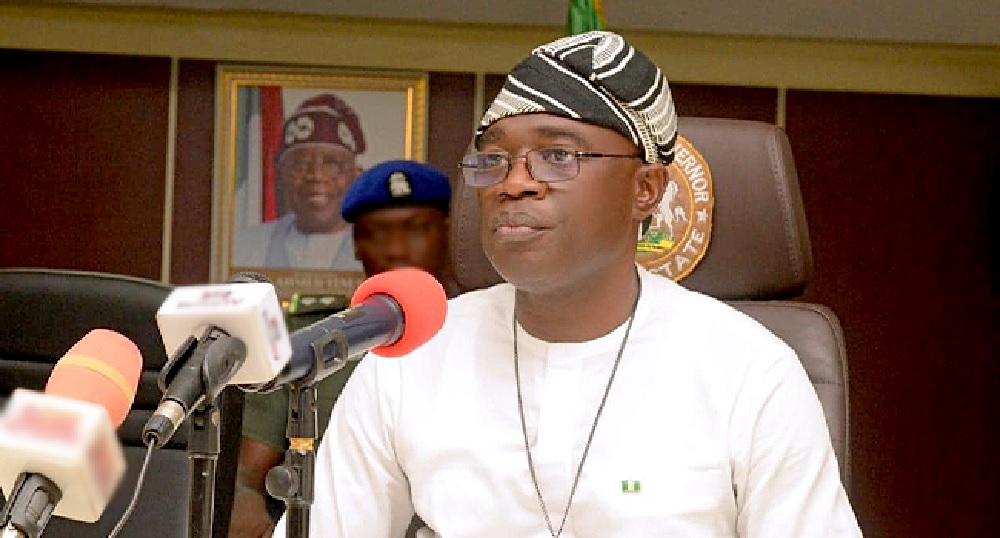
Alia blames illiteracy, poverty for Nigeria’s insecurity
- /home/naijuinz/public_html/wp-content/plugins/mvp-social-buttons/mvp-social-buttons.php on line 27
https://naijablitznews.com/wp-content/uploads/2024/08/Hyacinth-Alia.jpg&description=Alia blames illiteracy, poverty for Nigeria’s insecurity', 'pinterestShare', 'width=750,height=350'); return false;" title="Pin This Post">
- Share
- Tweet /home/naijuinz/public_html/wp-content/plugins/mvp-social-buttons/mvp-social-buttons.php on line 72
https://naijablitznews.com/wp-content/uploads/2024/08/Hyacinth-Alia.jpg&description=Alia blames illiteracy, poverty for Nigeria’s insecurity', 'pinterestShare', 'width=750,height=350'); return false;" title="Pin This Post">
Benue State Governor, Hyacinth Alia, has identified illiteracy, poverty, unemployment, inequality, weak institutions, ethno-religious tensions, poor governance and declining social values as major factors fueling Nigeria’s persistent insecurity.

The governor made the remarks on Friday while delivering a lecture at the quarterly lecture series of Yakubu Gowon University in Abuja.
Alia said Nigeria had witnessed an unprecedented wave of insecurity in recent decades, citing the Boko Haram insurgency, banditry, terrorism, kidnapping and recurring herders-farmers clashes, which he said have claimed thousands of lives, destroyed property and posed serious threats to national security.

According to him, the Boko Haram insurgency represents a direct attack on Western education, underscoring the need for governments to strengthen the country’s education system as part of efforts to address insecurity.
The governor stressed that building an efficient public service and strengthening institutions remain critical to tackling the country’s growing security challenges, noting that the public service plays a central role in delivering essential services and meeting the needs of citizens.
He said effective public service delivery would help build stronger and more resilient communities, stimulate economic growth and promote social cohesion.
“Through efficient and effective public service delivery, we can build stronger and more resilient communities, foster economic growth, and promote social cohesion,” he said.
Alia also called for greater investment in inclusive, equitable and quality education, lifelong learning opportunities, technical and vocational skills development, teacher capacity building and safe learning environments across all levels of education.
He argued that education remains one of the most sustainable approaches to addressing the root causes of insecurity, including illiteracy, ignorance, poverty, religious extremism and unemployment.
According to him, when deliberately deployed as a national development strategy, education can reduce vulnerability to violent extremism, promote tolerance and empower citizens with the knowledge and skills needed for productive livelihoods.
The governor maintained that rather than relying solely on military action or threats, Nigeria should prioritise accessible, compulsory and functional education capable of fostering social cohesion, religious tolerance and economic empowerment.
He added that strengthening the education sector would not only improve human capital development but also contribute significantly to building a more peaceful, stable and secure society.

News
Aviation labour bodies give airline operators 72hrs deadline over unionization, TSC
The National Union of Air Transport Employees (NUATE) and the Air Transport Services Senior Staff Association of Nigeria (ATSSSAN) have issued a three-day notice of strike to Nigeria’s domestic airlines, accusing the operators of blocking workers from unionising and non-remittance of ticket sales charges owed to the Nigerian Civil Aviation Authority (NCAA).
In a statement issued at the weekend, the unions said they were escalating the issue after the warning they gave on August 4, when the unions announced a notice of picketing and declared they were prepared to strike “at any time without further notice.”
Describing the latest move as a gesture of restraint, the unions said they were giving the airlines a further three days to address their grievances before industrial action begins. In the statement, the unions accused airlines of two major infractions.
They alleged that airlines have made it impossible for members of staff to join unions freely, despite repeated efforts by the aviation unions to secure that right.
They said workers are too afraid to even express interest in union membership for fear of discrimination.
The unions also accused the airlines of withholding a 5% charge on ticket sales that is meant to fund the operations of aviation agencies. According to the statement, the non-remittance of these funds has stalled the implementation of collective bargaining agreements already negotiated on behalf of union members.
The statement read: “In relaxing the notice of picketing, dated 4th August 2026 by our unions, with a statement that we were ready to strike at anytime without further notice, we hereby magnanimously issued a 3-day Notice of Strike upon the defaulting domestic airlines principally for the following infractions:
”Making unfettered unionization of staff in their organisation impossible after several efforts by the aviation unions. Their workers dare not even express the intention to belong to unions of their choices.
”Non-remittance of the already collected, but withheld 5% ticket sales charge, which is the operational fund of the aviation agencies, thereby rendering our members negotiated collective bargaining agreements at the aviation agencies nugatory so far. This continues to breed disgruntled air transport workers; the implication of which is an accident in the waiting!
“We want unequivocal declarations through circulars and other direct means of communication to their staff that they are free to join unions of their choices without fear of victimisation.
We want an immediate remittance of the seized operational funds of the aviation agencies to allow for the implementation of the conditions of service of our members in the various aviation agencies.”
News
NERC dissolves Kaduna Disco’s board over N456bn debt
The Nigerian Electricity Regulatory Commission (NERC) has assumed direct control of Kaduna Electricity Distribution Plc (Kaduna DisCo), dissolving the utility’s board and stripping its core investor of management authority over a N456 billion debt.
NERC said in an order dated August 10 that Kaduna Electricity, known as Kaduna DisCo, is in a “grave situation” marked by prolonged default, weak commercial performance and a balance sheet where liabilities have outrun assets.
The regulator invoked its intervention powers under sections 75 to 79 of the Electricity Act 2023, the strongest tool available to it short of revoking the company’s license outright.
“The commission therefore is obliged to act in the public interest and to safeguard continuity of distribution services in KAEDC’s network area,” the order states, citing the risk that further delay could trigger an unplanned collapse of service and expose Nigeria’s electricity market to systemic risk.
Kaduna DisCo’s cumulative market debt had climbed to roughly N456.5 billion as of May, split between N415.5 billion owed to the Nigerian Bulk Electricity Trading Plc and N41 billion owed to the system operator, according to the order.
The utility has also built up N14.26 billion in other statutory and third-party obligations, and has racked up more than N118.6 billion in additional market debt since ASI Engineering Limited took over operations in June 2024.
Kaduna DisCo paid just 41.93 percent of its adjusted market invoices in the year through December, leaving a shortfall of about N46.71 billion, the regulator’s data show.
That underperformance tracked losses across the network; aggregate technical, commercial and collection losses averaged 71.88 percent for the year, meaning the utility billed for barely more than a quarter of the power it received.
Capital investment lagged even further behind commitments. Actual spending in 2025 came to about N2.48 billion against a required minimum of N24.51 billion, a shortfall the regulator pinned largely on the commission’s own forbearance rather than any acceleration by the investor.
Meter coverage, meanwhile, stayed below 36 percent of customers throughout the year despite repeated industry-wide pushes to close the metering gap.
NERC had conditionally cleared ASI’s plan to acquire 60 percent of Kaduna DisCo in January 2024, working alongside a technical partner, Akanksha Power and Infrastructure Limited.
That approval carried a list of conditions, proof of the partner’s operating capacity, a compliance roadmap, bank guarantees to the market operator and trading company, and management vetting, among others, that the regulator said were never fully satisfied even after ASI assumed day-to-day control.
In a letter dated August 25, 2025, ASI told the commission it had met and was sustaining the approval conditions, pointing to restructured technical teams, loss-reduction and metering projects, and efforts to arrange equity and debt financing. Regulators found the supporting evidence insufficient. “The supporting submissions… did not provide adequate evidence of compliance with the conditions,” the order says, adding that documentation for planned infrastructure and technical-advisory work was missing.
Talks came to a head after the commission warned Kaduna DisCo’s shareholders and the Africa Export-Import Bank in a formal notice that an intervention was imminent unless a credible financial rescue plan materialised.
Representatives of the investor group met regulators, the Bureau of Public Enterprises, Afrexim and Fidelity Bank at Afrexim’s offices on June 11. All parties agreed at that meeting that ASI had not met the original takeover conditions or separate requirements set by the Bureau of Public Enterprises for finalising the share sale.
ASI asked for as much as 24 months more to stabilise cash flow and reach full market remittance. The commission, working with the Bureau of Public Enterprises and Afrexim, rejected the request, concluding that a further extension of similar length was not justified given the continuing risk to customers and the market, and that ASI had failed to back the request with a credible plan.
Under the order, KAEDC’s board is dissolved and its directors removed, with a seven-member interim board of special directors, chaired by Abdullahi Garba and including a representative from the Bureau of Public Enterprises, installed for an initial six-month term.
The utility’s incumbent managing director, Abubakar Umar Hashidu, has been retained as administrator to run day-to-day operations, while background-clearance approvals for the wider management team have been withdrawn pending revalidation.
Afrexim will lead a competitive process, coordinated with the regulator, to find a replacement core investor within 12 months, with interim milestones for transaction documents, bidder shortlists and financing terms due at 60, 180 and 270 days. Prospective bidders will need to show working capital, a five-year turnaround plan and bank guarantees covering at least three months of market invoices.
News
Visa processing shift won’t affect Abuja embassy operations – US
The United States Mission in Nigeria has clarified that the ongoing realignment of routine visa processing in Africa will not affect the operational status of the US Embassy in Abuja.
The clarification followed the United States Department of State’s announcement that routine visa services in Abuja would be realigned to a regional visa hub with effect from August 1, 2026.
The US Mission Nigeria, in a post on its official X handle on Monday, said the change was limited to routine visa processing and would not result in the closure of the embassy.
“The realignment of routine visa processing does not change the operating status of any of the embassies and consulates or the important work they continue to conduct on behalf of the American people,” the mission said.
The Department of State had, in a notice published on its website on July 15, said it was realigning visa operations in Africa to regional hubs as part of efforts to strengthen national security, improve efficiency and promote more uniform screening, vetting and adjudication standards.
It said the measure was part of a long-standing practice and that similar realignments had previously been implemented in several African countries and in Europe.
“Effective August 1, 2026, the Department of State will realign routine visa services in Antananarivo, Abuja, Asmara, Bamako, Banjul, Brazzaville, Bujumbura, Conakry, Cotonou, Durban, Freetown, Gaborone, Harare, Juba, Libreville, Lilongwe, Lusaka, Maputo, Maseru, Mbabane, N’Djamena, Niamey, Nouakchott, Ouagadougou, and Windhoek to a regional visa hub,” the department said.
Under the new arrangement, citizens and residents of affected countries seeking US visas on or after August 1 are required to schedule appointments and pay the applicable visa fees at designated nonimmigrant or immigrant visa locations.
For Nigeria, Lagos is listed among the US posts that will serve as a regional visa hub.
The State Department listed Abidjan, Accra, Addis Ababa, Cape Town, Dakar, Dar es Salaam, Djibouti, Johannesburg, Kampala, Kigali, Kinshasa, Lagos, Lomé, Luanda, Malabo, Monrovia, Nairobi, Port Louis, Praia and Yaoundé as the regional visa hubs for routine visa services.
It explained that all routine visa services were affected by the realignment, covering both nonimmigrant and immigrant visas.
“These include tourist and business-related nonimmigrant visas, as well as petition-based nonimmigrant visas,” the department said.
It added that immigrant visa services being realigned include immediate relative, family preference and employment-based categories, as well as fiancée/fiancé visas, adoptions, Diversity Visas and follow-to-join asylee and refugee cases.
The department, however, said the realignment would not affect existing valid visas.
“This does not affect any currently valid visas,” it said.
It also advised applicants who already have appointments scheduled at posts where routine visa services are being discontinued to check their email for specific guidance.
The department said applicants who had paid the Machine Readable Visa fee at a post where only limited nonimmigrant visa services would remain should schedule their appointment by July 31.
“By July 31, you should schedule an appointment at the post where you paid the fee,” it said.
The Mission added that the fees would not be refunded if applicants failed to schedule an appointment by the deadline.
The US also said affected immigrant visa applicants could undertake their mandatory medical examinations in their home countries where panel physicians were available or at their designated regional visa hubs.
The department stressed that visa suspensions under Presidential Proclamation 10998, visa bond requirements and immigrant visa pauses affecting certain nationalities remained in force.
The clarification by the US Mission Nigeria means that while routine visa processing is being moved from Abuja to the designated regional hub in Lagos, the US Embassy in Abuja will continue to operate and provide other diplomatic and consular functions.
-
News20 hours agoSee Black Market rate of the Dollar to Naira today 10th August, 2026
-
Metro7 hours agoMilitary Airstrikes Wipe Out Nine Terrorists In Borno
-
Politics7 hours agoOsun APC Raises Alarm Over Alleged Plot to Blackmail Police With Hired Protesters
-
News7 hours ago‘Helicopter Brought Money For Kidnappers’ – Kwara Victims Rejects Govt’s Claim Of No Ransom
-
News20 hours agoTop army officer confesses on why he planned coup against TInubu, identifies officers involved
-
Politics7 hours agoOsun election: Atiku, Aregbesola storm Osogbo for Najeem Salaam
-
News7 hours agoMeet twins who secured NNPC jobs in 2026 without connections
-
Metro7 hours ago23-Year-Old Nigerian Law Student Dies After Incident at 4-Storey Hostel on Lagos Campus