BY


TANKO IBN YAHAYA 
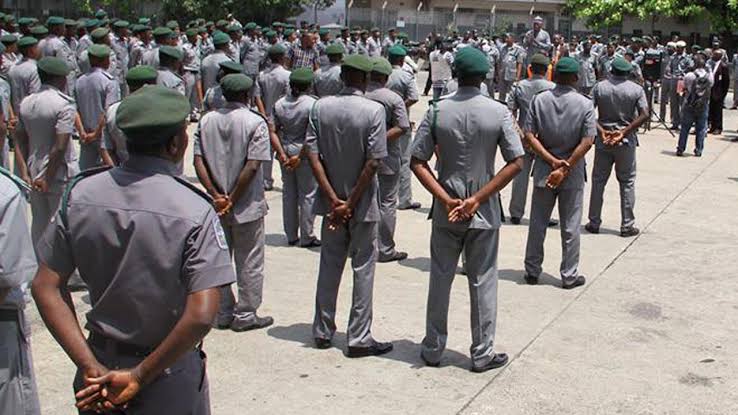
To many people, the Nigerian Customs Service, (NCS), has different, varied descriptions. The ordinary man on the streets sees the agency as one whose duties involve vehicles. For stakeholders in the maritime, shipping, and automobile sectors, the men in ash-coloured uniforms are very strategic to their line of businesses – some playfully describe them as “necessary evil.” The managers, custodians of the economy, as well as players in the money-sector believe that the NCS is very germane to the generation of revenue to the national treasury. In sum, Nigerians are not only aware of the institution’s humongous contributions to the country’s revenue base, but also appreciate and commend the landmark feats recorded yearly. Given its unique role in the national economy and position in broad-based development, the NCS, has over the years, become one of the sought after public service agencies and to a large extent, most discussed.
Despite the impressive ratings of the NCS, as a result of its humongous inflows to government coffers, lately, it has been in the news for some strange reasons – which some described as unsavory. Following the presidential approval for an extension – for six months – of the tenure of the Comptroller-General; Bashir Adewale Adeniyi, the NCS has been in the spotlight. Somehow, many of the critical stakeholders seem not averse to the career-gift, but critical of the numerous attempts to skew the narratives about and around the development. Many argue that the frequencies of these diluted stories, which reeks of propaganda and mischief are tailored towards name-shaming a few people – for whatever reasons. From careful analysis, it has been a bouquet of rumour-mongering, blackmailing, backstabbing, and brinkmanship. Within span and space, the regular and social media has been awash with salacious fictions to stain and spoil the image and credibility of some people who have contributed their quota to the growth and development of the institution.
Perhaps, in their desperation to wet the appetite of their paymasters, the purveyors of the numerous tales by moonlight stories did not only expose their lack of historical recall and intellectual laziness, but also opened the doors and provided genuine stakeholders the opportunity to unearth the truth. Sadly, the wishy-washy diatribes were insipid, ineffectual, and invertebrate on all sides. On many fronts, these coterie of praise-singers, cheer-leaders, and palace jesters masquerading in borrowed nomenclatures succeeded, big time in bringing to national consciousness their paymaster’s irascible, spinless, and discrepant penchant for unbridled insensitivity beyond description – already known by some stakeholders.
Contrary to their calculations and conjectures, they faltered and failed, woefully in their insidious and infantile attempts at changing the narratives. Hence, they embarked on a sloppy and knavish descent to perdition and irresponsibility. Painfully, the “imaginary stakeholders” spewed their non-intelligence fictional piece and conjured dramas with the intentions of disparaging and denigrating some people, at the expense of their “godfather” who they whitewashed.
This intervention is driven by the wise counsel of an unnamed sociologist that, “any lie or misinformation not debunked well enough, may become the truth people believe if it stays longer.” Given the writer’s long-standing admiration for the profession and recognition of the agency’s frontal role in national development, this piece is necessary. Further juxtaposition of news reports, inquiries, and narratives being bandied around reveals that the realities are very far from the position painted by the “news merchants.” Indeed, the spins concocted by these fellows are riddled with falsehoods, tissues of lies, and innuendos. The coordinated media onslaught contained bogus claims, unimaginable stunts, and throwing of dust, dirt, and mud at people; within and without the NCS – who – though wrongly – they identify as potential threats to carefully guided, upcoming plans at total and longer control of the institution by their benefactors.
Perhaps, it is trite to poo-pooh and rubbish these narratives, by allowing the people to get to know the true situation of matters. Fact. Since the beginning of the 4th Republic, in 1999, none of the past 7 former CGCs and acting CGC got tenure extension. From Ahmed Aliyu Mustapha to David Ogungbemile; Jacob Buba Gyang; Hamman Bello; Bernard Nwadiolo; Abdullahi Dikko; and Hameed Ali – they never sought an extension of tenure, but left either at the expirations of their respective tenures or bowed out of office at the appointment of a new CG. Fact. From available records, CGC Adeniyi is the first and only person to have secured extensions of the office – not once but twice; for one year, and a new six months – meaning he will exit the position early next year. Fact. By this new presidential gesture, he remains the last-man standing of the 1990 and 1991 sets – having enlisted into the NCS in 1990. This is unprecedented! Some stakeholders keep wondering what happened to the core of the two sets, which had some of the best professionals who variously won awards for excellence, gallantry, and milestones?
Fact. The 7 DCGs and 10 ACGs that are due for retirement between September 2026 and January 2027 are leaving because they would have statutorily met either 35 years in service or clock 60 years when they take their respective bows. Their retirement is nothing near the mischievous and banal contraption being circulated in the media space. Fact. Nothing untoward happened with the promotion of some of the Class 2009 officers to the rank of Deputy Comptroller – some are still in the Assistant Comptroller cadre. As is commonly said, “a labourer is worthy of his wages,” they truly merit the elevations. From information pieced together, as Heads of some strategic Commands, Units, and Ad Hoc assignments, they contributed immensely to the success stories of the Adeniyi administration.
Some stakeholders confirmed that the promotions are endorsements and recognition of their service to nationhood. Further checks revealed that it is from this group of officers that the Management Team of the NCS would emerge – after 7 DCGs and about 10 ACCs are selected. Fact. Deputy Comptroller I.D. Olorunfemi got his promotion purely on merit. Contrary to spins, the Officer never knew, or had any form of official or private interactions with Hon. Leke Abejide, Chairman of the Customs Committee in the House of Representatives before his elevation.
Speaking further, a stakeholder in the maritime sector who pleaded anonymity declared, “I find it laughable that Hon. Abejide was mentioned in an attempt to rubbish the good works he has for the NCS, and the sector. I wonder how low and shameless people can go in their desperation for power, position, and relevance.” A senior staff member of a clearing and forwarding company who also pleaded for anonymity added that, “Abejide has done so much in ensuring the provision of the right legislations for the sector through the passage and assent of the Nigerian Customs Service Act, 2023. For me, to vilify and demonize him because of things that are ephemeral and transient is the height of callousness and wickedness.” A retired NCS officer, whose tour of duty included some of the strategic Commands, but pleaded anonymity asked, “why input the names of Olugbenga Peter and Ejibunu Hussein, both retired very senior officers into the whole mess put together by people of questionable characters. For the records, Olugbenga by virtue of his outstanding professional excellence ought to have been named the CGC, but lost out to politics and horsetrading. Ejibunu’s legendary achievements in every posting, particularly Lagos Command are known by many people.”
Though a few people argue that an ambition, if not properly situated and pursued may in the long run, lead to stifled and stymied career progression of a silent majority, some others differ, slightly. From comments by various stakeholders within and without the NCS, no one is begrudging CGC Adeniyi for having another tenure extension. They counsel him to leverage on this lifeline to address, and resolve some burning issues in the NCS. Some stakeholders wondered why the institution has not embarked on major recruitment for 16 years; like other para-military services did – a decision Hameed Ali, who handed over to CGC Adeniyi had wanted to close the gaps in the officers cadre before he was removed. A very senior retired officer of the NCS who pleaded anonymity advised CGC Adeniyi to, “take a cue from the Heads of other institutions who have periodic interfaces and interactions with retired officers on issues of service growth and development. Being the chief executive, he should ensure he carries everyone along – those still in service, retirees, and the past CGCs in all his engagements and programmes. He should realize that no one wants his downfall, but the collective desire of all is that he performs creditably by uplifting the image and credibility of the NCS.”
* TANKO IBN YAHAYA is a Public Commenator and writes from Katsina.