Connect with us

News

Reps demand Full List of N34tn Customs Waivers, Probe Revenue Discrepancies

Published

on

ADVERTISEMENT
Zoom Ad
ADVERTISEMENT
Zoom Ad

…as committee orders CAC to explain ₦13.9bn operating surplus debt

By Gloria Ikibah

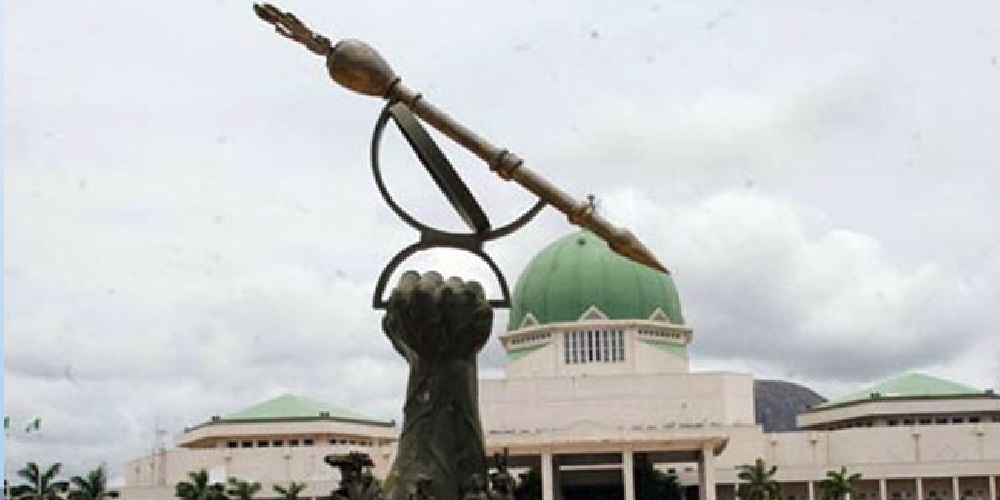
The House of Representatives has directed the Nigeria Customs Service (NCS) to submit a detailed account of the nearly ₦34 trillion worth of import duty waivers granted in 2025, demanding the identities of beneficiaries, the legal basis for the concessions and the specific purposes for which they were approved.

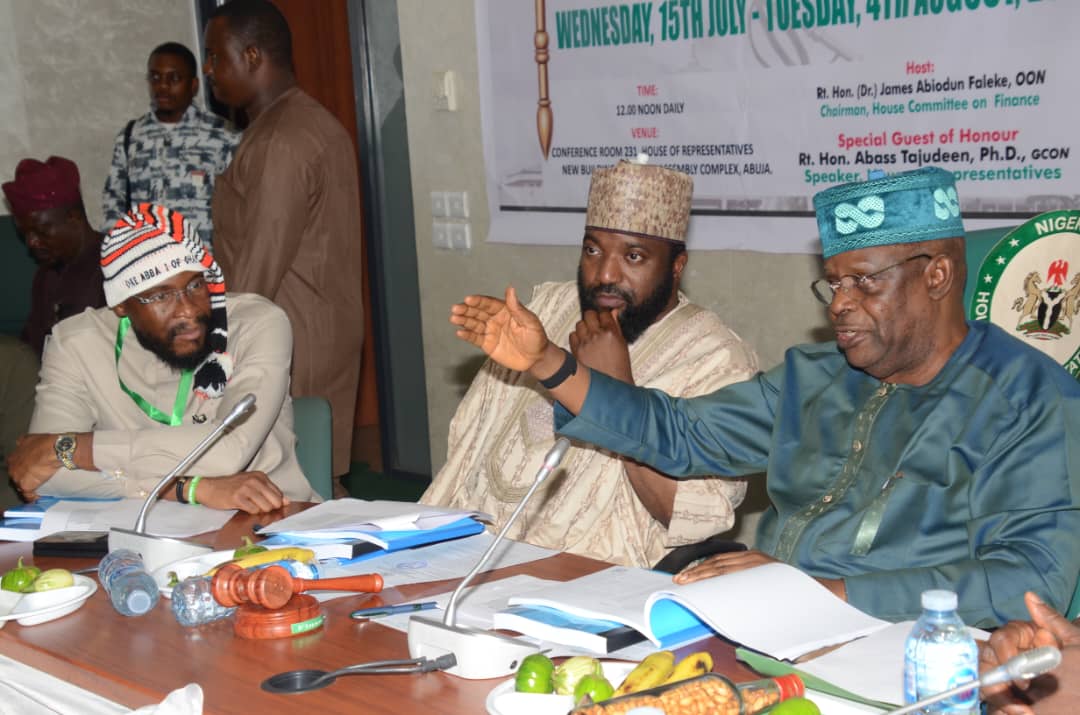
The directive was issued on Tuesday during an oversight session of the House Committee on Finance with the management of the Nigeria Customs Service as part of the National Assembly’s ongoing review of revenue-generating agencies.

Advertisement

Chairman of the committee, Rep. James Faleke, said the lawmakers were not opposed to the government’s waiver policy but had a constitutional duty to ensure that such concessions were transparent and served the country’s economic interests.

According to him, the committee wants clarity on who benefited from the waivers and whether the incentives achieved their intended objectives.

Faleke said: “Waiver is good. It is not a bad thing to grant waiver. But we want to know those who benefited from the waiver and the purpose for such waiver. It is okay if you grant waiver on medical and agricultural products.

“If you grant waiver, it is aimed at helping the economy to grow. For example, if you grant waiver on agricultural products, it is aimed at reducing the cost of food. So, we are not against waiver. But we want to know the beneficiaries of this ₦34 trillion waiver”.

Advertisement

The committee also questioned Customs over what lawmakers described as inconsistencies in its revenue reports, despite the agency consistently surpassing its collection targets.

Faleke observed that while the Service recorded impressive revenue performance, the financial records submitted did not sufficiently explain how the additional revenue above approved targets was realised.

“We are not going to applaud your efforts now because your account books are not balanced. We know that you want to be transparent, but you have not told us how the excess money you are reporting came about.

“I can see that in some months, you under-declare your revenue collection and in other months, you overshoot the collection. We want to know what is responsible for this. You have to provide these little details that will help us properly assess your performance”, he stated.

Advertisement

Deputy Chairman of the committee, Rep. Saidu Abdullahi, argued that the Federal Government should consider raising revenue targets for agencies such as the Nigeria Customs Service, noting that the Service had repeatedly exceeded expectations.

“I personally believe that they can do more than the target we give to them.

“I think we are not pushing them enough. That is why they will always come up with excesses. In 2024, you were given a target of ₦5 trillion and you generated N6.1 trillion. In 2025, you were given a target of about ₦6 trillion and you generated N7.2 trillion. I believe that if we push you enough, you can do better”, he said.

Responding on behalf of the Comptroller-General of Customs, Bashir Adeniyi, the Deputy Comptroller-General in charge of Finance, Administration and Technical Services, Kikelomo Adeola, clarified that the Nigeria Customs Service does not approve import duty waivers.

Advertisement

She explained that the Service only implements approvals granted by the Federal Ministry of Finance in line with existing laws and government policy.

Adeola also advocated greater investment in inland dry ports across the country, saying the facilities would ease congestion at seaports and speed up cargo clearance.

“I will encourage all state governments to invest in inland dry ports. That will have a lot of impact on our operations. Any cargo that is marked for such inland port will not be delayed at the main port.

“The container will be transported directly to the inland port where it will be examined. That will reduce the pressure at the nation’s ports and increase trade facilitation in the states”, she said.

Advertisement

She further assured lawmakers that Customs’ scanning equipment was largely operational, with only a few units currently undergoing repairs.

However, committee member Rep. Ifeanyi Uzokwe urged the Service to hold officers accountable whenever negligence leads to equipment failure or unnecessary delays in cargo clearance.

The committee also scrutinised the Corporate Affairs Commission (CAC), directing the agency to submit comprehensive records of all registered companies and businesses in Nigeria, including the fees paid during registration.

Lawmakers further queried the commission for failing to submit its audited financial statements to the Fiscal Responsibility Commission (FRC) since 2019, contrary to statutory requirements.

Advertisement

The committee ordered the CAC to reconcile its records with the Fiscal Responsibility Commission without delay.

A representative of the Fiscal Responsibility Commission told lawmakers that the Corporate Affairs Commission owed the Federal Government N13.9 billion in unremitted operating surplus accumulated over several years.

Responding, the Registrar-General of the Corporate Affairs Commission disclosed that the agency had already begun reconciling its accounts with the Fiscal Responsibility Commission and had agreed to settle the outstanding liability through quarterly payments of N500 million.
Advertisement
Continue Reading
Advertisement

News

Iranian Blogger, 33, Sentenced to Death for ‘Insulting’ Supreme Leader

Published

on

ADVERTISEMENT
Zoom Ad
ADVERTISEMENT
Zoom Ad


A 33-year-old Iranian blogger, Soda Ebrahimi Shamsabadi, has been sentenced to death after being convicted of “corruption on earth” over alleged anti-government activities, including insulting Iran’s Supreme Leader.

Shamsabadi was accused of insulting Supreme Leader Ayatollah Ali Khamenei, engaging in media and propaganda activities deemed hostile to national security, and cooperating with governments considered hostile to Iran.

According to Iran International, prosecutors also accused her of photographing a site where a missile had struck and sending the image to a Persian-language media outlet based outside Iran.

Advertisement

Shamsabadi, who was raised in Tehran and later lived in Bandar Abbas, has been held at Bandar Abbas Prison since March. She reportedly spent 20 days in solitary confinement.

During the January protests, she used social media to document alleged killings and abuses linked to the unrest. In one post, she said photographs, videos, documents and eyewitness accounts existed to establish what had occurred.

Her final Instagram post, published on February 23, appeared to acknowledge the possibility that she could die.

Addressing her more than 10,000 followers, Shamsabadi wrote that if she were no longer alive, they should know that she had chosen the path she believed in.

Advertisement

Her sentencing comes amid growing international concern over the use of capital punishment in Iran, particularly against protesters and government critics.

UN High Commissioner for Human Rights Volker Türk has warned that the increasing use of death sentences in Iran is intended to create fear and suppress dissent.

Iran Human Rights says at least 29 people arrested during the January protests have been executed since March. Meanwhile, the US-based Abdorrahman Boroumand Center has documented 950 executions in Iran so far this year.

Rights groups have repeatedly condemned Iran’s use of the death penalty, warning that capital punishment is increasingly being used against political dissidents and protesters.

Advertisement
Continue Reading

News

Just in: Five Islamic Clerics Reportedly Abducted After Praying for Tinubu’s Re-Election at Senator Yari’s Residence

Published

on

ADVERTISEMENT
Zoom Ad
ADVERTISEMENT
Zoom Ad

Five Islamic clerics have reportedly been abducted by suspected terrorists after attending a special prayer gathering organised for President Bola Tinubu’s re-election at the residence of former Zamfara State Governor and serving Senator Abdul’aziz Abubakar Yari in Talata Mafara.

The clerics were reportedly abducted on Saturday, September 12, 2026, shortly after attending the gathering at Yari’s residence, where about 1,000 Islamic scholars were said to have gathered to pray for Tinubu’s victory in the 2027 presidential election.

It was learnt that the victims reportedly include Imam Yahuza, the First Jumma’at Imam in Dogon Madacci; Magawata Abdullahi, the Second Jumma’at Imam in Dogon Madacci; Malam Shehu Dakko; Imam Bala Fagon; and Na’ibi Tasi’u of Tungar Nagudai.

Sources said the clerics had travelled from communities in Bakura and Talata Mafara Local Government Areas to attend the prayer gathering.

Advertisement

Their reported abduction has raised fresh concerns over the worsening security situation in Zamfara, particularly as the incident allegedly occurred in connection with a gathering at the residence of Yari, a former governor, serving senator and Director-General of Tinubu’s 2027 presidential campaign.

The identities of the abductors and their whereabouts remained unclear as of the time of filing this report.

Security agencies have yet to issue an official statement on the reported abductions as of press time.

Also, the Zamfara State police spokesman, Yezid Abubakar has not responded to messages and calls sent to him seeking his comment.

Advertisement
Continue Reading

News

2027: Peter Obi Launches Four-Year Reform Plan

Published

on

ADVERTISEMENT
Zoom Ad
ADVERTISEMENT
Zoom Ad


Presidential candidate of the Nigeria Democratic Congress (NDC), Peter Obi, has launched a four-year governance plan focused on economic reforms, competent appointments, infrastructure rehabilitation, security and direct engagement with Nigerians if elected president in 2027.


Obi said he would personally take charge of the government and would not govern through proxies, insisting that the president must remain directly accountable to the people.

Advertisement

The former Anambra State governor disclosed the plan during an exclusive interview with Arise News on Thursday as part of the station’s presidential campaign series.

He said four years would be enough to begin transforming Nigeria if the government identified clear priorities, appointed competent officials and implemented the right policies.

“I will be in charge and I will not run government by proxy. I will be answerable to the people,” Obi said.

He also reiterated his pledge to serve only one four-year term if elected, saying he would not remain in office beyond his tenure.

Advertisement

“I will not spend one extra day. Four years is enough to engender change and I did it as Governor of Anambra State,” he said.

On infrastructure, Obi said his administration would concentrate first on rehabilitating existing roads, schools and other public facilities before embarking on new projects.

“We will not build new roads until we fix the existing ones,” he said.

Obi said he would remove the corruption associated with the petrol subsidy regime but rejected the restoration of the old system.

Advertisement

He said the Federal Government had disclosed that about N15.8 trillion was generated from subsidy removal, adding that such resources should have been invested in productive sectors including agriculture, small businesses, manufacturing and job creation.

“The subsidy regime in Nigeria was enmeshed with corruption and criminality. I have said it clearly that I will remove subsidy and fight that corruption and criminality,” he said.

He said increased domestic refining and regular supply of crude oil to Nigerian refineries could help moderate fuel prices without returning to the old subsidy regime.

Obi also criticised government spending, arguing that resources being deployed to less critical projects could instead be invested in healthcare, including cancer treatment, education and other essential services.

Advertisement

Security

On insecurity, the NDC candidate promised to take personal charge of the country’s security architecture and appoint competent heads of security agencies with clear mandates.

“In the first week, it’s for me to appoint competent heads of security agencies with a decisive instruction: We must deal with this,” he said.

Obi said he would personally visit states affected by serious insecurity instead of managing security challenges exclusively from Abuja.

Advertisement

“I’m not going to sit in Abuja if there’s a problem in Zamfara. We’ll call the people in Zamfara and see what this problem is, and deal with it decisively,” he said.

He expressed support for deploying modern surveillance technology against criminals and rejected ransom payments as a strategy for dealing with kidnappers.

Obi said agriculture would be central to his economic plan for Northern Nigeria, describing the region’s vast arable land as a major economic asset.

He promised to invest in agriculture, education and skills development while supporting young people, including almajiris, to become productive participants in the economy.

Advertisement

According to him, increased agricultural production would provide food, create employment, supply raw materials to industries and expand Nigeria’s export opportunities.

“The north has an asset… and that asset is agriculture. I will deal with that asset,” he said.

Criticism of Tinubu

Assessing President Bola Tinubu’s administration, Obi said the government had not performed well and accused it of being reckless in its spending and management of the country.

Advertisement

“I think you should ask the people. But if you ask me, they’ve not done well. They’ve been a bit reckless in what they’re doing,” he said.

Asked whether he believed President Tinubu was fully in charge, Obi responded: “At times, I believe he’s not in charge.”

He said that, if elected, he would personally explain government decisions and remain accountable for every public expenditure.

“Nobody will talk for Peter. Because I’m the one that’s elected. I’ll be answerable to the people. And for every penny, I’ll be answerable to the people,” he said.

Advertisement

Electoral Reforms
Obi also promised electoral reforms, including real-time transmission of results from polling units to a central situation room.

He clarified that he would not establish a parallel electoral commission but would strengthen the use of technology within the existing electoral system.

“I won’t set up a parallel INEC but will make sure that in every polling unit we have a system that transmits results in real time to our Situation Room,” he said.

2023 Election

Advertisement

The NDC candidate maintained that he won the 2023 presidential election but said he would accept defeat in 2027 if the election was free, fair and credible.

“If the election is free, fair and credible, I will. That’s it. Because it’s an election… I will respect the will of the people. That’s democracy,” he said.

However, he added: “As long as I live, I will maintain that I won the 2023 presidential election.”

Competence Over Ethnicity

Advertisement

Obi rejected calls for the presidency to be determined by ethnic or religious considerations, arguing that competence should be the primary qualification for leadership.

“Our elections should not be driven by tribe or religion. Today, in terms of qualification, I’m qualified to be president of Nigeria. I have the competence,” he said.

He also cited his educational and professional background as evidence of his preparedness for the presidency.

The NDC candidate said his broader objective was to reverse Nigeria’s current trajectory within four years and lay the foundation for sustainable economic development.
“In four years, people will see the difference,” Obi said.

Advertisement

He further promised a physically present presidency, saying he would regularly visit states and communities and interact directly with ordinary Nigerians rather than govern exclusively from Abuja.

Continue Reading

Trending

Copyright © 2024 Naija Blitz News