Connect with us

News

NCC, REA partner to boost rural connectivity through renewable energy

Published

on

ADVERTISEMENT
Zoom Ad
ADVERTISEMENT
Zoom Ad

The Nigerian Communications Commission (NCC) and the Rural Electrification Agency (REA) have signed a Memorandum of Understanding (MoU) to use renewable energy solutions to expand telecommunications services in rural and underserved communities across Nigeria.


The partnership, formalised at the NCC-REA Stakeholder Forum and MoU Signing Ceremony in Abuja on Friday, is expected to reduce the telecom sector’s dependence on diesel-powered base stations while improving network availability through the deployment of mini-grids.

The event, themed “Unlocking the Energy–Telecoms Nexus for Scalable Digital Infrastructure in Nigeria,” brought together government officials, telecommunications operators, tower companies, renewable energy developers, financiers, development partners and investors to explore practical strategies for integrating energy and telecommunications infrastructure.

Speaking after the signing ceremony, the Executive Commissioner, Technical Services, NCC, Engr. Abraham Oshadami, said the partnership reflects the close relationship between electricity and telecommunications, noting that neither sector can function effectively without the other.

Advertisement

He explained that while mobile base stations require electricity to remain operational, consumers equally rely on telecommunications services to access electricity-related services such as smart metering and digital payments.

According to him, the collaboration is designed to ensure Nigerians enjoy improved access to both electricity and telecommunications services, especially in remote communities where power supply has remained a major challenge.

Oshadami said the agreement would enable both agencies to maximise existing infrastructure by linking telecom base stations located close to existing and planned mini-grids.

“Where you have mini-grids, we’re able to identify base stations that are close to them so that we’ll be able to take electricity supply from those closest mini-grids,” he said.

Advertisement

He noted that the arrangement would keep telecommunications infrastructure running even in locations without access to the national electricity grid.

According to him, powering telecom sites through renewable energy would improve service reliability and enable rural communities to participate more actively in the country’s digital economy.

“The whole globe is now more or less a village. It is only possible because of connectivity,” Oshadami said, adding that extending reliable communications services to underserved communities would support economic growth and social inclusion.

He disclosed that implementation of the agreement would begin immediately, as both organisations had already identified existing mini-grids located within one to two kilometres of telecom base stations.

Advertisement

“The MoU has made provision for everybody who knows their responsibility. It’s all spelt out in that MoU. So it’s immediate effect,” he said.

The NCC executive added that future mini-grid projects would also be planned with telecommunications infrastructure in mind, ensuring electricity investments simultaneously improve digital connectivity.

Also speaking, the Executive Director, Technical Services, Rural Electrification Agency, Engr. Umar Abdullahi, described the agreement as a turning point in the relationship between the two agencies.

He said although both organisations had independently recorded significant achievements in their respective sectors, they had previously pursued separate implementation strategies.

Advertisement

“Prior to today, both agencies, NCC and REA, have been working in silos. They’ve achieved a lot in the telecom sector and REA has achieved a lot in the power sector. By signing this MoU, we came together to have one agenda so that all our efforts are complementing each other,” he said.

Abdullahi explained that the partnership would be driven by detailed mapping and analysis of telecommunications and electricity infrastructure to identify locations where coordinated investments would produce the greatest impact.

He said an NCC-REA Collaboration Committee had already been established to coordinate implementation, develop pilot projects and provide practical recommendations for scaling the initiative nationwide.

According to him, implementation timelines would be developed by the committee as work progresses.

Advertisement

He disclosed that one of the first projects under the partnership would focus on migrating telecommunications towers currently powered by diesel generators to renewable energy supplied through mini-grids.

“We are trying to move them to be powered by mini-grids. That way we are having cheaper and cleaner energy and this will bring down the cost of operation of these towers and also be able to expand coverage to Nigerians that are served and underserved,” Abdullahi said.

The MoU builds on the work of the NCC-REA Collaboration Committee, which has been examining opportunities to align renewable energy assets with telecommunications infrastructure through coordinated planning, infrastructure sharing and innovative deployment models.

According to the agencies, the collaboration is expected to improve operational sustainability for telecom operators while extending communications services to underserved and unserved communities.

Advertisement

The initiative also represents a whole-of-government approach to infrastructure development by combining renewable energy and telecommunications investments to deliver more reliable connectivity and support the country’s growing digital economy.
Continue Reading
Advertisement

News

Atiku hails US report on Tinubu’s fiscal policy, says ‘I’m vindicated “

Published

on

ADVERTISEMENT
Zoom Ad
ADVERTISEMENT
Zoom Ad


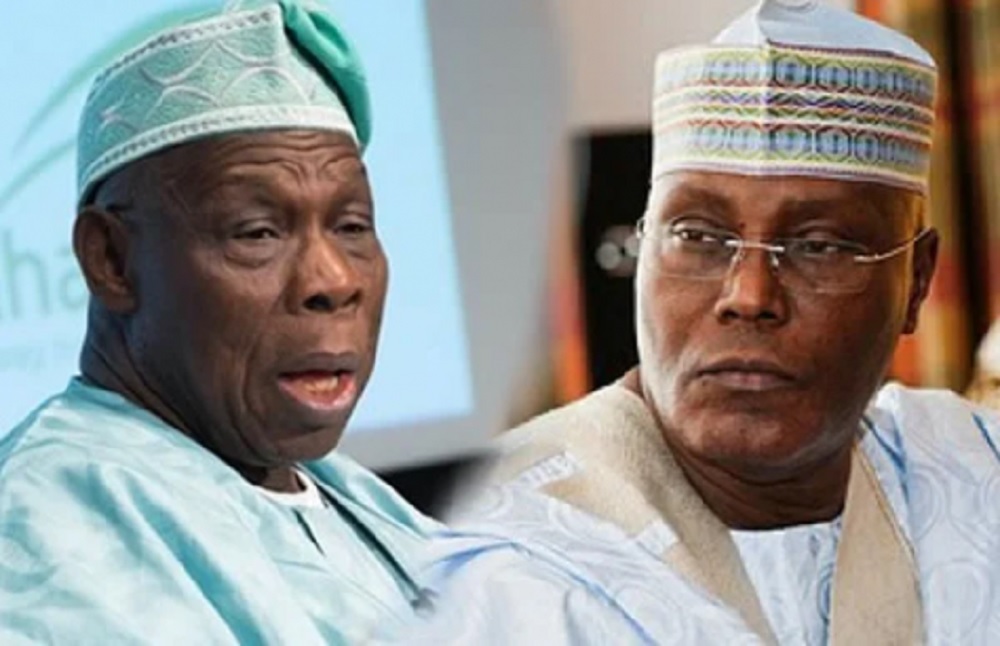
Atiku Abubakar, presidential candidate of the African Democratic Congress (ADC) and former Vice President of Nigeria, on Friday commended recent report by the United States Department of State highlighting concerns over fiscal transparency in Nigeria, with specific reference to the federal government’s failure to disclose revenues and expenditures.

Stating that it vindicated his position for consistently calling out President Bola for its failure to uphold the basic standards of fiscal transparency, accountability, and disclosure required in a modern democracy.

The US report, had stated that: “The government made its enacted budget and end-of-year report widely and easily accessible to the public, including online, but did not publish its executive budget proposal within a reasonable period.

Advertisement

“…Budget documents did not provide a substantially complete picture of the government’s revenues and expenditures, or break down expenditures to support executive offices in the budget.”

Atiku, who said the report aligned with his concerns quoted the part, where it said: “Actual revenues and expenditures did not reasonably correspond to those in the enacted budget.”

The report also carpeted the Office of the Auditor-General, for did not meeting international standards of independence and did not publish substantive reports, adding that the Tinubu-led government did not meet the minimum requirements for fiscal transparency during the period under review.

Citing the failure to provide timely, detailed, and publicly accessible information on government revenues and expenditures, as well as the absence of credible audit trails, the former VP, said the observation was on all fours with his position over the years that Nigerians were being kept in the dark about how public resources are generated and spent.

Advertisement

Maintain that without full disclosure of how public funds were earned and spent, Nigeria could not attract investment, fight corruption, or build public trust, Atiku, added: “Transparency is not a slogan. It is the foundation of good governance.

This report confirms what we have been saying that Nigerians deserve to know where every kobo is coming from and where it is being spent. They are our resources and not the resources of President Bola Tinubu and his family and friends.”

While stressing the importance of fiscal transparency as a key benchmark for investors, donor agencies, and credit rating firms, he argued that since the Nigerian economy also relied heavily on foreign investment and multilateral support to fund infrastructure and social programmes, publishing detailed, timely data on revenue from oil, taxes, and borrowing, and on how that money was spent, remained critical to restoring confidence amid rising debt and inflation.

Advertisement
Continue Reading

News

Osun Guber: Heavy Security Presence at INEC Office Ahead of Saturday’s Poll

Published

on

ADVERTISEMENT
Zoom Ad
ADVERTISEMENT
Zoom Ad


There is a heavy security presence at the Independent National Electoral Commission (INEC) office along the Gbongan-Ibadan Road in Osogbo, Osun State, as final preparations intensify for Saturday’s governorship election.

Our correspondent observed a large number of security personnel, including officers of the Nigeria Police Force, stationed within and around the INEC premises on Friday.

The deployment is part of the security arrangements being put in place ahead of the movement of election personnel and materials to the state’s 30 local government areas.
Election stakeholders, including civil society organisations, journalists and accredited observers, were also seen at the INEC office as preparations for the poll reached a critical stage.

Advertisement

The Resident Electoral Commissioner in the state, Oluwatoyin Babalola, was also said to be holding meetings with National Commissioners and supporting Resident Electoral Commissioners from other states as final arrangements for the election were being concluded.

The governorship election is scheduled to hold across 3,763 polling units in 332 wards spread across the 30 local government areas of the state.
Meanwhile, INEC had on Thursday disclosed that 1,906,390 Permanent Voter Cards (PVCs), representing 81.50 per cent of the 2,339,233 registered voters in the state, had been collected ahead of the election.

INEC’s National Commissioner and Chairman of the Information and Voter Education Committee, Mohammed Haruna, disclosed this in a statement.

According to him, 426,842 PVCs, representing 18.50 per cent of the total registered voters, remained uncollected and had been safely deposited with the Central Bank of Nigeria (CBN), in line with the commission’s established practice.

Advertisement

The commission also disclosed that some registered voters whose PVCs were damaged, defaced or lost had applied for replacement.
It said 6,101 applicants had printed downloadable copies of their replacement PVCs.

The heightened security presence at the INEC office comes amid increased preparations by security agencies and other stakeholders to ensure a peaceful and credible governorship election in the state.

Continue Reading

News

Osun Election: Police Deploy 30 CPs, 15,000 Personnel as DIG Takes Charge of Security

Published

on

ADVERTISEMENT
Zoom Ad
ADVERTISEMENT
Zoom Ad


The Nigeria Police Force has deployed no fewer than 30 Commissioners of Police and more than 15,000 personnel to provide security for Saturday’s governorship election in Osun State.

The Force also disclosed that a Deputy Inspector-General of Police (DIG) would coordinate the overall security operations for the election, while helicopters and drones would be deployed for aerial and area surveillance before, during and immediately after the poll.

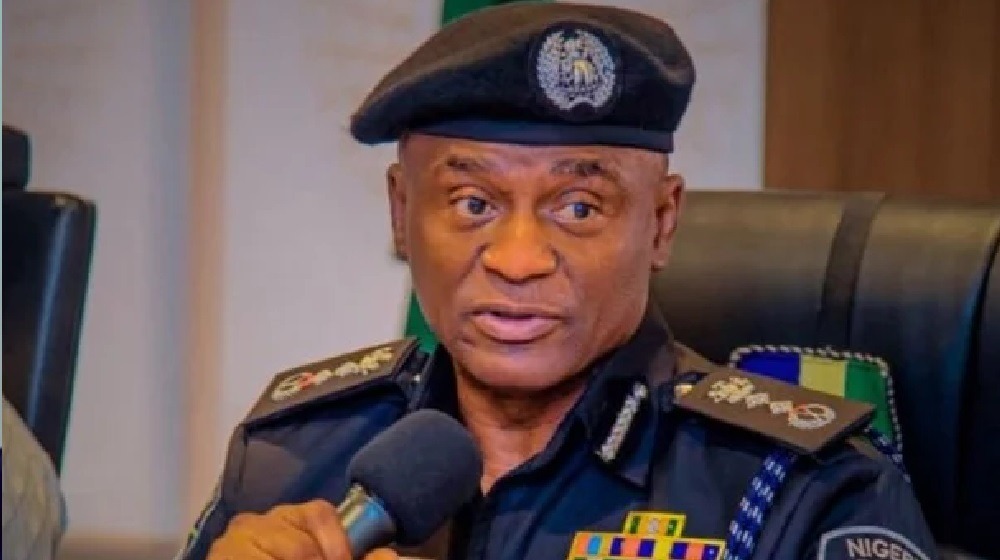
The Force Public Relations Officer, CSP Anietie Iniedu, disclosed this while briefing journalists on Friday in Osogbo, the Osun State capital, on the police preparations for the election.
Iniedu said the police commenced the deployment of personnel and other security resources three weeks before the election, adding that the measures were designed to ensure adequate security across the state’s 30 local government areas.
According to him, more than 15,000 police operatives would be deployed for election duties, while a police helicopter and drone unit had already arrived in Osogbo to support surveillance operations.

Advertisement

He further disclosed that two units of the Police Mobile Force (PMF), each comprising more than 60 personnel, had been deployed to the headquarters of the Independent National Electoral Commission (INEC) in Osogbo.

Similarly, he said each of the 30 local government areas would have a PMF unit to reinforce security during the election.

“We have deployed armed mobile policemen to every local government area in the state. So, we have 30 units across 30 local government areas. A unit is about 60 policemen.

“We also have two units of armed mobile policemen attached to the Independent National Electoral Commission headquarters in Osogbo here. The men who stay at the local government areas are being coordinated by a Commissioner of Police. There is a Commissioner of Police in each Local Government Area.
“We also have a Deputy Commissioner of Police in each Local Government Area, as well as a Mobile Police Commander and a PMF commander with the rank of Assistant Commissioner of Police in each Local Government Area.

Advertisement

“As of Thursday, our helicopters and drone units have arrived in Osogbo, and they will be conducting area surveillance from now, during and immediately after the elections.”

The Force PRO also disclosed that the Army would cordon off border routes leading into Osun State from midnight on Saturday as part of measures to restrict movement during the election.
“We will be locking down the state. We will not be allowing any vehicular movement apart from those on essential duty, security duties and those going to cast their franchise,” he said.

Iniedu urged parents to caution their children and wards against engaging in electoral offences, warning that security agencies would deal with anyone found violating the law.
He specifically identified intimidation, stalking, vote-buying and ballot-box snatching as offences that would attract legal consequences.

He also disclosed that a mobile court would be available to handle cases involving persons arrested for alleged electoral offences.
On firearms recovered from suspected hoodlums in the state, Iniedu said the police were yet to collate the specific details of the weapons but disclosed that about 34 illegal firearms had so far been recovered.

Advertisement

“We don’t have specific details about the guns we have mopped up, but I know that in Osun State, so far, we have mopped up about 34 illegal firearms, and investigations are ongoing,” he said.

Continue Reading

Trending

Copyright © 2024 Naija Blitz News