

News
ECOWAS Parliament Moves to Strengthen MSMEs as Pillars of Regional Trade
- /home/naijuinz/public_html/wp-content/plugins/mvp-social-buttons/mvp-social-buttons.php on line 27
https://naijablitznews.com/wp-content/uploads/2026/07/images-34.jpeg&description=ECOWAS Parliament Moves to Strengthen MSMEs as Pillars of Regional Trade', 'pinterestShare', 'width=750,height=350'); return false;" title="Pin This Post">
- Share
- Tweet /home/naijuinz/public_html/wp-content/plugins/mvp-social-buttons/mvp-social-buttons.php on line 72
https://naijablitznews.com/wp-content/uploads/2026/07/images-34.jpeg&description=ECOWAS Parliament Moves to Strengthen MSMEs as Pillars of Regional Trade', 'pinterestShare', 'width=750,height=350'); return false;" title="Pin This Post">
By Gloria Ikibah
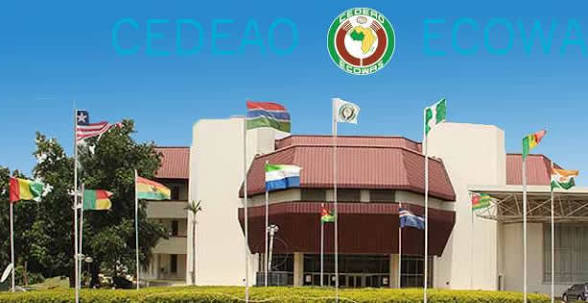
Members of the ECOWAS Parliament will this week begin deliberations on strategies to position Micro, Small and Medium-sized Enterprises (MSMEs) as key drivers of regional value chains, as part of efforts to boost economic integration and expand opportunities for businesses across West Africa.
The discussions will take place during a delocalised meeting of the Parliament’s Joint Committee on Industry and Private Sector; Macroeconomic Policy and Economic Research; Administration, Finance and Budget; and Public Accounts, scheduled to hold in Cotonou, Benin Republic, from 27 to 31 July 2026.

The meeting will focus on the theme, “Empowering MSMEs as Formal Drivers of ECOWAS Regional Value Chains,” reflecting growing recognition of the critical role small businesses play in the region’s economy.
According to a media advisory issued by the Communications Directorate of the ECOWAS Parliament on 21 July 2026, “The ECOWAS Parliament is holding the delocalized Meeting of the Joint Committee on Industry and Private Sector | Macroeconomic Policy and Economic Research | Administration, Finance and Budget | Public Accounts, on the theme ‘Empowering MSMEs as Formal Drivers of ECOWAS Regional Value Chains.’”
The meeting comes at a time when policymakers across West Africa are seeking practical ways to unlock the economic potential of MSMEs, which remain the backbone of the region’s private sector.
A United Nations policy brief on the subject indicates that MSMEs account for more than 90 per cent of all businesses and provide about half of total employment across ECOWAS member states. Despite their importance, many of these enterprises continue to operate outside the formal economy and face significant obstacles, including limited access to finance, weak infrastructure and barriers to cross-border trade.
Lawmakers are expected to examine these challenges and develop recommendations aimed at integrating MSMEs more effectively into regional value chains, improving their competitiveness and enabling them to contribute more meaningfully to sustainable economic growth and regional integration.

News
INEC uploads NDC’s logo, leadership as party wins in court
Independent National Electoral Commission (INEC) has uploaded the new logo of the Nigeria Democratic Congress (NDC) on its official website.
The commission also updated the party’s leadership, placing Cleopas Moses Zuwoghe as the National Chairman of the NDC, while Ikenna Morgan Enekweizu is listed as National Secretary.
This followed an order of the Federal High Court sitting in Abuja, which ordered the electoral body to recognise and use the NDC’s modified digital “two-finger” logo as its official symbol for elections.
The judgment, delivered by Justice J.O. Abdulmalik, followed a suit filed by the NDC after INEC allegedly removed the party’s modified logo from its system and restored an older association logo.
Advertisement
The NDC said its National Executive Committee approved the modified logo at its March 25, 2026, meeting and subsequently forwarded it to INEC.
According to the party, INEC initially uploaded the new logo but later removed it without providing any valid reason and reinstated the old logo.
The party said it gave the commission enough time to resolve the matter administratively before approaching the court.
In the judgment, the court ordered INEC to “forthwith approve” the NDC’s modified logo, including its symbol and colours, for use by the party “for all purposes as a political party,” including all elections conducted by the commission.
The court also granted a perpetual injunction restraining INEC from stopping or interfering with the NDC’s use of the digitally designed two-finger victory sign.
The NDC described the ruling as a victory for the party and thanked the judiciary for its intervention.
The party has consequently directed all its candidates and members to use only the approved logo on campaign materials, including banners, posters and other publicity materials.
It acknowledged that some members and candidates may have already produced campaign materials bearing the old logo, adding that it regretted any inconvenience caused.
The NDC said it would intensify public sensitisation to ensure that its candidates, members and supporters use the approved logo going forward.
“We assure our supporters and candidates that there is nothing to worry about. We are in this together,” the party said.
The upload at the INEC portal included Mr John Odey as National Treasurer, while Mainasara Abubakar Sani is the National Financial Secretary. Similarly, Reuben Egwuaba is listed as the party’s National Legal Adviser.
News
Why More Sex Lowers Risks of Women Having Breast Cancer – Doctor
A submission by Dr. Abasi suggesting that women who have more sex may have a lower risk of breast cancer has drawn attention, but the claim requires careful interpretation.
Speaking on women’s reproductive health, Dr. Abasi argued that sexual activity, particularly when it results in orgasm, could have beneficial effects on a woman’s health. He linked orgasm to the release of oxytocin and suggested that the hormone could potentially reduce the risk of breast cancer.
He also used the discussion to challenge the tendency of society to blame women for infertility, stressing that infertility can involve both male and female factors.
“It’s unfair that our society blames infertility on women,” he said, maintaining that responsibility for infertility should not automatically be placed on women.
However, the suggestion that more sex directly protects women against breast cancer is not established medical fact. While sexual activity and orgasm cause temporary hormonal and physiological changes, there is no established recommendation from major cancer-health authorities that women should have more sex as a breast-cancer prevention strategy.
Breast-cancer risk is influenced by several factors, including age, family history and inherited genetic mutations, reproductive and hormonal factors, alcohol consumption, body weight and physical activity. Some risk factors cannot be changed, while others can be modified through lifestyle choices.
Dr. Abasi also touched on childbearing and reproductive health, suggesting that women who have never had children may face increased risks of some reproductive cancers.
Medical evidence does show that reproductive history can influence breast-cancer risk, but this should not be interpreted to mean that women must have children—or have sex—to protect themselves from cancer.
For women, established preventive measures include maintaining a healthy weight, engaging in regular physical activity, limiting alcohol consumption, avoiding tobacco, knowing one’s family history and following age- and risk-appropriate breast-cancer screening recommendations.
The discussion therefore highlights an important distinction between a biological hypothesis and proven cancer prevention.
While sex and orgasm may have physical and psychological benefits, there is currently insufficient evidence to tell women that having more sex—or reaching orgasm—is a proven way to prevent breast cancer.
News
Tinubu, APC ask court to dismiss Atiku’s suit challenging 2027 presidential candidacy
President Bola Tinubu and the All Progressives Congress (APC) have asked the Federal High Court in Abuja to dismiss a suit filed by the presidential candidate of the Action Democratic Congress (ADC), Atiku Abubakar, challenging Tinubu’s eligibility to contest the 2027 presidential election.
Atiku and the ADC, in suit No. FHC/ABJ/CS/1888/2026, are seeking an order disqualifying Tinubu and the APC from the 2027 poll, alleging that the president submitted a forged National Youth Service Corps (NYSC) discharge certificate to the Independent National Electoral Commission (INEC).
However, in a joint counter-affidavit filed on Sept. 9, Tinubu and the APC denied the allegation, insisting that no forged certificate was submitted to INEC for either the 2023 or 2027 presidential elections.
The APC’s Director of Legal Services, Sanusi Samaila, who deposed to the affidavit, said Tinubu did not submit Form CF001 to INEC as alleged by the plaintiffs and maintained that the NYSC had never denied issuing the president a discharge certificate.
He added that all documents submitted by Tinubu to INEC were authentic and accepted by the electoral commission, which subsequently published his particulars as the APC’s candidate for both the 2023 and 2027 presidential elections.
Samaila further argued that Atiku lacked the legal standing to challenge Tinubu’s nomination because he was neither a member of the APC nor a participant in the party’s presidential primary that produced Tinubu as its candidate.
According to him, the plaintiffs were not challenging any action of INEC or alleging any breach of the Constitution or the Electoral Act, but were merely questioning the APC’s nomination process, an internal party affair.
He said the APC formally submitted the names of its candidates to INEC on June 26, while the commission acknowledged receipt of Tinubu’s profile on July 11.
In a written address supporting the application, APC and Tinubu’s counsel, Chief Akin Olujinmi (SAN), argued that the allegation of forgery, being a criminal offence, must be proved beyond reasonable doubt under the Evidence Act.
Court sends ‘fake agency’ DG’s rights suit for reassignment
He said Atiku and the ADC failed to provide any evidence from the NYSC disclaiming the issuance of the discharge certificate or produce the original document from which the alleged forgery was made.
Olujinmi argued that, under established Supreme Court decisions, a claim of forgery cannot succeed without evidence from the issuing authority and the allegedly forged document.
He also contended that the suit was speculative and based on hypothetical questions rather than established facts, stressing that the plaintiffs had not shown how their legal rights had been infringed.
The senior lawyer further submitted that parts of the suit were statute-barred because any challenge to the submission of Tinubu’s documents ought to have been filed within 14 days of the alleged action.
He argued that the case was incompetent as a pre-election matter under the Constitution and the Electoral Act, adding that only an aspirant who participated in a party’s primary could challenge its nomination process.
Describing the plaintiffs as lacking the required locus standi, Olujinmi urged the court to uphold the preliminary objection and dismiss the suit in its entirety.
Justice Inyang Ekwo has fixed September 28 for hearing of the matter.
-
News19 hours agoOil Prices Soar Above $100 as Middle East Tensions Raise Fresh Global Supply Fears
-
News19 hours agoArewa Group Rejects Viral ‘Anti-North’ Akpabio Quote, Commends Senate President for Promoting National Unity
-
News19 hours ago‘ War Will End Immediately After Election’ — Trump Speaks On Iran Crisis
-
News18 hours agoNCC Moves to Block Unapproved Phones From Nigerian Networks — What Users Must Know
-
Economy18 hours agoSee Black Market Dollar to Naira exchange rate today 10th September 2026
-
Economy2 hours agoCheck Out Full List Of Approved Channels To Buy Dangote Refinery IPO
-
News14 hours ago2023 Poll: “I Knew We Would Lose” — Okowa Reveals What He Told Christian Leaders Before Election
-
News18 hours agoCourt Grants 67-Year-Old UK-Based Nigerian Woman N150m Bail Over Alleged 13kg Cocaine Shipment