By Gloria Ikibah


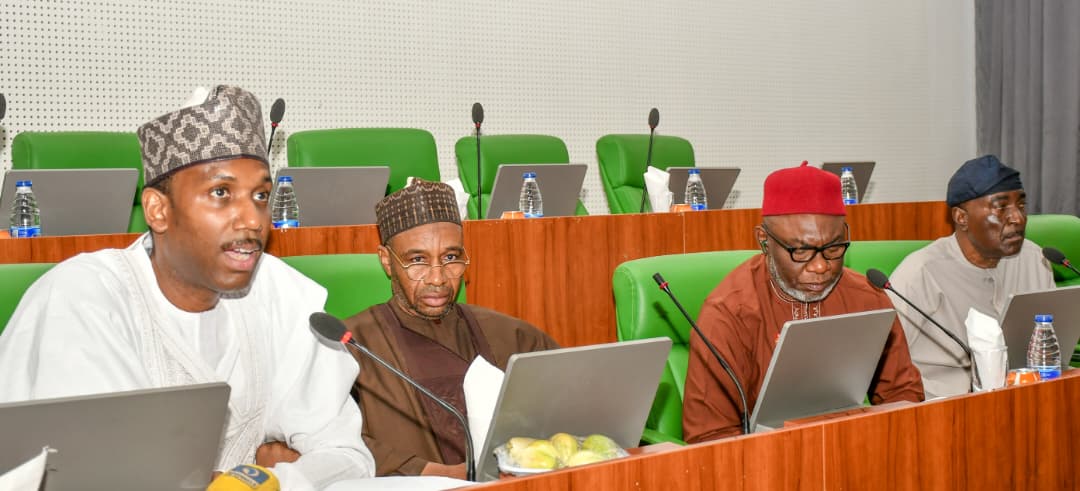
The House of Representatives Ad-Hoc Committee investigating the alleged operation of the Presidential Economic Advisory Council (PEAC) and the Presidential Foreign Investment Promotion Council (PFIPC) also heard fresh testimony from the Accountant-General of the Federation, Shamseldeen Ogunjimi, who explained how a letter purportedly issued by the State House enabled the controversial council to obtain official administrative recognition.
Presenting his report, Ogunjimi said the Office of the Accountant-General first interacted with the council in November 2024 after receiving a letter dated November 7, 2024, requesting the creation of an administrative code for budgeting, accounting and reporting purposes. 
He explained that the office followed established procedures by creating the administrative code and notifying the State House while copying the Office of the Auditor-General.
Subsequently, the office received additional requests relating to self-accounting status, Treasury Single Account (TSA), domiciliary accounts, staff deployment and funding.
Despite processing some administrative requests, Ogunjimi stressed that no public funds were released to the council.
“It is important to note that no funds were released under salaries, overhead, capital, or any form of intervention or special allocation to the council,” he told lawmakers.
He disclosed that although the council requested an establishment grant of N27.4 billion, the request was never approved because there was no budgetary provision for it.
He also explained that while the Central Bank of Nigeria opened two domiciliary accounts for the council, they never became operational because regulatory conditions were not met.
However, the most significant revelation came when Ogunjimi informed the committee that the original correspondence requesting the administrative code was later discovered not to have originated from the State House.
“The letter that was received by the Treasury. was respectfully addressed as coming from the State House.
“That letter was never issued by the State House”, he said.
The disclosure prompted lawmakers to describe the correspondence as a hijacked State House letter allegedly used to mislead government agencies into recognising a non-existent institution.
The Accountant-General further explained that two Treasury officers originally deployed to the Office of the Chief Economic Adviser in 2010 and 2013 remained there after the office was allegedly taken over by the new council because no formal notification was sent to his office.
“It was never assumed or written to us that those two officers were being taken over.
“The staff also never reported to the office to say that another council had taken over the office and the name had changed.
“As far as I was concerned, we were dealing with a new agency, not the Office of the Chief Economic Adviser,” he said.
He added that when the council later requested five additional officers, only three were approved because officials considered the organisation too small to justify the number requested.
“It was when all this matter came to light that I got to know that two of our staff were actually working or being absorbed by the agency.
“We never knew. We believed, based on the records available to us, that those officers were still with the Office of the Chief Economic Adviser,” he said.
The House committee is expected to continue its investigation on Wednesday when Adeyemi is expected to appear before lawmakers to respond to allegations surrounding the operation of the purported presidential council and the alleged forgery of official government documents.