

Connect with us

News

Reps Broker Truce Between Importers, Refiners to Drive Downstream Oil Sector Reforms

Published

on

ADVERTISEMENT
Zoom Ad
ADVERTISEMENT
Zoom Ad

By Gloria Ikibah

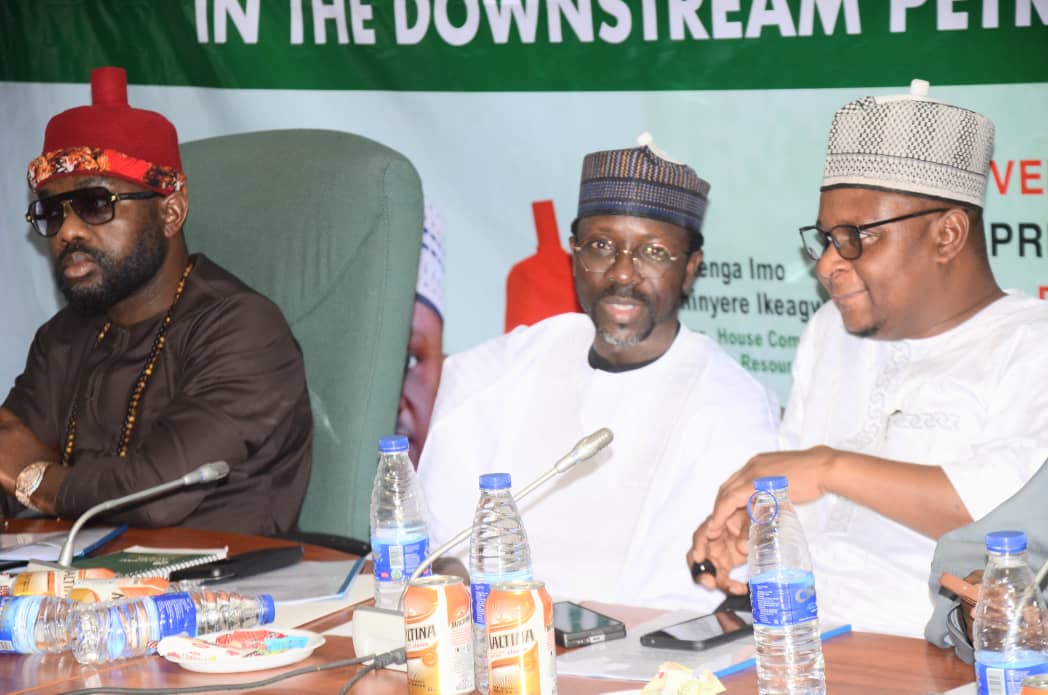
The House of Representatives has stepped in to ease rising tensions between petroleum importers and local refiners, opening discussions with key operators in the downstream oil and gas industry as part of efforts to build consensus on reforms aimed at guaranteeing energy security, stable fuel supply and long-term sector growth.

The move came during an interactive session organised on Tuesday by the House Committee on Petroleum Resources (Downstream), where executives of the Depot and Petroleum Products Marketers Association of Nigeria (DAPPMAN), Independent Petroleum Marketers Association of Nigeria (IPMAN) and Major Energies Marketers Association of Nigeria (MEMAN) met with lawmakers to examine the future of the industry.

Deliberations focused on finding the right balance between encouraging local refining and maintaining adequate fuel supplies across the country.

Advertisement

Chairman of the committee, Rep. Ikenga Ugochinyere, said the engagement reflected the House’s commitment to carrying stakeholders along in shaping reforms for the sector, stressing that meaningful progress could only be achieved through collaboration.

“We are here not to interrogate, not to accuse and not to put anyone on trial. We are here to listen. We are here to talk to one another as partners who share one common destiny, a Nigeria where energy is affordable, supply is stable and no citizen suffers because petroleum products are out of reach,” he said.

He assured operators that the National Assembly will not introduce policies affecting the downstream sector without extensive consultations with industry players whose investments sustain the country’s fuel distribution network.

According to him, Nigeria’s energy landscape is changing rapidly with increasing domestic refining capacity, shifting import patterns and renewed efforts to strengthen pipeline security and improve distribution.

Advertisement

“The marketers, depot owners, independent operators and major marketers remain the bridge between government policy and the pump. When that bridge is strong, Nigerians enjoy stable prices and reliable supply. When it is weak, the entire nation feels the consequences,” he stated.

Ugochinyere pledged that the committee will carefully study submissions from stakeholders before proposing legislative measures aimed at encouraging investment, strengthening local refining, promoting healthy competition and ensuring affordable and uninterrupted fuel supply.

He also assured industry operators that the committee will continue to embrace dialogue rather than confrontation in carrying out its oversight responsibilities.

Presenting DAPPMAN’s position, Executive Secretary of the association, Olufemi Adewole, called on the Nigerian Midstream and Downstream Petroleum Regulatory Authority (NMDPRA) to develop practical operating-stock guidelines in line with Section 182 of the Petroleum Industry Act.

Advertisement

He said the framework should establish clear standards for stock measurement, reporting, quality assurance and accessibility, while emphasising that strategic reserves should be assessed not only by product volume but also by the industry’s capacity to finance, transport and deploy products quickly during emergencies.

DAPPMAN also proposed the creation of a joint market-monitoring framework involving the NMDPRA and Federal Competition and Consumer Protection Commission to track product availability, monitor market concentration, ensure fair treatment of operators and identify early signs of supply disruptions.

The association further urged government to prioritise investment in roads, rail infrastructure, inland waterways, pipelines and petroleum depots to reduce reliance on long-distance trucking from coastal supply centres.

It also advocated the establishment of a permanent government-industry consultative platform bringing together regulators, refiners, marketers, NNPC Limited, transport agencies and security institutions to periodically review supply conditions, infrastructure gaps and emerging risks.

Advertisement

In its presentation, IPMAN described the downstream petroleum industry as one of Nigeria’s most strategic economic sectors, noting that it plays a critical role in supporting households, transportation, agriculture, healthcare, industry and national security.

The association observed that the implementation of the Petroleum Industry Act, fuel price deregulation, rehabilitation of state-owned refineries and the emergence of large private refineries have positioned Nigeria to become a leading refining and petroleum distribution hub on the African continent.

However, it warned that several obstacles continue to slow the industry’s progress, including high financing costs, multiple taxation, exchange rate volatility, inadequate storage and transportation infrastructure, pipeline vandalism, limited access to refinery products by independent marketers, delayed payment of bridging and NTA claims, and insufficient engagement with stakeholders.

IPMAN therefore urged the committee to support reforms that would improve logistics, strengthen competition, lower distribution costs, attract investment and ensure the sustainable availability of petroleum products nationwide.

Advertisement

Speaking on behalf of MEMAN, Executive Secretary Clement Isong acknowledged that Nigeria now has the capacity to refine petroleum products locally, satisfy domestic demand and export refined products.

He, however, cautioned against placing blanket restrictions on fuel imports, arguing that government should retain the flexibility to approve imports whenever necessary to protect national energy security.

According to him, strategic imports remain essential during supply shortages and unexpected market disruptions, helping to shield consumers from sharp price increases and fuel scarcity.

Isong also recommended that Nigeria establish a strategic petroleum reserve capable of sustaining at least 60 days of national consumption to cushion the country against global supply shocks and price volatility.

Advertisement

He cited the Liquefied Petroleum Gas market as an example where increased imports successfully bridged supply gaps and stabilised prices, demonstrating the importance of timely regulatory intervention.

While reaffirming MEMAN’s support for policies aimed at boosting domestic refining, he maintained that decisions on petroleum imports should remain the responsibility of the Federal Government and the NMDPRA to ensure adequate supply, preserve healthy competition and protect consumers.

Although stakeholders expressed differing views on the future of petroleum imports and domestic refining, they agreed on the need for consistent government policies, improved infrastructure, stronger regulatory coordination and sustained engagement to build a more resilient and competitive downstream petroleum industry capable of meeting Nigeria’s long-term energy needs.
Advertisement
Continue Reading
Advertisement

News

Wike fires Amaechi: You failed as Speaker, Governor and Minister For 24 Years(Photos)

Published

on

ADVERTISEMENT
Zoom Ad
ADVERTISEMENT
Zoom Ad

… ​Reaffirms loyalty to President Bola Tinubu, vows to continue building sustainable leadership
​
Former Governor of Rivers State and Minister of the Federal Capital Territory (FCT), Chief Nyesom Wike, has challenged the people of Evo Kingdom to point to any tangible development or political empowerment attracted to their land by his predecessor, Chibuike Rotimi Amaechi, despite holding top political offices as Speaker, Governor, and Minister for 24 years.

​Speaking during an interactive session with leaders and stakeholders of Evo Kingdom in Obio-Akpor Local Government Area, Wike declared that unlike past leaders who used their elevation to pull down others and monopolize power, his political philosophy centers on human capacity development, divine gratitude, and uplifting his people.

​Wike questioned the moral right of those who spent decades in high offices without leaving behind a legacy of leadership or infrastructure in the area, warning against selfish politics that crumbles once the leader passes on.

​”Because how will I answer before God if these people could take that kind of risk, and opportunity came up for you to help, for you to uplift them? But because of your greed, because of your selfishness, you don’t want anybody to reach the level you are,” Wike said.

He said; “You don’t want anybody in Obio-Akpor to be governor again because you have become governor. God will not be happy with me”.

​Taking direct aim at Amaechi’s 24-year tenure across various arms of government, Wike challenged the kingdom to present evidence of what was attracted to the land under his rival’s reign.

​”Someone was Speaker of the House of Assembly for eight years, Governor for eight years, and Minister for eight years—that is 24 years in top leadership positions! What can anybody point to that he attracted to Evo Kingdom or Rivers State in all those 24 years? Nothing! Not one single thing!

​”I was a Minister of State for Education, and as I sit here, I can count the projects I brought to Rivers State and my people. But somebody was Speaker, Governor, and headed a very lucrative ministry as a full Minister for eight years, yet brought nothing back home! How can someone who spent 24 years in power without empowering his people or raising new leaders now turn around to tell you he loves you?” Wike queried.

​Highlighting his political trajectory and contentment with his achievements under the administration of President Bola Ahmed Tinubu, the FCT Minister stressed that he has no further personal political ambitions other than serving as a vessel for his people.

​”After all, what do I want that God has not given to me? Nothing! Nothing! Nothing! The only thing I ask from God today is to continue to give me long life,” he said.

Advertisement

“I can’t be a governor again. I’ve been a minister two times. I cannot be chairman of council again. So I am happy. I don’t have anything to lose”.

​He continued: “What leadership, as you are leaving, what’s the leadership you have kept behind to continue with where you have stopped? Because our problem here is that you just want only yourself. When you die, everything crumbles. That is not our own case.”

​Addressing political uncertainties and betrayal, the Minister reiterated his firm trust in God rather than human promises.

​”As a politician, I know that the only person who will not disappoint is God,” Wike declared.

Advertisement

“So, don’t ever believe that a human being will not disappoint you. No matter the love you have, do the best you can do. If the person disappoints you, don’t kill yourself. God will right the wrong”, he said.

​Wike also recounted how his administration restructured the chieftaincy institution to give Evo Kingdom adequate representation in the Rivers State Council of Traditional Rulers, dismissing claims that traditional politics or native charms could intimidate him.

Political leaders and traditional rulers like Eze Temple Ejekwu
and Elder Peter Chinwo, President of Evo Assembly assured the FCT Minister of victory for the President and other candidates endorsed by the Rainbow Coalition.
​

Advertisement
Continue Reading

News

Nigeria’s Ambassador to Hungary, Abass Ogwime, Selected to Commission Hungarian-African House in Budapest

Published

on

ADVERTISEMENT
Zoom Ad
ADVERTISEMENT
Zoom Ad

Nigeria’s Ambassador to Hungary, Abass Braimah Ogwime, has been selected among African ambassadors accredited to Hungary to officially commission the newly established Hungarian-African House in Budapest.

Ogwime, who also serves as Nigeria’s ambassador to Serbia, Croatia, Bosnia and Herzegovina, and Slovenia, was the guest speaker at the inauguration ceremony held in Budapest on October 2, 2026.

The event attracted members of the diplomatic community, Hungarian government representatives, African heads of mission, business executives, investors, members of the African diaspora and other stakeholders seeking to strengthen economic, cultural and diplomatic relations between Hungary and African countries.

The Hungarian-African House, known locally as Magyar-Afrika Ház, is an initiative of the Foundation for Africa. The facility is designed to serve as a permanent platform for dialogue, business development, cultural exchange and cooperation between Hungary and African nations.

Advertisement

The initiative is expected to provide a meeting point for Hungarian and African businesses, investors, academic institutions and government representatives to explore investment opportunities, establish strategic partnerships and develop practical areas of collaboration.

Ogwime’s selection as one of the African ambassadors chosen for the commissioning underscores Nigeria’s participation in diplomatic engagements aimed at expanding cooperation between African countries and Hungary.

The Nigerian Embassy in Budapest reaffirmed its commitment to strengthening diplomatic ties, promoting economic partnerships and supporting initiatives that encourage collaboration between Nigerian, African and Hungarian institutions and communities.

The establishment of the Hungarian-African House comes amid broader efforts to deepen Africa-Europe engagement through trade, investment, cultural diplomacy and institutional partnerships.

Advertisement

The new facility is expected to provide a dedicated space for advancing these objectives and fostering long-term relationships between Hungary and African countries.

Continue Reading

News

‘Tinubu Must Go’: Yobe Youths Protest Economic Hardship, Insecurity

Published

on

ADVERTISEMENT
Zoom Ad
ADVERTISEMENT
Zoom Ad

Hundreds of youths on Thursday staged a peaceful protest in Potiskum Local Government Area of Yobe State, demanding an end to President Bola Tinubu’s administration over worsening economic hardship, insecurity and unemployment.

The demonstration, tagged “Tinubu Must Go”, coincided with Nigeria’s 66th Independence Anniversary on October 1.

The protesters marched through the Tsohowar Kasuwa area of Potiskum, carrying placards and flags of the African Democratic Congress (ADC), while expressing dissatisfaction with the state of the country.

They said President Tinubu’s Independence Day broadcast failed to address their concerns, particularly the rising cost of living, poverty, unemployment, insecurity and what they described as poor governance since the administration assumed office in 2023.

Advertisement

Speaking to journalists on condition of anonymity, one of the protesters said the demonstration was an exercise of their fundamental rights and a call for urgent action to address the country’s challenges.

“We came out today to express our fundamental rights, freedom of speech. We are suffering from this government, people are dying due to insecurity, poverty and unemployment in the land,” the protester said.

Another demonstrator, who identified with the opposition, expressed concern over the country’s economic situation and the state of the education sector.

He said the youths were dissatisfied with the government’s handling of issues affecting ordinary Nigerians.

Advertisement

Similarly, a protester identified as Malam Gambo said the demonstration was organised to draw attention to hunger, insecurity and what the participants described as bad governance.

Eyewitnesses reported that the protest remained peaceful and orderly, with young men and women making up the bulk of the demonstrators.

Some participants were seen carrying ADC flags as they marched through parts of Potiskum to express their grievances against the Tinubu administration.

Advertisement
Continue Reading

Trending

Copyright © 2024 Naija Blitz News