

Connect with us

News

Reps Weigh Funding Reform for South-South Commission as Oil Regulators, Industry Raise Fresh Concerns

Published

on

ADVERTISEMENT
Zoom Ad
ADVERTISEMENT
Zoom Ad

By Gloria Ikibah

The House of Representatives has intensified consultations on a proposed amendment to the South-South Development Commission (Establishment) Act, 2025, seeking stakeholders’ input on plans to strengthen the Commission’s funding base while balancing the interests of government, host communities and the petroleum industry.

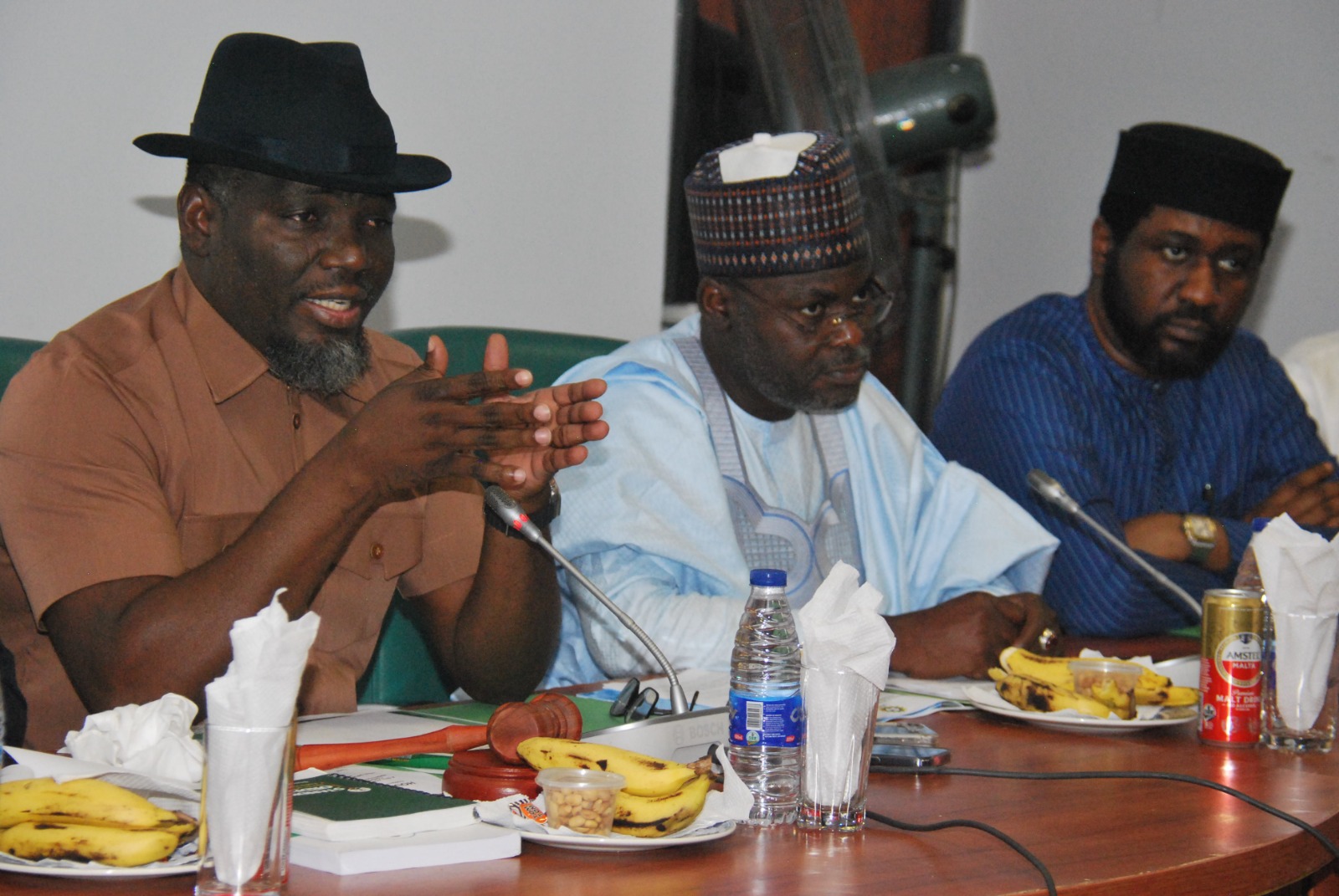
At the resumed public hearing on Wednesday, the House Committee on the South-South Development Commission engaged government agencies, petroleum regulators, oil producers and other stakeholders on the proposed legislation, which seeks to expand the Commission’s funding sources to accelerate development across the oil-rich region.

Committee Chairman, Rep. Julius Pondi, explained that the hearing was reconvened after several critical stakeholders were unable to attend the earlier session held on July 8 because they were participating in the Nigerian Oil and Gas (NOG) Conference.

Advertisement

According to him, “the committee considered it necessary to provide all relevant stakeholders with an opportunity to contribute to a bill with far-reaching implications for the region and the petroleum sector”.

Pondi reaffirmed the commitment of the House to an “open and participatory legislative process”, noting that public hearings remain essential in ensuring that laws reflect the views of government institutions, industry operators, professional bodies, civil society organisations and host communities.

He said the amendment was designed to strengthen the Commission’s financial capacity to fulfil its mandate of promoting sustainable development in the South-South.

According to him, despite serving as the nation’s economic backbone through petroleum production, maritime commerce and industrial activities, the region continues to grapple with inadequate infrastructure, environmental degradation and persistent socio-economic challenges.

Advertisement

“We are particularly interested in receiving constructive contributions on the proposed funding framework, its sustainability, its implications for government and industry, as well as alternative proposals that can further strengthen the objectives of the legislation,” Pondi said.

The Nigerian Upstream Petroleum Regulatory Commission (NUPRC) expressed support for a transparent and sustainable funding framework for the Commission but raised concerns over the proposal requiring oil and gas companies operating in the South-South to contribute three per cent of their total annual budgets.

Presenting the Commission’s position, Chief Executive Officer, Mrs Oritsemeyiwa Eyesan, represented by the Head of Regulations and Statutory Compliance, Kingsley Chikwendu, argued that the phrase “total annual budget” remained undefined in the bill, creating uncertainty over how the levy would be assessed and implemented.

He warned that the proposal, if retained in its current form, could effectively introduce another expenditure-based levy payable regardless of profitability, production levels or the financial position of affected companies.

Advertisement

Chikwendu noted that upstream operators already shoulder multiple statutory obligations, including royalties, petroleum taxes, contributions to the Niger Delta Development Commission (NDDC), Host Community Development Trust Funds under the Petroleum Industry Act (PIA), the Nigerian Content Development Fund, environmental remediation commitments and abandonment funds.

He urged lawmakers to carefully evaluate the likely impact of the proposed levy on investment decisions, production costs and the competitiveness of Nigeria’s upstream petroleum sector before reaching a final decision.

The Nigerian Midstream and Downstream Petroleum Regulatory Authority (NMDPRA) also advised the committee to ensure that any additional funding mechanism aligns with the fiscal philosophy and investment objectives of the Petroleum Industry Act, 2021.

Representing the Authority, Senior Manager Ahmed Laido said any new financial obligation should strengthen investor confidence, provide regulatory certainty, encourage long-term investment and support the Federal Government’s ease-of-doing-business reforms.

Advertisement

He stressed that lawmakers should consider the wider economic implications of the proposal to ensure the Commission’s funding objectives do not undermine the competitiveness and sustainability of the petroleum industry.

The Oil Producers Trade Section (OPTS) of the Lagos Chamber of Commerce and Industry similarly cautioned against introducing another statutory levy on operators.

Chairman of OPTS, Bala Wudiri said oil and gas companies were already making  substantial statutory contributions under existing laws, including payments to the NDDC and the Host Community Development Trust Fund.

He cautioned that imposing an additional three per cent contribution could increase the financial burden on operators, duplicate existing obligations and reduce Nigeria’s attractiveness as an investment destination.

Advertisement

Wudiri urged the committee to provide greater clarity on the proposed funding mechanism and adopt a balanced approach that would strengthen the South-South Development Commission without discouraging investment or creating overlapping statutory obligations.

The hearing highlighted broad support for improving development across the South-South, even as stakeholders differed on the most appropriate funding model.

Participants agreed that the Commission requires adequate resources to deliver critical infrastructure and development projects but urged lawmakers to ensure that any new funding framework preserves a stable, competitive and investment-friendly environment for Nigeria’s petroleum industry.

The committee is expected to review all memoranda and submissions before presenting its recommendations to the House of Representatives for further legislative consideration.
Advertisement
Continue Reading
Advertisement

News

FG Sets October 1 Launch for Free Educational Data for 5 Million Students

Published

on

ADVERTISEMENT
Zoom Ad
ADVERTISEMENT
Zoom Ad

The Federal Government has announced October 1, 2026, as the take-off date for its free educational data initiative, with about five million Nigerian students expected to receive daily data access to approved learning platforms.

The Minister of Education, Dr Tunji Alausa, disclosed this on Thursday in Abuja at the official launch of the Zero-Rated Access to Educational Platforms and Content initiative, organised by the Nigerian Communications Commission (NCC).

Under the programme, eligible students will receive 100 megabytes of free data every day to access approved educational websites, platforms and digital learning resources without paying for the data used.

“Let me let out the secret. This will be made available to Nigerian students from October 1, 2026,” Alausa said.

Advertisement

The minister described the initiative as a major step towards removing one of the biggest barriers to digital education, particularly for students from low-income families and communities with limited access to learning resources.

According to him, the programme is designed to move digital education from policy discussions to practical implementation by ensuring that students can access knowledge regardless of their location or financial circumstances.

Alausa said digital transformation remained a major pillar of the Federal Ministry of Education’s Nigeria Education Sector Renewal Initiative, stressing that Nigeria could not build a modern education system with outdated tools.

He disclosed that more than 240,000 schools had been geomapped and geolocated, while the digitised Nigeria Education Management Information System was providing government with data on enrolment, teachers, classrooms, laboratories, libraries and internet connectivity.

Advertisement

The minister also highlighted the planned Learner Identification Number (LIN), which will give every Nigerian learner a unique education identity and allow the government to track their educational journey from primary school through tertiary education.

However, he noted that such digital reforms would have limited impact if students could not afford the internet data required to use online educational resources.

“By enabling learners to access approved educational platforms and content without bearing the cost of data, we are removing one of the most significant barriers to digital learning in Nigeria,” he said.

The initiative will initially target senior secondary and tertiary students, with plans to expand the scheme to other categories of learners.

Advertisement

Alausa stressed that the zero-rating would apply only to credible, secure educational platforms and content aligned with Nigeria’s national curriculum.

He also urged stakeholders to assess the programme based on its impact on learning rather than simply measuring the amount of data consumed.

“We must track utilisation. We must understand who is accessing these platforms and who is not, and we must measure the quality of engagement,” he said.

The minister said the scale of the intervention would be significant, noting that 100MB daily for five million students would translate to approximately 15 billion megabytes of data every month.

Advertisement

He estimated the annual value of the data provided to students at about ₦180 billion.

Alausa called on development partners and other stakeholders to view the initiative as a major additional investment in Nigeria’s education sector.

He said the ultimate objective was to ensure that neither poverty nor geographical location determined a child’s access to quality education.

“Let us build a Nigeria where geography does not determine educational opportunity. Let us build a Nigeria where poverty does not prevent a child from accessing knowledge,” he said.

Advertisement

NCC: Initiative Goes Beyond Internet Access

The Executive Vice Chairman and Chief Executive Officer of the NCC, Dr Aminu Maida, said the programme was not simply about providing internet connectivity but about using connectivity to expand access to knowledge and create oppo

Continue Reading

News

Nigeria-India Renew Push to Restore Bilateral Trade to $27bn

Published

on

ADVERTISEMENT
Zoom Ad
ADVERTISEMENT
Zoom Ad

By Gloria Ikibah

The Nigerian High Commission in India is set to strengthen collaboration with key government agencies as part of efforts to improve services to Nigerians in the country and revive trade and investment between Nigeria and India.

Nigeria’s High Commissioner to India, Ambassador Saidu Dahiru Muhammad, said the mission will deepen engagement with the Nigerians in Diaspora Commission (NiDCOM), Economic and Financial Crimes Commission (EFCC), Nigerian Investment Promotion Commission (NIPC) and other relevant agencies.

Muhammad, who disclosed this in New Delhi, said closer cooperation will enhance information sharing, investment promotion and diaspora engagement.

Advertisement

He said: “We intend to work closely with agencies such as NiDCOM, the EFCC, NIPC and other relevant institutions to improve information sharing and service delivery”.

The envoy said trade and investment promotion remained a major priority for the mission, expressing optimism that bilateral trade would recover from the decline recorded in recent years.

Total trade between Nigeria and India stood at about $14.95 billion in 2024-25, down from approximately $27 billion in 2022-23.

Muhammad attributed the decline to several factors, including the absence of a substantive Nigerian head of mission in India for a period, global economic uncertainties and geopolitical tensions.

Advertisement

He, however, said commercial activities were beginning to recover following the appointment of a substantive High Commissioner.

“Trade has started picking up again. We are seeing figures between $8.7 billion and $8.9 billion, and we are optimistic that we can return to previous levels by the end of 2027,” he said.

Muhammad urged Nigerian investors attending events around the BRICS Summit to take advantage of opportunities in India’s expanding technology ecosystem.

He identified agri-tech, health-tech, pharmaceutical technology and mining technology as areas where Nigerian businesses could benefit from Indian expertise.

Advertisement

The envoy also highlighted renewable energy, manufacturing, healthcare, pharmaceuticals, the circular economy and the creative industry as sectors with considerable potential for stronger bilateral partnerships.

“There are enormous opportunities for Nigeria to leverage India’s technological expertise and manufacturing capacity for our economic development and industrial growth,” Muhammad said.

He encouraged Nigerian investors to partner with leading Indian healthcare institutions to establish medical facilities in Nigeria.

According to him, such investments can reduce the number of Nigerians travelling abroad for medical treatment while improving access to quality healthcare in Nigeria and other parts of West Africa.

Advertisement

Muhammad also identified the creative industry as another area capable of attracting greater Indian investment and creating new avenues for cooperation between both countries.

Beyond economic relations, the High Commissioner said the mission was intensifying efforts to educate Nigerians living in India on the importance of complying with local laws and immigration regulations.

“Every time they have access to us, we hammer on the need to abide by the rules.

“Compliance with the rules will help them avoid legal and security challenges,” he said.

Advertisement

He said the mission was also encouraging Nigerians who had experienced difficulties in India to share their experiences with prospective travellers and students, in order to help others avoid similar problems.

As part of its outreach programme, Muhammad said the High Commission was upgrading its website and social media platforms, including LinkedIn, Instagram, Facebook and X, to provide Nigerians with timely information and guidance.

He said the revamped website will provide practical information for Nigerians travelling to India for education, business and medical purposes, including guidance on local laws, cultural expectations and other important considerations.

The High Commissioner also disclosed plans to engage universities across India to improve communication with Nigerian students from the beginning of their academic programmes.

Advertisement

“We want to engage with students from the point of matriculation to graduation, stressing the importance of complying with visa conditions and remaining focused on their studies,” he added.

Muhammad said the mission was compiling a database of universities attended by Nigerians and will use the information to guide prospective students towards legitimate institutions.

He further highlighted increased cooperation between the Nigerian and Indian diplomatic missions on issues concerning Nigerians travelling to India.

“We are using that synergy to let Nigerians know when they come. They think we don’t know, but we already know they are here,” he noted.

Advertisement

According to the envoy, the collaboration is enabling both countries to exchange information on Nigerians travelling to India for education, healthcare and business, while also contributing to stronger diplomatic and bilateral relations.

Continue Reading

News

Osun East constituents begin recall bid against Senator Fadahunsi over alleged incitement

Published

on

ADVERTISEMENT
Zoom Ad
ADVERTISEMENT
Zoom Ad

Youths and concerned residents of Osun East Senatorial District have commenced moves to recall Senator Francis Adenigba Fadahunsi from the National Assembly over an alleged inciting statement linked to the 2026 Osun State governorship election.

The development followed a peaceful protest organised by the Coalition of Osun East Youths and Concerned Citizens in Ilesa, Osun State, on Wednesday.

The protesters, who carried placards with various inscriptions, assembled at the Enuwa Roundabout and marched through Isokun and the Ilesa Market Square before ending the procession at the entrance of the Owa-Obokun Palace.

The group accused Fadahunsi of making an alleged inflammatory statement during the election period and demanded accountability over what they described as conduct capable of heightening political tension in the district.

Advertisement

Beyond the allegation, the protesters also criticised the senator’s performance in office, claiming that he had failed to adequately represent the interests and aspirations of constituents in Osun East.

However, Fadahunsi has denied making the statement attributed to him in a viral video.

The senator previously alleged that the video, which circulated during a protest by members of the All Progressives Congress over alleged attacks on party supporters, had been manipulated and deliberately circulated to damage his reputation.

Speaking during Wednesday’s protest, one of the organisers, Olorunfemi Olatunji, said the demonstration marked the beginning of efforts to remove Fadahunsi through the constitutional recall process.

Advertisement

According to him, the group has already submitted a petition and is preparing to take the necessary legal and constitutional steps, including travelling to Abuja to advance the process.

Olatunji said the senator’s alleged poor representation, coupled with his conduct during the 2026 governorship election campaign, had deepened dissatisfaction among constituents.

He said the protesters would continue with the recall process and pursue all required procedures under the law.

The Chairman of the National Youth Council of Nigeria in Osun State, Akinbode Olakolupo, also expressed support for calls for action against the senator.

Advertisement

Olakolupo urged relevant authorities to investigate allegations surrounding incitement, threats, killings and other acts of political violence reportedly associated with the election period.

He further called on security agencies to intensify efforts to recover illegal firearms allegedly being used by political thugs and criminals across the state.

The recall bid is expected to face the constitutional procedures governing the removal of elected lawmakers, including the collection and verification of signatures from registered voters in the affected senatorial district.

Advertisement
Continue Reading

Trending

Copyright © 2024 Naija Blitz News