Spanish authorities said at least 72 people have died following the mass influx of migrants into the North African enclave of Ceuta, as Madrid stepped up border security and European nations called for stronger protection of the bloc’s external frontiers.


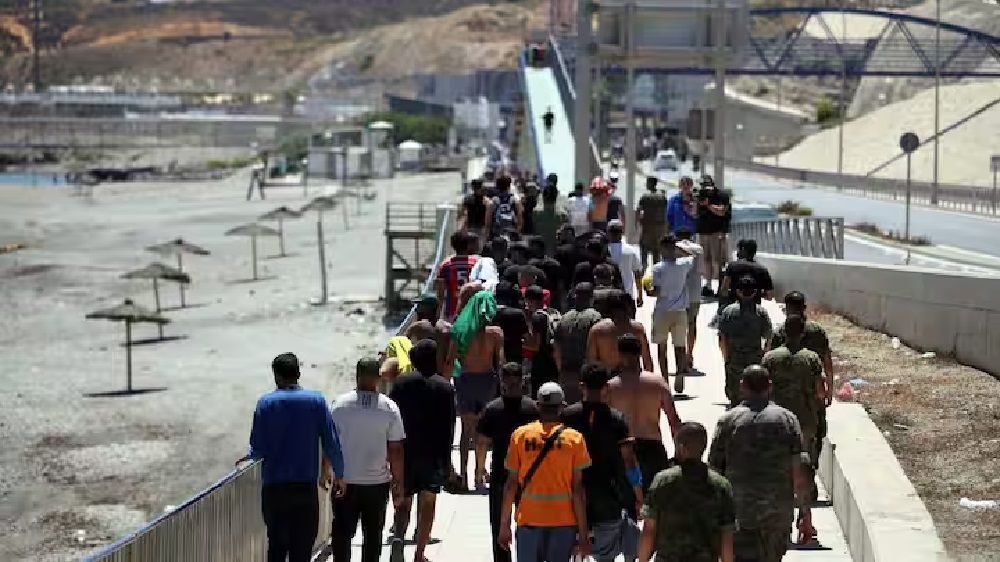
The death toll from the mass migrant influx into Spain’s North African enclave of Ceuta has risen to 72, local authorities said on Sunday, days after tens of thousands of people crossed from Morocco in the territory’s largest-ever migrant surge.
Most of the estimated 60,000 migrants, many of whom swam around the border post or crossed by sea, have since returned to Morocco following the unprecedented influx. 
Miguel Angel Perez Triano, the Spanish government’s delegate to Ceuta, said the latest confirmed death toll stood at 72, up from the previously reported 67.
He added that more than 1,000 people had received medical treatment since Thursday. While the situation in Ceuta had improved significantly, officials said efforts to restore normality were still ongoing.
Authorities said many migrants drowned while attempting to swim across the sea, while others were crushed trying to climb the breakwater and border fence. Officials said economic hardship and social media rumours encouraging people to make the crossing had contributed to the mass movement.
Expressing grief over the tragedy, Karima Abenaz, a French national with family in Morocco, said it was heartbreaking to see young people and even infants dying during the dangerous journey.
Meanwhile, Ceuta regional leader Juan Jesus Vivas told El Pais that the city’s morgue had received 88 bodies, a figure that also included people who died in smaller migration attempts over the previous two weeks. He added that Moroccan authorities were also recovering bodies from the sea, although no official figures were available.
Authorities have reinforced police and army patrols and on Saturday installed a 500-metre (1,600-foot) floating barrier off Ceuta.
Twenty-two EU member states wrote a letter asking for coordinated action to protect external borders and other measures after the Ceuta incident. Italy suspended passport-free Schengen travel arrangements with Spain for one month.
Spain has adopted a more open stance on migrants than most other EU countries, introducing a programme to grant residency to more than half a million undocumented people.
It has rejected suggestions that the scheme encouraged the rush into Ceuta, saying that those who entered Ceuta irregularly could not travel on to mainland Spain or elsewhere in the Schengen zone.