Economy
FG to Roll Out 90,000km Fibre Optic Network within Weeks – Minister
- /home/naijuinz/public_html/wp-content/plugins/mvp-social-buttons/mvp-social-buttons.php on line 27
https://naijablitznews.com/wp-content/uploads/2024/08/images-2024-08-21T085907.256.jpeg&description=FG to Roll Out 90,000km Fibre Optic Network within Weeks – Minister', 'pinterestShare', 'width=750,height=350'); return false;" title="Pin This Post">
- Share
- Tweet /home/naijuinz/public_html/wp-content/plugins/mvp-social-buttons/mvp-social-buttons.php on line 72
https://naijablitznews.com/wp-content/uploads/2024/08/images-2024-08-21T085907.256.jpeg&description=FG to Roll Out 90,000km Fibre Optic Network within Weeks – Minister', 'pinterestShare', 'width=750,height=350'); return false;" title="Pin This Post">
Minister of Communications, Innovation and Digital Economy, Dr. Bosun Tijani, has disclosed that the federal government will, in a matter of weeks, roll out a 90,000-kilometre fibre optic network nationwide.

He described it as one of the country’s most ambitious digital infrastructure projects targeted at transforming broadband connectivity across the country.
Tijani, who spoke with newsmen yesterday after briefing President Bola Tinubu at the State House, Abuja, on the progress of three flagship digital projects being implemented by his ministry, said government had completed the resource mobilisation and contractual processes required for the fibre project and was ready to begin deployment across the country.

He said: “We’re now at the point where, in a few weeks’ time, we should start to lay those fibre, so people will start seeing us around the country deploying the fibre. This is going to transform Nigeria for good.”
According to him, the project would extend fibre optic infrastructure to every state, geopolitical zone, local government area and ward, significantly improving the quality and reach of internet connectivity.
“This is a project where every state, every geopolitical zone, every local government and every ward in this country will be covered with fibre optic cables, which will transform the quality of connectivity,” he added.
Tijani also appreciated Tinubu for policy reforms that have strengthened the communications sector, including the designation of digital infrastructure as Critical National Infrastructure, tariff adjustments and tax harmonisation.
“I think our sector has been extremely fortunate. With Mr. President, as you can imagine, he’s given us quite a number of things that the sector has been demanding for a long time. Whether it’s the critical national infrastructure designation for all digital infrastructure, or the slight adjustment in tariff, which you’ve seen, the tax harmonisation, which the sector has been asking for.
“I think it’s probably the sector that is most appreciative of this government because when we came in, the sector was contributing between 16 to 18 per cent to our GDP, but today that sector is tracking close to 21 per cent, so it’s a significant growth”, he said.
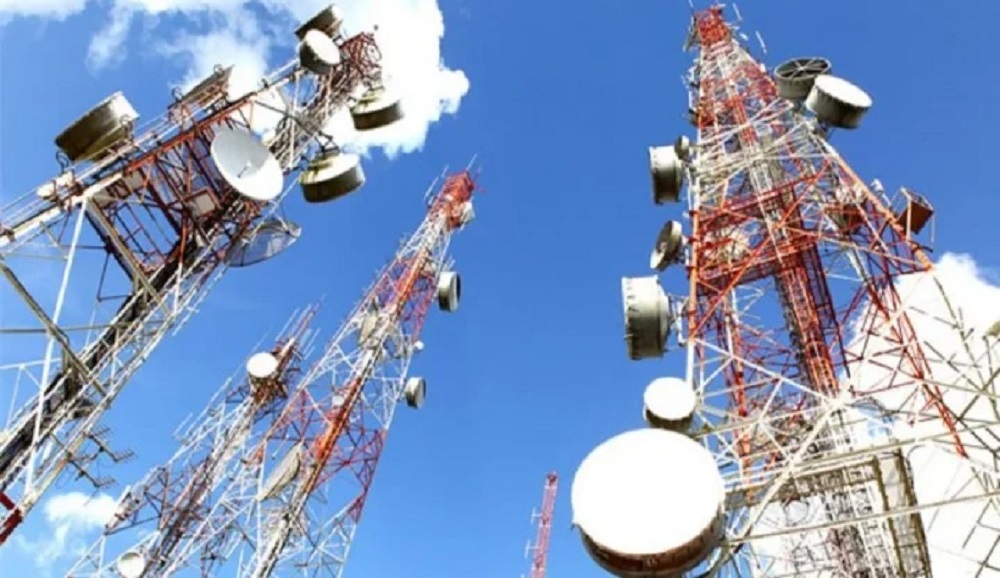
On rural connectivity, the minister stressed that the government would begin deploying about 3,700 telecommunications towers from October to provide network coverage for more than 20 million Nigerians currently living in communities without access to telecommunications services.
He stressed: “Mr. President also sanctioned that project. Today we’re in a place where, before the end of the year, we’ll also start to deploy close to 3,700 towers. It’s taken a lot of time putting this project together, raising the capital for it, but we are at a point where we should now start deploying around October.”
Tijani also stated that Nigeria would launch an alphanumeric postcode system on October 1, placing the country among a small number of nations using the advanced addressing technology.
“Nigeria will be amongst maybe 10 or 15 countries in the world with an alphanumeric postcode. It’s the latest design in the postcode system where we can now identify every property in this country. We’re hoping to launch that one on the 1st of October”, he said.
The system, the minister said, will assign a unique address to every building, making deliveries faster, boosting e-commerce, strengthening security and improving public service delivery.
“Inability to locate places comes at a cost. You can start to imagine what this will do to e-commerce. This would transform e-commerce completely because it means that things can now be delivered in record time”, Tijani said.
According to him, integrating the postcode system with existing government identity databases would enhance security and improve the efficiency of government services.
“Our alphanumeric postcode is unique because it allows us to have unique addresses for every property. In a lot of countries, like the UK, postcodes are not unique to one building; they’re typically for a cluster of buildings. But what we have here is one where you can identify every building. That will change the game significantly for Nigeria in terms of the delivery of public services,” he added.
Economy
See Black Market Dollar To Naira Exchange Rate Today 1st September 2026
The Black Market Dollar-to-Naira Exchange Rate for 1st September 2026 Can Be Accessed Below.
NOTE: The exchange rate changes hourly. It depends on the volume of dollars available and the Demand. This means…you can buy or sell 1 dollar at a certain rate, and the price can change (high or low) within hours.
The official naira black market exchange rate in Nigeria today, including the Black Market rates, Bureau De Change (BDC), and CBN rates.
The exchange rate fluctuates hourly based on the supply and demand of dollars in the market.
What’s the dollar to naira black market today, 1st September 2026?
The exchange rate for a dollar to naira at Lagos Parallel Market (Black Market) players sell a dollar for ₦1405 and buy at ₦1390 on Monday, 1st September, 2026, according to sources at Bureau De Change (BDC).
Please note that the Central Bank of Nigeria (CBN) does not recognize the parallel market (black market), as it has directed individuals who want to engage in Forex to approach their respective banks.
Dollar to Naira Black Market Rate Today
Dollar to Naira (USD to NGN) Black Market Exchange Rate Today
Selling Rate ₦1405
Buying Rate ₦1390
Dollar to Naira CBN Rate Today
Dollar to Naira (USD to NGN) CBN Rate Today
Highest Rate ₦1343
Lowest Rate ₦1320
Economy
NNPCL Increases Price Of Petrol
The Nigerian National Petroleum Company Limited (NNPCL) has increased the pump price of Premium Motor Spirit (PMS), commonly known as petrol, at some of its retail outlets in Abuja.
The latest adjustment has pushed the price of petrol at affected NNPCL filling stations to ₦1,345 per litre, representing a ₦75 increase from the previous price of ₦1,270 per litre.
Checks conducted on Monday showed that NNPCL stations in parts of the Federal Capital Territory, including outlets around Gwarinpa and Wuse Zones 4 and 6, were dispensing petrol at the new price.
The increase comes amid a fresh wave of upward adjustments in petrol prices by several marketers across the country.
NNPCL Stations Adjust Pump Price
A staff member of an NNPCL retail outlet, who spoke on condition of anonymity, confirmed that the company had adjusted its pump price on Monday.
“Our petrol pump price was raised to ₦1,345 per litre today (Monday),” the attendant said.
The latest development means motorists who purchase 50 litres of petrol at the affected NNPCL stations will now spend approximately ₦67,250, compared with ₦63,500 under the previous ₦1,270-per-litre price.
The increase is expected to put additional pressure on motorists and other consumers who rely heavily on petrol for transportation and business activities.
Other Marketers Also Increase Prices
The NNPCL adjustment follows similar price reviews by several independent petroleum marketers over the weekend.
Filling stations operated by MRS, Ranoil, Empire Energy and other downstream operators reportedly increased their petrol prices by between ₦20 and ₦80 per litre in different locations.
The varying adjustments highlight the increasingly market-driven nature of petrol pricing in Nigeria, with retail prices differing depending on the marketer, location, supply costs and prevailing market conditions.
Motorists in Abuja and other parts of the country are therefore expected to continue seeing different pump prices from one filling station to another.
Dangote Refinery Raises Ex-Depot Price
The latest pump price increases came after Dangote Refinery reportedly adjusted its ex-depot price for petrol.
The refinery increased its gantry price by ₦65, taking it from the previous level to ₦1,265 per litre.
The ex-depot price is a major component of the cost structure faced by petroleum marketers before transportation, logistics, storage, operational expenses and other charges are added before the product reaches retail filling stations.
An increase at the depot level can consequently result in higher pump prices if marketers pass the additional cost on to consumers.
Rising Petrol Imports Raise Concerns
The latest petrol price adjustments have also emerged amid renewed concerns over the increasing volume of imported petrol entering the Nigerian market.
The development has attracted attention because Nigeria’s domestic refining capacity, particularly following the commencement of operations at the Dangote Refinery, has been expected to reduce the country’s dependence on imported refined petroleum products.
However, petrol imports have continued to account for a significant portion of the country’s total supply.
Data from the Nigerian Midstream and Downstream Petroleum Regulatory Authority (NMDPRA) reportedly showed that imported petrol accounted for 43.3 per cent of total PMS supply in July.
The figure has raised concerns within the domestic refining and downstream petroleum sector.
Dangote Refinery Raises Concern Over Imports
The Dangote Refinery had previously expressed concerns about the increasing volume of imported petrol into Nigeria.
The refinery reportedly threatened to restrict petrol sales to importers and marketers amid what it described as a surge in imported products.
The development has contributed to an ongoing debate over competition, supply sources and pricing within Nigeria’s downstream petroleum industry.
While domestic refiners are seeking to expand their share of the local market, petroleum marketers continue to source products from different suppliers based on prevailing commercial conditions.
What the Latest Increase Means for Nigerians
The latest increase in Abuja is likely to generate concern among motorists and businesses, particularly those already dealing with high operating and transportation costs.
Petrol price movements often have a wider impact on the economy because the product is heavily relied upon for transportation, power generation and the distribution of goods and services.
An increase in pump prices can therefore raise transportation fares and increase the cost of moving food, agricultural produce and other commodities.
For businesses that depend on petrol-powered generators and vehicles, the additional cost could also translate into higher operating expenses.
With NNPCL stations now selling petrol at ₦1,345 per litre in some parts of Abuja, motorists will be watching closely to see whether other filling stations follow with further increases in the coming days.
The latest adjustment also adds to recent concerns that petrol prices could continue rising if depot prices and other supply-related costs remain elevated.
Economy
See Dollar to Naira exchange rate today, August 31, 2026
The Nigerian naira is opening the new trading week around the ₦1,300-per-dollar range, with the latest official Nigerian Foreign Exchange Market (NFEM) data showing a closing rate of about ₦1,337.29/$1 at the end of Friday’s session.
According to the Central Bank of Nigeria (CBN), the NFEM rate stood at ₦1,337.2873 per dollar on August 28, while the closing rate was ₦1,337.0000. The official NFEM rate is calculated using a volume-weighted average of transactions in the market.
The naira had strengthened during the previous week, moving from ₦1,349.99/$1 on August 24 to ₦1,337/$1 on August 28, representing an appreciation of about 0.96 percent.
In the parallel market, the dollar was quoted at about ₦1,400 on Friday, according to market data published by AbokiFX. This was ₦7 lower than the ₦1,407/$1 recorded the previous day.
The latest parallel-market rate leaves a gap of roughly ₦63 between the informal market and the official NFEM rate.
Meanwhile, a live indicative USD/NGN rate available early Monday puts the dollar around ₦1,346.78, although this should not be confused with the official NFEM closing rate, which reflects the most recent completed trading session.
Market data also showed continued strength in foreign exchange liquidity. NFEM turnover reached $1.06 billion in one trading session last week, while Nigeria’s foreign reserves continued to provide support for the naira.
For today, Monday, August 31, 2026, the dollar-to-naira rate is therefore around ₦1,337/$1 at the latest official NFEM close, while the parallel-market rate is around ₦1,400/$1. Rates may change as trading activity resumes and demand and supply conditions evolve.
It is important to note that rates offered by banks, Bureau de Change operators and other dealers may differ from the published NFEM and parallel-market reference rates because of transaction margins and market conditions.
-
News17 hours agoEFCC sacks over 40 staff for corruption, prosecutes 5 others
-
Economy17 hours agoNNPCL Increases Price Of Petrol
-
Metro17 hours agoAir Force Officer Narrates How Gunmen Abducted His Wife, Two Children From Kaduna Home
-
News18 hours agoCalls Mount for Forensic Audit of Chinua Achebe Airport Over Alleged Revenue Diversion
-
News11 hours agoJust in: Court fires 2027 APC candidate, orders fresh primaries
-
News10 hours agoIntoxicated Pilot Crashes Stolen Plane Near Nuclear Site
-
Entertainment17 hours agoHeadies dismiss claims of sidelining gospel artistes
-
News11 hours agoBreaking Dangote Refinery stops sales of petroleum products to Matrix, AA Rano, others