Connect with us

News

Fadahunsi, Osun and the Price of Political Rhetoric

Published

on

ADVERTISEMENT
Zoom Ad
ADVERTISEMENT
Zoom Ad

By Dr Willie Adegbite

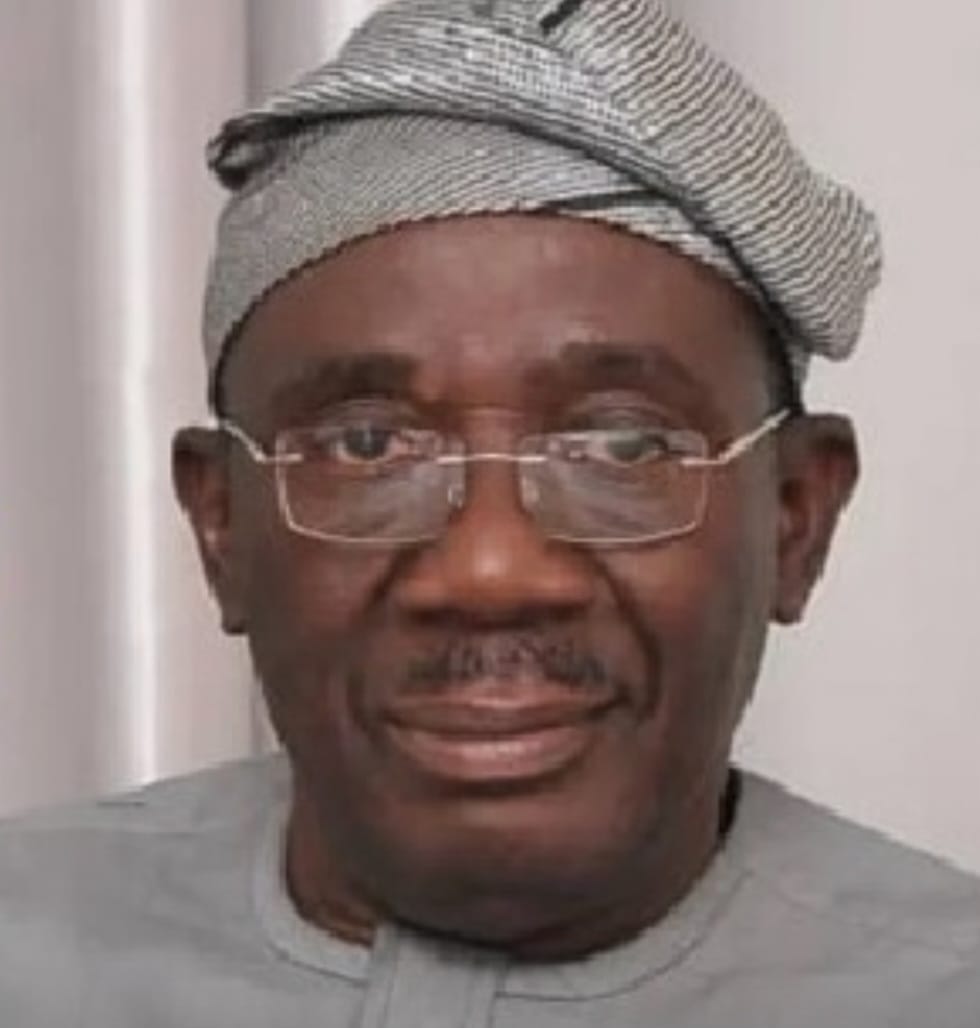
A video clip has placed Senator Francis Fadahunsi at the centre of a political firestorm. In it, he appears to use language that many have interpreted as a call to violence against members of the Accord Party. The senator insists the footage was edited and that his words were metaphorical, but the controversy has already taken hold. His political opponents have demanded his arrest, while the National Human Rights Commission has called for his suspension, arrest and investigation.

But in the rough-and-tumble of Nigerian politics, context matters. This controversy is about more than an incautious word. It also raises questions about the political environment in which the remarks were made and the allegations of violence that Fadahunsi says prompted them.

It is important to state clearly that Senator Fadahunsi’s remarks do not reflect the position of the All Progressives Congress or its governorship candidate in Osun State. The APC has never subscribed to do-or-die politics. Its candidate is not an advocate of violence or political thuggery. The party believes in competitive elections conducted within the boundaries of law and civility. That distinction matters because the temptation in partisan politics is to treat the words of one member as the doctrine of the entire party. That is not the case here.

Advertisement

Let us first deal with the offending word.

In the language of Nigerian political campaigning, “kill” can sometimes be used as visceral hyperbole for “overwhelm”, “defeat” or “send packing”. It is hardly elegant, but it is not invariably literal. In Yoruba political speech especially, vivid language is often used to describe electoral domination.

The danger is that such language can be heard differently when the political atmosphere is already tense.

Fadahunsi’s defence is that his words were taken out of context and that he was speaking metaphorically about defeating his opponents at the polls. That explanation deserves to be heard and tested against the full recording. But even if his intention was entirely political, the choice of words was reckless in an environment where allegations of violence are already circulating.

Advertisement

That is the uncomfortable middle ground in this controversy.

We should neither assume that the senator intended physical violence simply because a word was used, nor pretend that the word was harmless because it may have been metaphorical.

The more important question is what prompted the outburst.

Fadahunsi has alleged that as many as 30 APC members were killed in Osun within a month, while other reports have put his broader claim at more than 40 people killed in Osun East over the past year. These are serious allegations, not established facts, and they require verification.

Advertisement

But they should not be dismissed because they come from a politician currently facing scrutiny.

If even a fraction of these allegations is substantiated, Osun has a serious security problem that deserves the attention of the police and other relevant authorities. The families of anyone killed in political violence deserve investigation and justice, irrespective of party affiliation.

This is where the controversy risks becoming distorted. The attention devoted to Fadahunsi’s words should not prevent the authorities from examining the allegations of violence that he says formed their backdrop.

The two issues can be addressed at the same time.

Advertisement

The senator’s language can be investigated, while the alleged killings can also be investigated. One does not cancel out the other.

Indeed, this is precisely where responsible governance matters. When security agencies fail to provide timely and credible information about incidents of violence, suspicion grows and political narratives quickly fill the vacuum. Viral videos then become evidence, arguments become accusations and every incident is interpreted through partisan lenses.

Fadahunsi’s outburst is therefore not necessarily the cause of the tension in Osun. It may also be a symptom of a political environment in which fear and recrimination have become increasingly prominent.

That does not excuse his language.

Advertisement

Public office carries a responsibility to choose words carefully, particularly during an election. A politician who knows that his supporters are agitated should be cooling tempers rather than giving opponents reason to believe that violence has been sanctioned. The APC and its candidate have consistently demonstrated that they understand this responsibility. They reject the language of violence and have called for peaceful engagement.

Fadahunsi must therefore face the consequences of his words. The police investigation should run its course, and if it establishes that he genuinely incited violence, the law should take its course.

But fairness requires the authorities to follow the same principle in examining the allegations he has raised.

If people have been killed, their families deserve more than a political argument over a viral video. They deserve to know what happened and who was responsible.

Advertisement

This is also where Fadahunsi himself has an opportunity to help de-escalate the situation.

He should make it unequivocally clear that whatever metaphor he intended, he does not support physical violence against Accord members or anybody else. He should urge his supporters to settle the contest at the ballot box and cooperate fully with the authorities investigating both his remarks and the incidents he has cited.

That would be more than damage control.

It would be responsible leadership.

Advertisement

The same standard should apply across the political divide. Nobody should be allowed to use the language of violence as political mobilisation, just as nobody should be allowed to use allegations of violence selectively for partisan advantage. For the APC and its candidate, the path is clear. The party must continue to demonstrate through its conduct and messaging that it rejects violence and upholds the principles of democratic contestation.

Osun does not need competing narratives of victimhood. It needs credible facts.

The coming election is too important for the state to become trapped in a cycle in which every inflammatory statement produces another accusation, every accusation produces another counter-accusation and the underlying violence remains insufficiently investigated.

Fadahunsi may have chosen the wrong words. He should own that responsibility. But the controversy should not end there.

Advertisement

The real test is whether Osun’s political leaders and institutions can look beyond the viral clip and address the conditions that made such language possible in the first place.

An election should settle political disagreements with votes. It should not leave citizens wondering whether the people seeking their mandate are prepared to protect them from the consequences of their own rhetoric.

That is the responsibility Fadahunsi now carries.

And it is a responsibility that extends far beyond him.

Advertisement


● Dr Adegbite contributed this piece from Abuja.
Continue Reading
Advertisement

News

Sad! Pastor, wife found dead after domestic fight

Published

on

ADVERTISEMENT
Zoom Ad
ADVERTISEMENT
Zoom Ad

A Celestial Church of Christ evangelist, Abidemi Odukoya, and his wife, Adenike, have reportedly died in separate circumstances following an alleged domestic altercation at their residence in the Akinode/Ibogun community, Ogun State.

It was learnt that the incident occurred in the early hours of Monday, August 25, after the couple allegedly engaged in a domestic dispute that escalated into a physical confrontation.

The altercation reportedly left Adenike unconscious and injured, while her husband allegedly fled the residence.

A former Chairman of the Community Development Association, Adejimi Olawumi, said in a video shared by Arole TV on Wednesday that he was alerted by residents’ cries for help and subsequently found the woman lying in a pool of blood.

Advertisement

Olawumi said, “It was around 1am when I heard my neighbours shouting, ‘thief, thief.’ On my way out, I saw Daniel. I asked him what happened, and he said it was his mum and dad. Then I went to call my neighbours to come out.

“Immediately, we got inside the house and saw the wife in a pool of blood. At that time, there were no vehicles to take her to the hospital.

“The son said he did not see what happened between his mum and dad because he was in the other room. So, we started calling people together.”

Olawumi said members of the CDA subsequently noticed that Odukoya was missing and began searching for him.

Advertisement

According to him, they later learnt that the cleric had been hit by a vehicle in the Ifo area of the state.

He said, “When we saw that we did not see the husband, everyone in the CDA came out to look for him everywhere. We called our area chairman to tell him about the incident.

“Later, we heard that Mr Abidemi had been hit by a car in Ifo. The police took him to the hospital, and we confirmed that he was the one. The CDA then started working on how to bring his remains home.

“We have never heard or seen something like this happen before. We only know that they fight sometimes and settle it among themselves.”

Advertisement

Meanwhile, the late evangelist’s younger sister, in a video circulating online, claimed that the couple had been involved in repeated disagreements before their deaths.

She said the couple had visited her around April following an earlier altercation, adding that the matter was eventually resolved at a police station.

She said, “I have been hearing that they have been fighting for a while now. Around April, they came to my house. He explained everything about how he and his wife fought, and that it was at the police station they settled it.

“I only told them to be patient with each other because it is not right for a husband and wife to fight against each other. They had been fighting for a very long time, and people helped them settle it. And now we just heard that the husband and wife are dead.”

Advertisement

The woman said the family was informed of the incident after one of the siblings received a phone call, adding that arrangements were subsequently made for the remains of the deceased.

The wife was reportedly buried on the day of the incident, while Odukoya was buried on Wednesday, September 2.

In separate footage seen by PUNCH Metro on Wednesday, some clerics were seen performing burial rites over the remains of the evangelist at an undisclosed location.

The circumstances surrounding the deaths, however, remained unclear as of the time of filing this report.

Advertisement

When contacted on Wednesday, the deputy spokesman for the state police command, Opeyemi Oluborode, confirmed the incident.

“The police is investigating the incident,” he added. (The PUNCH)

Continue Reading

News

Borno Commissioner backpedals over ‘finger-cutting’ threat as police begin probe

Published

on

ADVERTISEMENT
Zoom Ad
ADVERTISEMENT
Zoom Ad

Borno State Commissioner for Youths, Sports and Poverty Alleviation, Hon. Saina Buba, has retracted his controversial remark threatening to cut off the finger of anyone who pointed at government officials.

Buba had, while speaking at the City Boy Movement Empowerment Programme in Maiduguri, earlier in the week, threatened opponents of the ruling All Progressives Congress.

He had reportedly declared that citizens who voted for the ruling party would be fed with honey, while those who refused to support them would face physical punishment by caning.

The aggressive rhetoric sparked sharp criticism from various quarters, with civil society groups and political observers warning that the comments threatened public safety, violated democratic norms, and endangered dissenting voices in the state.

Advertisement

Critics argued that such language from a serving public official was unbecoming and posed a direct threat to multi-party democracy.

But the commissioner held a press briefing where he said he had no apology for his comment on the ground that there was no opposition in Borno and no one could fairly accuse him of threatening opponents.

After the briefing, the widespread anger continued, with critics blaming authorities and saying the man showed no remorse.

On Tuesday, the police high command said it had launched a critical probe into the inciting comments made by Buba and two other APC chieftains.

Advertisement

Fielding questions from Defence Correspondents at a joint security briefing in Abuja, on Tuesday, the force spokesman, Anietie Iniedu, described the inciting comments particularly in relation to the electoral process, as “a criminal offence”.

He said, “On the issue of the Senator in Osun State, the Council Chairman in FCT and the Borno Commissioner’s inciting comments, I was part of the team that questioned the distinguished Senator in Osun State.

“The law is very clear when it comes to inciting. It is criminal to incite members of the public, especially as you comment on the electoral process.”

Hours after the comment of the police spokesman, Buba issued a statement to address the controversy.

Advertisement

He expressed regret over the uproar his comments caused and offered an unreserved apology to the people of Borno State.

He said, “In recent days, a comment I made during the empowerment programme organised by the City Boy Movement in Maiduguri has generated considerable concern within the public space.

“I wish to state, unequivocally, that my remark was never intended to harm or violate the fundamental rights of the people of our dear state to freedom of choice and association, as enshrined in the Constitution of the Federal Republic of Nigeria (as amended).”

While noting that he had previously attempted to clarify that the remark was not meant to be taken literally, the commissioner acknowledged the gravity of ongoing public concern, prompting him to issue a formal retraction

Advertisement

Buba added, “I had earlier provided clarification that the comment was not intended to be taken in its literal sense.

“However, in view of the concern it has continued to generate, I am using this medium to retract my earlier statement formally and to apologise to the entire people of Borno State and beyond for any offence it may have caused.

“Let me state in categorical terms that my comment does not in any way represent the ideals of the All Progressives Congress (APC) and the administration of His Excellency, Governor Professor Babagana Umara Zulum.

“This administration does not in any way undermine the rights of our citizenry. Rather, the party and the administration continue to uphold and respect every segment of our society, particularly our youth, who have remained steadfast supporters of both the party and the Zulum administration.

Advertisement

“Governor Zulum and the APC have consistently demonstrated a true democratic spirit over the past seven years, and this commitment will remain unwavering to the very end of his tenure.”

Continue Reading

News

FG Moves to End Unrealistic Budget Forecasts, Unveils New Economic Data Framework

Published

on

ADVERTISEMENT
Zoom Ad
ADVERTISEMENT
Zoom Ad

By Gloria Ikibah

The Federal Government has moved to strengthen the credibility of economic forecasts used in Nigeria’s budgeting process, with plans to introduce a single data repository and tighter scrutiny of the assumptions underpinning future budgets.

The Ministry of Finance and Ministry of Budget and Economic Planning reached the resolutions at a Macroeconomic Data and Assumptions Validation Workshop held on August 29, 2026.

The workshop brought together key fiscal and monetary data institutions across government to address weaknesses in economic forecasting and ensure that national planning is based on credible data, realistic assumptions and transparent methodologies.

Advertisement

A review of previous budget cycles revealed significant gaps between some macroeconomic projections and actual outcomes, particularly in oil production and revenue.

The participants agreed that the gaps must be addressed through stronger forecasting, improved coordination and measures to reduce optimism bias in future budgets.

One of the key resolutions was the establishment of a Standing Committee on Macroeconomic Data and Assumptions. The committee will be responsible for continuous validation and review of economic data and assumptions, with its reports submitted to the Economic Management Team.

The government also plans to establish a central data repository to ensure that government institutions work with a single and consistent set of economic data and assumptions.

Advertisement

Another resolution is the development of a unified national data reporting framework containing standard definitions for revenue, expenditure and borrowing.

The workshop further called for stronger coordination between fiscal and monetary authorities and improvements in the timeliness and quality of key national statistics.

The areas identified for improvement include employment, productivity and producer-price data, which are considered important for accurate economic forecasting and policy decisions.

The assumptions underpinning the Medium-Term Expenditure Framework (MTEF), Fiscal Strategy Paper (FSP) and annual Budget will also face tougher scrutiny before finalisation.

Advertisement

The government said these assumptions will be subjected to stronger methodology, sensitivity analysis and scenario testing to assess how different economic conditions could affect projected outcomes.

The measures form part of the Federal Government’s wider efforts to improve fiscal transparency, accountability and evidence-based economic management.

The workshop emphasised the importance of reliable data in shaping economic policy, noting that better data would lead to more realistic assumptions, improved planning and, ultimately, stronger economic outcomes for Nigerians.

The resolutions come as preparations for the 2027 budget gather pace, with the government seeking to improve the accuracy of its economic projections and strengthen the foundation on which national spending and revenue decisions are made.

Advertisement
Continue Reading

Trending

Copyright © 2024 Naija Blitz News