Connect with us

News

Why Davido Should Apologise To Okpebholo Over WAEC Result Troll — Lawyer

Published

on

ADVERTISEMENT
Zoom Ad
ADVERTISEMENT
Zoom Ad

A legal practitioner and author, Timothy Tugbiyele, has called on Afrobeats singer David Adeleke, popularly known as Davido, to apologise to Edo State Governor, Monday Okpebholo, over his social media post displaying the governor’s alleged West African Examinations Council result.


Tugbiyele made the call in a now-trending video originally uploaded on Facebook on Monday while commenting on the ongoing political exchanges ahead of the August 15 Osun State governorship election.

Davido had shared what appeared to be Okpebholo’s WAEC result on his Instagram Story on Friday, shortly after the Edo governor mocked Osun State Governor Ademola Adeleke over his penchant for dancing.

Okpebholo had criticised Adeleke’s leadership style while campaigning for the All Progressives Congress candidate, Bola Oyebamiji, popularly known as AMBO.

Advertisement

The Edo governor said, “Before somebody signs paper, he will dance. Are you not tired? For four years, this man has been dancing. Before he takes breakfast, before he drinks tea, he will dance.”

Davido, who has been actively campaigning for his uncle, subsequently shared the alleged WAEC result of Okpebholo without a caption.

Reacting to the development, Tugbiyele said Davido should not have responded personally to the governor’s remarks.

He said, “I watched a video when Governor Okpebholo called the governor of my state, Adeleke, the dancing governor. And the governor’s relation, David Adeleke, replied by publishing the WAEC Secondary School leaving result of Governor Okpebholo, the governor of Edo State.”

Advertisement

According to the lawyer, although Okpebholo’s alleged result may not have been impressive, it should not have been used to ridicule him.

He said, “The result is not good enough, but it’s possible. The governor did a resit. We are not aware of that, but I think Davido, David Adeleke’s publication is inappropriate.”

Tugbiyele argued that Adeleke could have responded to his Edo counterpart through official channels instead of allowing Davido to engage him.

He said, “Governor Adeleke, Ademola Adeleke, would have replied his contemporary governor, or caused one of his workers, maybe a commissioner of information or a special assistant, to reply. Not Davido, David Adeleke.”

Advertisement

The lawyer also stressed that Davido and Okpebholo occupy different positions and should therefore not engage each other on the same level.

He said, “David Adeleke and the governor of the state, they are not in the same social class. They are not of the same status. They are not in the same class.”

Tugbiyele described Davido’s post as disrespectful and appealed to the singer to apologise.

“I think what Davido did is disrespectful and I will plead with him, he should exercise some humility and apologise,” he said.

Advertisement

He recalled seeing photographs of Davido prostrating before elders, describing him as a well-brought-up Yoruba man.

“I’ve seen his pictures in time past, prostrating. He’s a properly well-brought-up Yoruba boy,” the lawyer said.

Tugbiyele also rejected the argument that the exchange should simply be viewed as part of political rivalry.

He said, “I have heard it said by one of the political leaders that everything is fair in politics. No, when you are fighting below the belt, when you are insulting, when you disrespect elders, that is not fair in politics.”

Advertisement

He urged older people and Davido’s elders to caution him, adding that political disagreements should not become personal attacks.

“You do not disrespect elders. He should apologise to Okpebholo. I’m not saying what Okpebholo did is right, to disrespect his uncle, but it should not be an eye for an eye,” he said.

The lawyer further argued that poor academic performance at one stage of a person’s life should not be used to define the individual.

Using his own experience, Tugbiyele said he had also obtained results that were not good enough but was encouraged by his father.

Advertisement

“I’ve had results that are not, I mean, results not good enough. But one of the things that has kept me going is that I had a father who never called me a dullard. He continued to encourage me,” he said.

He added, “So, oh, Governor Okpebholo had a result that was not good enough. He’s governor today. All of that, the bad result is in the past. Politics does not really have to go to that extent.”

Tugbiyele concluded by directly appealing to the singer, saying, “Davido, David Adeleke, please, as a proper Yoruba, please apologise to Governor Okpebholo. God bless you, David. God bless Nigeria.”

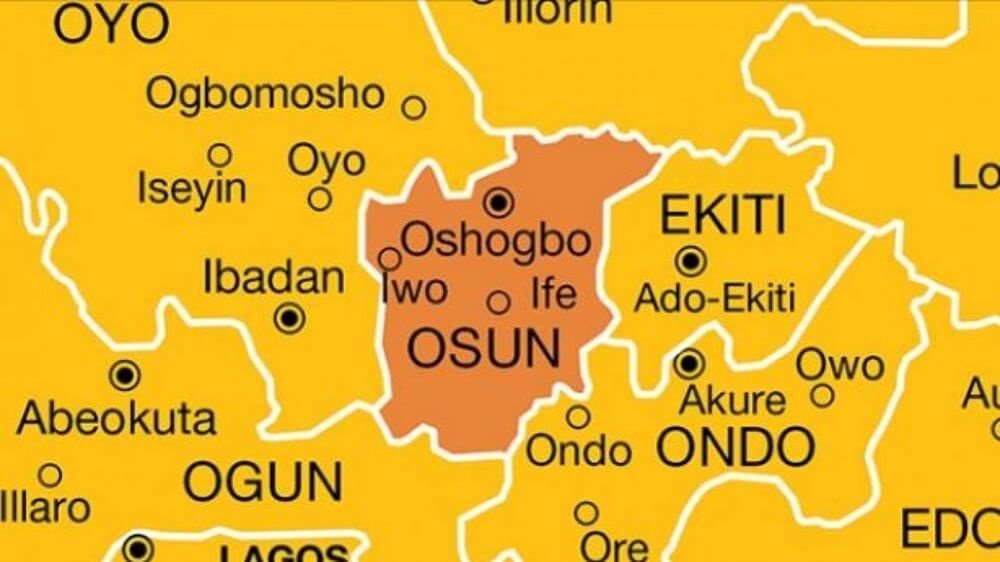
The controversy comes amid heightened political activity in Osun State ahead of Saturday’s governorship election, with Davido openly supporting Adeleke’s bid for a second term.
Advertisement
Continue Reading
Advertisement

News

FG reserves 33000 hectares for FCT livestock settlements

Published

on

By

ADVERTISEMENT
Zoom Ad
ADVERTISEMENT
Zoom Ad

The Federal Government has earmarked about 33,000 hectares of land in the Federal Capital Territory (FCT) for livestock settlements as part of efforts to curb cattle movement within Abuja and shift livestock production to a more settled, commercially viable system.

Minister of Livestock Development, Idi Mukhtar Maiha, disclosed this on Friday in Abuja during a ministerial press briefing, fielding questions from journalists.

Maiha said the land, captured in the Abuja Master Plan and located outside the city centre, would provide designated areas where livestock could be raised under improved conditions without competing for space with residents in densely populated parts of the capital.

He said the initiative is part of the Federal Government’s broader livestock transformation programme, focusing on settled production, improved animal genetics, better husbandry practices, and the establishment of Livestock Development Centres across the country.

Advertisement

“The city is not designed to co-mingle livestock with people,” Maiha said.

He explained that livestock owners would still be free to conduct their businesses within the city, while their animals would be kept in designated production areas where adequate feed, water, veterinary services, and other facilities would be provided.

The minister said the Federal Government was already engaging the FCT Administration to rehabilitate existing livestock facilities, including the Cow Grazing Reserve, Karshi, Piko, and Kore.

He said improvements had commenced at the Cow Grazing Reserve, where three boreholes and a digital weather station had been provided to enhance livestock production and management.

Advertisement

Maiha added that discussions were ongoing with the FCT authorities to rehabilitate other facilities and integrate them into the government’s proposed settled livestock production system.

The minister said the government was determined to address the practice of moving livestock over long distances in search of pasture and water, describing the system as economically inefficient and detrimental to animal productivity.

According to him, animals that continuously trek long distances expend energy that should ordinarily contribute to weight gain, milk production and other productive purposes.

He described cattle subjected to such movements as “athletes”, stressing that the extensive production system was partly responsible for Nigeria’s low livestock productivity.

Advertisement

Maiha said animals were not roaming for the sake of movement but because the existing production system compelled livestock owners to search continuously for feed and water.

He said the government’s preferred model would keep animals within designated production areas where they could access feed, water, veterinary care, breeding services and other essential inputs.

The minister noted that the approach would not only increase meat and milk production but also reduce waste and some of the social and economic challenges associated with uncontrolled livestock movement.

Maiha also identified low genetic potential and poor animal husbandry practices as major constraints on Nigeria’s ability to meet growing demand for meat, milk and eggs.

Advertisement

He said indigenous livestock breeds were not necessarily inferior but had not undergone the systematic genetic improvement required to substantially increase their productivity.

According to him, some indigenous cattle require several years to reach marketable weight, whereas genetically improved breeds can achieve considerably higher weights in a shorter period.

He also highlighted the disparity in milk production, noting that many indigenous cows produce between 1.2 and two litres of milk daily, compared with significantly higher yields obtainable from improved dairy breeds.

“The rate of growth matters a lot. Serviceability matters a lot,” Maiha said.

Advertisement

He said genetic improvement, better feeding and modern animal husbandry would therefore be critical components of the Federal Government’s livestock development programme.

Maiha said the creation of the Federal Ministry of Livestock Development in July 2024 had begun to trigger institutional reforms at the state level.

Only three states, he said, had dedicated ministries or agencies responsible for livestock when the ministry was established, but the number has since increased to 20 states.

He said this development would strengthen collaboration between federal and state governments in implementing livestock policies and attracting investment into the sector.

Advertisement

The minister, however, cautioned that transforming a sector that had operated largely through traditional systems for decades would take time.

“It’s a gradual process,” he said, adding that the impact of the reforms should not be assessed solely on immediate outcomes.

Under the emerging framework, the Federal Government would provide policy direction, technical and animal health standards, traceability systems, data infrastructure, investor facilitation and regulatory coordination.

State governments would be expected to provide suitable land and local infrastructure, undertake community engagement and security coordination, and mobilise livestock producers.

Advertisement

Private investors and producer organisations would, in turn, finance and operate commercial activities across livestock value chains.

Maiha said the proposed Livestock Development Centres would serve as commercially oriented production clusters rather than government-owned farms.

The centres are expected to accommodate investments in breeding, feed and fodder production, cattle finishing, dairy production and chilling, sheep and goat fattening, poultry production, pig breeding, feedlots, modern abattoirs and meat processing.

Other opportunities include cold-chain facilities, logistics, biogas and organic fertiliser production, and hides, skins and leather processing.

Advertisement

He said states would be encouraged to develop livestock industries based on their comparative advantages, available feed and water resources, agro-ecological conditions, producer populations, and market demand, rather than adopting a uniform model.

For cattle and dairy production, investment opportunities would include irrigated fodder, hay and silage production, feedlots, breeding and artificial insemination, milk collection and chilling, abattoirs and meat packaging.

The poultry value chain would encompass hatcheries, breeder farms, feed mills, broiler and layer clusters, vaccination and laboratory services, egg grading and packaging, processing and cold-chain facilities.

Similar investment opportunities would be developed for sheep and goats, pigs and micro-livestock, including rabbits, grass cutters, snails and bees.

Advertisement

Maiha said the reforms were aligned with the National Livestock Growth Acceleration Strategy (NL-GAS), which seeks to raise the livestock sector’s contribution to the Nigerian economy from about $32 billion to at least $74 billion by 2035.

The minister said the reforms would also reduce the economic and security risks associated with transporting live animals over long distances from major livestock-producing areas to consumer markets.

He noted that although a significant proportion of the country’s livestock population is concentrated in the North, major markets are located elsewhere, resulting in animals travelling more than 1,000 kilometres.

Maiha said developing livestock production, processing and marketing infrastructure across states would reduce dependence on long-distance movement of live animals.

Advertisement

He said the combination of settled livestock production, improved genetics, adequate feed and water, animal health services, processing infrastructure and private-sector investment would enable Nigeria to produce more meat, milk and eggs while creating jobs and strengthening rural economies.

Meanwhile, the National Veterinary Research Institute (NVRI), Vom, presented awards to Maiha and the Permanent Secretary of the Ministry, Dr Chinyere Ijomah Akujobi, in recognition of their contributions to developing the livestock sector.

The Executive Director and Chief Executive Officer of NVRI, Dr Yakubu Gunya Dashe, presented the awards alongside institute officials.

The institute recognised Maiha for service delivery, while Akujobi was honoured for her leadership and supportive role in advancing the ministry’s mandate.

Advertisement

The recognition highlighted the importance of collaboration among government institutions, veterinary research organisations, livestock producers and private investors in building a modern and productive livestock industry.

Continue Reading

News

NAHCON fixes N7.5m, N7.8m fares for 2027 Hajj

Published

on

By

ADVERTISEMENT
Zoom Ad
ADVERTISEMENT
Zoom Ad

The National Hajj Commission of Nigeria (NAHCON) has announced fares ranging from N7,560,822 to N7,882,822 for Nigerian pilgrims participating in the 2027 Hajj exercise.

The commission made the announcement on Friday in a public notice, stating that the fares were approved by the Federal Government and determined according to pilgrims’ departure zones.

Under the approved structure, intending pilgrims from the Maiduguri/Yola zone will pay N7,560,822, while those from other northern states will pay N7,672,822. Pilgrims from the southern states will pay N7,882,822.

NAHCON said the fares were determined based on consultations with the leadership of the Forum of State Muslim Pilgrims’ Welfare Boards, service providers in Saudi Arabia, prevailing exchange rates and service costs.

Advertisement

The commission said the new fares were guided by the principles of transparency and cost efficiency, as well as the Federal Government’s commitment to the welfare of Nigerian pilgrims.

“In line with the principle of transparency, cost-efficiency, and the Federal Government’s commitment to the welfare of Nigerian pilgrims, the National Hajj Commission of Nigeria (NAHCON) announces the 2027 Hajj fares approved by the Federal Government,” the commission stated.

The 2027 fares are slightly higher than those paid for the 2026 Hajj exercise.

For the 2026 pilgrimage, intending pilgrims from the Maiduguri/Yola zone, comprising Adamawa, Borno, Yobe and Taraba states, paid N7,579,209.96, while those from other northern states and the southern states paid N7,696,769.76 and N7,991,411.76, respectively.

Advertisement

NAHCON urged intending pilgrims who had already made an initial deposit of N5 million to pay the outstanding balance to complete their registration.

Those yet to make any payment but interested in performing the 2027 Hajj were advised to pay the approved fare through their respective State Muslim Pilgrims’ Welfare Boards, Agencies or Commissions, or through approved Hajj Savings Scheme participating banks.

The commission also announced September 26, 2026, as the final deadline for the complete upload of intending pilgrims’ biometric data on the designated Nusuk-Masar digital platform.

According to NAHCON, the deadline is in compliance with the Saudi Ministry of Hajj and Umrah’s policy and will not be extended.

Advertisement

“In strict compliance with the Saudi Ministry of Hajj and Umrah’s policy, NAHCON has fixed September 26, 2026, as the final and absolute deadline for the complete upload of intending pilgrims’ biometric data on the designated Nusuk-Masar digital platform, while remittance of all 2027 Hajj fares by states must be completed by 2nd December 2026,” it stated.

The commission further directed states to complete the remittance of all 2027 Hajj fares by December 2, 2026, warning that failure to meet the deadlines could lead to the forfeiture of allocated Hajj slots.

“No extension will be granted beyond this deadline, as data synchronisation and seat allocations depend entirely on timely remittances,” NAHCON said.

“The Commission wishes to emphasise that failure to meet the set deadlines will result in forfeiture of the allocated Hajj slots,” it added.

Advertisement
Continue Reading

News

UK seizes $300m worth of cocaine at London gateway

Published

on

By

ADVERTISEMENT
Zoom Ad
ADVERTISEMENT
Zoom Ad

Authorities in the United Kingdom have yet again thwarted a plot by South America cartels to smuggle cocaine into the country with a three-tonne bust at London Gateway.

The National Crime Agency NCA, said that on August 6, officers intercepted a 2.9 tonne consignment of cocaine that was hidden in a load of bananas, among the largest seizures in recent months. The drugs, which are estimated to have a street value of $313 million, originated from the banana-producing, cocaine-trafficking regions of South America. Nine men were arrested as part of the investigation.

Although authorities did not reveal the identity of the vessel, they said that NCA intelligence led to the seizure at the London Gateway port that in recent months has been used as an entry point by South American drug cartels targeting the lucrative UK market. The drugs were removed and the container allowed to be collected.

“This is a very significant seizure which has deprived the organised crime group behind it of huge profits. That is money that cannot be ploughed back into further crime,” said Dave Phillips, NCA senior investigating officer.

Advertisement

The London Gateway port is implementing an ambitious plan to become Britain’s most important container port, and saw container throughput surge by 52 per cent last year to three million TEU from 1.9 million TEU recorded in 2024.

Drug cartels are taking advantage of the growth to use the facility for drug trafficking into the UK. In March, law enforcement officers seized around one tonne of cocaine hidden in a container originating from Panama with a street value of $107 million. In June last year, officers seized 2.4 tonnes of cocaine with an estimated street value of $133 million at the port.

Government statistics show that the UK remains a lucrative market for cocaine smugglers, with people in England consuming 123,000 kilograms of cocaine annually, equating to a $13.2 billion market value.

“Class A drugs wreck lives, they are toxic and can devastate our communities,” said Phillips, adding that the NCA is determined to continue combating the threat of cocaine with domestic partners like the Border Force as well as international partners across source and transit countries.

Advertisement
Continue Reading

Trending

Copyright © 2024 Naija Blitz News