Connect with us

Foreign

Iran slams Trump’s threat to declare Hormuz US territory

Published

on

ADVERTISEMENT
Zoom Ad
ADVERTISEMENT
Zoom Ad

Iran on Saturday fired back at US President Donald Trump’s claim that he would soon declare the Strait of Hormuz part of US territory, saying the crucial energy waterway it has blockaded “will remain Iranian”.


Trump has repeatedly insisted that the strait, which Tehran effectively closed at the start of the Middle East war in late February, is under US control despite traffic remaining throttled.

“The Strait of Hormuz has been Iranian, is Iranian, and will remain Iranian,” Iranian Deputy Foreign Minister Kazem Gharibabadi said on X.

“This strait will only be closed and opened under Iran’s command.”

Advertisement

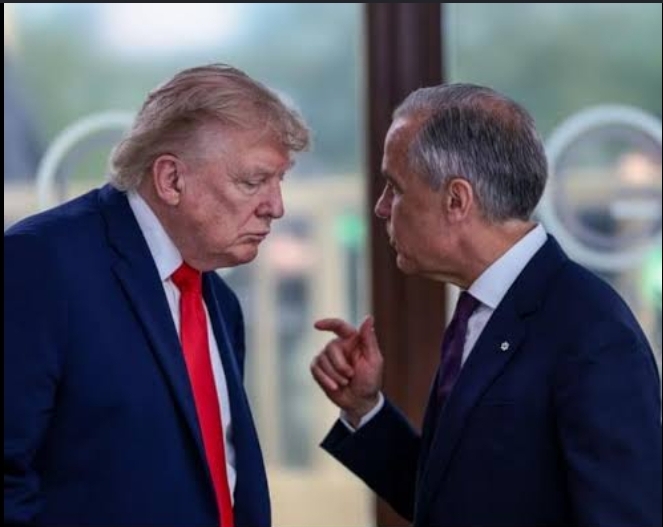
Trump told a political rally in New York state on Friday that after the US defeats Iran, “pretty soon I’ll be declaring the Hormuz Strait a territory of the United States”.

“It’s true,” he added.

An unnamed White House official later clarified that Trump was joking, the Wall Street Journal reported.

Last week, a top Iranian official set out a list of conditions for reopening the strait, including an end to the “war and aggression against Iran and its allies in Lebanon, Palestine, Yemen, and Iraq”.

Advertisement

Mohammad Bagher Zolghadr also demanded the end of crippling sanctions, the release of frozen assets and compensation for wartime damage.

– Ongoing attacks –

As diplomacy stalls between the longtime foes, attacks in the Hormuz strait have continued, highlighting the continued risks to regional shipping.

The United Arab Emirates’ state-owned oil giant ADNOC said on Saturday that one of its vessels came under attack the night before.

Advertisement

Abu Dhabi’s foreign ministry later blamed Tehran, and said that Iran’s Revolutionary Guards were engaged in “acts of piracy” in the strait.

On Friday the Gulf nation blamed Iran for other attacks on two vessels linked to ADNOC as they passed through the waterway.

Such attacks led to the collapse of an April ceasefire between the United States and Iran.

As Iran chokes traffic in Hormuz, its Houthi allies in Yemen have also declared a parallel maritime blockade on Saudi ports in the Red Sea, the oil-exporting giant’s only other maritime route.

Advertisement

A June deal between Washington and Tehran — meant to serve as a jumping-off point for negotiations on a permanent settlement — had said Iran and Oman would hash out future arrangements for the Hormuz in discussion with other Gulf countries and “in line with the applicable international law”.

Before the war, the strait carried around a fifth of the world’s oil and LNG exports, and prices have repeatedly surged since the dispute over the waterway erupted, piling economic and political pressure on Washington.

Iran wants to control the strait and charge tolls, powers it did not exercise before the war and ones that the US fiercely opposes.

The closure of Hormuz has driven up prices for US voters, creating a political headache for Trump as November’s midterm elections near.

Advertisement

US Vice President JD Vance said this week that Washington’s top priority in the Iran war was keeping energy prices low for Americans, while preventing Tehran from acquiring a nuclear weapon ranked second.

Tehran signalled last week that it had agreed with Oman on a route for ships to transit the strait and were finalising arrangements to jointly manage the waterway.

The US has imposed its own retaliatory blockade of Iranian ports in an attempt to cripple its economy.

“We have the blockade. No ships get through unless we want them to,” Trump said to a cheering crowd of supporters on Friday.

Advertisement

AFP

Continue Reading
Advertisement

Foreign

SAD! Professor’s lifeless body found in London apartment days after receiving sack letter

Published

on

ADVERTISEMENT
Zoom Ad
ADVERTISEMENT
Zoom Ad


Who Was Jason Arday, the sociologist whose remarkable rise through academia made him one of Britain’s most prominent Black scholars, has died at the age of 41.

Arday was found unresponsive at an address in Battersea, south London, on Friday afternoon. Police said his death was unexpected but is not currently being treated as suspicious. His cause of death has not been made public, with a report expected to be prepared for the coroner.

His death came days after he was fired from Cambridge University and Jesus College raising dust that something must be amiss.

Advertisement

But before the controversy, Arday had built a career around an extraordinary personal and academic journey.

Despite those early challenges, he went on to pursue higher education, earn a doctorate and establish himself as a sociologist whose work focused on race, inequality, social mobility and education.

Arday’s family said in a statement that they were “in shock to have lost this amazing father, partner, brother, uncle and son”.

They added: “The campaign of misinformation was too much for Jason, who was a gentle man and who always wanted to see the best in everyone.”

Advertisement

Earlier on Friday, police officers were called to an address in Battersea by the London Ambulance Service.

In a statement, the Metropolitan Police said: “At this time his death is being treated as unexpected, but is not believed to be suspicious.”

Cambridge University vice-chancellor Prof Deborah Prentice said: “We are desperately saddened to hear this tragic news.”

“Our heartfelt sympathies go to Jason Arday’s family and friends at this incredibly difficult time,” she said.

Advertisement

Education Secretary Lucy Powell said she was “deeply shocked and saddened” to hear about the death and she urged people to “remember there are real people with loved ones involved”.

Arday, 41, had denied any plagiarism – but admitted errors in his work – and last week said the recent controversy about his work had led to “an unrelenting level of public scrutiny and personal attack”.

The row first erupted after another academic – self-defined “race realist” Nathan Cofnas, who was sacked from his Cambridge role in 2024 – said he found numerous instances of plagiarism in the professor’s work.

Arday said some errors in his early academic work arose because of his autism, as he relied on using mimicry to make sense of information.

Advertisement

Similar scrutiny would find similar errors in work by other academics, he said.

Continue Reading

Foreign

U.S. Deports 3 Million Foreign Nationals

Published

on

By

ADVERTISEMENT
Zoom Ad
ADVERTISEMENT
Zoom Ad

The United States government announced that it has completed 15 consecutive months without releasing any undocumented immigrants into the country, citing over 3 million deportations alongside a series of tightened visa and citizenship regulations.

According to an official fact sheet released by the Department of State, the measures form part of a broader framework aimed at prioritizing American citizens and overhauling federal immigration enforcement following record-breaking border crossings under the previous administration:

“President Trump has delivered on his promise to fix the immigration system, prioritize American citizens, and protect U.S. citizenship. The border is sealed. The results are undeniable.”

Official figures indicate that more than 3 million foreign nationals have been deported, including thousands of individuals convicted of violent offenses. Alongside border enforcement, federal authorities launched an unprecedented denaturalization campaign targeting individuals accused of obtaining citizenship through fraudulent means, with legal claims already filed against 88 individuals.

Advertisement

The policy shift also extends to social welfare, election integrity, and international travel. Federal agencies terminated public assistance benefits for over 1.4 million ineligible individuals, barred non-citizens from more than a dozen taxpayer-funded healthcare programs, and paused visa processing for 75 high-risk nations.

Furthermore, the administration initiated measures to remove tens of thousands of non-citizens from state voter rolls while introducing a revised naturalization exam designed to evaluate applicants’ understanding of American history and government institutions.

Highlighting the continuation of strict enforcement measures initiated via executive order early in the presidential term, officials underscored the operational shift:

“For 15 straight months, no illegal aliens have been released into the country.”

Advertisement

The broader policy push carries significant international implications, particularly in nations with high visa volumes. The U.S. Mission has issued repeated advisories urging visa applicants and holders to adhere strictly to immigration rules, warning that violations, including overstays, fraudulent claims, or criminal conduct—will result in immediate visa revocation and deportation.

With immigration remaining a central focal point ahead of the 2026 midterm elections, the administration continues to position its hardline enforcement strategy as a necessary restoration of national security, legal order, and fiscal discipline

Continue Reading

Foreign

Colombia quake kills 224, leaves 700 injured

Published

on

By

ADVERTISEMENT
Zoom Ad
ADVERTISEMENT
Zoom Ad

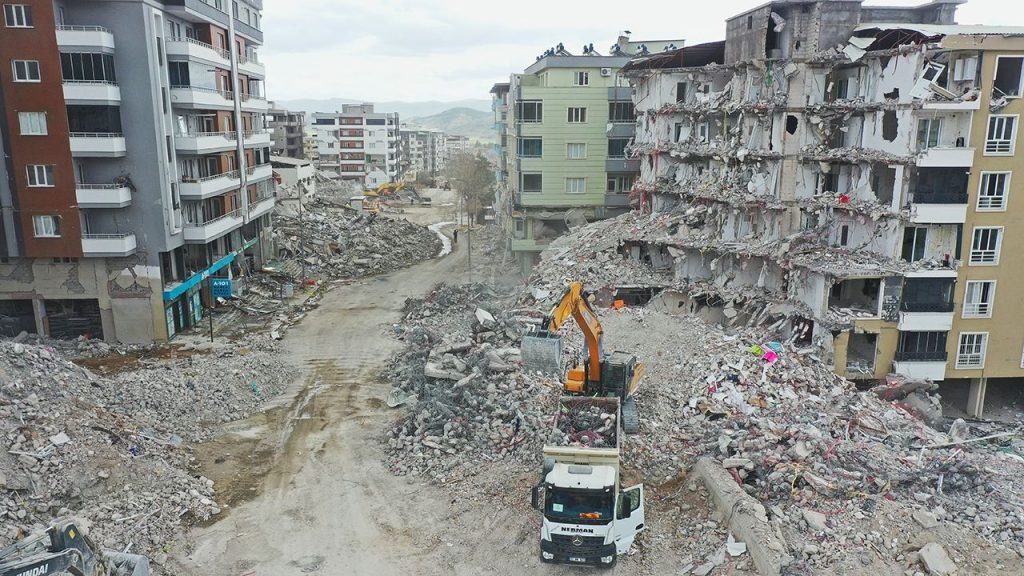
At least 224 people have been killed after a magnitude 7.4 earthquake struck western Colombia, with rescue teams continuing to search collapsed buildings for survivors on Tuesday.

The earthquake struck at 7:34 am local time on Monday, with Cali, Pereira and parts of the Choco region among the worst affected areas.

Authorities warned that the death toll could rise as emergency teams reach more affected communities and assess the extent of the destruction.

Cali authorities reported 35 deaths, while officials in the Risaralda region, where Pereira is located, confirmed at least 40 deaths. Nine people were also reported killed in Choco, two in Caldas and one in Antioquia.

Advertisement

At least 700 people were injured in Valle del Cauca alone, according to President Abelardo de la Espriella, who declared a national state of emergency and said the government’s priority was to rescue people trapped under rubble.

More than 1,600 buildings were reportedly damaged or destroyed, including parts of a historic cathedral in Manizales.

Several upper floors of a hospital in Cali also collapsed, trapping some patients and forcing about 600 others to receive treatment outside amid the debris.

Rescue operations continued overnight and into Tuesday, with soldiers, firefighters, emergency workers, volunteers and relatives searching through collapsed buildings.

Advertisement

In Cali, volunteers formed human chains to remove concrete and other debris by hand, while rescue teams repeatedly stopped to listen for survivors.

Firefighters rescued two women and two children from a collapsed building, while rescuers in Pereira were reportedly in contact with a boy trapped beneath a bakery as cranes were used to remove unstable sections of the building.

Authorities have also deployed engineers, rescue workers and search dogs to Choco, where the scale of the destruction remains unclear because many communities are remote and difficult to reach.

The United States Geological Survey identified San Jose del Palmar, a community of about 4,800 people, as the epicentre. The area is about 400km west of the capital, Bogota.

Advertisement

Colombia’s Geological Service reported 21 aftershocks by late Monday and warned that further tremors were possible.

The rescue effort has been complicated by the geography of Choco, where some communities can only be reached by boat or aircraft.

The government has also imposed nighttime curfews in Cali, Armenia and Manizales, while hospitals in five cities were placed on red alert.

Operations at airports in Pereira, Manizales, Quibdo, Armenia, Cartago and Buenaventura were suspended temporarily to allow structural inspections.

Advertisement

Authorities postponed the Petronio Alvarez Music Festival in Cali, which was scheduled to begin on Wednesday, as well as professional football matches.

International assistance has also begun. The United States announced $15.5m in emergency aid for shelters, food and other relief, while the European Union activated its Copernicus satellite service to support rescue operations.

El Salvador and Mexico also offered to provide rescue teams, medical personnel, supplies and other assistance.

Rescuers are expected to face a critical window in the coming hours as they continue searching for people trapped beneath the rubble.

Advertisement
Continue Reading

Trending

Copyright © 2024 Naija Blitz News